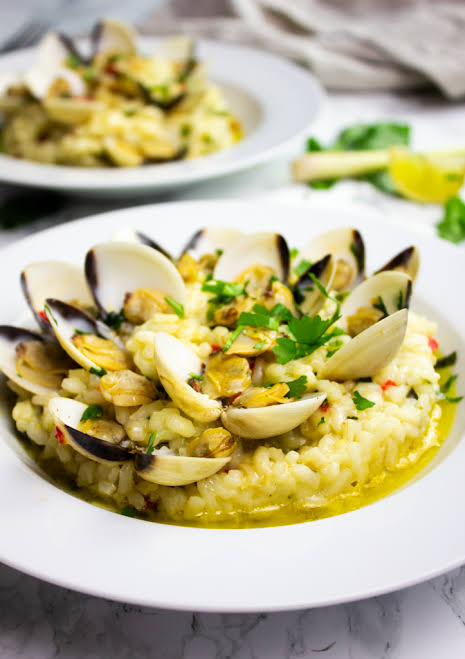
Make a creamy, fragrant lemongrass risotto with Arborio or Carnaroli rice, coconut milk, fresh lime, garlic, shallot, and Parmesan. This easy stovetop method delivers glossy, spoonable risotto with bright Southeast Asian-inspired flavor.
Quick Answer
This lemongrass risotto uses Arborio or Carnaroli rice cooked slowly with lemongrass-infused stock, then finished with coconut milk, lime, butter, and Parmesan. It takes about 45 minutes and serves 4 as a main dish or 6 as a side.
For the creamiest result, do not rinse the rice, keep the stock hot, add it gradually, and serve the risotto while it is still loose and spoonable. Carnaroli is particularly forgiving, while Arborio is easier to find in American grocery stores.
Lemongrass Risotto Recipe at a Glance
| Detail | Information |
|---|---|
| Prep time | 15 minutes |
| Cook time | About 30 minutes |
| Total time | About 45 minutes |
| Serves | 4 main-dish portions or 6 side portions |
| Cuisine | Italian-inspired with Southeast Asian flavors |
| Cooking method | Stovetop |
| Difficulty | Intermediate |
| Best rice | Arborio or Carnaroli |
| Main flavors | Lemongrass, lime, coconut |
| Best served | Immediately |
| Dietary options | Vegetarian; easily adaptable to vegan, dairy-free, and gluten-free |
Why This Lemongrass Risotto Works
Traditional risotto depends on rice starch, gradual liquid additions, and careful cooking. This version keeps that foundation but uses lemongrass-infused stock instead of plain broth.
The result is not simply risotto with lemon flavor. Lemongrass brings a softer citrus aroma with herbal and slightly floral notes, while lime provides the sharper acidity needed at the finish.
Cilantro or Thai basil adds a fresh herbal finish. The combination works because each rich element has a balancing ingredient: coconut milk and butter add richness, while lime and lemongrass keep the dish from tasting heavy.
Ingredients You’ll Need
The ingredient list is straightforward, but a few choices make a noticeable difference. Use unsweetened coconut milk, fresh lemongrass, and low-sodium stock so you can control the final seasoning.
For the Lemongrass Stock
- 5 cups low-sodium vegetable stock
- 2 fresh lemongrass stalks
- 3 thin slices fresh ginger, optional
- 1 garlic clove, lightly crushed
- 1 strip lime peel, optional
For the Risotto
- 1½ cups Arborio or Carnaroli rice
- 1 small shallot, finely diced
- 2 garlic cloves, minced
- 1 tablespoon olive oil
- ½ cup dry white wine, optional
- ½ cup unsweetened full-fat coconut milk
- 2 tablespoons unsalted butter
- ⅓ cup finely grated Parmesan
- 1 lime
- ½ teaspoon kosher salt, plus more to taste
- ¼ teaspoon freshly ground black pepper
- ¼ cup chopped cilantro or Thai basil
Optional Garnishes
Ingredient Notes
Fresh lemongrass is worth using here. The stalks provide a cleaner aroma than dried lemongrass, especially when gently infused into the stock.
Do not rinse the risotto rice. Its surface starch helps create the creamy texture that defines risotto. Arborio is widely available, while Carnaroli tends to hold its shape better during cooking.
Use unsweetened coconut milk. Sweetened coconut products can push the dish in an unwanted dessert-like direction.
How to Prepare Lemongrass for Risotto
Lemongrass has tough outer layers, so you don’t want to throw the entire stalk into the rice. For this recipe, infusing the stock is easier than chopping lemongrass directly into the risotto.
Trim the root end and remove the dry upper portion. Peel away the tough outer layers until the stalk feels firm and pale.
Then bruise the stalk with the flat side of a chef’s knife. This opens the fibers and helps the aromatic oils move into the stock.
Prepare the Lemongrass
- Trim the root end.
- Remove the dry green tops.
- Peel away the outer layers.
- Cut each stalk into two or three pieces.
- Crush each piece gently with the side of a knife.
- Keep the pieces large enough to remove easily.
Kitchen Tip
Don’t finely chop the tough outer stalks. Fibrous pieces can make an otherwise silky risotto unpleasant to eat.
How to Make Lemongrass-Infused Stock
This small step gives the finished risotto a much cleaner flavor.
- Pour the stock into a saucepan and add the bruised lemongrass.
- Add ginger and garlic if using.
- Warm over medium heat until steaming.
- Keep it just below a simmer for about 10 minutes.
- Strain the stock and return it to the saucepan.
- Keep it hot but not aggressively boiling while cooking the rice.
Why This Step Matters
Infusing the stock lets you control the lemongrass flavor before it reaches the rice. It also removes the fibrous stalks completely.
For a milder risotto, use two stalks and a shorter infusion. For a stronger citrus aroma, let the strained stock sit with the lemongrass for a few extra minutes before beginning the rice.
How to Make Lemongrass Risotto
Have your hot stock beside the skillet before you begin because the cooking process moves quickly once the rice starts.
Cook the Aromatics
Heat a wide, heavy skillet or sauté pan over medium heat. Add the olive oil and shallot. Cook for about 2–3 minutes, stirring occasionally, until the shallot softens without browning heavily.
Add the garlic and cook for about 30 seconds.
Toast the Rice
Add the dry, unrinsed rice. Stir for about 1–2 minutes. The grains should become lightly glossy and warm, but they should not brown.
This brief toasting step helps the grains maintain their shape during cooking.
Add the Wine
Pour in the white wine, if using. Stir until most of the wine has evaporated. If you don’t use wine, simply move to the next step.
Add the Hot Stock Gradually
Add about ¾ cup hot lemongrass stock. Stir regularly as the rice absorbs the liquid. When the pan begins looking nearly dry, add another ladleful.
Continue until the rice is creamy outside but still slightly firm in the center. This usually takes about 20–25 minutes, although the exact time depends on your pan, heat, rice, and stock temperature.
Add the Coconut Milk
When the rice is almost tender, stir in the ½ cup coconut milk. Continue cooking gently until the rice reaches the texture you want.
Don’t wait until the rice is completely dry. Properly finished risotto should still move easily when you tilt the pan.
Finish Off the Heat
Remove the pan from the heat and stir in:
- Butter
- Parmesan
- Lime zest
- 1–2 teaspoons fresh lime juice
- Black pepper
Taste before adding more salt. If the risotto looks thick, stir in a small splash of warm stock.
Rest Briefly and Serve
Let the risotto sit for about 1 minute, then spoon it into warm bowls. Finish with cilantro or Thai basil, extra lime zest, and a lime wedge.
Serve immediately.
How to Tell When Risotto Is Done
This is one of the most important parts of the recipe.
Finished risotto should not sit in a stiff mound like cooked rice. It should spread slowly across a shallow bowl when served.
The grains should be tender but retain a slight firmness in the center.
Look for These Signs
- The rice grains are visibly plump.
- The sauce looks creamy rather than watery.
- The rice still moves when stirred.
- There is enough liquid to make the mixture spoonable.
- The center of the grain has a gentle bite.
- The finished risotto looks glossy.
- The rice isn’t sitting in a dry, compact pile.
Easy Kitchen Test
Drag your spoon through the pan. The path should slowly fill with creamy rice rather than staying completely empty.
Remember that risotto continues absorbing liquid after cooking, so it’s better to finish it slightly looser than you think you need.
Arborio vs. Carnaroli for Lemongrass Risotto
Both work well, but they behave differently.
| Rice | Texture | Availability | Best For |
|---|---|---|---|
| Arborio | Creamy and soft | Very easy to find | Everyday cooking |
| Carnaroli | Creamy with firmer grains | Less common | Better texture control |
| Vialone Nano | Very creamy and tender | Specialty stores | Traditional-style risotto |
Carnaroli works particularly well when you want firmer grains and more texture control. Arborio remains an excellent practical grocery-store option.
Coconut Milk or Parmesan: Which Finish Should You Use?
You don’t have to choose one style for every batch.
The coconut milk version tastes softer, rounder, and more tropical. The Parmesan version tastes more traditionally Italian and has a stronger savory finish. Using both gives you a rich middle ground.
For a Coconut-Forward Risotto
- Use ½ to ¾ cup unsweetened coconut milk.
- Keep Parmesan modest or omit it.
- Increase lime slightly if needed.
- Finish with cilantro or Thai basil.
- Add toasted coconut for texture.
For a More Italian-Style Risotto
- Use ¼ to ½ cup coconut milk.
- Keep the Parmesan.
- Finish with butter.
- Use parsley or basil instead of cilantro.
- Keep the lime subtle.
Best Balance
Use ½ cup coconut milk plus Parmesan and fresh lime. That gives the rice enough richness without letting coconut dominate the lemongrass.
Vegan and Dairy-Free Lemongrass Risotto
The recipe is easy to make vegan and dairy-free. Replace the butter with olive oil or vegan butter, and omit Parmesan. Use vegetable stock that contains no animal ingredients.
For more savory depth, add a small amount of nutritional yeast or sautéed mushrooms.
Vegan Finish
- Olive oil instead of butter
- Nutritional yeast instead of Parmesan, optional
- Unsweetened coconut milk
- Vegetable stock
- Fresh lime
- Cilantro or Thai basil
Allergy Note
If cooking for someone with a serious allergy, check packaged stock, vegan butter, nutritional yeast, and other processed ingredients for the relevant allergen information.
Lemongrass Risotto Variations
Once you understand the basic technique, this recipe can move in several directions. Keep the additions focused so the lemongrass remains part of the flavor story.
Shrimp Lemongrass Risotto
Cook peeled and deveined shrimp separately in a skillet, then fold them into the finished risotto. Finish with lime, cilantro, and a little chili.
Mushroom Lemongrass Risotto
Brown sliced cremini, shiitake, or oyster mushrooms separately. Fold some into the rice and reserve the best browned pieces for the top.
Chicken Lemongrass Risotto
Use boneless chicken thighs or breasts. Cook the chicken separately, then add it to the finished risotto.
Asparagus and Pea Risotto
Add asparagus pieces during the later part of cooking and stir in peas near the end. This gives you a fresh spring-style version without overwhelming the lemongrass.
Chili-Ginger Risotto
Add finely grated ginger with the garlic and a small amount of fresh chili. Keep the quantities restrained so the warmth stays behind the lemongrass.
Corn and Zucchini Risotto
Sauté fresh corn and diced zucchini separately, then fold them into the finished rice. This works especially well in summer.
Food Safety Temperatures
If adding shrimp or other seafood, cook it to 145°F internally. Chicken should reach 165°F internally.
Common Lemongrass Risotto Mistakes
Cold liquid can slow the cooking process and make it harder to maintain an even simmer. Keep the stock hot beside the risotto.
Rinsing removes surface starch that helps create creamy risotto.
Gradual additions give you better control over the final texture.
Risotto should finish loose. Add warm stock if the rice looks dry.
Start small and taste. It is easier to add acidity than correct an overly sour risotto.
Start tasting several minutes before you expect the rice to finish.
Risotto thickens quickly after cooking. Loosen it with warm stock before serving if necessary.
How to Fix Risotto That Isn’t Right
| Problem | Likely Cause | What to Do |
|---|---|---|
| Too thick | Too little finishing liquid | Add warm stock a little at a time. |
| Too watery | Too much stock | Cook gently for another few minutes. |
| Rice is crunchy | Not enough cooking time | Add hot stock and continue cooking. |
| Rice is mushy | Overcooking | Stop cooking and serve immediately. |
| Too salty | Salty stock or cheese | Add unsalted stock and adjust carefully. |
| Too rich | Too much coconut milk or butter | Add lime and unsalted stock. |
| Too sour | Excess lime | Add a little coconut milk or butter. |
| Weak lemongrass flavor | Under-infused stock | Use a stronger infusion next time. |
| Fibrous pieces | Lemongrass wasn’t strained | Remove the pieces before serving. |
What to Serve With Lemongrass Risotto
Because the rice is rich and creamy, the best sides bring freshness, crunch, or a little bitterness.
For a dinner party, serve smaller portions as a first course. For a weeknight meal, pair it with shrimp, chicken, or mushrooms for a more substantial plate.
Can You Make Lemongrass Risotto Ahead?
Risotto is best freshly cooked, but you can prepare parts of the recipe ahead.
The lemongrass stock can be infused, strained, cooled, covered, and refrigerated before dinner. Reheat it before beginning the rice.
You can also chop the shallot, garlic, herbs, and lemongrass earlier in the day.
Best Make-Ahead Strategy
- Prepare the lemongrass stock ahead.
- Chop the aromatics.
- Grate the Parmesan.
- Zest and juice the lime shortly before serving.
- Cook the risotto just before dinner.
- Serve immediately for the best texture.
If you need to prepare the entire risotto ahead, expect the rice to become thicker and softer during storage.
How to Store and Reheat Lemongrass Risotto
Cool leftover risotto promptly and place it in a shallow container. Refrigerate cooked leftovers within 2 hours and use most leftovers within 3–4 days when properly stored.
For reheating, place the risotto in a saucepan over low to medium-low heat. Add a splash of water or unsalted stock and stir until hot throughout.
Leftover Safety
Reheat leftovers to 165°F. If the risotto contains shrimp or chicken, make sure the reheated dish reaches 165°F throughout.
Can You Freeze It?
You can freeze cooked risotto, but the texture usually suffers. The rice can become softer after freezing and thawing.
If you have leftovers, refrigeration is generally the better choice for texture.
Another option is turning cold leftover risotto into crispy rice cakes rather than trying to recreate its original creamy consistency.
Dietary Substitutions
Gluten-Free
Risotto rice itself is naturally gluten-free, but stock, bouillon, seasonings, and packaged ingredients can vary. Choose products labeled or verified as gluten-free when necessary.
Dairy-Free
Replace butter with olive oil or dairy-free butter and omit Parmesan. Nutritional yeast can provide additional savory depth.
Vegan
Use vegetable stock, olive oil or vegan butter, unsweetened coconut milk, no Parmesan, and fresh herbs and lime.
Coconut-Free
Omit the coconut milk and use additional warm stock. Finish with butter and Parmesan for a more traditional risotto.
Alcohol-Free
Simply skip the wine. Add a little extra stock and finish with lime juice for brightness.
Frequently Asked Questions
What does lemongrass taste like in risotto?
Lemongrass has a fresh citrus aroma with herbal and lightly floral notes. It tastes more aromatic than simply adding lemon juice. That makes it especially good with coconut milk, lime, ginger, chili, shrimp, mushrooms, and fresh herbs.
Can I use dried lemongrass instead of fresh?
Yes, but fresh lemongrass gives the brightest flavor. If using dried lemongrass, use it primarily to flavor the stock and strain it before adding the liquid to the rice.
Do I have to use Arborio rice?
No. Carnaroli and Vialone Nano are excellent alternatives. Carnaroli is especially useful if you want firmer grains and more tolerance during cooking, while Arborio is easier to find.
Can I make this risotto without Parmesan?
Absolutely. For a dairy-free or vegan version, omit Parmesan and use olive oil or vegan butter. Coconut milk already supplies plenty of richness.
Why is my risotto gummy?
Gummy risotto can result from overcooking, using too little liquid, or allowing the finished rice to sit too long. Cook until the grains are tender but slightly firm, and finish with enough liquid for a loose, flowing texture.
Do I need to stir risotto constantly?
No. Regular stirring is enough. Stir frequently enough to keep the rice moving and prevent sticking, but you don’t need to stand over the pan stirring every second.
Can I use coconut milk instead of stock?
It is better not to replace all the stock with coconut milk. Cook the rice primarily with flavorful stock and add coconut milk near the end. This keeps the dish balanced and prevents the coconut flavor from overwhelming the lemongrass.
How long does leftover risotto last?
Refrigerated risotto should generally be used within 3–4 days when handled and stored properly. Refrigerate it within two hours and reheat leftovers to 165°F.
Can I add shrimp or chicken?
Yes. Cook the protein separately, then fold it into the finished risotto. Cook shrimp and other seafood to 145°F and chicken to 165°F internally.
🍋 Lemongrass Risotto Recipe
Creamy Arborio rice with lemongrass, coconut milk, lime, and Parmesan.
Ingredients
- 5 cups low-sodium vegetable stock
- 2 fresh lemongrass stalks, trimmed and bruised
- 1½ cups Arborio or Carnaroli rice
- 1 small shallot, finely diced
- 2 garlic cloves, minced
- 1 tablespoon olive oil
- ½ cup dry white wine, optional
- ½ cup unsweetened full-fat coconut milk
- 2 tablespoons unsalted butter
- ⅓ cup finely grated Parmesan
- 1 lime, zested and juiced
- ¼ cup chopped cilantro or Thai basil
- Kosher salt and black pepper, to taste
Instructions
- Infuse the stock: Warm the stock with bruised lemongrass for about 10 minutes. Strain and keep hot.
- Cook aromatics: Heat olive oil in a wide skillet over medium heat. Cook shallot for 2–3 minutes, then add garlic for 30 seconds.
- Toast rice: Add the unrinsed rice and stir for 1–2 minutes.
- Deglaze: Add wine, if using, and cook until mostly absorbed.
- Add stock: Add hot lemongrass stock gradually, stirring regularly as each addition is absorbed.
- Cook rice: Continue for roughly 20–25 minutes, tasting as you go.
- Add coconut milk: Stir in coconut milk during the final few minutes.
- Finish: Remove from heat and stir in butter, Parmesan, lime zest, and lime juice.
- Adjust texture: Add a splash of warm stock if the risotto is too thick.
- Serve: Season to taste and finish with fresh herbs and lime.
Recipe Notes
- Do not rinse the rice; the surface starch helps create creaminess.
- Don’t wait for the rice to become completely dry.
- Use fresh lime juice at the end for brighter acidity.
- Serve immediately because risotto thickens quickly as it stands.
Final Thoughts
This lemongrass risotto recipe takes the creamy technique of classic risotto and gives it a fresh, aromatic twist with lemongrass, coconut milk, and lime.
The most important details are simple: infuse the stock, use the right rice, add liquid gradually, and finish with enough liquid to keep the rice loose.
Make the basic version first so you can learn the ideal texture. Then try shrimp, mushrooms, asparagus, chicken, or chili-ginger variations depending on what you’re serving.
The best bowl of risotto is the one that reaches the table hot, glossy, creamy, and still slightly firm in the center.