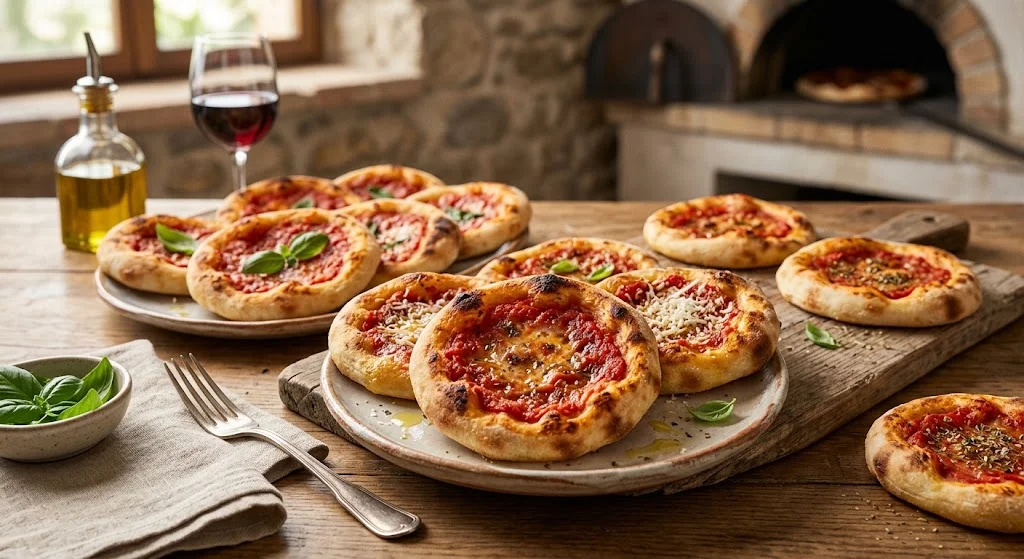
Learn how to make classic Roman pizzette rosse with soft, airy centers, lightly crisp edges, rich tomato sauce, extra virgin olive oil, and oregano — all without cheese.
There’s something special about pizzette rosse, the famous Roman snack pizza marinara you see in bakery windows across Rome. These small, bright red pizzas are simple, yet full of flavor. Made with soft dough and topped with rich tomato sauce, they are known as Roman pizzette rosse because of their deep red color.
Unlike many pizzas, this Italian mini pizza has no cheese, which lets the tomato and olive oil shine. In Rome, this Roman street food pizza is often enjoyed as an after-school snack or a quick bite on the go.
The edges are slightly crispy, the center is soft, and the taste is comforting. Whether you call it pizza rossa romana or Roman snack pizza, this authentic bakery treat is loved for its balance of simplicity and flavor.
Pizzette rosse are small, cheese-free Roman snack pizzas topped with rich tomato sauce, extra virgin olive oil, and oregano. To make them at home, prepare a soft pizza dough, let it rise, shape it into small rounds, add a thin layer of tomato sauce, and bake at 425–480°F (220–250°C) for 12–15 minutes. The result is a soft-centered, lightly crisp Italian mini pizza that can be enjoyed warm or at room temperature.
What Are Pizzette Rosse?
Pizzette rosse are small, round Roman snack pizzas known for their bright red topping. The word “rosse” means “red” in Italian, referring to the rich tomato sauce spread on top. Unlike many other Italian pizzas, these little bites have no cheese.
They are closer to a simple pizza rossa romana or mini marinara pizza, where tomato, olive oil, and oregano are the stars. The center stays soft while the edges become lightly crisp.
The Roman Forno Connection
You’ll often find pizzette rosse displayed in trays inside traditional Roman fornos — bakeries where these inexpensive snacks can be purchased warm or at room temperature.
The History of Pizza Rossa in Rome
The story of Roman pizzette rosse is associated with the post-war years in Italy, when bakeries focused on simple, affordable foods made with basic ingredients such as flour, yeast, and tomato.
This helped popularize pizza rossa, a thin sheet-pan pizza topped with tomato sauce and olive oil. Over time, bakers shaped smaller portions, creating the individual pizzette rosse enjoyed as everyday snacks.
In many neighborhoods, these bakery snacks were sold by weight, wrapped in paper, and enjoyed after school. The tradition of buying this Roman street food pizza from a local forno remains part of Rome’s everyday food culture.
Pizzette Rosse vs Pizza Marinara vs Pizza Rossa
These three tomato-forward Italian styles share similarities, but their size, texture, preparation, and serving style are different.
| Feature | Pizzette Rosse | Pizza Marinara | Pizza Rossa |
|---|---|---|---|
| Cheese | No | Usually no | No |
| Size | Small, mini rounds | Full-size pizza | Large sheet-pan |
| Texture | Soft center, lightly crisp edges | Thin crust | Slightly airy, tray-baked |
| Serving Style | Warm or room temperature | Usually hot | Warm or room temperature |
| Origin / Style | Roman bakery snack | Traditional Italian pizza | Roman forno classic |
Authentic Ingredients for Roman Pizzette Rosse
A truly authentic pizzette rosse recipe keeps the ingredient list simple. Quality matters because every component has a noticeable role.
00 Flour vs Bread Flour
Traditional Roman pizzette rosse can be made with 00 flour, which helps create a soft texture with lightly crisp edges. Bread flour works when you prefer slightly more chew.
Yeast
Fresh yeast, active dry yeast, or instant yeast can be used. Fresh yeast is traditional in many bakery settings, while instant yeast is especially convenient for home baking.
Tomato Passata
Smooth tomato passata spreads easily and creates the clean, vivid red topping associated with this Italian mini pizza.
Extra Virgin Olive Oil
Good-quality extra virgin olive oil adds richness, shine, and depth to the simple tomato topping.
Dried Oregano
A light sprinkle of oregano gives the pizza its classic herbal aroma and complements the tomato without overpowering it.
Simple Is the Point
The identity of Roman pizzette rosse comes from restraint: tomato, olive oil, herbs, and well-fermented dough rather than a heavy topping.
Ingredient Substitutions: Flexible Home Version
No 00 Flour?
Use all-purpose flour. It can still produce a soft center and lightly crisp crust.
No Passata?
Blend canned whole tomatoes until smooth and drain excess liquid if the sauce seems too watery.
Using Instant Yeast
Instant yeast can generally be mixed directly into the flour without a separate proofing step.
Gluten-Free Option
Use a quality gluten-free pizza flour blend. The texture will differ somewhat, but the tomato-forward flavor remains the focus.
The Secret to the Signature Roman Tomato Sauce
The heart of pizzette rosse is the tomato topping. It should be flavorful without becoming heavy or watery.
Why No Cheese?
Traditional Roman pizzette rosse are cheese-free. This keeps the flavor focused on tomato, olive oil, and herbs.
Get the Thickness Right
The sauce should be thick enough to spread easily without soaking the dough. A watery sauce can interfere with the desired texture.
Salt & Olive Oil
A small pinch of salt and a drizzle of extra virgin olive oil add balance. Too much oil can make the pizza greasy.
Oregano Timing
Add dried oregano before baking so the oven heat releases its aroma into the tomato topping.
Dough Hydration & Fermentation Explained
65–70% Hydration
Hydration describes the amount of water relative to flour. A dough around 65–70% hydration can produce the soft center and crisping potential desired for pizzette rosse.
Slow Fermentation
An 8–24 hour refrigerated fermentation develops deeper flavor, aroma, and dough structure.
Fast-Rise Alternative
If time is limited, allow the dough to rise at room temperature for about 1–2 hours. The flavor will be milder but still delicious.
Roman vs Neapolitan
Roman dough for this style is designed around a somewhat firmer, bakery-friendly texture, while Neapolitan dough is typically softer and more elastic.
How Roman Bakeries Achieve Crispy Edges & Soft Centers
Deck Ovens
Traditional Roman bakeries may use deck ovens and stone surfaces to transfer strong heat directly to the dough.
High Heat
A hot oven around 425–480°F (220–250°C) helps the dough expand quickly while encouraging browning.
Lightly Oiled Trays
Baking on a lightly oiled tray can help the bottom develop a crisp, lightly fried character.
Olive Oil Brushing
A light brush of extra virgin olive oil before or after baking adds shine and enhances the finished texture.
How to Make Pizzette Rosse: Step-by-Step Guide
Follow these steps for the classic soft-centered, lightly crisp texture of Roman snack pizza marinara.
Dough Prep
Mix flour, water, yeast, salt, and a little extra virgin olive oil. Knead for 8–10 minutes until the dough is smooth.
First Rise
Cover the dough and let it rise until doubled, usually around 1–2 hours at room temperature.
Divide & Shape
Divide the dough into small portions, roll into balls, then flatten each portion into a small round.
Add the Sauce
Spread a thin, even layer of seasoned tomato sauce. Avoid over-saucing.
Bake
Bake at 425–480°F (220–250°C) for approximately 12–15 minutes, or until the edges are golden.
Cool Slightly
Let the pizzette cool briefly before serving. They are excellent warm or at room temperature.
Fast 30-Minute Version vs Traditional Slow-Rise Method
| Method | Fermentation | Flavor | Texture | Best For |
|---|---|---|---|---|
| Quick | About 45–60 minutes | Milder | Soft and light | Busy weeknights |
| Slow Rise | 8–24 hours refrigerated | More developed | Better chew and crisping | Maximum bakery-style flavor |
Both methods make excellent Roman snack pizza. Choose the quick version when convenience matters and the slow method when you want more developed flavor and structure.
How to Scale Pizzette Rosse: Small Batch to Party Tray
4 Pizzette
Divide the dough into four mini rounds. This is a useful small batch for testing your technique or preparing a family snack.
10–12 Pizzette
Make smaller portions for a gathering. These bite-sized Italian mini pizzas work especially well as shared appetizers.
Large Sheet Pan
Press the dough into a lightly oiled sheet pan and bake it as a full pizza rossa romana, then cut it into squares.
Party Tip
For entertaining, the sheet-pan version makes serving easier while keeping the same tomato-forward, cheese-free character.
Serving Ideas: From Kids’ Lunchbox to Italian Aperitivo
After-School Snack
Serve a few warm or room-temperature pizzette as a simple, satisfying snack.
Party Appetizer
Arrange mini rounds on a platter for an easy crowd-pleasing appetizer.
Light Dinner
Pair your Roman snack pizza with a fresh salad for a simple meal.
Picnic Snack
Since they can be enjoyed at room temperature, pizzette rosse are convenient for picnics and outdoor meals.
Storage, Freezing & Reheating Without Losing Texture
| Method | How to Store | Recommended Time |
|---|---|---|
| Refrigerator | Cool completely and store airtight; use parchment between layers. | Up to 3 days |
| Freezer | Freeze in a single layer until firm, then transfer to a freezer-safe bag. | Up to 2 months |
| Reheating | Heat on a baking tray or directly on the oven rack. | 350–400°F / 180–200°C for 5–8 min |
Common Pizzette Rosse Mistakes & How to Fix Them
| Problem | Why It Happens | Better Approach |
|---|---|---|
| Over-saucing | Too much tomato adds excess moisture. | Spread a thin, even layer. |
| Dense Dough | Insufficient proofing. | Let the dough rise until doubled. |
| Pale Crust | Oven temperature is too low. | Preheat thoroughly and bake at high heat. |
| Strong Yeast Flavor | Too much yeast or rushed fermentation. | Use measured yeast and allow adequate fermentation. |
| Flat Tomato Flavor | Sauce lacks balance. | Adjust salt and add a light drizzle of olive oil. |
Are Pizzette Rosse Vegan?
Yes — the traditional version is naturally vegan.
A classic Roman snack pizza marinara uses flour, water, yeast, salt, tomato sauce, extra virgin olive oil, and oregano. There is no cheese, butter, or egg in the traditional version.
When using store-bought dough or packaged tomato products, check the ingredient label because formulations can vary.
Nutrition Overview
Estimated Calories
One small pizzetta rossa typically contains approximately 120–180 calories, depending on portion size and ingredients.
Carbohydrates
Most of the calories come from carbohydrates in the pizza dough, while the tomato topping contributes relatively little fat.
No Cheese
Because traditional pizzette rosse contain no cheese, they can be lighter in fat than many cheese-topped pizzas.
Important Note
Nutrition values are estimates and can change with dough size, flour, oil quantity, and tomato topping.
Traditional Roman Pizzette Rosse Variations
Anchovy Version
A small piece of anchovy can be placed over the tomato before baking, adding a salty, savory depth.
Garlic-Heavy Marinara
Add finely minced or fresh garlic to the tomato sauce for a stronger, more aromatic variation.
Chili Oil Drizzle
A light drizzle of chili oil after baking gives the pizza a gentle spicy kick.
Extra Oregano
Increase the oregano for a more pronounced herbal aroma while keeping the classic tomato-forward identity.
Frequently Asked Questions About Pizzette Rosse
Why are pizzette rosse often eaten at room temperature?
In Rome, pizzette rosse are commonly displayed in bakery trays and may be eaten later in the day. At room temperature, the tomato and olive oil flavors remain prominent while the dough stays pleasantly soft.
Can I use store-bought pizza dough?
Yes. Store-bought pizza dough is a convenient option for homemade Roman pizzette rosse. Shape it into small rounds and use a thin layer of sauce to avoid excess moisture.
What flour is best for pizzette rosse?
00 flour is an excellent choice for a soft center and lightly crisp edges. Bread flour and all-purpose flour can also work. Hydration, fermentation, and oven temperature are equally important.
Can you freeze pizzette rosse?
Yes. Cool them completely, freeze them until firm in a single layer, then transfer them to airtight freezer bags. They can be stored for approximately two months and reheated in a hot oven.
How do I get crispy edges?
Use a thoroughly preheated oven, bake at high heat, avoid excessive sauce, and consider a lightly oiled baking tray. Proper dough fermentation also contributes to the final texture.
What is the difference between pizza rossa and pizzette rosse?
Pizza rossa is generally the larger, sheet-pan tomato pizza that is cut into portions. Pizzette rosse are smaller individual rounds designed as bakery snacks. Both are typically tomato-forward and cheese-free.
Bring Authentic Roman Bakery Flavor Into Your Kitchen
Making pizzette rosse at home is more than baking a simple Roman snack pizza marinara. It recreates a small piece of Roman bakery culture with soft dough, rich tomato sauce, extra virgin olive oil, and oregano.
Whether you choose the quick-rise version or allow the dough to ferment slowly, the goal remains the same: a soft center, lightly crisp edges, and a vivid tomato topping. Serve your Italian mini pizza warm, at room temperature, or as part of a larger spread for friends and family.
Once you understand the dough, control the sauce, and avoid over-saucing, you can confidently make an authentic pizzette rosse recipe whenever you want a simple taste of Rome.