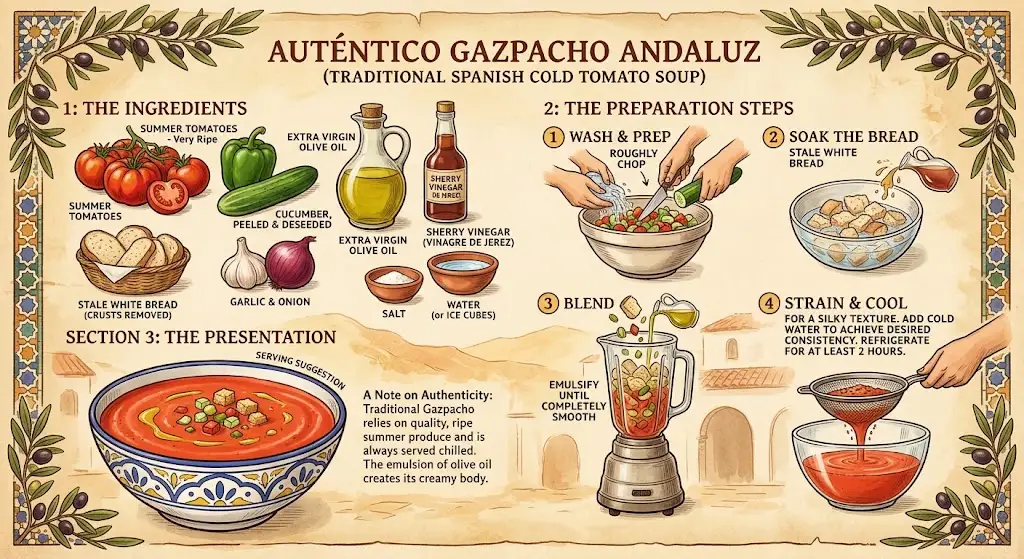
Learn how to make authentic Andalusian gazpacho with ripe tomatoes, cucumber, green pepper, stale bread, extra virgin olive oil, garlic, and sherry vinegar for a refreshing taste of southern Spain.
Quick Answer: What Is Authentic Andalusian Gazpacho?
Authentic Andalusian gazpacho is a traditional Spanish cold tomato soup from Andalusia made with ripe tomatoes, cucumber, green bell pepper, garlic, stale bread, extra virgin olive oil, and vinegar. The raw ingredients are blended until smooth, the olive oil is slowly emulsified into the mixture, and the gazpacho is chilled before serving. It can be served in a bowl as a soup or poured into a glass as a refreshing summer drink.
Authentic Andalusian gazpacho is one of Spain’s most recognizable summer dishes. Originating in southern Spain, this refreshing cold tomato soup combines fresh raw vegetables with extra virgin olive oil, vinegar, garlic, and bread.
Unlike a cooked soup, traditional gazpacho is prepared entirely from uncooked ingredients. The result is bright, savory, slightly acidic, creamy from natural emulsification, and intensely refreshing.
In Andalusia, gazpacho may be served in a bowl or poured into a glass and enjoyed almost like a savory vegetable drink.
The Origins of Gazpacho in Southern Spain
The history of authentic Andalusian gazpacho predates the arrival of tomatoes in Europe. Early forms were based on humble ingredients such as stale bread, garlic, olive oil, vinegar, and water.
Before tomatoes became central to the red version, southern Spain was home to preparations such as ajo blanco, a pale gazpacho made with bread, garlic, almonds, olive oil, and vinegar.
Tomatoes arrived in Europe from the Americas in the 16th century and gradually became an important ingredient in Spanish cooking. Over time, the red tomato-based version became the internationally recognized gazpacho Andaluz.
What Makes Gazpacho Truly Authentic?
Stale Bread
Traditional gazpacho uses bread to provide body and help create a smooth emulsion. It also makes the soup more substantial.
Extra Virgin Olive Oil
Olive oil provides richness and helps produce the silky texture associated with properly blended gazpacho.
Sherry Vinegar
Sherry vinegar provides acidity and complements the sweetness of ripe tomatoes without overwhelming their flavor.
Raw Ingredients
Traditional Andalusian gazpacho is not cooked. Fresh vegetables are blended directly to preserve their bright, refreshing character.
Traditional Gazpacho Ingredients Explained
The ingredient list for an authentic gazpacho recipe is short, but every ingredient contributes to the final flavor, texture, or balance.
- Ripe tomatoes — the foundation of the soup.
- Cucumber — adds cooling freshness.
- Green bell pepper — provides vegetal depth.
- Garlic — adds savory intensity.
- Stale bread — thickens and supports emulsification.
- Extra virgin olive oil — provides richness.
- Sherry vinegar — balances tomato sweetness.
- Salt — brings all the flavors together.
Best Tomatoes for Authentic Gazpacho
Fully ripe tomatoes are more important than choosing one specific variety. Roma tomatoes can produce a relatively thick gazpacho, while ripe heirloom tomatoes can provide particularly deep flavor.
Avoid pale, underripe tomatoes because they can produce a bland, watery, or overly acidic soup.
The Role of Stale Bread
Stale bread absorbs liquid and contributes body. It also helps the olive oil and vegetable mixture form a smoother emulsion.
Why Extra Virgin Olive Oil Matters
Extra virgin olive oil is both a flavor ingredient and an important part of the soup’s texture. When incorporated gradually during blending, it contributes to the creamy mouthfeel without adding dairy.
Sherry Vinegar vs. Red Wine Vinegar
| Vinegar | Flavor | Best Use |
|---|---|---|
| Sherry vinegar | Complex, rounded, slightly nutty | Best choice for a traditional-style gazpacho |
| Red wine vinegar | Sharper and more pronounced | Useful substitute when sherry vinegar is unavailable |
| White vinegar | Very sharp and neutral | Use sparingly because it can overpower tomatoes |
How to Make Authentic Andalusian Gazpacho
Authentic Andalusian Gazpacho
Ingredients
- Ripe tomatoes
- Cucumber
- Green bell pepper
- Garlic
- Stale bread
- Extra virgin olive oil
- Sherry vinegar
- Salt
- Cold water, as needed
Instructions
Rustic vs. Smooth: Should You Strain Gazpacho?
Rustic Farmhouse Style
A rustic gazpacho can retain tiny pieces of vegetables and has a more substantial texture. This style emphasizes the humble, homemade character of the dish.
Ultra-Smooth Restaurant Style
Straining the blended mixture removes many seeds and skins, producing an exceptionally smooth and silky texture.
Is Gazpacho a Drink or a Soup?
The simplest answer is: both. Gazpacho is generally classified as a cold soup, but its smooth, pourable consistency makes it perfectly suited to drinking from a glass.
| Serving Style | Texture | Typical Presentation |
|---|---|---|
| Glass | Smooth and relatively thin | Refreshing summer drink |
| Bowl | Thicker and more substantial | Soup or chilled starter |
Traditional Gazpacho Variations Across Spain
Salmorejo
Associated with Córdoba, salmorejo is thicker and richer than classic gazpacho. It relies heavily on tomatoes, bread, olive oil, garlic, and vinegar and is commonly served in a bowl.
Ajo Blanco
This pale, pre-tomato style combines bread, almonds, garlic, olive oil, and vinegar. It demonstrates the older roots of Andalusian cold soups.
Modern Fruit Gazpacho
Contemporary versions may use watermelon, strawberries, mango, or other fruits. These are creative interpretations rather than the classic Andalusian formula.
Gazpacho vs. Salmorejo: What’s the Difference?
| Feature | Gazpacho Andaluz | Salmorejo |
|---|---|---|
| Texture | Light, smooth, refreshing | Very thick and creamy |
| Main vegetables | Tomato, cucumber, green pepper | Primarily tomato |
| Bread | Moderate amount | Usually more bread |
| Olive oil | Important | Important and often more pronounced |
| Serving | Glass or bowl | Usually bowl |
| Regional identity | Andalusia broadly | Córdoba |
Is Authentic Gazpacho Healthy?
Vegetable-Rich
Tomatoes, cucumber, and green pepper provide vitamins, minerals, water, and plant compounds.
Heart-Friendly Fats
Extra virgin olive oil supplies mostly monounsaturated fat and fits naturally into Mediterranean-style eating patterns.
Antioxidants
Tomatoes provide lycopene, while garlic and peppers contribute additional plant compounds.
Refreshing & Hydrating
Water-rich vegetables make gazpacho particularly appealing during hot weather.
Classic gazpacho is naturally vegan. Traditional versions containing wheat bread are not gluten-free, but gluten-free bread can be used as an adaptation.
Common Mistakes That Ruin Authentic Gazpacho
Using Underripe Tomatoes
Pale or underripe tomatoes produce a less flavorful gazpacho. Choose tomatoes that are fully ripe and naturally sweet.
Overpowering Garlic
Garlic should add depth rather than dominate the fresh vegetable flavor. Start conservatively and adjust.
Adding Too Much Vinegar
Vinegar should brighten the soup, not make it aggressively sour. Add it gradually and taste as you go.
Pouring in Oil Too Quickly
Slowly incorporating olive oil while blending encourages a better emulsion and smoother texture.
Skipping the Chill
Gazpacho tastes substantially better when thoroughly chilled. Give it at least two hours whenever possible.
Making It Too Watery
Watery tomatoes and excessive added water can weaken the texture. Bread and proper emulsification help restore body.
How to Fix Gazpacho That’s Too Thin, Thick, or Sour
Too Thin?
Blend in a small amount of softened stale bread. A little more olive oil can also help improve body and emulsification.
Too Thick?
Add cold water a tablespoon at a time and blend briefly until the desired consistency is reached.
Too Sour?
Add more ripe tomato and adjust the salt carefully. Avoid adding additional vinegar until the flavor is balanced.
Lacks Flavor?
Check the salt, vinegar, garlic, and tomato quality. Chilling the gazpacho for several hours can also allow the flavors to meld.
How to Store, Chill, and Serve Gazpacho Properly
| Storage / Serving Question | Best Practice |
|---|---|
| Refrigerator | Store covered and refrigerated; use within about 3 days. |
| Best chilling time | At least 2 hours for a thoroughly chilled soup. |
| Overnight chilling | Can deepen and blend the flavors. |
| Freezing | Possible, but texture may separate after thawing. |
| Serving temperature | Serve thoroughly chilled; around 7–10°C / 45–50°F is a useful target. |
Food Safety Reminder
Because gazpacho contains raw vegetables and is served cold, keep it refrigerated and avoid leaving it at room temperature for extended periods. Store leftovers in a clean, covered container and follow standard food-safety practices.
The Science Behind Gazpacho’s Emulsion
One of the secrets behind a creamy gazpacho Andaluz is emulsification. Olive oil naturally separates from water, but blending the oil with vegetable liquid and bread helps distribute tiny droplets throughout the mixture.
Oil + Vegetable Liquid
Tomatoes and other vegetables supply plenty of water. Blending breaks olive oil into small droplets and disperses them through the mixture.
Bread as a Binder
Bread contributes starch and structure, helping the emulsion become thicker and more stable.
Slow Oil Addition
Adding olive oil gradually while blending gives the mixture a better chance of becoming smooth and cohesive.
Chilling
Refrigeration allows the flavors to settle and makes the final gazpacho especially refreshing.
Is Gazpacho Vegan and Gluten-Free?
| Diet | Traditional Gazpacho | Easy Adaptation |
|---|---|---|
| Vegan | Yes | No changes normally needed |
| Gluten-free | No, when made with wheat bread | Use certified gluten-free bread |
| Dairy-free | Yes | No changes normally needed |
Authentic Gazpacho Success Checklist
- Use fully ripe, flavorful tomatoes.
- Include stale bread for traditional body and texture.
- Use quality extra virgin olive oil.
- Choose sherry vinegar when available.
- Keep garlic balanced rather than overpowering.
- Blend until the desired texture is reached.
- Drizzle olive oil gradually for better emulsification.
- Chill thoroughly before serving.
- Taste again after chilling and adjust seasoning if needed.
Frequently Asked Questions About Authentic Andalusian Gazpacho
Can gazpacho be made without bread?
Yes. However, bread contributes traditional body and helps with emulsification. Without it, gazpacho will generally be thinner and lighter.
Why is gazpacho served cold?
Gazpacho is designed as a refreshing dish for warm weather. Serving it chilled highlights the fresh vegetables and makes it especially cooling during summer.
Is authentic gazpacho vegan?
Classic Andalusian gazpacho is naturally vegan because it is made from vegetables, bread, olive oil, vinegar, garlic, and salt.
Is traditional gazpacho gluten-free?
Traditional gazpacho made with wheat bread is not gluten-free. Gluten-free bread can be substituted for a gluten-free version.
How long should gazpacho chill?
Chill gazpacho for at least 2 hours. An overnight rest can also allow the flavors to meld further.
Can I make gazpacho without vinegar?
You can reduce the vinegar, but acidity is an important part of the traditional flavor balance. Sherry vinegar is especially well suited to classic Andalusian-style gazpacho.
Can gazpacho be frozen?
It can be frozen, although the texture may separate after thawing. Blend it again before serving to help restore a smoother consistency.
What is the difference between gazpacho and salmorejo?
Gazpacho is generally lighter and includes vegetables such as cucumber and green pepper. Salmorejo is thicker, uses more bread, and is strongly associated with Córdoba.
Why Authentic Andalusian Gazpacho Remains Spain’s Ultimate Summer Classic
Authentic Andalusian gazpacho represents everything that makes traditional Mediterranean cooking so appealing: simple ingredients, seasonal produce, thoughtful technique, and intense flavor without complicated preparation.
Ripe tomatoes provide sweetness and acidity, cucumber adds freshness, green pepper contributes depth, garlic supplies savory character, and extra virgin olive oil creates richness. Stale bread brings everything together into a smooth and satisfying cold soup.
Whether served in a chilled bowl or poured into a glass, gazpacho is one of the most refreshing ways to enjoy summer vegetables. Its simplicity is precisely what has allowed this Andalusian classic to remain popular across generations.