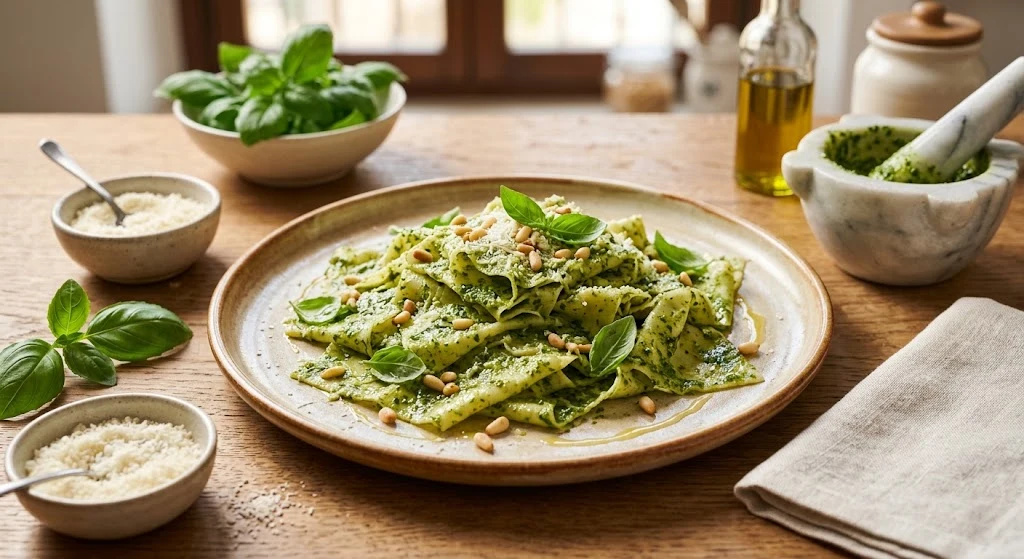
Discover Mandilli de Sea, also known as Mandilli de Saea — the ultra-thin, delicate Ligurian pasta traditionally served with pesto alla Genovese.
Mandilli de Sea, also called Mandilli de Saea, is a traditional Italian silk handkerchief pasta from the Liguria region of Italy. This beautiful fresh pasta gets its name because the thin pasta sheets resemble soft silk handkerchiefs. In the Ligurian language, mandilli refers to handkerchiefs while saea refers to silk.
This unique Ligurian pasta is made by rolling fresh pasta dough very thin and cutting it into large, square pasta sheets. The squares are lighter and more delicate than lasagna sheets while being much wider than ordinary noodles.
You may also see similar pasta described as fazzoletti or fazzoletti di seta. Because of its smooth surface and delicate texture, Mandilli de Sea pasta is especially well suited to pesto alla Genovese, which coats the pasta beautifully.
Mandilli de Sea, also known as Mandilli de Saea, is a traditional Ligurian pasta made from very thin, large square sheets of fresh pasta. Its name is commonly translated as “silk handkerchiefs” because the delicate sheets resemble silk fabric. Traditionally associated with Genoa and Liguria, Mandilli is most famously served with pesto alla Genovese, which clings beautifully to its silky surface.
Meaning & Etymology of “Mandilli de Saea”
The name Mandilli de Saea comes from the traditional Ligurian dialect spoken in the coastal areas of Liguria, particularly around Genoa. Mandilli refers to handkerchiefs, while saea refers to silk. Together, the expression evokes the idea of “silk handkerchiefs.”
The name is a fitting description of the pasta itself. When the large, paper-thin sheets are cooked, they soften and fold gently, creating a delicate appearance that resembles pieces of fabric.
Unlike many pasta names that describe a shape or ingredient, Mandilli de Saea uses a visual comparison. The pasta’s thin, flexible sheets are associated with delicate silk handkerchiefs, giving this Ligurian specialty one of the most poetic names in Italian cuisine.
Where Does Mandilli de Sea Come From?
Mandilli de Sea comes from Liguria in northern Italy, a coastal region along the Italian Riviera. The area’s cuisine is famous for fresh basil, excellent olive oil, pine nuts, seafood, vegetables, and handmade pasta.
Genoa is especially important to the tradition because it is closely associated with pesto alla Genovese and many classic Ligurian foods. The delicate pasta works naturally with the region’s aromatic basil pesto because its broad, thin surface allows the sauce to spread across each sheet.
Outside Liguria, Mandilli can be harder to find than more familiar Italian pasta shapes. Its delicate nature and traditional handmade preparation make it particularly well suited to fresh pasta production.
Why Is Silk Handkerchief Pasta So Unique?
Ultra-Thin Sheets
Mandilli is rolled extremely thin, giving it a soft, delicate texture that distinguishes it from sturdy pasta sheets used for baked lasagna.
Large Square Shape
Instead of long strands, the pasta is cut into large squares or handkerchief-like pieces that gently fold during cooking.
Quick Cooking
Because the sheets are so thin, fresh Mandilli cooks much faster than thicker pasta varieties.
Excellent With Pesto
Its broad, silky surface provides plenty of area for pesto and other delicate sauces to cling to the pasta.
How Italians Traditionally Eat Mandilli
In Liguria, Mandilli is associated with handmade pasta and home cooking. Because fresh sheets are delicate, they are best prepared close to the time they will be served.
The most iconic pairing is pesto alla Genovese, traditionally made with fresh basil, pine nuts, garlic, cheese, and extra virgin olive oil. The pesto coats the thin pasta without requiring a heavy sauce.
Classic Pairing
Mandilli + pesto alla Genovese is the signature combination and the best place to start if you want to experience the pasta in a traditional Ligurian style.
Simple Alternatives
Light butter and herbs, seasonal vegetables, walnut-based sauces, or other delicate preparations can also complement the thin pasta.
Ingredients for Authentic Mandilli de Sea
One of the appealing features of Mandilli de Sea is its relatively simple dough. Recipes can vary between households and pasta makers, but common ingredients include:
| Ingredient | Purpose |
|---|---|
| 00 flour | Creates a smooth, delicate pasta dough. |
| Semolina | Can be incorporated in some recipes for additional structure and bite. |
| Eggs | Add richness, color, tenderness, and structure to egg-based dough. |
| Olive oil | May be used to contribute elasticity and richness. |
| Salt | Enhances the flavor of the dough. |
There is no single universal recipe for every family or pasta maker. Some versions use eggs, while others can be prepared as egg-free pasta. The defining characteristic is the very thin, large sheet shape.
Ingredients for Traditional Pesto alla Genovese
Pesto alla Genovese is the classic sauce associated with Mandilli de Sea. Its fresh ingredients complement rather than overwhelm the delicate pasta.
Genovese Basil
Fresh basil provides the sauce’s distinctive aroma, herbal flavor, and characteristic green appearance.
Pine Nuts
Pine nuts contribute a subtle nutty flavor and creamy richness.
Garlic
Garlic adds savory depth and is an important traditional component of pesto.
Cheese
Parmesan and, in traditional Ligurian preparations, other aged cheese contribute saltiness and depth.
Extra Virgin Olive Oil
Olive oil brings the ingredients together into the smooth sauce that coats the pasta.
How Thin Should Mandilli Pasta Be?
One of the defining features of Mandilli de Sea is its ultra-thin thickness. The sheets should be thin enough to feel delicate and flexible rather than thick and doughy.
A useful visual goal is a sheet that is very thin and almost translucent when held up to light. Exact thickness can vary depending on the pasta maker, dough recipe, and rolling technique, so the important characteristic is the delicate, silky result rather than a single exact measurement.
If the sheet feels thick and heavy like a typical lasagna sheet, it has probably not been rolled thin enough. Mandilli should feel light, flexible, and delicate while still being strong enough to handle.
Cutting & Shaping the Pasta
After rolling the dough into thin sheets, cut it into large squares. A common home-cooking size is around 10–12 cm (4–5 inches) per side, although the dimensions can vary.
Lightly Flour the Surface
Use just enough flour to prevent sticking without leaving the sheets heavily coated.
Roll Very Thin
Use a pasta machine or rolling pin and work gradually rather than forcing the dough too quickly.
Cut Large Squares
Trim the sheet into large square pieces that resemble handkerchiefs.
Handle Gently
Lift the sheets carefully and avoid pressing or stacking them heavily.
Fresh Mandilli de Sea: Basic Cooking Guide
The goal is tender, silky pasta that keeps its shape while remaining delicate enough to fold around the sauce.
- Fresh Mandilli de Sea
- Large pot of water
- Salt
- Pesto alla Genovese or another light sauce
- Reserved pasta water
Fresh sheets often cook in approximately 2–3 minutes, depending on their thickness and freshness. Start checking early.
How to Cook Mandilli de Sea Properly
Boil the Water
Bring a large pot of generously salted water to a full boil.
Add the Pasta Carefully
Gently place the pasta squares into the boiling water so they do not tear or stick together.
Cook Briefly
Fresh Mandilli may need only about 2–3 minutes. Check for tenderness early because thin sheets cook quickly.
Reserve Pasta Water
Save a little starchy cooking water before draining. It can help loosen and distribute pesto.
Drain Gently
Handle the sheets carefully because their thin structure makes them more fragile than standard pasta.
Kitchen Safety Tip
Fresh Mandilli is delicate, so avoid vigorous stirring. Use a gentle lifting or folding motion when moving the pasta. If you use a colander, handle the sheets carefully to reduce tearing.
How to Toss Mandilli with Pesto Like in Liguria
Because the pasta sheets are delicate, tossing should be gentler than it is with sturdy shapes such as penne or spaghetti.
Reserve Pasta Water
Save a small cup of the starchy cooking water before draining.
Prepare a Wide Bowl
A wide bowl or shallow pan gives the pasta enough room to be handled without crushing the sheets.
Add Pesto
Add pesto to the pasta rather than aggressively stirring the sheets.
Fold Gently
Lift and fold the pasta carefully with a spatula or suitable utensil.
Adjust the Texture
Add a small amount of reserved pasta water if the pesto needs loosening.
Best Sauces for Mandilli de Sea
Pesto alla Genovese
The classic pairing. Basil, pine nuts, garlic, cheese, and olive oil complement the delicate sheets beautifully.
Walnut Sauce
A creamy walnut-based sauce offers a nutty alternative while maintaining the soft character of the pasta.
Mushroom Sauce
Seasonal mushrooms can provide earthy flavor without requiring an excessively heavy sauce.
Light Meat Ragù
A delicate chicken or veal ragù can work when prepared with a lighter consistency.
Lemon-Butter Sauce
Lemon and butter provide a bright, simple combination that allows the silky pasta texture to remain the focus.
Mandilli de Sea vs Fazzoletti vs Lasagna
| Feature | Mandilli de Sea | Fazzoletti | Lasagna |
|---|---|---|---|
| Shape | Large, thin squares | Square or handkerchief-style sheets | Large rectangular sheets |
| Texture | Very delicate and silky | Soft with a more substantial bite | Firm and sturdy |
| Typical Use | Fresh pasta dishes | Delicate pasta preparations | Layered baked pasta |
| Cooking | Very quick when fresh and thin | Varies with thickness | Boiled, baked, or used directly depending on the type |
| Best Sauce Style | Pesto and light sauces | Light to moderately rich sauces | Ragù, béchamel, tomato sauces, and layered fillings |
Mandilli de Sea stands out because its defining quality is extreme thinness combined with a large handkerchief-like shape. It is not simply a smaller version of lasagna; its delicate texture is central to how the pasta is made and served.
Can You Make Mandilli at Home?
Yes. You can make Mandilli de Sea at home if you have a pasta machine or a rolling pin and enough patience to produce very thin sheets.
Tools
A pasta machine or rolling pin, knife or pasta cutter, lightly floured work surface, and large cooking pot are enough for a basic homemade version.
Time
Kneading and resting may take around 30–40 minutes, while rolling and cutting can require another 15–20 minutes depending on experience.
Main Challenge
The hardest part is getting the dough thin enough without tearing it during rolling, cutting, or cooking.
Store-Bought Option
Specialty Italian pasta shops may offer Mandilli or similar fresh handkerchief-style pasta when homemade preparation is not practical.
Modern Ways to Serve Mandilli
With Seafood
Shrimp, scallops, or clams can be paired with the pasta for a light coastal-style dish.
With Roasted Vegetables
Zucchini, peppers, cherry tomatoes, and other seasonal vegetables can create a colorful modern pasta dish.
With Fresh Herbs
Fresh herbs and a drizzle of quality olive oil can enhance the pasta without overwhelming its delicate texture.
Gourmet Presentation
Large sheets can be folded carefully on the plate and finished with pesto, vegetables, herbs, or other refined garnishes.
Is Mandilli de Sea Healthy?
Mandilli de Sea can fit into a balanced diet, but its nutritional value depends on the recipe, serving size, eggs, flour, cheese, pesto, and amount of oil used.
| Nutritional Factor | What to Know |
|---|---|
| Calories | Fresh pasta calories vary considerably by recipe and serving size. |
| Carbohydrates | Wheat flour makes pasta primarily a carbohydrate-rich food. |
| Protein | Egg-based dough and cheese-containing sauces can increase protein. |
| Fat | Pesto can contribute significant fat from olive oil, nuts, and cheese. |
| Gluten | Traditional wheat-based Mandilli contains gluten. |
If you are watching calories or fat intake, the overall dish matters more than the pasta alone. A moderate portion with vegetables and a controlled amount of pesto can create a balanced meal.
FAQs About Mandilli de Sea
Is Mandilli de Sea gluten-free?
No. Traditional Mandilli is generally made with wheat flour such as 00 flour or semolina and therefore contains gluten. Gluten-free adaptations are possible, but the texture will differ.
Is Mandilli de Sea vegan?
Not necessarily. Many fresh pasta recipes contain eggs. Egg-free versions can be made, but the specific recipe should always be checked.
Can lasagna sheets replace Mandilli de Sea?
They can be used as an emergency substitute, but lasagna sheets are generally thicker and sturdier. The final texture will not be the same.
Why does Mandilli de Sea tear easily?
Its extremely thin structure makes it naturally delicate. Overworking the dough, rolling it too aggressively, or handling the cooked sheets roughly can cause tearing.
Can Mandilli de Sea be dried?
Yes, the sheets can be dried, but dried pasta behaves differently from fresh Mandilli. Fresh pasta is especially valued for its delicate, silky texture.
What sauce is traditionally served with Mandilli?
Pesto alla Genovese is the iconic pairing. Its basil, pine nuts, garlic, cheese, and olive oil complement the thin pasta particularly well.
Is Mandilli the same as fazzoletti?
The names can overlap because both describe handkerchief-style pasta, but terminology and exact shape or thickness can vary between recipes and regions. Mandilli de Saea is specifically associated with Liguria.
How long does fresh Mandilli take to cook?
Very thin fresh sheets can cook in approximately 2–3 minutes, although the exact time depends on thickness and freshness. Always check early to avoid overcooking.
Final Thoughts on Mandilli de Sea
Mandilli de Sea is one of the most distinctive examples of Ligurian fresh pasta. Its ultra-thin sheets, large handkerchief-like shape, and silky texture make it very different from heavier pasta varieties.
Its most famous partner is pesto alla Genovese, and for good reason. The broad, delicate sheets provide an ideal surface for the aromatic combination of basil, pine nuts, garlic, cheese, and olive oil.
If you love handmade pasta, Mandilli de Saea is worth trying for its combination of history, craftsmanship, texture, and unmistakable connection to Liguria and Genoa.