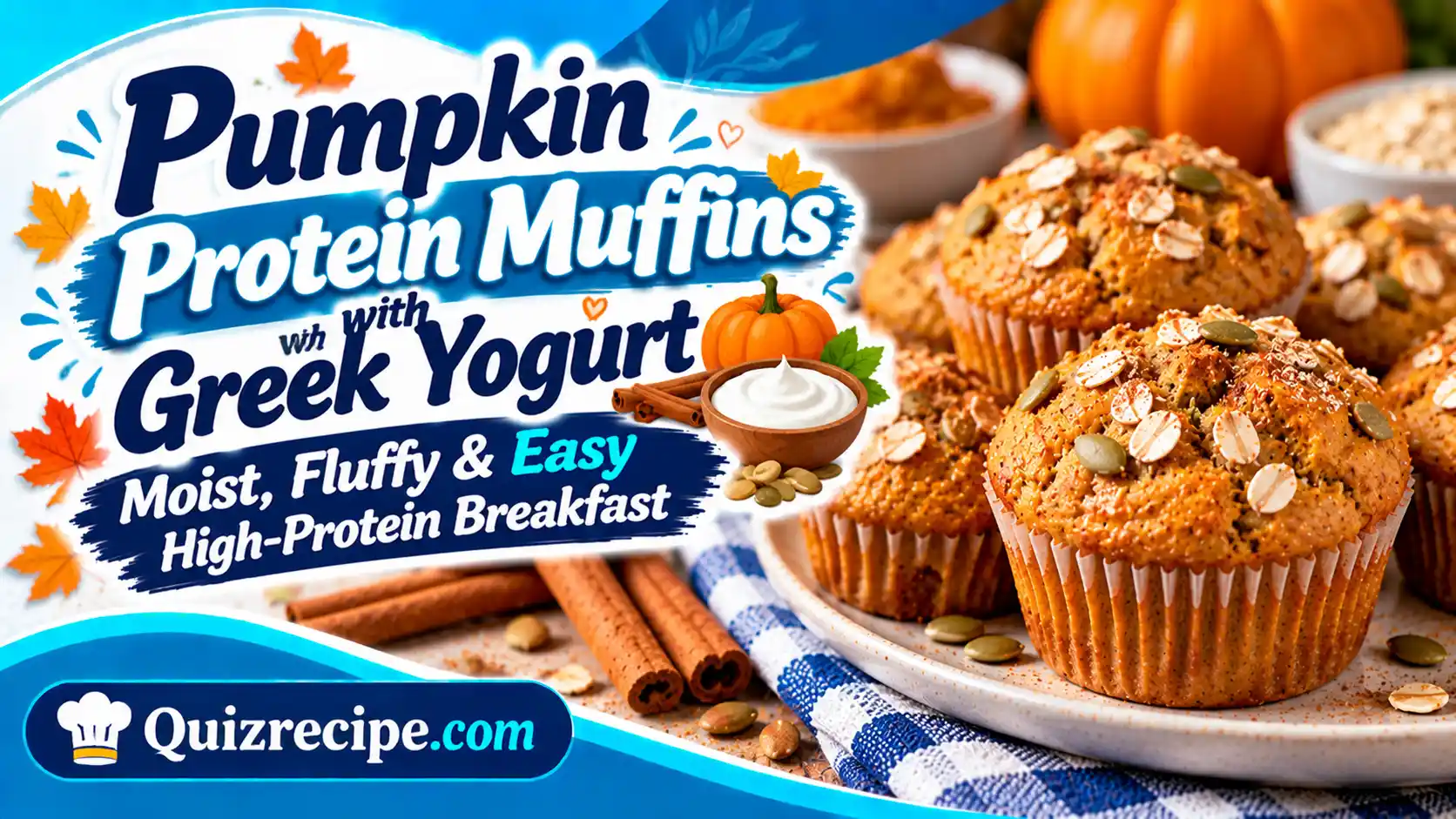
Soft, warmly spiced pumpkin muffins made with real pumpkin puree, thick Greek yogurt, and vanilla protein powder. A convenient homemade breakfast or snack for busy mornings and meal prep.
15-Minute Prep 350°F Oven 12 Muffins Freezer-FriendlyIf you’re looking for a cozy, filling breakfast, these pumpkin protein muffins with Greek yogurt are a delicious way to enjoy fall flavors. Made with real pumpkin puree, thick Greek yogurt, vanilla protein powder, and warm pumpkin pie spice, these homemade muffins have a soft crumb and a gently sweet taste. They’re perfect for busy mornings, lunchboxes, post-workout snacks, and weekend meal prep.
Unlike many traditional pumpkin muffins, this recipe includes extra protein from Greek yogurt, eggs, and protein powder. The pumpkin keeps the muffins moist, while cinnamon and vanilla add bakery-style flavor. You’ll learn how to choose ingredients, avoid dry or rubbery muffins, adjust the sweetness, store leftovers, and make easy variations.
⚡ Quick Answer
To make pumpkin protein muffins with Greek yogurt, whisk pumpkin puree, plain Greek yogurt, eggs, maple syrup, and vanilla. Combine with flour, vanilla protein powder, baking powder, baking soda, and pumpkin pie spice. Divide into a lined muffin pan and bake at 350°F (177°C) for approximately 18–23 minutes, until the centers are fully baked.
📌 TL;DR — Key Takeaways
- Use plain pumpkin puree, not pumpkin pie filling.
- Choose thick, plain Greek yogurt.
- Use a protein powder suitable for baking.
- Measure flour and protein powder carefully.
- Avoid overmixing the batter.
- Bake until a toothpick comes out without wet batter.
- Refrigerate or freeze extras for meal prep.
1. Why You’ll Love These Pumpkin Protein Muffins
These healthy-style pumpkin protein muffins combine the comfort of homemade fall baking with protein-rich ingredients. They’re soft, lightly sweet, and flavored with pumpkin spice, making them suitable for breakfast or an afternoon snack.
Greek yogurt adds moisture and tang, while eggs and protein powder contribute protein. The muffins are also convenient to portion, pack, and freeze, which makes them useful for busy schedules.
2. Ingredients for Pumpkin Protein Muffins with Greek Yogurt
The key to moist high-protein pumpkin muffins is balancing wet and dry ingredients. Pumpkin puree and Greek yogurt add moisture, while flour and protein powder provide structure.
Protein powder absorbs liquid differently depending on its ingredients, so the type you choose matters. This recipe is designed around a moderate amount of vanilla whey protein powder rather than replacing most of the flour with protein powder.
🛒 Complete Ingredient Checklist
Yield: 12 muffins. Tick each ingredient as you prepare it.
Ingredient Notes
- Pumpkin puree: Use 100% plain pumpkin puree. Pumpkin pie filling contains added sugar and spices that can change the recipe’s flavor and consistency.
- Greek yogurt: Thick, plain Greek yogurt contributes moisture, tang, and protein. Different fat percentages may slightly change the texture.
- Vanilla protein powder: Adds protein and vanilla flavor. Whey powders vary in sweetness and moisture absorption.
- All-purpose flour: Provides structure and helps prevent overly dense muffins.
- Maple syrup: Adds sweetness and subtle maple flavor.
- Eggs: Help bind ingredients and provide structure.
- Neutral oil: Supports a tender crumb and prevents dryness.
- Baking powder and baking soda: Help the muffins rise.
3. Best Protein Powder for Pumpkin Muffins
Choosing the right protein powder can make a major difference in the finished muffins. Some powders absorb more liquid than others, and certain sweeteners can change the flavor after baking.
For this recipe, vanilla whey protein powder is the suggested starting point. It provides a mild flavor and works with the pumpkin and spices, but exact results depend on the product.
💪 Protein Powder Comparison
| Protein Powder | Typical Baking Behavior | Recommendation |
|---|---|---|
| Whey protein | Can dry or firm when overused | Suggested starting choice |
| Whey-casein blend | Often absorbs more moisture | May require adjustment |
| Casein protein | Thickens batter significantly | Use a separately adjusted formula |
| Pea protein | Can create a denser texture | May need extra moisture |
| Soy protein | Varies by formulation | Test with the chosen brand |
| Collagen peptides | Not a complete flour substitute | Not a direct replacement |
Tips for Choosing Protein Powder
- Choose a flavor that complements pumpkin.
- Check protein per serving.
- Read ingredient lists for sweeteners.
- Avoid assuming all scoops weigh the same.
- Measure by weight when possible.
- Start with a moderate amount.
- Avoid replacing all flour with protein powder.
- Check allergen labels.
- Consider how sweet the powder already tastes.
- Use a consistent brand when repeating the recipe.
Can You Use Unflavored Protein Powder?
Yes, but the muffins may taste less sweet or less vanilla-forward. You may want to adjust vanilla extract or maple syrup.
Because unflavored powders still vary in composition, don’t assume they’ll behave exactly like the vanilla version.
4. How to Make Pumpkin Protein Muffins with Greek Yogurt
Making homemade pumpkin protein muffins is straightforward when you follow the muffin mixing method. Combine wet and dry ingredients separately, then gently fold them together until no dry flour remains.
This method helps prevent tough muffins. Protein powder can make baked goods firmer, so it’s especially important to avoid excessive mixing or baking.
🎃 Pumpkin Greek Yogurt Protein Muffins
Soft pumpkin-spice muffins with extra protein
👩🍳 Step-by-Step Instructions
- Preheat the oven to 350°F (177°C). Line a standard 12-cup muffin pan with paper liners or lightly grease the cups.
- In a large bowl, whisk pumpkin puree, Greek yogurt, eggs, maple syrup, oil, and vanilla until smooth.
- In a separate bowl, whisk flour, protein powder, baking powder, baking soda, pumpkin pie spice, cinnamon, and salt.
- Add the dry ingredients to the wet ingredients. Fold gently with a spatula until just combined.
- If using mini chocolate chips, fold them in with a few gentle strokes.
- Divide the batter evenly among 12 muffin cups, filling each about two-thirds to three-quarters full.
- Bake for approximately 18–23 minutes, checking near 18 minutes.
- Insert a toothpick into the center of a muffin. It should come out without wet batter. Moist crumbs are acceptable.
- Let the muffins cool in the pan for about 5 minutes, then transfer them to a wire rack.
- Allow them to cool further before eating or storing.
📝 Recipe Development Note
This is a proposed original recipe, not a kitchen-tested formula. Protein powder brands differ, so batter consistency, baking time, and final texture should be checked in a real test batch before publication as tested.
5. How to Make Protein Muffins Moist and Fluffy
Moisture is one of the biggest challenges when baking with protein powder. Adding too much powder or baking the muffins too long can create a dry, chewy texture.
Pumpkin puree, Greek yogurt, and a small amount of oil help balance the dry ingredients. Using a moderate amount of protein powder rather than replacing all the flour is also important.
🧁 Tips for Soft Pumpkin Protein Muffins
- Measure flour correctly: Spoon and level or use a kitchen scale.
- Avoid extra protein powder: More doesn’t always improve the recipe.
- Use thick Greek yogurt: Provides moisture without excessive liquid.
- Don’t overmix: Stop as soon as ingredients are combined.
- Use room-temperature eggs: They mix more easily.
- Check baking time early: Overbaking dries muffins.
- Avoid excessive heat: Use the recommended temperature.
- Don’t skip the oil: Supports tenderness.
- Cool properly: Transfer to a wire rack.
- Store carefully: Keep covered after cooling.
What Should the Batter Look Like?
The batter should be thick and scoopable, similar to ordinary pumpkin muffin batter. It shouldn’t pour like pancake batter or feel stiff like bread dough.
If your protein powder creates an unusually thick batter, a tablespoon or two of milk may help. Add gradually rather than making large changes.
6. Why Greek Yogurt Works So Well in Pumpkin Muffins
Greek yogurt plays two roles in these pumpkin Greek yogurt muffins. It adds protein and helps maintain moisture in the finished crumb.
Its mild tang also balances pumpkin, maple syrup, and warm spices. The thickness of Greek yogurt makes it especially useful in muffins because it contributes moisture without making the batter excessively runny.
🥛 Benefits of Greek Yogurt in Baking
- Adds protein from a familiar dairy ingredient.
- Helps keep the batter moist.
- Provides a mildly tangy flavor.
- Combines well with pumpkin puree.
- Works with baking soda in the batter.
- Helps create a soft texture in balanced amounts.
- Can replace some moisture-rich ingredients in other tested recipes.
- Comes in several fat percentages.
- Is widely available in US supermarkets.
- Works in sweet and savory baking.
Which Greek Yogurt Is Best?
Plain 2% or whole-milk Greek yogurt is a useful starting choice. Nonfat Greek yogurt may also work, but it can produce a slightly different texture.
Avoid flavored yogurt unless you’re willing to adjust the recipe’s sweetness. Vanilla-flavored products may contain added sugar and other ingredients.
7. How Much Protein Is in Pumpkin Protein Muffins?
The protein content depends on the Greek yogurt, eggs, flour, and protein powder you use. Different protein powders provide different amounts per scoop, so an exact figure requires checking ingredient labels and calculating the full recipe.
Other pumpkin protein muffin recipes may report different protein levels, but those figures apply to their own ingredient formulas and cannot automatically be used for this recipe.
Main Protein Sources
| Ingredient | How It Contributes |
|---|---|
| Greek yogurt | Adds dairy protein and moisture |
| Vanilla whey powder | Provides concentrated protein |
| Eggs | Add protein and structure |
| All-purpose flour | Contributes a smaller amount |
| Pumpkin puree | Adds a modest amount |
How to Calculate Protein Per Muffin
Add the protein grams from every ingredient using reliable nutrition labels or food composition data. Divide the total by the actual number of muffins produced.
For example, if a complete batch contains 120 grams of protein and makes 12 equal muffins, each contains approximately 10 grams. This is a calculation example, not a verified nutrition claim for this recipe.
Are These Muffins a Complete Breakfast?
One muffin may be a convenient part of breakfast, but whether it’s enough depends on your nutritional needs and serving size.
Pair it with fruit, yogurt, eggs, or another suitable food for a more substantial meal.
8. Pumpkin Protein Muffins Without Protein Powder
You can make pumpkin muffins with Greek yogurt without using protein powder. Greek yogurt and eggs still contribute protein, although the final amount will generally be lower.
However, simply removing protein powder from the main recipe changes the dry-to-wet balance. Use an adjusted muffin formula rather than assuming the texture will remain identical.
🥣 No-Protein-Powder Variation
For an experimental alternative, replace the ½ cup protein powder with approximately ½ cup (60 g) additional all-purpose flour.
This creates a different batter and may change rise, moisture, and protein content. Check consistency and doneness carefully; the substitution needs kitchen validation.
Ways to Add Protein Without Powder
- Use plain Greek yogurt in the batter.
- Serve muffins with additional Greek yogurt.
- Pair them with eggs at breakfast.
- Add pumpkin seeds as a topping.
- Include chopped almonds if allergies allow.
- Serve with peanut or almond butter.
- Pair with cottage cheese.
- Use milk as a breakfast beverage.
- Add hemp hearts as a topping.
- Choose other protein-rich foods alongside the muffins.
9. Healthy Pumpkin Protein Muffin Variations
These pumpkin protein breakfast muffins can be customized with different spices, toppings, and mix-ins. Small additions create variety without changing the basic preparation method.
Keep extra ingredients moderate so the batter doesn’t become too heavy. Nuts, chocolate chips, and dried fruit all affect sweetness, texture, and nutrition.
🍫 Flavor Variations
- Chocolate Chip Pumpkin Protein Muffins: Add mini chocolate chips.
- Pumpkin Pecan Protein Muffins: Fold in chopped pecans.
- Pumpkin Walnut Muffins: Add finely chopped walnuts.
- Maple Pumpkin Muffins: Use a little maple extract.
- Cinnamon Pumpkin Muffins: Add a light cinnamon topping.
- Pumpkin Seed Muffins: Sprinkle pepitas over batter.
- Apple Pumpkin Muffins: Fold in finely diced apple.
- Cranberry Pumpkin Muffins: Add chopped dried cranberries.
- Dark Chocolate Pumpkin Muffins: Use dark chocolate chips.
- Pumpkin Oat Muffins: Add a small oat topping.
- Ginger Pumpkin Muffins: Add a pinch of ground ginger.
- Vanilla Pumpkin Muffins: Use mild vanilla protein powder.
Best Variation for Fall
Chocolate chip pumpkin muffins offer a familiar sweet flavor, while pumpkin seed muffins provide a less dessert-like finish.
For Thanksgiving breakfast, cinnamon pecan muffins are another seasonal option.
10. Common Pumpkin Protein Muffin Mistakes
Protein muffins can be more sensitive to ingredient ratios than ordinary muffins. Too much protein powder, excess mixing, or a long baking time may produce dry or rubbery results.
Recognizing common problems helps you adjust the recipe for your chosen ingredients. The most useful checks are batter thickness, oven temperature, and center doneness.
🔧 Troubleshooting Guide
| Problem | Likely Cause | Suggested Solution |
|---|---|---|
| Dry muffins | Too much powder or overbaking | Measure carefully and check sooner |
| Rubbery texture | Excessive powder or mixing | Fold gently |
| Dense centers | Too much moisture or insufficient baking | Check ratios and bake until set |
| Flat tops | Weak leavening or thin batter | Check baking powder and consistency |
| Bitter flavor | Too much baking soda or certain sweeteners | Measure precisely |
| Chalky taste | Protein powder formulation | Try another baking-friendly brand |
| Muffins stick | Unsuitable liners or insufficient cooling | Use quality liners and cool first |
| Crumbly muffins | Too little moisture | Check yogurt and pumpkin amounts |
| Uneven baking | Inconsistent filling amounts | Portion evenly |
| Burnt tops | Oven too hot | Verify temperature and rack position |
Why Are My Protein Muffins Rubbery?
Protein powders can change the way baked goods set during heating. A large amount may create a firm, chewy crumb.
Avoid adding extra powder beyond the recipe. Mix gently and stop baking once the centers are cooked.
Why Are My Muffins Wet in the Middle?
Pumpkin and yogurt add significant moisture. If the muffins are underbaked, the centers may look sticky or dense.
Check with a toothpick and continue baking in short intervals when needed. Let muffins cool before judging their final texture.
11. How to Store and Freeze Pumpkin Protein Muffins
These meal prep pumpkin protein muffins can be baked ahead and stored for convenient breakfasts. Because they contain moist ingredients, refrigeration is a sensible choice for keeping leftovers fresh.
Cool muffins before placing them in covered containers, but don’t leave them at room temperature for extended periods. Refrigerate promptly and keep your refrigerator at 40°F (4°C) or below.
🧊 Refrigerator Storage
- Allow muffins to cool on a wire rack.
- Place them in an airtight container.
- Refrigerate within two hours of baking.
- Store at 40°F or below.
- Use within approximately 3–4 days as a conservative plan.
- Separate layers with parchment if needed.
- Keep toppings or spreads separate.
- Discard muffins showing mold or spoilage.
❄️ Freezer Storage
Freezing works well for preparing muffins ahead of time. For best quality, aim to use frozen muffins within about 2–3 months.
Wrap cooled muffins individually or place them in a freezer-safe container with parchment between layers. Label with the freezing date.
How to Reheat
🛡️ Food Safety Note
Avoid leaving perishable baked goods at room temperature for long periods. Refrigerate promptly, keep containers clean, and discard muffins showing signs of spoilage.
12. Pumpkin Protein Muffins for Meal Prep and Busy Mornings
Preparing Greek yogurt pumpkin muffins ahead of time makes breakfast easier on busy weekdays. Individual portions are convenient to pack, store, and pair with other foods.
For variety, you can divide one batch into two flavors. Add chocolate chips to half and pumpkin seeds to the other half, keeping the base recipe unchanged.
📅 Easy Meal Prep Plan
- Check ingredient quantities before baking.
- Preheat the oven while preparing batter.
- Use a kitchen scale for consistent measurements.
- Divide batter evenly among muffin cups.
- Bake until centers are fully cooked.
- Cool on a wire rack.
- Refrigerate portions needed soon.
- Freeze extra muffins for later.
- Label containers with dates.
- Pair each muffin with suitable breakfast foods.
Breakfast Pairing Ideas
13. Dietary Substitutions and Allergy Information
The standard pumpkin protein muffins with Greek yogurt contain wheat, dairy, and eggs. Some protein powders also contain soy or other allergens, depending on the brand.
Ingredient substitutions may help accommodate dietary preferences, but changing several ingredients at once can affect baking results. Use a separately tested recipe when strict dietary requirements apply.
Ingredient Substitutions
- Whole wheat flour: Replace part of all-purpose flour for a heartier texture.
- Oat flour: Requires a modified recipe because absorption differs.
- Gluten-free flour: Use a suitable baking blend and test.
- Nonfat Greek yogurt: May work with a different texture.
- Plain skyr: May work depending on thickness.
- Honey: Can replace maple syrup by volume, changing flavor.
- Melted butter: Can replace neutral oil with a different crumb.
- Plant protein powder: May require additional moisture.
- Dairy-free yogurt: Needs a tested adjustment.
- Egg-free version: Requires an egg-free baking formula.
- Nut-free option: Avoid nuts and check labels.
- Lower-sugar option: Reduce sweetener cautiously.
Are These Muffins Gluten-Free?
Not as written. The main recipe uses all-purpose wheat flour.
To make a gluten-free version, choose an appropriate gluten-free muffin formula and verify every ingredient, including protein powder.
Are These Muffins Dairy-Free?
No. Greek yogurt and whey protein both contain dairy ingredients.
A dairy-free version requires suitable yogurt and protein alternatives, along with adjusted measurements.
⚠️ Allergy Reminder
Always check packaged protein powder, chocolate chips, yogurt, and other ingredient labels for allergens and cross-contact warnings, especially when serving someone with a food allergy.
14. Pumpkin Protein Muffins vs Regular Pumpkin Muffins
Both versions contain pumpkin and warm spices, but protein pumpkin muffins use additional protein-rich ingredients. Greek yogurt and protein powder can increase protein content compared with a basic recipe.
However, adding protein powder also changes baking behavior. Traditional pumpkin muffins may be easier to make consistently because they don’t contain concentrated protein ingredients.
📊 Comparison Table
| Feature | Pumpkin Protein Muffins | Traditional Pumpkin Muffins |
|---|---|---|
| Main flavor | Pumpkin spice | Pumpkin spice |
| Protein sources | Yogurt, eggs, protein powder | Primarily eggs and flour |
| Texture | Can be tender or slightly firmer | Usually soft and cake-like |
| Preparation | Simple mixing method | Simple mixing method |
| Moisture control | More sensitive to powder type | Generally more forgiving |
| Meal prep | Suitable | Suitable |
| Customization | Nuts, seeds, chocolate | Nuts, seeds, chocolate |
| Protein content | Depends on formula | Depends on formula |
Are Protein Muffins Healthier?
That depends on the complete ingredients, portion size, and individual nutritional needs. More protein doesn’t automatically make a muffin healthier in every respect.
Look at the full recipe, including added sugar, fat, fiber, and total energy. A balanced diet matters more than any single ingredient.
15. Best Toppings and Serving Ideas for Pumpkin Protein Muffins
These moist pumpkin protein muffins have enough flavor to enjoy plain, but simple toppings can make them more interesting. Greek yogurt, nut butter, and pumpkin seeds complement the warm spices.
For breakfast, pair the muffins with fresh fruit or another protein source. For dessert, a little maple glaze or chocolate can create a sweeter finish.
🍯 Delicious Topping Ideas
- Greek Yogurt: Add a spoonful of thick plain yogurt.
- Almond Butter: Spread a thin layer over a sliced muffin.
- Peanut Butter: Adds a rich, nutty flavor.
- Pumpkin Seeds: Sprinkle over batter before baking.
- Chopped Pecans: Add crunch and fall flavor.
- Cinnamon: Dust lightly over the top.
- Maple Yogurt Drizzle: Mix yogurt with a little maple syrup.
- Mini Chocolate Chips: Sprinkle over batter.
- Apple Slices: Serve on the side.
- Fresh Berries: Pair with strawberries or blueberries.
- Cottage Cheese: Serve alongside for additional protein.
- Vanilla Yogurt Dip: Use as an accompaniment.
Best Way to Serve Them Warm
Warm a muffin gently, slice it in half, and spread with a little nut butter or softened butter.
For a fall-inspired breakfast, pair it with fresh apple slices and hot coffee or tea.
16. More High-Protein Breakfast and Pumpkin Recipes to Try
Once you’ve made pumpkin protein muffins with Greek yogurt, you can explore other breakfast recipes that use similar ingredients. Pumpkin puree, yogurt, oats, and eggs work in many simple homemade dishes.
Choosing a variety of recipes helps keep meal prep interesting. Some options are better for baking ahead, while others are convenient for fresh weekend breakfasts.
More Recipe Ideas
- Greek Yogurt Banana Muffins: Soft muffins with banana and yogurt.
- Pumpkin Oatmeal Muffins: Hearty muffins with oats and pumpkin.
- Cottage Cheese Pancakes: Fluffy pancakes featuring cottage cheese.
- Greek Yogurt Blueberry Muffins: Moist muffins with blueberries.
- Pumpkin Protein Pancakes: Pumpkin-spiced pancakes with extra protein.
- Chocolate Protein Muffins: Chocolate muffins with protein powder.
- Banana Protein Bread: Protein-enriched banana quick bread.
- Pumpkin Baked Oatmeal: Warm breakfast with oats and spices.
- Greek Yogurt Breakfast Bowls: Yogurt with fruit, seeds, and nuts.
- Pumpkin Overnight Oats: Make-ahead oats with pumpkin spice.
- Cinnamon Protein Waffles: Cinnamon waffles with protein-rich ingredients.
- Apple Cinnamon Oat Muffins: Oat muffins with apples and cinnamon.
Choosing Your Next Recipe
For another make-ahead breakfast, try Greek yogurt blueberry muffins or pumpkin baked oatmeal.
If you prefer fresh breakfast dishes, cottage cheese pancakes or pumpkin protein pancakes are good choices. Both can be served with fruit and yogurt.
Frequently Asked Questions About Pumpkin Protein Muffins
Can I make pumpkin protein muffins with Greek yogurt?
Yes. Greek yogurt adds moisture, tang, and protein to pumpkin muffins. Combine it with pumpkin puree, eggs, flour, and a suitable amount of protein powder for a protein-enriched version.
How do I keep pumpkin protein muffins moist?
Use accurate measurements, avoid excessive protein powder, and mix the batter gently. Pumpkin puree, Greek yogurt, and a little oil help maintain a tender crumb. Check early to avoid overbaking.
Can I make pumpkin protein muffins without protein powder?
Yes, but you’ll need an adjusted recipe. Simply removing protein powder can change batter consistency. Greek yogurt and eggs still contribute protein even without concentrated powder.
What is the best protein powder for pumpkin muffins?
Vanilla whey protein powder is a practical starting choice. However, brands vary and some absorb much more liquid than others. Choose one suitable for baking and measure carefully.
Can I use pumpkin pie filling instead of pumpkin puree?
Plain pumpkin puree is recommended. Pumpkin pie filling contains added sugar and spices that may change sweetness and moisture balance.
Can I freeze pumpkin protein muffins?
Yes. Cool them completely, wrap or pack in freezer-safe containers, and freeze. For best quality, use within about 2–3 months. Thaw in the refrigerator and warm gently.
How much protein is in each pumpkin muffin?
The exact amount depends on the protein powder, Greek yogurt, and other ingredients. Calculate total protein from ingredient labels and divide by the number of muffins. Avoid using nutrition figures from another recipe.