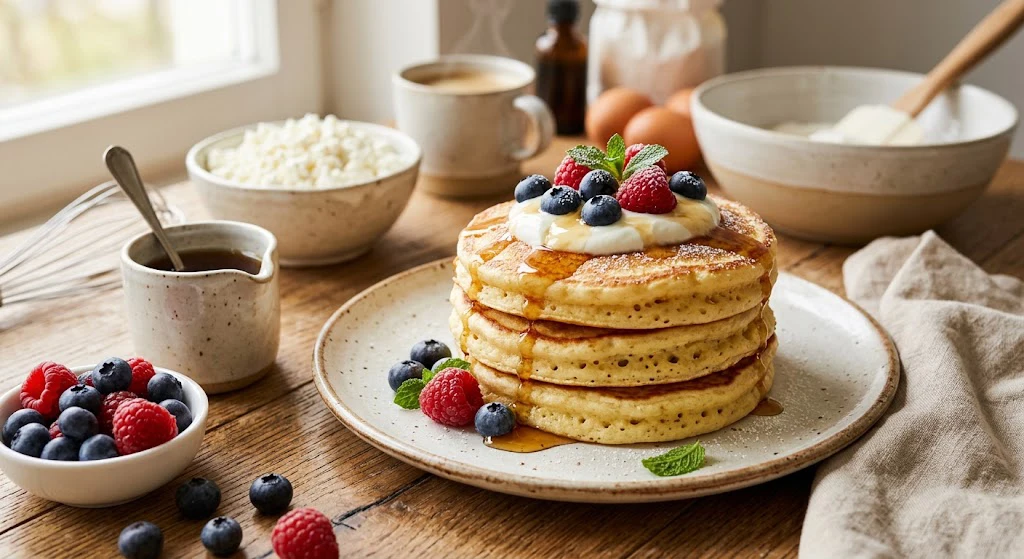
Make a satisfying stack of homemade cottage cheese pancakes with simple everyday ingredients, golden edges, tender centers, and delicious sweet or savory toppings.
If you love a warm stack of homemade pancakes but want something a little more satisfying than the usual breakfast, this cottage cheese pancakes recipe is worth adding to your morning routine. Made with cottage cheese, eggs, flour, and a few everyday ingredients, these pancakes have tender centers, lightly golden edges, and a mild, creamy flavor that pairs beautifully with fresh fruit or maple syrup.
The best part? You do not need a complicated batter or specialty ingredients. Blend everything for a smoother texture, or mix the batter by hand if you prefer a few small curds. Either way, the secret to delicious homemade cottage cheese pancakes is cooking them over moderate heat so the centers set before the outsides become too dark.
Serve them for a quick weekday breakfast, a relaxed weekend brunch, or a make-ahead meal you can reheat on busy mornings.
To make cottage cheese pancakes, combine 1 cup cottage cheese, 3 large eggs, ½ cup all-purpose flour, 1 teaspoon baking powder, 1 tablespoon maple syrup, 1 teaspoon vanilla extract, and a pinch of salt. Blend until mostly smooth or stir together by hand. Cook small portions of batter in a lightly greased skillet over medium-low to medium heat for about 2–3 minutes per side, until golden and cooked through.
Easy Cottage Cheese Pancakes
A tender, creamy homemade pancake recipe for breakfast or brunch.
Servings: 2–3
Difficulty: Easy
Best pan: Nonstick skillet or well-seasoned griddle
Ingredients
- 1 cup cottage cheese (about 225–230 g)
- 3 large eggs
- ½ cup all-purpose flour (about 60 g)
- 1 teaspoon baking powder
- 1 tablespoon maple syrup
- 1 teaspoon vanilla extract
- ⅛ teaspoon fine salt
- Butter or neutral oil, as needed
Instructions
- Add the cottage cheese, eggs, flour, baking powder, maple syrup, vanilla, and salt to a blender.
- Blend just until mostly smooth, or mix by hand for a more rustic texture.
- Check that the batter is thick but spoonable. Adjust gradually if necessary.
- Heat a lightly greased nonstick skillet over medium-low to medium heat.
- Spoon about 2 tablespoons of batter per pancake into the skillet.
- Cook for 2–3 minutes, until the edges set and the underside turns golden.
- Flip carefully and cook for another 2–3 minutes, until the center is set.
- Serve warm with your favorite toppings.
TL;DR: What You Need to Know
- Cottage cheese adds moisture, richness, and protein to pancake batter.
- All-purpose flour gives these pancakes structure, so they are easier to flip than many flourless versions.
- Blend the batter for a more uniform texture, or mix by hand for a slightly more rustic pancake.
- Cook smaller pancakes over moderate heat to help the centers cook without burning the outside.
- Avoid adding too much flour at once. The batter should be thick but spoonable.
- Freeze leftovers in a single layer and reheat them for a convenient breakfast.
- Serve with berries, sliced bananas, Greek yogurt, nut butter, or maple syrup.
Why You’ll Love This Cottage Cheese Pancakes Recipe
A simple breakfast with everyday ingredients
You do not need protein powder, a specialty pancake mix, or an elaborate list of ingredients. Cottage cheese, eggs, flour, baking powder, and a few flavorings are enough to make a satisfying stack.
Soft centers with golden edges
Cottage cheese contributes moisture, while eggs and flour help the pancakes hold together. Baking powder provides lift, and gentle cooking gives the batter time to set.
These are not exactly the same as classic buttermilk pancakes. Expect a tender, slightly custardy center and a mild dairy flavor rather than an especially airy, cake-like crumb.
Easy to customize
Keep the batter simple, add blueberries or cinnamon, or serve the finished pancakes with sweet or savory toppings. The base recipe works well for a range of breakfast preferences.
Convenient for meal prep
Make a batch ahead, refrigerate what you plan to eat soon, and freeze the rest. Reheated pancakes are handy for school mornings, workday breakfasts, or a quick snack.
Ingredients for Cottage Cheese Pancakes
You only need a handful of ingredients. For the most reliable results, measure the flour accurately and use the ingredient notes below to adjust the texture to your preference.
| Ingredient | Amount | Purpose |
|---|---|---|
| Cottage cheese | 1 cup (about 225–230 g) | Adds moisture, richness, and protein |
| Large eggs | 3 | Bind the batter and help the pancakes set |
| All-purpose flour | ½ cup (about 60 g) | Provides structure |
| Baking powder | 1 teaspoon | Helps the pancakes rise |
| Maple syrup | 1 tablespoon | Adds mild sweetness |
| Vanilla extract | 1 teaspoon | Adds warm flavor |
| Fine salt | ⅛ teaspoon | Balances the sweetness |
| Butter or neutral oil | As needed | Greases the cooking surface |
1. Cottage cheese
Small-curd or large-curd cottage cheese both work. Full-fat cottage cheese gives the pancakes a richer flavor, while low-fat cottage cheese can also be used.
The moisture level varies by brand. If your cottage cheese looks particularly watery, drain off excess liquid before measuring. This helps keep the batter from becoming too thin.
You can use regular cottage cheese or a lactose-free variety if it suits your needs. Check the package label, as lactose content and nutritional values vary.
2. Eggs
Eggs help bind the cottage cheese and flour together. They also contribute structure and tenderness. Use large eggs for the measurements in this recipe.
3. All-purpose flour
Regular all-purpose flour gives these pancakes enough structure to flip without falling apart. Spoon flour into the measuring cup and level it off instead of packing it down.
For alternative options, see the substitutions section below. Different flours absorb moisture differently, so changing the flour may change the texture.
4. Baking powder
Baking powder adds lift and helps prevent the pancakes from becoming too dense. Check that yours is fresh; old baking powder may not provide as much rise.
5. Maple syrup and vanilla
Maple syrup gives the batter a gentle sweetness, and vanilla rounds out the flavor. You can omit the syrup if you prefer less sweetness or plan to serve the pancakes with sweet toppings.
6. Salt and cooking fat
A small amount of salt makes the flavor more balanced. Use butter for a richer taste or a neutral cooking oil for a less buttery finish.
How to Make Cottage Cheese Pancakes Step by Step
Step 1: Prepare the batter
Add the cottage cheese, eggs, flour, baking powder, maple syrup, vanilla, and salt to a blender.
Blend just until the mixture is mostly smooth and no large pockets of dry flour remain. Scrape down the sides if needed.
Prefer pancakes with a little texture? Whisk the eggs in a bowl, stir in the cottage cheese and flavorings, then fold in the flour and baking powder. The finished pancakes will have more noticeable curds.
Step 2: Check the consistency
The batter should be thick but spoonable. It may look thicker than traditional pancake batter, depending on your cottage cheese and flour.
If it seems unusually stiff, stir in milk a teaspoon at a time. If it is very runny, add flour one tablespoon at a time and allow the batter to sit briefly before adjusting it again.
Do not try to make the batter perfectly smooth if you are mixing by hand. Small curds are normal.
Step 3: Heat the skillet
Place a nonstick skillet or griddle over medium-low to medium heat. Lightly grease the surface with butter or oil.
Give the pan a moment to heat evenly before adding the batter. If the fat starts smoking or the first pancake darkens almost immediately, lower the heat.
Step 4: Add small portions of batter
Spoon about 2 tablespoons of batter per pancake into the skillet. Leave space between pancakes so you can turn them comfortably.
Smaller pancakes are easier to flip and cook more evenly than large ones. Gently spread any very thick mounds into small rounds with the back of a spoon.
Step 5: Cook the first side
Cook for approximately 2–3 minutes, watching the edges and underside rather than relying only on the clock.
Look for edges that begin to set and a bottom that has turned golden. These pancakes may not develop as many bubbles as a traditional flour-based pancake, so do not wait for bubbles alone to tell you when to flip.
Step 6: Flip and finish cooking
Slide a thin spatula underneath each pancake and turn it carefully. Cook the second side for another 2–3 minutes, or until the center is set.
If the outside is browning too quickly while the middle remains soft, reduce the heat and give the pancakes more time. Because the batter contains eggs and dairy, avoid serving them with wet, uncooked centers.
Step 7: Serve warm
Transfer the cooked pancakes to plates and serve with your favorite toppings. For a larger batch, keep finished pancakes warm in a low oven while you cook the remaining batter.
Make one test pancake first. It lets you check the heat and consistency before cooking the entire batch.
The Secret to Fluffy Cottage Cheese Pancakes
Cottage cheese pancakes behave a little differently from classic pancakes. These techniques help you get a tender result without overcomplicating the recipe.
Use the right amount of flour
Too little flour can leave the pancakes fragile and difficult to flip. Too much can make them heavy or dry. Start with the stated amount and make small adjustments only if the batter is clearly too loose.
Do not use excessive heat
A skillet that is too hot can brown the outside before the center sets. Medium-low to medium heat is usually the safest starting point for this batter.
Keep the pancakes small
Small pancakes are easier to turn and more likely to cook evenly. If you are new to making cottage cheese pancakes, begin with 2-tablespoon portions.
Blend only as much as needed
Blending creates a more uniform batter, but extended blending is unnecessary. Stop once the ingredients are combined. If you prefer a more noticeable cottage cheese texture, skip the blender entirely.
Give the batter a short rest if needed
If the batter seems loose, let it stand for about 3–5 minutes before cooking. The flour may absorb some of the moisture during this time. This is a useful adjustment, not a mandatory step.
Blender vs. No-Blender Cottage Cheese Pancakes
| Method | Texture | Best for |
|---|---|---|
| Blender | More uniform, with fewer visible curds | A smoother pancake |
| Mixing bowl | More rustic, with small curds | Less cleanup and a more textured result |
| Immersion blender | Mostly smooth without transferring ingredients | A middle ground between the two methods |
Neither is automatically better. Use a blender if you dislike visible curds; use a bowl if you want a simple, low-equipment recipe. Both methods can produce tender pancakes when the batter is thick enough and the heat is controlled.
Cottage Cheese Pancake Variations
Once you have the basic recipe down, try one of these variations. Make small changes at a time so you can see how each addition affects the batter.
Blueberry cottage cheese pancakes
Fold a small handful of fresh or frozen blueberries into the finished batter. If using frozen berries, add them straight from the freezer and stir gently to avoid turning the batter purple.
Banana cottage cheese pancakes
Mash about half a ripe banana and mix it into the batter. Banana adds sweetness and moisture, so the pancakes may be softer and may brown more quickly. Cook them over slightly lower heat if needed.
Cinnamon cottage cheese pancakes
Add ½ teaspoon ground cinnamon to the dry ingredients. Cinnamon pairs especially well with sliced apples, bananas, or a spoonful of yogurt.
Lemon cottage cheese pancakes
Add a little finely grated lemon zest to the batter. Serve with berries or plain Greek yogurt for a fresh, bright flavor.
Chocolate chip cottage cheese pancakes
Fold a small handful of chocolate chips into the batter just before cooking. Keep the pancakes small so they remain easy to flip.
Savory cottage cheese pancakes
Leave out the maple syrup and vanilla. Add black pepper, chopped chives, or a little grated Parmesan instead. Serve with sliced avocado, sautéed spinach, or eggs.
Gluten-free cottage cheese pancakes
Use a gluten-free all-purpose flour blend in place of the regular flour. Choose a blend intended for baking, and check whether it already contains a binder. Because gluten-free flours vary, the batter may need a small adjustment to its consistency.
Higher-protein serving idea
Serve the pancakes with plain Greek yogurt or another protein-rich topping. The exact protein content depends on the cottage cheese, eggs, flour, serving size, and topping you choose.
Adding protein powder or replacing the flour with an alternative ingredient can change the way the pancakes set. Those changes are not guaranteed to work in the same proportions as the base recipe.
Can You Make Cottage Cheese Pancakes Without Flour?
Yes, but flourless cottage cheese pancakes are a different recipe, not simply the same batter with the flour removed.
Flour helps this version hold together and gives it a more familiar pancake texture. When you leave it out, the eggs and cottage cheese become the main structure, so the result may be softer, more delicate, and more difficult to flip.
If you want to experiment with a flourless version:
- Start with a recipe specifically developed for flourless cottage cheese pancakes.
- Make the pancakes small.
- Use a well-heated nonstick pan with a light coating of fat.
- Wait until the underside is set before attempting to flip.
- Expect a more egg-forward, tender texture than the standard recipe.
Do not assume that replacing the flour with almond flour, oat flour, or protein powder at a one-to-one ratio will produce the same result. Each ingredient absorbs moisture differently.
What to Serve With Cottage Cheese Pancakes
These pancakes work with sweet or savory accompaniments. Choose toppings based on whether you want a light breakfast, a hearty brunch, or something closer to dessert.
| Topping | Flavor and texture | Serving suggestion |
|---|---|---|
| Fresh strawberries or blueberries | Juicy and slightly tart | Add fresh fruit just before serving |
| Sliced banana | Soft and naturally sweet | Pair with cinnamon |
| Pure maple syrup | Classic pancake sweetness | Drizzle lightly over the stack |
| Plain Greek yogurt | Creamy with a tangy contrast | Spoon on top with berries |
| Peanut or almond butter | Rich and nutty | Spread a thin layer over warm pancakes |
| Chopped walnuts or pecans | Crunchy and toasted | Sprinkle over fruit-topped pancakes |
| Applesauce | Soft, fruity, and mild | Serve as a simple topping for children or adults |
| Sautéed spinach and eggs | Savory and filling | Use the unsweetened pancake variation |
For a balanced breakfast, combine the pancakes with fruit and a topping you enjoy. You do not need to add several toppings at once; a simple serving can be just as satisfying.
Are Cottage Cheese Pancakes Healthy?
Cottage cheese pancakes can be a nutrient-rich breakfast option, but their nutritional value depends on the ingredients, portion size, and toppings.
Cottage cheese provides protein and calcium, while eggs contribute protein and other nutrients. Flour supplies carbohydrates, and toppings such as fruit can add fiber and additional micronutrients.
A few practical points:
- Protein: Cottage cheese and eggs contribute protein, but the amount varies by brand and serving size.
- Carbohydrates: The flour and any added sweeteners contribute carbohydrates.
- Fat: Full-fat cottage cheese and cooking butter generally provide more fat than lower-fat alternatives.
- Sodium: Cottage cheese can contain a meaningful amount of sodium, so check the product label if sodium intake matters to you.
- Added sugar: The recipe uses only a small amount of maple syrup, which you can omit. Sweet toppings can add more sugar.
These pancakes are not automatically low-carb, gluten-free, or low-calorie. The flour-based recipe contains carbohydrates and is not suitable for people who need to avoid gluten unless you use appropriate gluten-free ingredients.
Cottage cheese pancakes vs. regular pancakes
| Feature | Cottage cheese pancakes | Traditional pancakes |
|---|---|---|
| Main ingredients | Cottage cheese, eggs, flour | Usually flour, milk, eggs, and a leavening agent |
| Texture | Tender, sometimes slightly custardy | Often lighter and more cake-like |
| Protein sources | Cottage cheese and eggs | Primarily eggs and milk, depending on the recipe |
| Flavor | Mild, creamy, slightly tangy | Mild and buttery, depending on the recipe |
| Customization | Works with sweet or savory variations | Also works with sweet or savory additions |
Neither type is universally healthier. Compare the complete recipe, portion size, and toppings rather than judging by the name alone.
Cottage Cheese Pancakes Nutrition Information
The following figures are rough estimates, not laboratory-tested nutrition facts. They are based on the ingredients listed in this recipe, divided into three servings, and can vary considerably by cottage cheese brand, egg size, flour measurement, and cooking fat.
| Nutrient | Estimated amount per serving |
|---|---|
| Calories | 250–310 |
| Protein | 18–22 g |
| Carbohydrates | 20–27 g |
| Fat | 10–15 g |
| Sugar | 4–8 g |
| Sodium | Varies by cottage cheese brand |
These estimates assume the batch is divided into three servings and do not include extra toppings. If you divide the batch into two larger servings, the per-serving figures will be higher. For accurate nutrition information, calculate the exact ingredients using their package labels and the amount of cooking fat actually used.
Common Cottage Cheese Pancake Problems and How to Fix Them
Why are my cottage cheese pancakes falling apart?
The batter may be too wet, the pancakes may be too large, or you may be flipping them before the first side sets.
Why are my pancakes soggy in the middle?
The pan may be too hot, causing the outside to brown before the center cooks. The batter may also contain too much moisture.
Why are my cottage cheese pancakes dense?
Too much flour, expired baking powder, or overly aggressive mixing can affect the texture.
Why do my pancakes taste strongly of cottage cheese?
Some cottage cheese varieties have a more pronounced tangy flavor, and hand-mixed batter leaves the curds more noticeable.
Why are my pancakes browning too quickly?
The skillet is probably too hot, especially if the batter contains maple syrup or banana.
Can I make the batter ahead of time?
For the most predictable texture, cook the pancakes shortly after preparing the batter. If you need breakfast ready in advance, cooking the pancakes and refrigerating or freezing them is generally more convenient than storing the uncooked batter.
How to Store, Freeze, and Reheat Cottage Cheese Pancakes
These pancakes can be prepared ahead, making them useful for weekday breakfasts. Cool them promptly and store them in a covered container.
Refrigerating leftovers
- Allow the pancakes to cool enough to package without trapping excessive steam.
- Place them in an airtight container.
- Refrigerate promptly at 40°F (4°C) or below.
- Use refrigerated leftovers within 3–4 days.
Do not leave cooked pancakes at room temperature for more than two hours, or more than one hour when the temperature is above 90°F (32°C). These are general USDA leftover-safety recommendations. USDA food safety guidance.
Freezing cottage cheese pancakes
- Let the pancakes cool.
- Arrange them in a single layer on a tray and freeze until firm.
- Transfer them to a freezer-safe bag or airtight container, separating layers with parchment if needed.
- Label the container with the date.
For best quality, use frozen leftovers within 3–4 months. Freezing for longer may affect flavor and texture. USDA storage recommendations.
Reheating pancakes
- Skillet: Warm over low heat, turning once, until heated through.
- Toaster: Works well for smaller pancakes that fit safely inside your toaster.
- Oven: Arrange on a baking sheet and warm in a preheated oven until hot.
- Microwave: Heat in short intervals, checking the center to avoid overheating.
When reheating leftovers, the USDA recommends reaching 165°F (74°C). USDA leftovers guidance.
Frequently Asked Questions About Cottage Cheese Pancakes
1. Do cottage cheese pancakes taste like cottage cheese?
They have a mild, creamy flavor with a little tang. Blending the batter makes the curds less noticeable, while hand mixing creates a more rustic texture. Vanilla, cinnamon, berries, and maple syrup can complement the flavor.
2. Should I blend cottage cheese before making pancakes?
You do not have to. Blending creates a more uniform batter, but stirring by hand works too. Choose the method based on whether you prefer smooth pancakes or a little texture.
3. Can I use low-fat cottage cheese?
Yes. Low-fat cottage cheese can be used in the same quantity as full-fat cottage cheese. Because brands differ in moisture and consistency, check the batter before cooking and adjust it gradually if needed.
4. Can I make cottage cheese pancakes without a blender?
Yes. Whisk the eggs, stir in the cottage cheese and flavorings, then fold in the flour and baking powder. The pancakes will have a more noticeable cottage cheese texture.
5. Are cottage cheese pancakes high in protein?
They can provide a substantial amount of protein because both cottage cheese and eggs contribute protein. The exact amount depends on the products you use, how many pancakes you make, and how you divide the batch into servings.
6. Can I make cottage cheese pancakes without flour?
Yes, but you should follow a recipe designed specifically for flourless cottage cheese pancakes. Removing the flour from this recipe changes the structure and may make the pancakes much more delicate.
7. Can I substitute oat flour or almond flour?
You can experiment with alternative flours, but they do not behave exactly like all-purpose flour. Oat flour may produce a softer texture, while almond flour can make pancakes more delicate. Begin with a recipe designed for your chosen flour for the most reliable results.
8. Are cottage cheese pancakes gluten-free?
This recipe is not gluten-free when made with regular all-purpose flour. To make it gluten-free, use a suitable gluten-free flour blend and check that all other ingredients are gluten-free. People with celiac disease should avoid cross-contact with gluten-containing ingredients and equipment.
9. Can I make cottage cheese pancakes without baking powder?
You can, but they may be flatter and denser. Baking powder helps the pancakes rise, so leaving it out changes the texture. For best results, use fresh baking powder or choose a recipe formulated without it.
10. Can I add banana or blueberries to the batter?
Yes. Add mashed banana or gently fold in blueberries after mixing the batter. Banana adds moisture and sweetness, while blueberries add juicy bursts of fruit. Both can affect cooking time, so keep the pancakes small and cook them gently.
11. Why are my cottage cheese pancakes wet inside?
They may be undercooked, too large, or made with batter that is too wet. Lower the heat, reduce the pancake size, and cook until the center is set. Drain watery cottage cheese and avoid adding too much liquid to the batter.
12. Can I make cottage cheese pancakes ahead for meal prep?
Yes. Cook the pancakes, cool them promptly, and refrigerate them for 3–4 days or freeze them for longer storage. Reheat thoroughly before serving. Preparing cooked pancakes ahead is usually more convenient than storing raw batter.
13. Can I make savory cottage cheese pancakes?
Absolutely. Omit the maple syrup and vanilla, then add herbs, black pepper, or a little grated cheese. Serve with avocado, eggs, or sautéed vegetables.
14. What is the best cottage cheese for pancakes?
Most small-curd or large-curd cottage cheese varieties work. Full-fat cottage cheese often produces a richer result, while lower-fat varieties can work well too. Choose one you enjoy eating, and drain off excess liquid if it appears unusually watery.
Read More :
Best Starbucks Drinks in 2026: Popular Orders, Iced Coffee, Refreshers, and More
Protein Drinks: Best Options, Easy Recipes & Buying Guide