
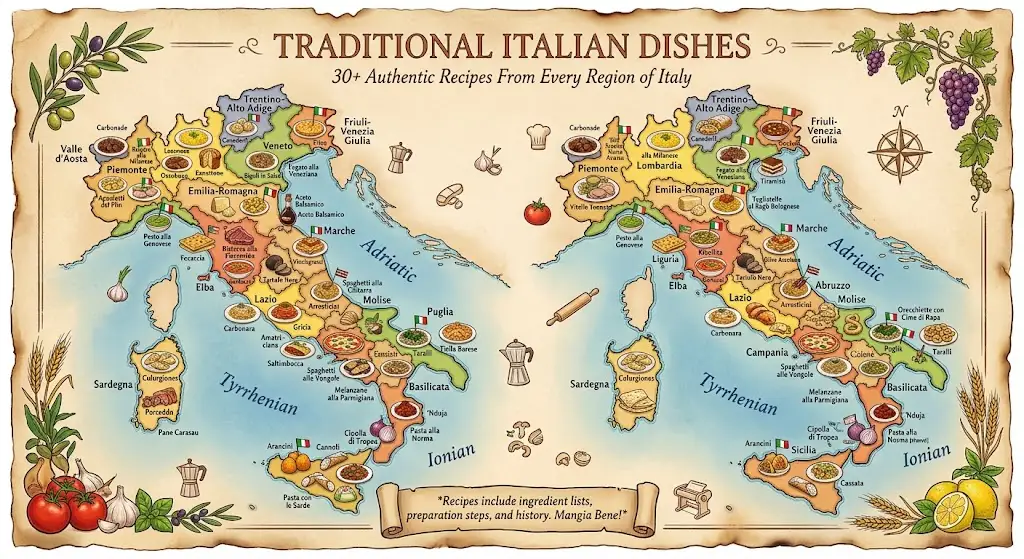
Discover the history, regional traditions, ingredients, meal structure, and authentic preparation behind traditional Italian dishes — from Carbonara and Cacio e Pepe to Pizza Napoletana, Ribollita, Orecchiette, Ossobuco, and classic Italian desserts.
When we talk about traditional Italian dishes, we mean recipes that have been passed down for generations. These are not modern twists or restaurant inventions. They are part of Italy’s culinary heritage and reflect deep regional Italian cuisine traditions. In Italy, food is strongly connected to place. A dish from Rome will taste different from one in Sicily because each region uses local ingredients and old family methods.
Many authentic Italian dishes are protected by strict food rules like DOP and PDO certifications, which protect regional identity and quality. Traditional cooking also follows the idea of simplicity — fresh ingredients, seasonal produce, and minimal changes. This is why classic Italian food feels honest and balanced.
Quick Answer
Traditional Italian dishes are regional recipes passed down through generations and built around local, seasonal ingredients and time-tested cooking methods. Famous examples include Carbonara, Cacio e Pepe, Risotto alla Milanese, Pizza Napoletana, Ribollita, Orecchiette, Pasta alla Norma, Ossobuco, and Tiramisu.
Italian cuisine varies greatly by region, with Northern Italy known for rice, butter, and polenta, while Central and Southern Italy emphasize olive oil, tomatoes, vegetables, pasta, and seafood.
What Makes a Dish Truly “Traditional” in Italy?
A dish becomes part of traditional Italian cuisine when it is built on generational recipes and strong regional identity. In Italy, families protect their cooking methods for decades, sometimes centuries.
Many authentic Italian dishes are associated with protected regional products and certifications such as DOP and PDO. This helps preserve the origin and quality of foods such as Parmigiano Reggiano.
Another key factor is authentic preparation. Traditional recipes generally respect their original methods, cooking times, ingredient combinations, and regional customs rather than constantly changing to follow food trends.
A Brief History of Traditional Italian Cuisine
The story of traditional Italian dishes begins with Ancient Roman food culture, where bread, olives, wine, and grains were important staples. During the Medieval and Renaissance periods, noble kitchens added refinement, spices, and structured meals.
But much of the heart of authentic Italian cuisine came from cucina povera — simple cooking that transformed humble ingredients into satisfying meals.
After World War II, Italy rebuilt its food identity around regional pride and simplicity. Later, the Slow Food movement helped draw greater attention to local foods, traditional recipes, and food biodiversity.
The Philosophy Behind Traditional Italian Cooking
01. Simplicity
Many classic recipes use relatively few ingredients and rely on technique and ingredient quality rather than complicated sauces.
02. Seasonality
Traditional cooking follows the seasons, using ingredients when they are locally available and at their best.
03. Local Ingredients
Regional produce, grains, cheeses, olive oil, cured meats, seafood, and other local foods shape each area’s distinctive cuisine.
From Antipasti to Dolce: Understanding the Italian Meal Format
To understand traditional Italian dishes, it helps to understand how a traditional meal can be structured. Italian dining often follows a sequence that allows different foods to have their own place.
| Course | What It Means | Typical Examples |
|---|---|---|
| Antipasti | Starters and small bites | Olives, cured meats, bruschetta |
| Primi | First substantial course | Pasta, risotto, soup |
| Secondi | Main protein course | Meat, poultry, seafood |
| Contorni | Vegetable side dishes | Seasonal vegetables, greens |
| Dolce | Dessert | Tiramisu, panna cotta |
Alongside the formal meal structure, aperitivo culture brings people together over drinks and small bites. The exact order and number of courses varies by household, region, and occasion.
Traditional Italian Dishes From Northern Italy
Northern Italy has a distinct food identity shaped by cooler climates, alpine traditions, rice, butter, cheese, and other regional ingredients.
Risotto alla Milanese
A famous Milanese rice dish traditionally associated with saffron and a creamy cooking technique.
Polenta
A long-standing cornmeal staple served in many Northern Italian preparations with vegetables, cheese, meat, or sauces.
Ossobuco
A slow-braised veal dish strongly associated with Milan and Lombardy.
Pesto Genovese
The famous Ligurian basil pesto made with basil, olive oil, pine nuts, cheese, garlic, and salt.
Bagna Cauda
A Piedmontese warm dip traditionally built around anchovies, garlic, and olive oil.
Traditional Dishes From Central Italy
Central Italy, especially Rome and Tuscany, is famous for rustic simplicity and bold, focused flavors.
Carbonara
Roman pasta traditionally prepared with eggs, Pecorino Romano, guanciale, and black pepper.
Cacio e Pepe
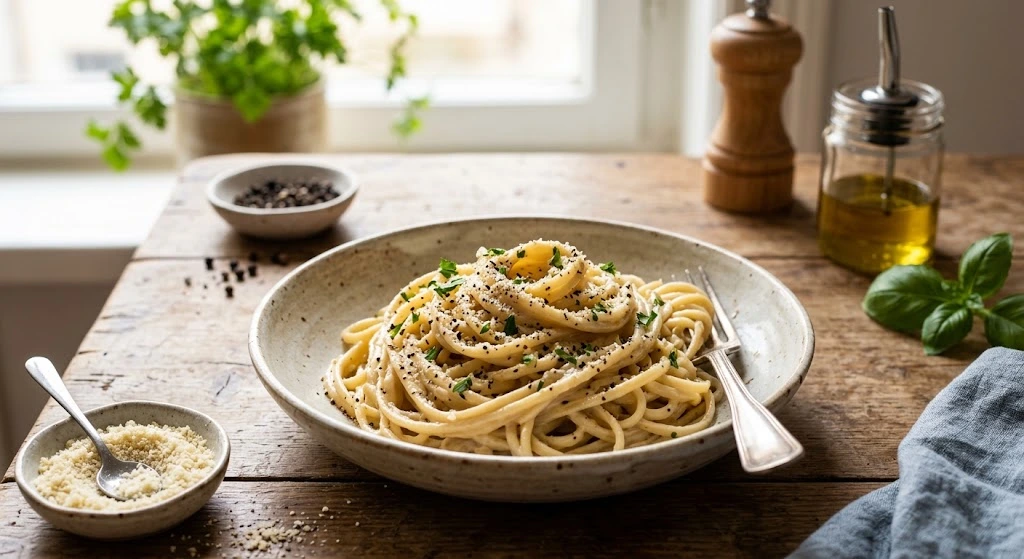
A Roman pasta classic centered on Pecorino Romano, black pepper, pasta, and pasta water.
Amatriciana
A Roman-area pasta tradition featuring tomato, cured pork, and Pecorino Romano.
Ribollita
A Tuscan rustic soup associated with beans, vegetables, bread, and the traditions of cucina povera.
Porchetta
Herb-seasoned roasted pork strongly associated with Central Italian food culture.
Traditional Southern Italian Dishes
Southern Italy is strongly associated with Mediterranean ingredients such as olive oil, tomatoes, vegetables, seafood, legumes, and wheat-based foods.
Pizza Napoletana
Naples’ famous pizza tradition is known for a simple combination of dough, tomatoes, olive oil, and other carefully selected ingredients.
Parmigiana di Melanzane
A Southern Italian baked dish built around eggplant, tomato sauce, cheese, and regional variations.
Orecchiette
Small ear-shaped pasta strongly associated with Puglia and often paired with vegetables and olive oil.
Pasta e Fagioli
A rustic pasta-and-bean dish found in several Italian regions, with regional variations.
Caponata
A Sicilian vegetable dish centered on eggplant with sweet-and-sour flavor elements.
Sicilian & Sardinian Specialties
Italy’s islands have developed especially distinctive food traditions. Sicily reflects centuries of Mediterranean exchange, while Sardinia maintains its own strong island identity.
| Dish | Region | What Makes It Special |
|---|---|---|
| Arancini | Sicily | Stuffed and fried rice balls with regional variations |
| Pasta alla Norma | Sicily | Pasta with eggplant, tomato, basil, and cheese |
| Cassata | Sicily | Rich dessert reflecting Sicily’s layered culinary history |
| Panelle | Sicily | Chickpea-flour fritters with strong street-food roots |
| Malloreddus | Sardinia | Traditional Sardinian ridged pasta |
Traditional Pasta Classics
Pasta is one of the best examples of how regional Italian cuisine works. Similar basic ingredients can become completely different dishes depending on local history and traditions.
| Pasta Dish | Associated Region | Signature Ingredients |
|---|---|---|
| Carbonara | Rome | Eggs, Pecorino Romano, guanciale, black pepper |
| Cacio e Pepe | Rome | Pecorino Romano, black pepper, pasta |
| Amatriciana | Lazio | Tomato, cured pork, Pecorino Romano |
| Orecchiette | Puglia | Ear-shaped pasta, vegetables, olive oil |
| Pasta alla Norma | Sicily | Eggplant, tomato, basil, cheese |
| Lasagna | Emilia-Romagna | Pasta sheets, ragù, béchamel, cheese |
Rice & Grain Traditions
Not all authentic Italian cuisine revolves around pasta. Rice, cornmeal, and chickpea flour have all played important roles in Italian food traditions.
Risotto
A Northern Italian rice tradition known for slow cooking and a creamy final texture.
Polenta
A cornmeal staple associated especially with Northern and Alpine cooking.
Farinata
A savory chickpea-flour preparation associated with Liguria and other parts of the Italian coast.
Meat & Seafood Specialties
Ossobuco
Slow-braised veal shank associated with Lombardy and Milanese cooking.
Porchetta
Herb-seasoned roasted pork strongly associated with Central Italy.
Baccalà
Salt cod used in many Italian regional preparations.
Branzino
Sea bass often prepared simply with herbs, olive oil, and other fresh ingredients.
Street Food & Rustic Favorites
Street food is another important part of traditional Italian cuisine. Foods once viewed as inexpensive everyday meals have become cultural icons.
- Arancini — crispy stuffed rice balls from Sicily.
- Panelle — chickpea-flour fritters associated with Palermo and Sicily.
- Pizza Napoletana — one of Italy’s most internationally recognized food traditions.
Traditional Italian Desserts
Tiramisu
A famous layered dessert combining coffee, mascarpone, ladyfingers, and cocoa.
Cannoli
A Sicilian pastry traditionally filled with sweetened ricotta.
Cassata
A rich Sicilian dessert shaped by the island’s complex culinary history.
Panna Cotta
A simple Italian dessert known for its delicate set texture and creamy flavor.
Naturally Vegan Traditional Italian Dishes
One surprising feature of traditional Italian dishes is how many recipes can naturally be plant-based. Long before modern vegan terminology, Italian families cooked with vegetables, legumes, grains, bread, and olive oil.
Pasta e Ceci
A comforting pasta-and-chickpea dish rooted in rustic Italian cooking.
Ribollita
A Tuscan vegetable and bread soup associated with cucina povera.
Pizza Marinara
A classic Neapolitan pizza traditionally made without cheese, using tomato, garlic, and olive oil.
Caponata
A Sicilian eggplant dish with sweet-and-sour flavor.
Farinata
A chickpea-flour specialty that is naturally plant-based.
Italian culinary history includes many naturally meat-free and dairy-free dishes. Their identity comes from regional ingredients and traditional preparation rather than modern substitutions.
Ingredients That Define Authentic Italian Cuisine
The heart of traditional Italian dishes is not complicated cooking — it is high-quality ingredients. In authentic regional cooking, each ingredient has a purpose.
| Ingredient | Why It Matters | Common Uses |
|---|---|---|
| San Marzano Tomatoes | Important to many Campanian and Neapolitan preparations | Pizza, pasta sauces |
| Parmigiano Reggiano | A protected regional cheese with a long maturation tradition | Pasta, risotto, sauces |
| Extra Virgin Olive Oil | Central to many Mediterranean and Southern Italian preparations | Sauces, vegetables, finishing |
| Fresh Basil | Aromatic herb central to several Italian preparations | Pesto, tomato dishes, pizza |
| Pecorino | Regional sheep’s-milk cheeses play major roles in Italian cooking | Roman pasta, soups, salads |
| Guanciale | Traditional cured pork used in several Central Italian pasta dishes | Carbonara, Amatriciana |
Traditional Italian vs. Italian-American Food
Many foods popular outside Italy developed through immigration and adaptation. These dishes can be delicious and culturally important, but they are not always the same as traditional regional recipes found in Italy.
| Dish / Idea | Common Outside Italy | Traditional Italian Context |
|---|---|---|
| Spaghetti & Meatballs | Large meatballs served directly with spaghetti | Meatballs and pasta traditionally have distinct regional traditions and are not universally paired this way |
| Fettuccine Alfredo | Often made with heavy cream | The Roman dish associated with Alfredo is traditionally much simpler |
| Garlic Bread | Common restaurant side dish | Not a standard equivalent of traditional Italian dining |
| Portion Structure | Large combined plates are common | Traditional meals can be divided into multiple courses |
Why Italian Cuisine Is So Regionally Diverse
One reason traditional Italian dishes are so unique is Italy’s geography. The country stretches from the Alps in the north to the Mediterranean islands in the south, creating major differences in climate, agriculture, and food culture.
Geography
Mountains, plains, coastlines, and islands create different agricultural and culinary environments.
Climate
Cooler northern regions developed different staples from warmer Mediterranean regions.
History
Italy’s long history of independent states and city-regions allowed distinctive local traditions to develop.
Trade
Trade and cultural exchange introduced ingredients and techniques that became part of regional cuisines.
Traditional Italian Food for Special Occasions
Food in Italy is more than daily nourishment — it is part of celebration, family, and community. Many traditional Italian dishes are closely connected with holidays and gatherings.
| Occasion | Traditional Food Culture |
|---|---|
| Sunday Family Lunch | Long family meals with pasta, meat, vegetables, bread, and dessert |
| Christmas | Regional specialties ranging from seafood dishes to rich baked foods |
| Easter | Seasonal dishes, lamb, vegetables, breads, and regional specialties |
| Local Festivals | Regional ingredients and dishes connected to local history and community celebrations |
How to Experience Traditional Italian Dishes Authentically
Try Local Trattorias
Family-run restaurants and regional trattorias can offer a stronger connection to local dishes than menus designed primarily for international tourists.
Explore Local Markets
Markets reveal seasonal produce and ingredients that help explain the character of regional cuisine.
Eat Seasonally
Seasonal ingredients help you understand why particular foods have traditionally been important at different times of year.
Explore Beyond Tourist Classics
Try regional specialties rather than limiting yourself to globally famous pizza and pasta dishes.
Traditional Italian Dishes: Quick Reference
Use this quick guide to connect some of Italy’s best-known dishes with their regional traditions.
Traditional does not automatically mean every historical preparation is safe by modern standards. When preparing Italian dishes at home, use properly stored ingredients, keep perishable foods refrigerated, cook meat and seafood thoroughly, and follow current food-safety guidance. Regional recipes can also vary considerably between families.
FAQs About Traditional Italian Dishes
What is the most traditional Italian dish?
There is no single official answer because traditional Italian dishes vary by region. Pasta alla Carbonara, Risotto, and Pizza Napoletana are among the best-known examples, but each region has its own iconic classics.
What food is Italy famous for?
Italy is famous for pizza, pasta, risotto, gelato, and tiramisu. Their traditional versions are strongly connected to regional ingredients and cooking methods.
Are all Italian dishes pasta?
No. Italian cuisine includes pasta, rice, polenta, seafood, meat, vegetables, legumes, soups, breads, pastries, and desserts.
Are traditional Italian dishes healthy?
Many traditional Italian dishes emphasize vegetables, legumes, olive oil, grains, seafood, and moderate portions. However, the nutritional profile varies considerably from dish to dish.
Which traditional Italian dishes are vegan?
Naturally plant-based examples include Pasta e Ceci, Ribollita, Pizza Marinara, Caponata, and Farinata, although recipes can vary by region and household.
What is Italy’s national dish?
Italy does not have one universally designated national dish. Because regional identity is so important, foods such as pizza and pasta are often treated as national symbols while individual regions maintain their own specialties.
Conclusion
Traditional Italian dishes are more than famous recipes — they are a living part of Italy’s history, family life, regional identity, and culinary heritage. From the rich rice dishes of the North to the olive-oil-focused cooking of the South, every region tells a different food story.
Italian food is not built on unnecessary complexity. It is built on simplicity, quality ingredients, seasonality, and recipes shaped by generations. That is what makes authentic Italian cuisine so recognizable and respected around the world.
If you want to understand classic Italian food, explore beyond tourist favorites. Discover regional specialties, visit local markets, learn about seasonal ingredients, and appreciate the traditions behind each dish. You don’t just taste Italy — you experience its culinary heritage.
SEO Title: 25+ Traditional Italian Dishes: Authentic Classics From Every Region
URL Slug: traditional-italian-dishes
Meta Description: Discover 25+ traditional Italian dishes from Northern, Central, Southern, Sicilian, and Sardinian cuisine, plus authentic ingredients, meal traditions, and regional classics.
Secondary Keywords: authentic Italian dishes, traditional Italian food, classic Italian food, regional Italian cuisine, Italian culinary heritage, famous Italian dishes, traditional Italian recipes, Italian regional dishes, authentic Italian cuisine
97 thoughts on “Traditional Italian Dishes: 30+ Authentic Recipes From Every Region of Italy”