Master the secrets to authentic Italian farinata with the perfect chickpea-flour ratio, proper batter resting time, a blazing-hot pan, and high-heat baking for crispy edges and a soft, tender center.
What Is Italian Chickpea Flatbread?
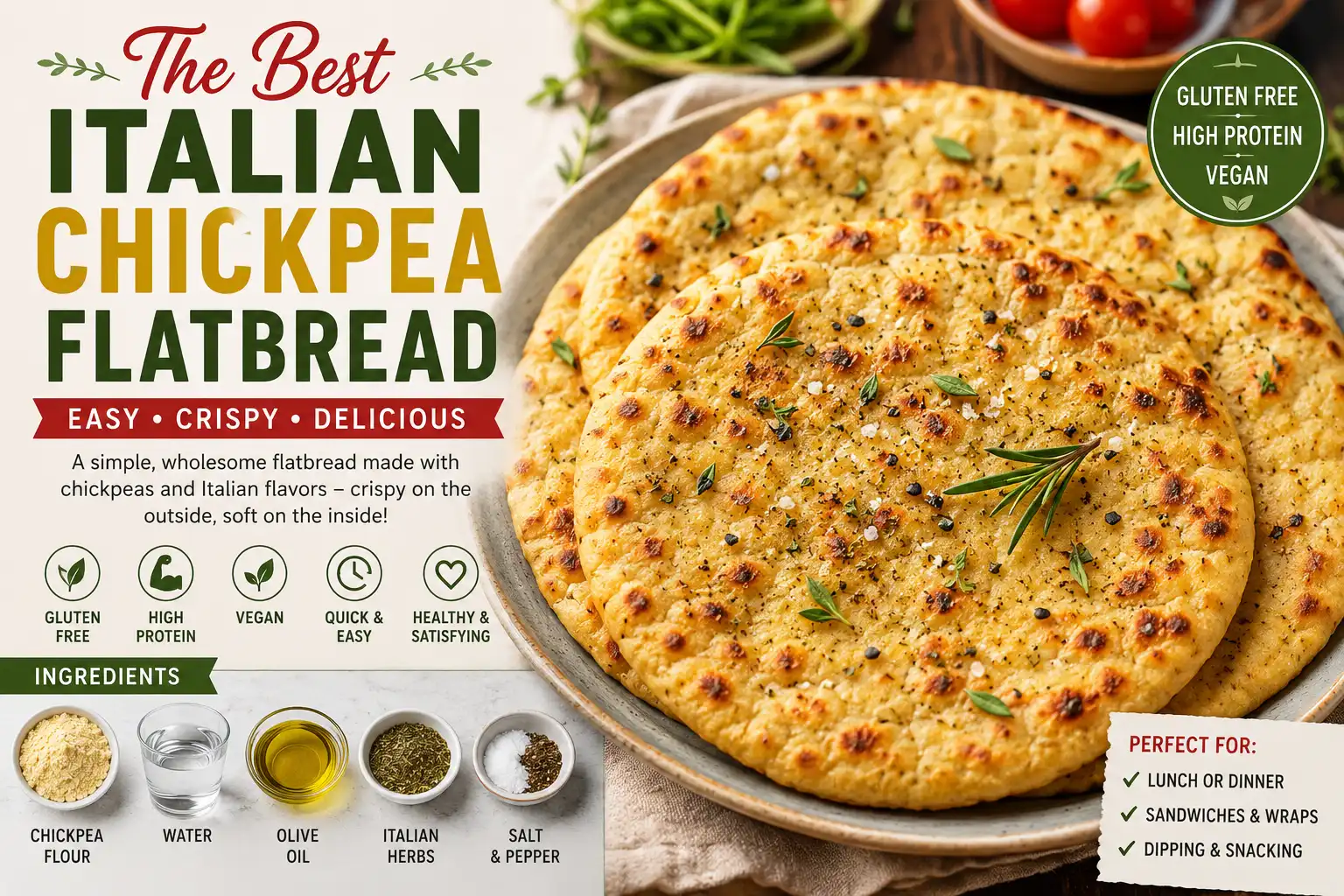
Italian chickpea flatbread, also known as farinata, is a traditional gluten-free flatbread made with chickpea flour, water, olive oil, and salt. It is baked at high heat until golden, creating a crispy outer layer with a soft, tender center and a rich, nutty flavor.
What Is Italian Chickpea Flatbread? (Farinata Explained)
Italian chickpea flatbread, commonly known as farinata, is a traditional Italian street-food flatbread made from chickpea flour, water, olive oil, and salt. It has a thin, slightly crispy texture with a soft center and a rich, nutty flavor.
Origin: Liguria, Italy
This authentic farinata style comes from the coastal region of Liguria, especially Genoa. Historically made with inexpensive ingredients, it has become a beloved Ligurian specialty enjoyed far beyond Italy.
Street Food History
Farinata has long been prepared in large, round pans and baked in very hot ovens. It is traditionally served fresh, hot, and sliced into portions.
Other Names You Should Know
- Cecina — popular in Tuscany
- Socca — associated with southern France, especially Nice
Why It’s Globally Popular
- Naturally gluten-free
- Contains plant-based protein and fiber
- Requires no yeast
- Uses simple pantry ingredients
- Works beautifully with herbs and savory toppings
The Secret Behind Perfect Farinata
Making great Italian chickpea flatbread isn’t simply about combining ingredients. The texture depends heavily on hydration, resting, pan temperature, oil, and batter depth.
Rest the Batter
Resting the chickpea flour and water mixture for 30–60 minutes allows the flour to hydrate properly and creates a smoother batter.
Heat the Pan
A thoroughly preheated pan helps the batter begin cooking immediately, encouraging a crisp bottom rather than a soggy one.
Use Enough Oil
Olive oil contributes flavor and helps create the characteristic golden, lightly fried edges of farinata.
Chickpea flour needs time to fully absorb water. Skipping the rest can produce a rougher, less evenly hydrated batter.
Ingredient Science: Why Each Ingredient Matters
| Ingredient | Main Role | What It Does |
|---|---|---|
| Chickpea flour | Structure | Provides the base, protein, nutty flavor, and structure. |
| Water | Hydration | Controls batter consistency and final thickness. |
| Olive oil | Crispiness + flavor | Helps brown the surface and contributes rich flavor. |
| Salt | Seasoning | Balances and enhances the naturally nutty chickpea flavor. |
| Herbs/toppings | Flavor | Rosemary, onions, garlic, and pepper add extra character. |
Exact Batter Ratio Guide: The Foolproof Formula
The right chickpea flour ratio is one of the most important factors in creating a thin, crispy farinata.
| Ingredient | Classic Amount | Purpose |
|---|---|---|
| Chickpea flour | 1 cup | Creates the structure and nutty base. |
| Water | 1½–2 cups | Creates a thin, pourable batter. |
| Olive oil | 2–3 tbsp | Adds flavor and helps crisp the surface. |
| Salt | To taste | Enhances the flavor. |
Thin Batter
Spreads easily and produces a thin, golden farinata with crisp edges.
Thicker Batter
Creates a denser, softer texture that is less traditional.
Silky & Lump-Free
The batter should pour easily and spread into a thin, even layer.
Classic Italian Chickpea Flatbread Recipe
Thin, golden, crispy-edged farinata with a tender center.
Ingredients
- 1 cup chickpea flour
- 1½–2 cups water
- 2–3 tablespoons olive oil
- Salt, to taste
- Fresh rosemary, optional
- Black pepper, optional
- Sliced onion or garlic, optional
The pan and oil become extremely hot. Use dry oven mitts or heat-resistant gloves and keep hands, towels, and handles clear of hot surfaces.
Method
-
Mix the batter. Whisk chickpea flour and water until smooth and lump-free. Add salt and a small amount of olive oil.
-
Rest for 30–60 minutes. Allow the flour to fully hydrate before baking.
-
Preheat the pan. Place your cast-iron skillet or baking tray in the oven and heat it thoroughly.
-
Oil the pan. Carefully coat the hot pan with olive oil.
-
Pour and bake. Carefully add the batter and bake at 220–250°C (425–480°F) until golden and set.
-
Finish for extra crispiness. If desired, use the broiler briefly to deepen browning.
-
Serve hot. Look for a golden top, crisp edges, and a center that is set but still tender.
- Top is golden brown
- Edges are visibly crisp
- Center is set but slightly soft
- Bottom is browned rather than pale
Best Pan & Equipment: Cast Iron vs Baking Tray
Cast-Iron Skillet
Excellent heat retention makes cast iron especially useful for developing a deeply browned, crispy base.
Oven Baking Tray
A tray works well when properly preheated and generously coated with oil.
Broiler Finish
A short broiler finish can help brown the top and edges. Watch closely because browning can happen quickly.
Do not touch a preheated pan with bare hands. Keep the hot pan stable and transfer it carefully. If using the broiler, stay nearby and monitor the farinata closely to prevent burning.
Crispiness Blueprint: How to Make Perfect Farinata
| Technique | What to Do | Why It Helps |
|---|---|---|
| High heat | Use approximately 220–250°C / 425–480°F. | Promotes fast cooking and browning. |
| Thin layer | Spread batter evenly and avoid excessive depth. | Creates crisp edges and prevents a dense center. |
| Hot pan | Preheat the pan before adding batter. | Immediately starts cooking the bottom. |
| Oil coverage | Coat the pan evenly with olive oil. | Encourages browning and reduces sticking. |
| Short broiler finish | Broil briefly if additional browning is needed. | Deepens color and surface crispness. |
Why Your Farinata Fails: Common Mistakes & Fixes
| Problem | Likely Cause | Best Fix |
|---|---|---|
| Soggy texture | Low heat or overly thick batter | Use higher heat and spread the batter more thinly. |
| Not crispy | Cold pan or insufficient oil | Preheat thoroughly and coat the pan properly. |
| Sticking | Insufficient oil or inadequate pan heat | Use enough oil and start with a hot pan. |
| Too thick | Too much batter in the pan | Use a wider pan or reduce batter depth. |
| Undercooked center | Uneven or excessive thickness | Spread the batter evenly and avoid overfilling the pan. |
| Burnt edges | Excessive broiling or very high localized heat | Watch closely during the final browning stage. |
Texture Guide: Thin vs Thick Farinata
Thin Farinata
Thin, flexible, lightly crisp, and tender inside. This is the better choice when your priority is classic crispness.
Thick Farinata
Softer and more cake-like. It can be enjoyable but has less of the classic crisp edge-to-center contrast.
Choose Thin
A thinner layer exposes more surface to intense heat and makes it easier to achieve browned edges and a crisp base.
Farinata vs Socca vs Cecina
| Dish | Associated Region | Typical Texture | Common Cooking Style |
|---|---|---|---|
| Farinata | Liguria, Italy | Thin, crisp edges, tender center | Very hot oven, traditionally large pans |
| Socca | Nice / southern France | Often very crisp, with variations in thickness | Very high heat |
| Cecina | Tuscany, Italy | Similar chickpea-flatbread texture | Oven-baked, with regional variations |
The three dishes share a simple chickpea-flour foundation, but regional traditions, thickness, heat, and cooking methods can create noticeable differences.
Variations You Must Try
Vegetable Farinata
Add thinly sliced onions, zucchini, or tomatoes for extra texture and freshness.
Cheese Version
Parmesan or mozzarella can create a richer, more indulgent variation.
Garlic + Rosemary
Fresh rosemary, garlic, and black pepper complement the nutty chickpea flavor.
For the cleanest traditional flavor, keep toppings restrained. Farinata is at its best when the nutty chickpea flavor and olive oil remain prominent.
Ingredient Substitutions & Flavor Add-Ons
| Ingredient | Traditional Choice | Alternative | Flavor Impact |
|---|---|---|---|
| Oil | Extra-virgin olive oil | Avocado or sunflower oil | Olive oil provides the most characteristic flavor. |
| Herbs | Rosemary | Thyme | Adds an aromatic, savory note. |
| Seasoning | Salt + pepper | Garlic or chili | Adds more intensity. |
| Toppings | Minimal | Onion, tomato, zucchini | Creates a more substantial variation. |
Is Italian Chickpea Flatbread Healthy?
Farinata can be a nutritious choice because its primary ingredient, chickpea flour, provides plant-based protein and fiber. It is also naturally free from wheat and requires no yeast.
Plant-Based Protein
Chickpea flour contributes plant-based protein to the dish.
Fiber
Chickpeas naturally provide dietary fiber, helping make the flatbread satisfying.
Calories Vary
Total calories depend heavily on serving size and especially the amount of oil and toppings used.
“Gluten-free” does not automatically mean suitable for every dietary need. If you require strict gluten avoidance, choose certified gluten-free chickpea flour and prevent cross-contact with gluten-containing ingredients.
What to Serve With Italian Chickpea Flatbread
🥗 Salads
Pair with arugula, tomato, cucumber, or a bright lemony salad.
🍲 Soups
Serve alongside tomato, vegetable, or bean soups for a satisfying meal.
🥣 Dips & Sauces
Try hummus, yogurt-based dips, or olive oil with herbs and black pepper.
Storage, Reheating & Meal Prep Tips
| Method | How to Store | Best Approach |
|---|---|---|
| Refrigerator | Airtight container | Use within about 2–3 days for best quality. |
| Reheating | Oven or pan | Use high heat for a few minutes to restore crispness. |
| Freezing | Wrap well and freeze | Texture may change slightly; reheat in the oven for better results. |
Microwaving can soften the crust. For the best texture, reheat farinata in a hot oven or skillet instead.
Expert Tips for Perfect Results Every Time
🔥 Start Hot
Preheat the pan thoroughly before adding the oiled batter.
⏳ Don’t Rush
Give the batter 30–60 minutes to hydrate before baking.
🌿 Finish Fresh
Add rosemary, black pepper, or a light drizzle of olive oil before serving.
FAQs About Italian Chickpea Flatbread
Can you make farinata without cast iron?
Yes. A regular oven baking tray can work well. Preheat it thoroughly and use enough oil to reduce sticking. Cast iron is particularly useful because it retains heat exceptionally well.
Why should you rest the farinata batter?
Resting gives chickpea flour time to absorb the water. This creates a smoother, more evenly hydrated batter and can improve the final texture.
Can you make chickpea flatbread in an air fryer?
You can experiment with a small oven-safe pan that fits inside your air fryer. However, the cooking environment and pan size differ from a traditional oven, so the final texture may not match classic farinata.
Why is my farinata bitter?
Bitterness can come from overbrowning or burning, stale chickpea flour, or unwanted flavors in the ingredients. Use fresh flour and avoid scorching the edges during the final browning stage.
How do I make farinata extra crispy?
Use a thin batter, thoroughly preheat the pan, use enough olive oil, bake at high heat, and consider a brief broiler finish while watching closely.
Why is my chickpea flatbread soggy?
Common causes include a cold pan, low oven temperature, excessive batter depth, or insufficient browning. A hotter pan and thinner layer are usually the best places to start.
Ready to Make Crispy Italian Farinata?
The formula is simple: use a smooth, thin batter, let it rest, heat the pan well, use enough olive oil, and bake hot. Master those fundamentals and you’ll be well on your way to golden, crispy-edged Italian chickpea flatbread at home.