Looking for the best substitute for coconut oil? From avocado oil for frying to butter for baking and vegetable oil for vegan recipes, this guide explains the best coconut oil alternatives, replacement ratios, flavors, and uses.
Quick Answer
The best coconut oil substitute depends on how you use it. Avocado oil is an excellent choice for high-heat cooking, butter works especially well in baking, and vegetable oil is a versatile vegan 1:1 substitute. For lower-fat baking, applesauce or mashed banana can replace part of the oil while adding moisture.
Why People Look for Coconut Oil Substitutes
There are many reasons people search for what to use instead of coconut oil. Sometimes, you may simply have run out of coconut oil while cooking or baking. Instead of stopping your recipe, you can choose a suitable coconut oil alternative already available in your kitchen.
Another reason is flavor. Coconut oil can add a noticeable coconut aroma, while some recipes work better with a neutral-tasting fat. Dietary preferences, allergies, and the need for a different cooking temperature can also influence which substitute makes the most sense.
Before You Substitute: 5 Things You Must Know
1. Solid vs. Liquid Fats
Coconut oil is solid or semi-solid at cooler room temperatures. This matters in recipes where fat provides structure, such as cookies and pastry. Butter or shortening can often provide a closer textural match than liquid oil.
2. Smoke Point Matters
For frying and high-heat cooking, choose an oil suitable for the temperature you plan to use. Avocado oil is a popular option because many refined avocado oils have a high smoke point.
3. Flavor Impact
Some oils have stronger flavors than others. If you want your recipe to remain neutral, vegetable oil or grapeseed oil can be useful choices.
4. Health & Saturated Fat
Coconut oil is relatively high in saturated fat. If reducing saturated fat is your goal, oils such as olive oil and avocado oil generally provide more unsaturated fat.
5. Match the Recipe Type
Baking, frying, sautéing, skincare, and haircare all have different requirements. A substitute that works beautifully in a cake may not be appropriate for deep frying or personal care.
The 10 Best Coconut Oil Substitutes
These coconut oil alternatives cover cooking, baking, vegan recipes, frying, and beauty uses. Always consider the recipe before substituting, because ratios and textures can vary.
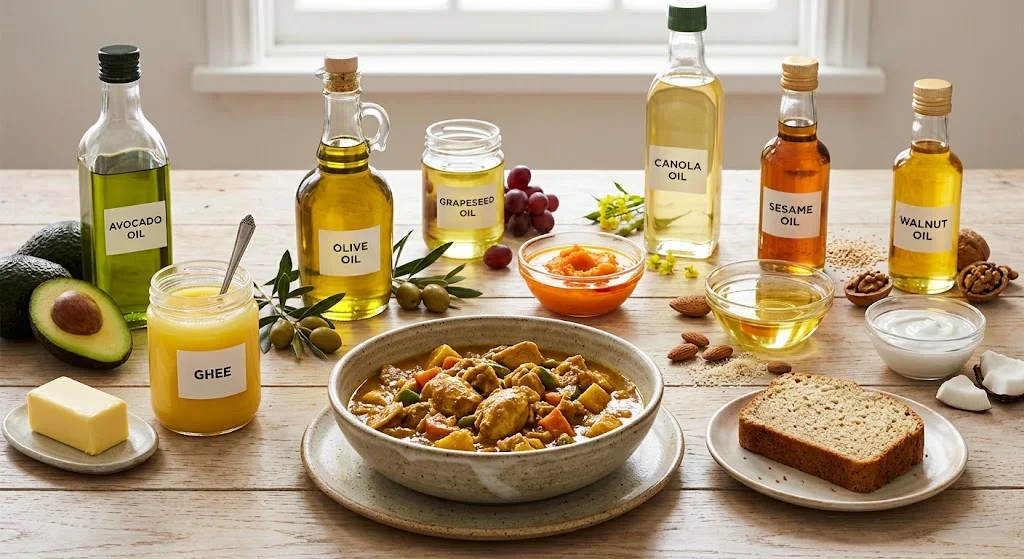
Avocado Oil
Best for: Frying, sautéing, roasting and high-heat cooking
Smoke point: Depends on refinement; refined avocado oil is commonly used for high heat.
Ratio: Usually 1:1 for cooking
Flavor: Mild and relatively neutral
Pros: Versatile and suitable for high-heat cooking.
Consideration: Often more expensive than basic vegetable oils.
Olive Oil
Best for: Sautéing, roasting, dressings and many baked goods
Smoke point: Varies by type and refinement
Ratio: Recipe-dependent; often close to 1:1 for cooking
Flavor: Fruity to peppery depending on the oil
Pros: Rich in monounsaturated fat and widely available.
Consideration: Extra-virgin olive oil can add noticeable flavor.
Vegetable Oil
Best for: Baking, general cooking and vegan recipes
Smoke point: Varies by oil blend and formulation
Ratio: Usually 1:1 for many cooking and baking applications
Flavor: Neutral
Pros: Affordable, versatile and easy to find.
Consideration: Nutritional profile depends on the specific oil.
Butter
Best for: Cookies, cakes, pastries and sautéing
Smoke point: Lower than many cooking oils
Ratio: Often 1:1 by volume in baking, though recipes can vary
Flavor: Rich and creamy
Pros: Excellent flavor and solid-fat structure.
Consideration: Not vegan and contains dairy.
Shortening
Best for: Cookies, pie crusts and pastry
Smoke point: Varies by product
Ratio: Often 1:1 in recipes designed for solid fat
Flavor: Usually neutral
Pros: Provides structure and can be available in vegan versions.
Consideration: Highly processed compared with some whole-food options.
Grapeseed Oil
Best for: Baking, sautéing, stir-frying and dressings
Smoke point: Often around 420°F (216°C)
Ratio: Usually 1:1 for cooking
Flavor: Light and neutral
Pros: Mild flavor and versatile cooking performance.
Consideration: Can cost more than basic vegetable oil.
Sunflower Oil
Best for: Baking, cooking and frying
Smoke point: Depends on refinement
Ratio: Usually 1:1 for cooking
Flavor: Mild and neutral
Pros: Affordable and widely available.
Consideration: Nutritional profile varies by sunflower oil type.
Applesauce
Best for: Cakes, muffins and softer baked goods
Smoke point: Not applicable as an oil
Ratio: Start around ¾ cup applesauce per 1 cup oil, then adjust to the recipe
Flavor: Mildly sweet and fruity
Pros: Adds moisture and reduces added fat.
Consideration: Changes texture and cannot replace oil in frying.
Mashed Banana
Best for: Muffins, quick breads and cakes
Smoke point: Not applicable as an oil
Ratio: Start around ¾ cup mashed banana per 1 cup oil
Flavor: Sweet with noticeable banana flavor
Pros: Adds moisture and natural sweetness.
Consideration: Works best in recipes where banana flavor fits.
Almond Oil
Best for: Some baking, dressings and cosmetic uses
Smoke point: Depends on product and refinement
Ratio: Often 1:1 for suitable cooking applications
Flavor: Mildly nutty
Pros: Versatile and useful in both culinary and cosmetic applications.
Consideration: Avoid if you have a relevant tree-nut allergy.
Best Coconut Oil Substitutes by Use Case
Best for High-Heat Cooking
- Avocado oil — excellent high-heat option
- Sunflower oil — mild and practical
- Grapeseed oil — light flavor and versatile
Best for Baking
- Butter — excellent for structure and flavor
- Shortening — useful for pastry and cookies
- Vegetable oil — easy liquid-oil swap
- Applesauce — useful for reducing added fat
Best Lower-Saturated-Fat Options
- Olive oil — rich in monounsaturated fat
- Avocado oil — primarily unsaturated fat
- Sunflower oil — generally lower in saturated fat than coconut oil
Best Vegan Substitutes
- Vegetable oil — simple 1:1 option for many recipes
- Applesauce — good for cakes and muffins
- Mashed banana — adds moisture and sweetness
- Vegan shortening — useful where solid fat is needed
Best for Skin
- Jojoba oil — lightweight cosmetic oil
- Almond oil — moisturizing option
- Argan oil — commonly used for skin hydration
Best for Hair
- Argan oil — commonly used to smooth and condition hair
- Jojoba oil — lightweight option
- Almond oil — can add softness and shine
Coconut Oil vs. the Best Substitutes
| Feature | Coconut Oil | Avocado Oil | Butter | Olive Oil |
|---|---|---|---|---|
| Room Temperature | Usually solid or semi-solid | Liquid | Solid | Liquid |
| Heat Use | Low to moderate depending on type | Excellent for high heat when refined | Better for moderate heat | Varies by type and refinement |
| Saturated Fat | High | Low | High | Relatively low |
| Flavor | Mild coconut flavor | Mild | Rich and creamy | Fruity to peppery |
| Best Use | Baking, cooking and some beauty uses | Frying and high-heat cooking | Baking and moderate-heat cooking | Cooking, roasting and dressings |
Nutrition & Health Considerations
Saturated Fat Comparison
Coconut oil contains a high proportion of saturated fat compared with most common plant oils. If your goal is to reduce saturated fat, replacing some coconut oil with oils higher in unsaturated fats can be a useful dietary choice.
Heart Health
Oils such as olive and avocado oil are rich in unsaturated fats. Replacing saturated fats with unsaturated fats is generally considered a favorable dietary pattern for cardiovascular health.
Keto Compatibility
Coconut oil can fit into a keto diet, but it is not the only option. Avocado oil and other low-carbohydrate cooking oils can also be used depending on the recipe.
Paleo Suitability
Coconut oil, avocado oil, and olive oil are commonly used in paleo-style cooking. Individual paleo guidelines can differ, particularly around processed oils.
Allergy Considerations
If allergies are a concern, always check the specific product and ingredients. Almond oil should be avoided by people with relevant tree-nut allergies. Sunflower, avocado, and vegetable oils may be more appropriate alternatives depending on the individual’s allergy needs.
⚠️ Allergy & Skincare Safety
Cosmetic oils can cause irritation or allergic reactions. Patch-test a new skincare product when appropriate, and avoid applying an oil to broken or irritated skin. For known allergies, check product labels and cross-contact information carefully.
Common Mistakes When Replacing Coconut Oil
| Common Mistake | Why It Causes Problems | Better Approach |
|---|---|---|
| Using the wrong ratio | Different fats have different properties. | Check whether the substitute is solid, liquid, or a moisture-based replacement. |
| Ignoring texture | Liquid oil can change the structure of baked goods. | Use butter or shortening when a recipe depends on solid fat. |
| Choosing a strong flavor | Bold oils can change the taste of desserts. | Use neutral vegetable or grapeseed oil when appropriate. |
| Using an unsuitable oil for high heat | The oil may smoke or degrade at temperatures above its recommended range. | Choose an oil suitable for the cooking temperature. |
| Ignoring added moisture | Applesauce and banana can make baked goods wetter or denser. | Adjust other liquids and baking time when needed. |
Can You Mix Oils as a Substitute?
Yes. Mixing fats can sometimes help balance flavor, texture, and cooking performance. However, there is no universal combination that works for every recipe.
When Mixing Works
Combining two neutral oils can give you a useful balance of flavor and cooking performance. In baking, combining a solid fat with a liquid fat can also affect tenderness and structure.
Flavor Balancing
If an oil has a strong flavor, blending it with a neutral oil can make the overall taste more subtle.
Texture Improvement
In baking, combinations such as butter plus a moisture-rich ingredient can create a different texture than using either ingredient alone.
Practical Tip
Make small adjustments first. A substitution should preserve the recipe’s intended texture rather than simply matching the original volume of coconut oil.
Coconut Oil Replacement Ratio Guide
Replacement ratios are a starting point rather than a universal rule. Liquid oils, solid fats, and fruit-based substitutes behave differently, especially in baking.
| Coconut Oil | Substitute | Starting Ratio | Best Use |
|---|---|---|---|
| 1 cup | Butter | 1 cup | Cookies, cakes and pastry |
| 1 cup | Vegetable oil | 1 cup | Cooking and many baked goods |
| 1 cup | Avocado oil | 1 cup | Cooking and frying |
| 1 cup | Applesauce | About ¾ cup to start | Cakes and muffins |
| 1 cup | Mashed banana | About ¾ cup to start | Muffins and quick breads |
Best Substitutes for Specific Recipes
Indian Cooking
For curries, sautéing, and other high-heat dishes, avocado or sunflower oil can provide a relatively neutral alternative when coconut flavor is not essential.
Mediterranean Recipes
Olive oil is often a natural choice for Mediterranean dishes because its flavor works well with vegetables, herbs, grains, and roasted foods.
Brownies
Butter can produce rich brownies with a familiar buttery flavor. Applesauce can replace part of the fat in some recipes but will alter the texture.
Chocolate Melting
A small amount of neutral vegetable oil can sometimes replace coconut oil when melting chocolate. Avoid strongly flavored oils unless that flavor is intentional.
Granola
Sunflower, grapeseed, or avocado oil can work well when roasting granola. Choose an oil that complements the other ingredients.
Protein Balls & Energy Bites
Depending on the recipe, nut or seed butters can sometimes provide binding and richness better than a liquid oil. For allergy-friendly recipes, sunflower seed butter is another possibility.
FAQs About the Best Coconut Oil Substitutes
What is the healthiest substitute for coconut oil?
Olive oil and avocado oil are popular choices when you want an oil higher in unsaturated fats and lower in saturated fat than coconut oil. The best choice still depends on the recipe and cooking temperature.
Can I use olive oil instead of coconut oil in baking?
Yes, especially in cakes, muffins, breads, and other recipes where olive oil’s flavor works well. The exact ratio depends on the recipe, so avoid assuming that every baking recipe requires a fixed ¾-cup substitution.
What is the best substitute for coconut oil in cookies?
Butter or shortening are often the closest choices because they are solid fats. Vegan shortening can work when dairy must be avoided.
Is there a nut-free coconut oil alternative?
Yes. Sunflower oil, vegetable oil, and avocado oil can be useful nut-free alternatives, provided the specific product is appropriate for the allergy situation.
Can I replace coconut oil with butter 1:1?
In many baking recipes, yes. Both are solid fats, although butter contains water and dairy solids, so the final texture can still differ.
What is the best oil for frying instead of coconut oil?
Avocado oil is a strong choice for high-heat cooking, while sunflower and other suitable refined oils can also work. Always choose an oil appropriate for your actual cooking temperature.
Which substitute works for hair and skin?
Jojoba oil, argan oil, and almond oil are commonly used in personal-care products. Skin compatibility varies, so patch testing and checking the product’s ingredients is wise.
Final Verdict: Which Coconut Oil Substitute Is Best?
🥑 Best Overall: Avocado Oil
Avocado oil is one of the most versatile choices, particularly when you need a neutral oil that can handle relatively high cooking temperatures.
🧈 Best for Baking: Butter
Butter is excellent when structure, richness, and flavor matter. For vegan baking, vegan shortening or suitable plant-based fats may provide a closer structural replacement.
🍳 Best for Frying: Avocado or Sunflower Oil
For frying, choose an oil appropriate for the temperature rather than relying on a single universal smoke-point number. Avocado and sunflower oils are practical options depending on the specific product.
💆 Best for Beauty: Jojoba or Argan Oil
For skincare and haircare, jojoba and argan oils are popular lightweight alternatives. The right option depends on your skin, hair, and the formulation of the product.
❤️ Best Lower-Saturated-Fat Choice: Olive or Avocado Oil
If your main goal is replacing coconut oil with an oil containing more unsaturated fat, olive oil and avocado oil are strong choices for many everyday cooking applications.