Confused about mukimame vs edamame? They come from the same young soybean, but one is served in its pod while the other is already shelled. Learn the difference, nutrition, cooking methods, health benefits, and which one is best for your meals.
Quick Answer: Mukimame vs Edamame
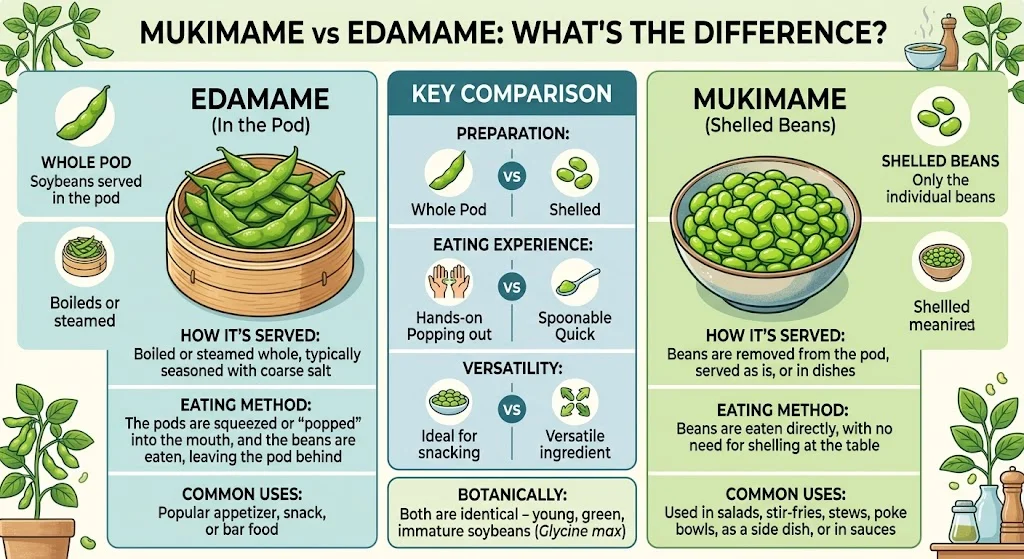
Edamame and mukimame are the same young, immature soybeans. The main difference is how they are prepared and served. Edamame usually refers to young soybeans served inside their pods, while mukimame means the beans have already been removed from the pods. Their nutritional value is very similar, but mukimame is more convenient for salads, stir-fries, rice bowls, soups, and meal prep.
Edamame are young, immature soybeans harvested before they fully harden. These bright green edamame beans grow inside soft pods and are usually boiled or steamed before eating. If you have ever ordered a Japanese appetizer, you have likely seen edamame served in the pod with a sprinkle of salt.
The word edamame refers to these fresh green soybeans, which are picked early to keep their mild, slightly sweet flavor. Unlike mature soybeans used to make products such as tofu and soy milk, edamame has a tender texture and is eaten as the beans, with the pod discarded.
In simple terms, edamame is a fresh soybean harvested while young. It is also a useful plant-based protein source and provides fiber, vitamins, minerals, and other nutrients.
What Is Mukimame?
Mukimame is shelled edamame, meaning the beans have been removed from the pod. In other words, it is the same young soybean, simply without the outer shell. Packages labeled “shelled edamame” are generally referring to mukimame.
The Japanese word can be understood as referring to beans that have been removed or peeled from their outer covering. This explains why mukimame is commonly used as another name for shelled edamame.
The main difference between mukimame and edamame is therefore not the plant or the bean itself. It is the form in which you buy and eat it. Mukimame is especially convenient for salads, stir-fries, grain bowls, fried rice, soups, and meal prep.
Think of It This Way
Edamame = young soybean in the pod.
Mukimame = young soybean with the pod removed.
Mukimame vs Edamame: Quick Comparison
If you are searching for mukimame vs edamame, this table gives you the key differences at a glance.
| Feature | Edamame | Mukimame |
|---|---|---|
| Bean | Young soybean | Young soybean |
| Pod | Served in the pod | Pod removed |
| Preparation | Beans are squeezed or removed from the pod before eating | Ready to add directly to recipes |
| Texture | Firm and tender | Tender and convenient to eat |
| Best For | Snacks and appetizers | Salads, bowls, stir-fries and meal prep |
| Nutrition | Very similar | Very similar |
| Main Advantage | Fun, interactive presentation | Convenience and faster recipe preparation |
Both come from the same immature soybeans, so their basic nutritional profile is very similar. The practical difference is primarily the presence or absence of the pod.
The Real Differences Explained
Pod vs No Pod
Edamame is commonly served inside its soft green pod. The pod itself is generally not eaten. Mukimame has already been shelled, so only the edible beans remain.
Eating Experience
Edamame provides an interactive snack experience because you remove the beans from the pods. Mukimame can be eaten directly with a fork or spoon.
Cooking Convenience
Mukimame saves preparation time because there is no pod to remove. This makes it particularly useful for quick weeknight meals and meal prep.
Presentation
Whole edamame pods make an attractive appetizer, while mukimame blends easily into salads, grain bowls, rice dishes, soups, and stir-fries.
Edamame vs Mukimame Nutrition
When comparing mukimame vs edamame nutrition, remember that both are young soybeans. Because the edible beans are essentially the same, their nutritional profiles are very similar.
Nutrition Snapshot
Cooked edamame provides a substantial amount of plant-based protein, dietary fiber, and micronutrients. Exact nutrition can vary by product, cooking method, and serving size.
| Nutrient | Edamame | Mukimame | Key Point |
|---|---|---|---|
| Calories | Similar | Similar | Depends on serving and preparation |
| Protein | High | High | Excellent plant-based protein source |
| Fiber | Good source | Good source | Supports fullness and digestion |
| Fat | Moderate | Moderate | Primarily unsaturated fat |
| Folate | Good source | Good source | Amount varies by product |
| Iron & Magnesium | Provides both | Provides both | Amounts vary with preparation |
Health Benefits of Mukimame and Edamame
Both mukimame and edamame are nutrient-dense young soybeans that can fit easily into a balanced diet.
High in Protein
Soybeans provide high-quality plant protein and are especially useful for vegetarian and vegan meals.
Good Source of Fiber
Edamame provides dietary fiber, which contributes to digestive health and can help you feel satisfied after eating.
Provides Micronutrients
Young soybeans provide nutrients including folate, iron, magnesium and vitamin K.
Heart-Friendly Choice
Soy foods can be part of a heart-conscious eating pattern, particularly when they replace foods higher in saturated fat.
Useful for Active Diets
Their protein content makes edamame and mukimame convenient additions to meals after exercise or whenever you want more plant protein.
Contains Isoflavones
Soybeans naturally contain isoflavones, plant compounds that have been studied for their potential effects on cardiovascular and bone health.
Soy foods contain protein, unsaturated fats, fiber, vitamins, minerals, and naturally occurring isoflavones. Including minimally processed soy foods such as edamame in a balanced diet can contribute to overall nutrient intake.
Mukimame vs Edamame: Taste & Texture
The beans themselves have a similar flavor whether they are served in pods or shelled. Both are generally mild, slightly nutty, grassy, and naturally sweet.
| Characteristic | Edamame | Mukimame |
|---|---|---|
| Flavor | Mild, grassy and slightly sweet | Mild, nutty and slightly sweet |
| Texture | Tender with a firm bite | Tender and easy to incorporate into dishes |
| Snack Experience | Interactive and fun | Simple and convenient |
| Best Applications | Appetizers and snacks | Salads, bowls, soups and stir-fries |
How to Cook Edamame and Mukimame
Cooking mukimame vs edamame is straightforward. The best method depends on whether you want a snack or an ingredient for another dish.
1How to Cook Edamame
Boiling: Add edamame pods to boiling water and cook until tender, usually around 5–7 minutes. Drain and season with salt.
Steaming: Steam the pods for roughly 5–6 minutes, or until heated through and tender.
Seasoning: Finish with sea salt, garlic powder, chili flakes, lemon zest, sesame seasoning, or another favorite spice blend.
2How to Cook Mukimame
Sautéing: Add shelled mukimame to a hot pan with a small amount of oil, garlic, and seasonings. Cook until hot and lightly browned.
Stir-Frying: Add mukimame toward the end of a vegetable stir-fry so the beans warm through without becoming overly soft.
Salads & Bowls: Add cooked shelled edamame directly to grain bowls, pasta salads, green salads, and rice dishes.
Cooking Tip
Avoid overcooking. Excessive cooking can make the beans soft and reduce their pleasant texture. If you plan to stir-fry them, drain them well first so excess moisture does not create unnecessary steam.
Can You Substitute Mukimame for Edamame?
Yes — In Most Recipes
Because mukimame is shelled edamame, you can generally substitute one for the other when the recipe calls for the edible beans. The main difference is that mukimame does not provide the visual presentation or interactive eating experience of whole edamame pods.
Best Situations for Substitution
- Salads
- Grain and rice bowls
- Stir-fries
- Soups
- Fried rice
- Meal-prep recipes
When It Is Not Ideal
- Appetizers designed around whole pods
- Interactive snack platters
- Recipes where whole pods are part of the presentation
When to Use Edamame vs Mukimame
| Choose Edamame When… | Choose Mukimame When… |
|---|---|
| You want an appetizer | You are meal prepping |
| You enjoy eating from the pod | You want a ready-to-use ingredient |
| You are serving guests | You are making salads |
| You want a visually attractive starter | You are making stir-fries or rice bowls |
| You want an interactive snack | You want convenient plant protein |
Buying Guide: Fresh, Frozen, Edamame or Mukimame?
Frozen Edamame
Frozen edamame is convenient, widely available, and easy to keep on hand. It is a practical choice for snacks and everyday cooking.
Frozen Mukimame
Shelled frozen edamame is especially convenient for meal prep, bowls, salads, soups, and stir-fries.
Fresh Edamame
Fresh pods can have a pleasant sweet flavor but generally require quicker use and more preparation.
What to Check
Look for plain products if you want to control salt and seasoning. Check packaging instructions because some products are blanched while others may be sold ready to cook.
Organic vs Conventional
Both organic and conventional edamame can be nutritious choices. If organic certification is important to you, look for the appropriate certification on the package. Otherwise, choose based on availability, price, and personal preference.
Storage Tips
- Frozen: Keep frozen according to package directions.
- Fresh pods: Refrigerate and use promptly.
- Cooked beans: Refrigerate in a covered container and use within a few days.
- Follow the manufacturer’s storage instructions for packaged products.
Edamame vs Other Beans
| Comparison | Taste & Texture | Typical Best Uses |
|---|---|---|
| Edamame vs Lima Beans | Edamame is firmer and slightly nutty; lima beans are creamier. | Edamame for snacks and bowls; lima beans for soups and casseroles. |
| Edamame vs Peas | Peas are sweeter and softer; edamame has a firmer, nuttier bite. | Peas for sides and soups; edamame for protein-rich bowls and snacks. |
| Edamame vs Chickpeas | Chickpeas are starchier and nuttier; edamame is tender and fresh. | Chickpeas for hummus and roasting; edamame for salads and stir-fries. |
| Edamame vs Mature Soybeans | Mature soybeans are harder and more developed in flavor. | Edamame for fresh eating; mature soybeans for soy-based products. |
Allergies, Safety & Dietary Considerations
Soy Allergy Warning
Edamame and mukimame are soybeans and can trigger reactions in people with a soy allergy. Anyone with a known soy allergy should avoid them and follow the advice of their healthcare professional.
Raw Soybeans vs Cooked Edamame
Edamame is generally eaten after cooking rather than raw. Cooking improves texture and digestibility and is the standard way these beans are prepared. Follow the cooking instructions supplied with packaged products.
Gluten-Free
Plain edamame and mukimame are naturally gluten-free. However, seasoned, sauced, or prepared products can contain other ingredients, so always check the ingredient label if you need to avoid gluten strictly.
What About Soy and Hormones?
Soy contains naturally occurring isoflavones, which are sometimes described as phytoestrogens. These plant compounds are chemically different from human estrogen. For most adults, soy foods can be included as part of a balanced diet.
Rather than relying on a universal “safe daily limit,” consider your overall diet, serving sizes, individual tolerance, and any medical advice specific to your situation.
Common Mukimame vs Edamame Myths Debunked
Myth: “Mukimame is healthier than edamame.”
Fact: They are the same young soybean in different forms, so their basic nutrition is very similar.
Myth: “Edamame has more protein.”
Fact: The edible beans themselves are essentially the same. Differences in nutrition labels usually come from serving size, preparation, or the particular product.
Myth: “They taste completely different.”
Fact: Both have a mild, slightly sweet and nutty flavor. The main difference is the eating experience created by the pod.
Myth: “Mukimame is a completely different bean.”
Fact: Mukimame refers to shelled young soybeans. It is not a separate species from edamame.
FAQs About Mukimame vs Edamame
Q1: Are mukimame and edamame the same?
A: They come from the same young soybean. Edamame is commonly sold or served in the pod, while mukimame is shelled and ready to use.
Q2: Which is healthier, edamame or mukimame?
A: Neither is inherently healthier. Because they are the same young soybean, their nutritional value is very similar.
Q3: Can I eat edamame raw?
A: Edamame is normally cooked before eating. Boiling, steaming, microwaving, or another appropriate cooking method improves its texture and digestibility.
Q4: Is mukimame already cooked?
A: It depends on the product. Some packaged shelled edamame is blanched, while other products require cooking. Always check the package instructions.
Q5: Is edamame good for weight management?
A: Edamame can fit well into a balanced eating pattern because it provides protein and fiber, which can contribute to fullness. Overall calorie intake and dietary pattern still matter most.
Q6: How much protein does edamame have?
A: Edamame is considered a protein-rich plant food. Exact protein content varies by serving size, cooking method, and product, so check the nutrition label for the most accurate number.
Q7: Are edamame and mukimame gluten-free?
A: Plain edamame and mukimame are naturally gluten-free. Check flavored or prepared products for added ingredients if you need strict gluten avoidance.
Expert Tips for Better Edamame & Mukimame
Salt & Pepper
Keep it simple with sea salt and freshly ground pepper to highlight the natural flavor of the beans.
Garlic & Olive Oil
Toss cooked mukimame with garlic, olive oil, and herbs for an easy side dish.
Spicy Seasoning
Chili flakes, smoked paprika, or a small amount of chili sauce can add a spicy kick.
Citrus
Lemon or lime zest adds brightness to edamame salads, grain bowls, and vegetable dishes.
Best Pairing Ideas
- Grains: Rice, quinoa, farro, and other whole grains.
- Vegetables: Spinach, kale, broccoli, carrots, and roasted vegetables.
- Nuts & Seeds: Sesame seeds, almonds, pumpkin seeds, or cashews.
- Dressings: Miso, sesame, citrus, ginger, or soy-based sauces.
Final Verdict: Which One Should You Choose?
After comparing mukimame vs edamame, the winner depends on how you plan to use them. They are the same young soybean, but their form makes them better suited to different situations.
Choose Edamame If You Want:
- An interactive snack or appetizer
- Whole pods for attractive presentation
- A fun food to serve when entertaining
- A simple seasoned snack
Choose Mukimame If You Want:
- Ready-to-use shelled beans
- Easy meal preparation
- A convenient protein addition to salads
- Beans for stir-fries, soups, rice, and grain bowls
The bottom line: There is no major nutritional winner between edamame and mukimame. Edamame is best for snacking and presentation, while mukimame is the convenient choice for cooking and meal prep.