Discover the best dark soy sauce substitutes for stir-fries, noodles, marinades, braises, and glazes—including gluten-free, soy-free, vegan, and pantry-friendly options.
Understanding Dark Soy Sauce
Dark soy sauce is a staple in many Asian recipes, giving dishes a rich color, thick texture, and slightly sweet flavor. Sometimes you may not have it on hand or may need a gluten-free, soy-free, or vegan alternative.
Understanding its flavor and functional role makes it much easier to choose the right replacement without losing the character of your dish.
Flavor Profile and Typical Uses in Recipes
Dark soy sauce has a deep, rich flavor, slight sweetness, and thicker consistency compared with regular soy sauce. It adds umami depth while enhancing the color and texture of dishes.
Difference Between Dark Soy Sauce and Light Soy Sauce
Common Dishes That Rely on Dark Soy Sauce
Many stir-fries, braises, and glazes rely on dark soy sauce for their signature look and taste. Examples include beef or chicken stir-fries, soy-braised pork, and teriyaki-style glazes.
Why Dark Soy Sauce Affects Color, Flavor, and Consistency
Dark soy sauce adds richness and thickness, helping create a velvety texture. Its deep color improves visual appeal, while slightly sweet undertones balance salty flavors.
Top Substitutes for Dark Soy Sauce
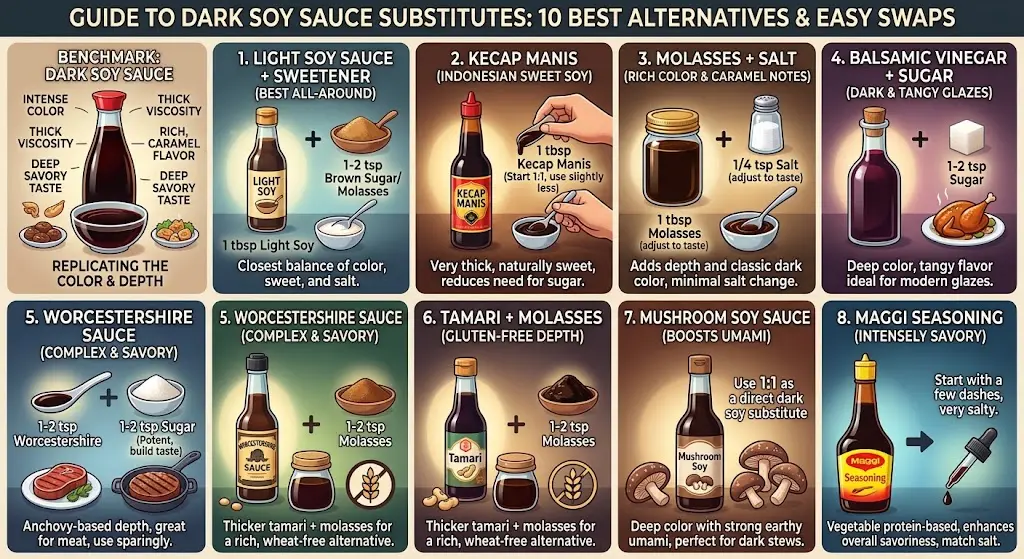
The best replacement depends on what your recipe needs most: saltiness, sweetness, color, thickness, or umami.
| Substitute | Starting Ratio | What It Adds | Best For | Dietary Notes |
|---|---|---|---|---|
| Light Soy Sauce + Brown Sugar | 1 tbsp soy + ½ tsp sugar | Saltiness, sweetness, moderate color | Stir-fries, marinades | Use a certified GF version when needed |
| Tamari | 1:1 | Umami and savory depth | Noodles, general cooking | Many varieties are gluten-free; check label |
| Coconut Aminos | 1:1 | Mild savory flavor and sweetness | Stir-fries, sauces | Soy-free, gluten-free |
| Hoisin Sauce | 1:1 | Sweetness, thickness, bold flavor | Glazes, braises | Check label for dietary requirements |
| Mushroom Soy Sauce | 1:1 | Umami and dark color | Vegetarian dishes | Check ingredients |
| Oyster Sauce | 1:1 | Savory depth and richness | Braises, marinades | Not vegan |
| Sweet Soy Sauce / Kecap Manis | 1:1 | Dark color, sweetness, syrupy texture | Stir-fries, glazing | Check label for dietary requirements |
| Teriyaki Sauce | 1:1 | Sweet-savory flavor | Quick stir-fries | Check ingredients |
| Worcestershire Sauce | 1:1 | Complex savory flavor and color | Western-style braises | Often contains non-vegan ingredients |
| DIY Quick Dark Soy Mix | 1 tbsp soy + ½ tsp molasses/sugar | Sweetness, color, and richness | Almost any recipe | Flexible |
⭐ Best All-Around Swap
For most recipes, start with 1 tablespoon light soy sauce + ½ teaspoon brown sugar or molasses. Add gradually and taste before adding more.
How to Use Dark Soy Sauce Substitutes in Recipes
For Stir-Fries
Use light soy sauce with brown sugar, tamari, or coconut aminos. Hoisin sauce or a little molasses can provide extra thickness and sweetness.
For Marinades & Sauces
Tamari or oyster sauce can provide umami depth, while Kecap Manis contributes a sweet, syrupy texture. Adjust saltiness as needed.
For Noodles & Fried Rice
Light soy sauce with brown sugar or mushroom soy sauce can maintain a rich color and umami flavor without overpowering the dish.
For Braised Dishes & Glazes
Hoisin sauce, Kecap Manis, or a DIY dark soy mix works particularly well when you want a thick, glossy coating.
Tips to Maintain Original Color, Flavor, and Thickness
- Color: Add a little molasses or brown sugar to light soy or tamari.
- Flavor: Combine two substitutes to recreate greater umami depth.
- Thickness: Simmer sauces briefly to reduce excess liquid.
- Taste-test: Adjust salt and sweetness gradually.
Maintaining Color, Flavor & Consistency
Adjusting Sweetness and Saltiness
Different substitutes vary in sweetness and saltiness. Light soy sauce with brown sugar can reproduce some of dark soy sauce’s balance, while coconut aminos are generally milder. Taste as you go and adjust gradually.
Thickening Tips for Sauces
- Simmer sauces slightly to reduce excess water.
- Add a small amount of molasses or hoisin sauce.
- Combine two substitutes for a richer, glossier consistency.
Color Preservation Techniques
- Mix light soy sauce with brown sugar or molasses.
- Use Kecap Manis for a dark, syrupy finish.
- Use mushroom soy sauce when you need both color and umami.
Flavor Balance for Umami-Rich Dishes
Consider combining umami-rich options such as mushroom soy sauce and tamari. Oyster sauce can add depth to non-vegetarian dishes, while sweetness and saltiness should be adjusted gradually.
Dietary & Allergy-Friendly Substitutes
Gluten-Free Options
Tamari is a popular choice. You can also use a certified gluten-free soy sauce with brown sugar or molasses. Always check the product label if gluten avoidance is important.
Soy-Free Options
Coconut aminos are a convenient soy-free alternative. A homemade pantry mix using molasses and other ingredients can also work.
Vegan Alternatives
Mushroom soy sauce, hoisin sauce, and some sweet soy sauces can work well. Always check the ingredient label because formulations vary.
Lower-Sodium Options
Coconut aminos or reduced-sodium soy sauce can be useful choices. Tamari can also be diluted slightly with water and adjusted to taste.
If you are avoiding gluten, soy, shellfish, or animal-derived ingredients because of an allergy or dietary requirement, check the exact product label. Sauces can vary by brand, and a substitute that is suitable in one formulation may not be suitable in another.
Quick Fix & Pantry-Friendly Substitutions
5 Instant Swaps When You’re Missing Dark Soy Sauce
- Light soy sauce + brown sugar — mimics sweetness and adds some color.
- Tamari — convenient 1:1 option for general cooking.
- Coconut aminos — useful for soy-free, gluten-free dishes.
- Hoisin sauce — delivers sweetness, thickness, and bold flavor.
- Mushroom soy sauce — adds umami and works especially well in vegetarian dishes.
Using Combinations of Substitutes for Best Results
Light Soy + Molasses
Best when you need color, savory flavor, and thickness.
Tamari + Sugar
Useful when you want umami with a touch of sweetness.
Coconut Aminos + Hoisin
A quick combination for a sweet-savory, soy-free option.
Homemade Dark Soy Sauce Recipes
DIY Quick Mix
Mix together and use immediately in stir-fries, noodles, marinades, and sauces.
Simmered Version
Simmer light soy sauce with a little brown sugar and molasses for about 30 minutes. This produces a deeper color and flavor.
Longer Homemade Version
Combine soy sauce, molasses, brown sugar, and optional mushroom soy or tamari, then simmer slowly for 1–2 hours for a fuller-bodied substitute.
Storage Tips
- Store in an airtight container in the refrigerator.
- Quick mixes: up to 1 week.
- Simmered versions: about 3–4 weeks.
- Shake before use if ingredients settle.
Homemade sauces do not have the same validated shelf-life controls as commercially produced sauces. Refrigerate promptly, use clean containers and utensils, and discard the sauce if you notice mold, fermentation, an unusual odor, or other signs of spoilage.
International & Less Common Alternatives
Kecap Manis
Kecap Manis is a thick, sweet Indonesian soy sauce. It is darker and sweeter than traditional dark soy sauce and works well in stir-fries, glazes, and marinades.
Japanese Black Soy Sauce (Kuro Shoyu)
Kuro Shoyu can provide deep umami and a dark hue, making it useful in braises, noodles, noodle soups, and Asian-style fusion recipes.
Other Soy & Umami-Rich Sauces
- Chinese mushroom soy sauce: vegetarian-friendly depth.
- Thai sweet soy sauce: slightly sweeter for stir-fries.
- Korean ganjang: traditional soy sauce that can contribute savory depth.
FAQs About How to Substitute Dark Soy Sauce
Can I use light soy sauce instead of dark soy sauce?
Yes. Light soy sauce lacks some of the sweetness, thickness, and deep color of dark soy sauce, so adding brown sugar or molasses can help bridge the difference.
How much substitute should I use for 1 tbsp of dark soy sauce?
Many alternatives can begin at a 1:1 ratio. For light soy sauce, try 1 tablespoon light soy sauce + ½ teaspoon sugar or molasses.
Will substitutes affect the color of my dish?
Yes. Light soy sauce and tamari may produce a lighter result, while molasses, hoisin, and Kecap Manis can contribute a deeper, glossier color.
Can I make a soy-free version?
Yes. Coconut aminos are a convenient soy-free option. A homemade mixture can also be adapted around pantry ingredients.
What are the quickest substitutes?
Light soy sauce + brown sugar, tamari, coconut aminos, hoisin sauce, and mushroom soy sauce are among the easiest pantry options.
Can I omit dark soy sauce entirely?
Yes, although your dish may lose some color, sweetness, and depth. A combination of light soy sauce and molasses or another substitute can help compensate.
How can I mimic the flavor without sugar or molasses?
Try combining tamari, mushroom soy sauce, or hoisin sauce for additional umami depth. The result will not be identical, but it can provide a satisfying savory alternative.
Tips & Tricks for Perfect Substitution
Conclusion
Substituting dark soy sauce doesn’t have to be difficult. Options such as light soy sauce + brown sugar, tamari, coconut aminos, hoisin, mushroom soy sauce, Kecap Manis, and DIY mixes can help maintain the flavor, color, and consistency of your favorite dishes.
The best approach is to choose your substitute based on what the recipe needs most. Combine alternatives when necessary, adjust sweetness and saltiness gradually, and taste-test as you cook.