Missing dark soy sauce? Learn exactly what to use instead for stir-fries, noodles, marinades, braises and glazes—with practical ratios for matching its rich color, savory flavor and sweetness.
Quick Answer
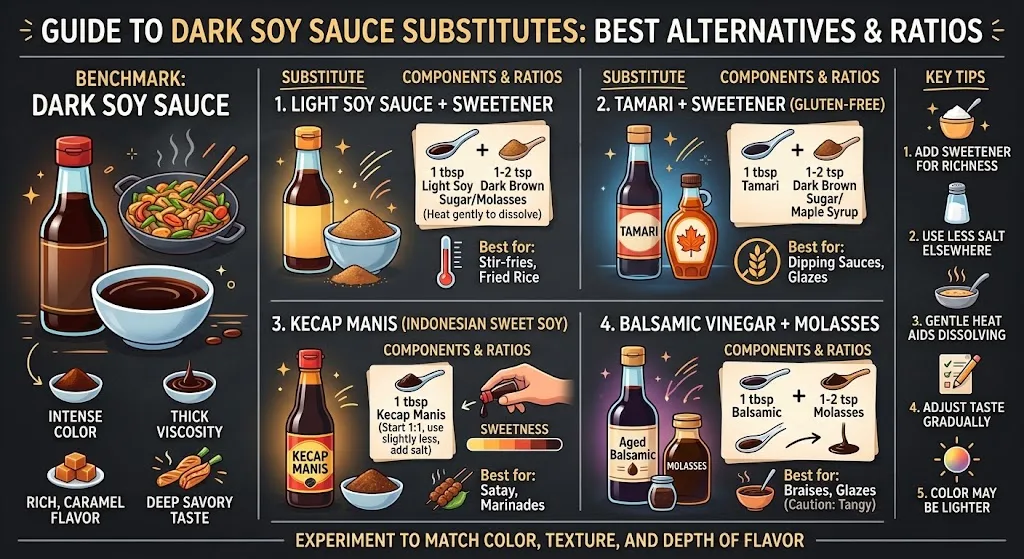
The easiest substitute is 1 tablespoon light soy sauce plus ½ teaspoon brown sugar or molasses for every 1 tablespoon of dark soy sauce. Tamari, coconut aminos, hoisin sauce, mushroom soy sauce and Kecap Manis can also work, depending on the recipe and dietary requirements.
Dark soy sauce is a staple in many Asian recipes, giving dishes a rich color, thicker texture and slightly sweet flavor. But sometimes you may not have it on hand—or you may need a gluten-free, soy-free or vegan alternative. That is where knowing how to substitute dark soy sauce becomes useful.
In this guide, you’ll discover the best dark soy sauce substitutes, including light soy sauce with sugar, tamari, coconut aminos, hoisin sauce, mushroom soy sauce and more. You’ll also learn practical ratios, quick DIY options and techniques for maintaining flavor, color and thickness.
Understanding Dark Soy Sauce
Flavor Profile and Typical Uses in Recipes
Dark soy sauce is known for its deep color, savory umami flavor, mild sweetness and thicker consistency compared with many regular soy sauces. It is commonly used to season and color stir-fries, braises, marinades, noodles and sauces.
Dark soy sauce often contributes more color and sweetness than salt. A good substitute therefore needs to consider more than simply replacing the same volume of sauce.
Difference Between Dark Soy Sauce and Light Soy Sauce
The main differences are color, sweetness, saltiness and consistency. Dark soy sauce is generally darker, thicker and somewhat sweeter, while light soy sauce is typically thinner, saltier and primarily used for seasoning.
Common Dishes That Rely on Dark Soy Sauce
Dark soy sauce is especially useful in stir-fries, braised meats, fried rice, noodles, marinades and glossy sauces. It gives dishes a characteristic dark appearance while contributing savory depth.
Why Dark Soy Sauce Affects Color, Flavor and Consistency
Dark soy sauce contributes several things at once: umami, sweetness, color and body. That means the best substitute depends on which of those qualities matters most in your particular dish.
Top Substitutes for Dark Soy Sauce
The right substitute depends on whether your priority is flavor, color, thickness, sweetness or dietary compatibility.
| Substitute | Starting Ratio | What It Adds | Best Uses | Dietary Notes |
|---|---|---|---|---|
| Light Soy Sauce + Brown Sugar | 1 tbsp + ½ tsp | Salt, umami and sweetness | Stir-fries, marinades, sauces | Use certified gluten-free products if needed |
| Tamari | 1:1 | Rich savory flavor | Noodles, stir-fries, general cooking | Many are gluten-free, but check the label |
| Coconut Aminos | 1:1 | Mild umami and sweetness | Stir-fries, sauces, marinades | Usually soy-free and gluten-free; verify label |
| Hoisin Sauce | 1:1, then adjust | Sweetness, thickness and bold flavor | Glazes, braises, marinades | Check ingredients for wheat, soy and animal products |
| Mushroom Soy Sauce | 1:1 | Deep color and umami | Vegetarian dishes, noodles, stir-fries | Usually soy-based; check ingredients |
| Oyster Sauce | 1:1 | Strong savory depth and body | Braises, marinades, stir-fries | Not vegetarian or vegan |
| Kecap Manis | 1:1, adjust sweetness | Dark color and syrupy sweetness | Stir-fries, noodles, glazing | Typically soy-based; check label for dietary needs |
| Teriyaki Sauce | 1:1 | Sweet-savory flavor | Quick stir-fries and glazes | Ingredients vary by brand |
| Worcestershire Sauce | Use sparingly | Tangy umami and darker color | Fusion dishes and Western-style braises | Some contain fish and/or gluten |
| DIY Dark Soy Mix | 1 tbsp light soy + ½ tsp molasses | Color, sweetness and savory flavor | Most everyday recipes | Adapt ingredients to dietary requirements |
How to Use Substitutes in Recipes
Stir-Fries
For stir-fries, light soy sauce combined with brown sugar or molasses is an excellent starting point. Tamari and coconut aminos can also work. Add the sauce during the final stages of cooking and adjust gradually so the dish does not become overly salty.
Marinades & Sauces
Tamari provides savory depth, while Kecap Manis adds sweetness and thickness. Hoisin can also work when its stronger flavor complements the recipe. If using coconut aminos, taste before adding additional salt because brands vary in sodium content.
Noodles & Fried Rice
For noodles and fried rice, light soy sauce plus a small amount of brown sugar is an easy choice. Mushroom soy sauce can add darker color and extra umami. Add the sauce gradually and taste before adding more seasoning.
Braised Dishes & Glazes
Thick options such as Kecap Manis and hoisin are particularly useful for glazes. For braises, light soy sauce combined with molasses or brown sugar can provide a closer balance of salt, sweetness and color.
Tips to Maintain Original Color, Flavor and Thickness
- Color: Add a small amount of molasses or use Kecap Manis.
- Flavor: Combine a salty soy-based sauce with a sweet component.
- Thickness: Reduce a sauce gently or add a small amount of a thick sauce.
- Balance: Taste before adding extra salt or sugar.
Maintaining Color, Flavor & Consistency
Adjusting Sweetness and Saltiness
Substitutes vary considerably. Light soy sauce and tamari can be relatively salty, while coconut aminos are often milder and sweeter. Kecap Manis and hoisin can introduce considerably more sweetness. Add your substitute in stages and taste as you go.
Thickening Tips for Sauces
- Simmer the sauce gently to reduce excess liquid.
- Add a small amount of molasses for color and body.
- Use hoisin or Kecap Manis when a thicker glaze is desirable.
- Combine two substitutes when you need both umami and thickness.
Color Preservation Techniques
If appearance is important, combine light soy sauce with a small amount of brown sugar or molasses. Kecap Manis is another strong option when a dark, glossy finish is desired.
Flavor Balance for Umami-Rich Dishes
Mushroom-based sauces, tamari and oyster sauce can provide substantial umami. Combining two compatible ingredients can produce a more balanced result than relying on one substitute.
Don’t automatically replace dark soy sauce with the same amount of a sweeter sauce. Start with less when using Kecap Manis or hoisin, then adjust after tasting.
Dietary & Allergy-Friendly Substitutes
Gluten-Free Options
Tamari is a popular gluten-free alternative, but not every tamari product is necessarily gluten-free. Always check the package if gluten avoidance is important. Certified gluten-free soy sauce can also be combined with brown sugar or molasses.
Soy-Free Options
Coconut aminos are one of the easiest soy-free alternatives. They are generally milder and sweeter than soy sauce, so you may need to adjust salt and other seasonings.
Vegan Alternatives
Mushroom-based sauces, many hoisin sauces and some Kecap Manis products can be vegan-friendly. However, formulations vary, so check the ingredient label rather than assuming a product is vegan.
Lower-Sodium Options
Coconut aminos may be useful when you want a milder, lower-sodium alternative, although sodium content varies by brand. Another approach is to use a reduced-sodium soy sauce and build sweetness and color separately.
If you have a food allergy or medically required dietary restriction, check the actual product label. Soy sauce, tamari, hoisin, oyster sauce, mushroom soy sauce and Worcestershire sauce can have different formulations and allergen statements.
Quick Fix & Pantry-Friendly Substitutions
5 Instant Swaps When You’re Missing Dark Soy Sauce
Light Soy + Brown Sugar
The best all-purpose option when you want saltiness, umami and a touch of sweetness.
1 tbsp soy + ½ tsp sugarTamari
A rich, savory option that works especially well in noodles and stir-fries.
Start at 1:1Coconut Aminos
A useful soy-free option with a naturally mild, slightly sweet flavor.
Start at 1:1Hoisin Sauce
Thick, sweet and bold, making it particularly useful for glazes and braises.
Use less if very sweetMushroom Soy Sauce
Adds dark color and strong umami, especially in vegetarian dishes.
Start at 1:1Using Combinations of Substitutes for Best Results
- Light soy + molasses: color, salt and body.
- Tamari + a touch of sugar: savory flavor with sweetness.
- Coconut aminos + hoisin: mild sweetness and body, but check ingredients for dietary restrictions.
Homemade Dark Soy Sauce Substitute Recipes
A homemade substitute gives you more control over sweetness, color and intensity. The following versions are designed as practical replacements rather than exact replicas of traditionally produced dark soy sauce.
5-Minute DIY Dark Soy Sauce Substitute
Best for quick stir-fries, noodles and marinades.
Ingredients
- 1 tbsp light soy sauce
- ½ tsp brown sugar or molasses
Method
- Combine the soy sauce and brown sugar or molasses.
- Stir until the sweetener is well incorporated.
- Taste and adjust sweetness if necessary.
- Use immediately in place of approximately 1 tbsp dark soy sauce.
30-Minute Richer Sauce
Useful when you want deeper color and a more concentrated flavor.
Combine light soy sauce with a small amount of brown sugar and molasses. Simmer gently over low heat until the mixture becomes slightly more concentrated.
Keep the heat low and watch the sauce closely. Sugar-heavy mixtures can scorch as they reduce.
Longer Simmered Version
A concentrated option for recipes where color and body matter.
Combine soy sauce with a small amount of molasses and brown sugar, then reduce gently until the desired consistency is reached. Optional mushroom seasoning can provide additional savory depth.
A very long simmer is not automatically better. Stop once the sauce reaches the desired concentration, because excessive reduction can make it overly salty, bitter or sticky.
Storage Tips
- Place homemade mixtures in a clean, airtight container.
- Refrigerate homemade substitutes.
- For best quality and food safety, make small batches and use them promptly.
- Discard the mixture if it develops an unusual odor, appearance or mold.
International & Less Common Alternatives
Kecap Manis
Kecap Manis is an Indonesian sweet soy sauce with a thick, syrup-like consistency and dark color. It can be an excellent substitute for dark soy sauce in stir-fries, glazes and marinades, although it is considerably sweeter.
Start with a 1:1 ratio and reduce other sweeteners in the recipe if necessary.
Japanese Black Soy Sauce (Kuro Shoyu)
Japanese black soy sauce products can provide dark color and savory depth. Because formulations differ, start with a small amount and adjust according to the recipe.
Other Regional Soy or Umami-Rich Sauces
- Chinese mushroom soy sauce: useful for dark color and umami.
- Thai sweet soy sauce: useful when sweetness is welcome.
- Korean ganjang: can contribute savory soy flavor, although it will not necessarily reproduce the sweetness or thickness of dark soy sauce.
FAQs About Dark Soy Sauce Substitutes
Can I use light soy sauce instead of dark soy sauce?
Yes. Light soy sauce can replace dark soy sauce, but it generally provides less sweetness, thickness and dark color. Add about ½ teaspoon brown sugar or molasses per tablespoon of light soy sauce to move the flavor closer to dark soy sauce.
How much substitute should I use for 1 tablespoon of dark soy sauce?
Many liquid substitutes can begin at a 1:1 ratio. For light soy sauce, start with 1 tablespoon plus ½ teaspoon brown sugar or molasses. Sweeter sauces such as Kecap Manis or hoisin may need a smaller amount depending on the recipe.
Will substitutes affect the color of my dish?
Yes. Light soy sauce and some tamari products are lighter than dark soy sauce. Molasses, Kecap Manis, mushroom soy sauce and darker sauces can help produce a deeper appearance.
Can I make a soy-free version?
Yes. Coconut aminos are one of the easiest soy-free choices. They are usually milder and sweeter, so taste and adjust the seasoning rather than automatically using extra salt.
What are the quickest substitutes when I’m out of dark soy sauce?
The fastest options include light soy sauce with brown sugar, tamari, coconut aminos, hoisin sauce, mushroom soy sauce and Kecap Manis.
Can I omit dark soy sauce completely?
Yes, especially when it is primarily being used for color. However, the dish may be lighter and slightly different in flavor. Light soy sauce combined with a small amount of molasses or sugar can help compensate.
How can I mimic the flavor without sugar or molasses?
Focus on savory depth rather than sweetness. Tamari or mushroom-based sauces can add umami, while a suitable dark sauce can help with color. The result will not be identical, but it can still work very well.
Tips & Tricks for Perfect Substitution
Combine 2 Substitutes for Better Flavor & Color
A combination can often get closer to the original than a single ingredient. Try light soy sauce with molasses, tamari with a little sugar, or coconut aminos with a suitable thick sauce.
Use Substitutes to Enhance Natural Umami
Mushroom-based sauces, tamari and oyster sauce can provide strong savory depth. Choose the option that fits the dish and dietary requirements rather than trying to match dark soy sauce by color alone.
Adjust Seasoning Gradually & Taste-Test
This is the most important substitution rule. Different brands have different salt, sugar and flavor levels. Start conservatively, taste, then add more as needed.
Match the job, not just the ingredient. If dark soy sauce is mainly providing color, prioritize a dark sauce. If it is providing salt and umami, prioritize a savory soy-based substitute. If it is creating a glossy glaze, choose something thicker and sweeter.
Conclusion
Finding a good dark soy sauce substitute does not have to be difficult. For most everyday recipes, light soy sauce plus a little brown sugar or molasses is one of the easiest solutions.
Tamari, coconut aminos, hoisin sauce, mushroom soy sauce, Kecap Manis and other alternatives can also work depending on whether you need more umami, sweetness, color, thickness or dietary flexibility.
The key is to start with the recommended ratio, taste as you go and adjust gradually. With the right combination, you can make delicious stir-fries, noodles, marinades, braises and glazes even when dark soy sauce is missing from your pantry.
Cook With Confidence—even Without Dark Soy Sauce
Keep this guide handy whenever a recipe calls for dark soy sauce. Choose your substitute based on flavor, color, thickness and dietary needs, then adjust to taste.
Read More :