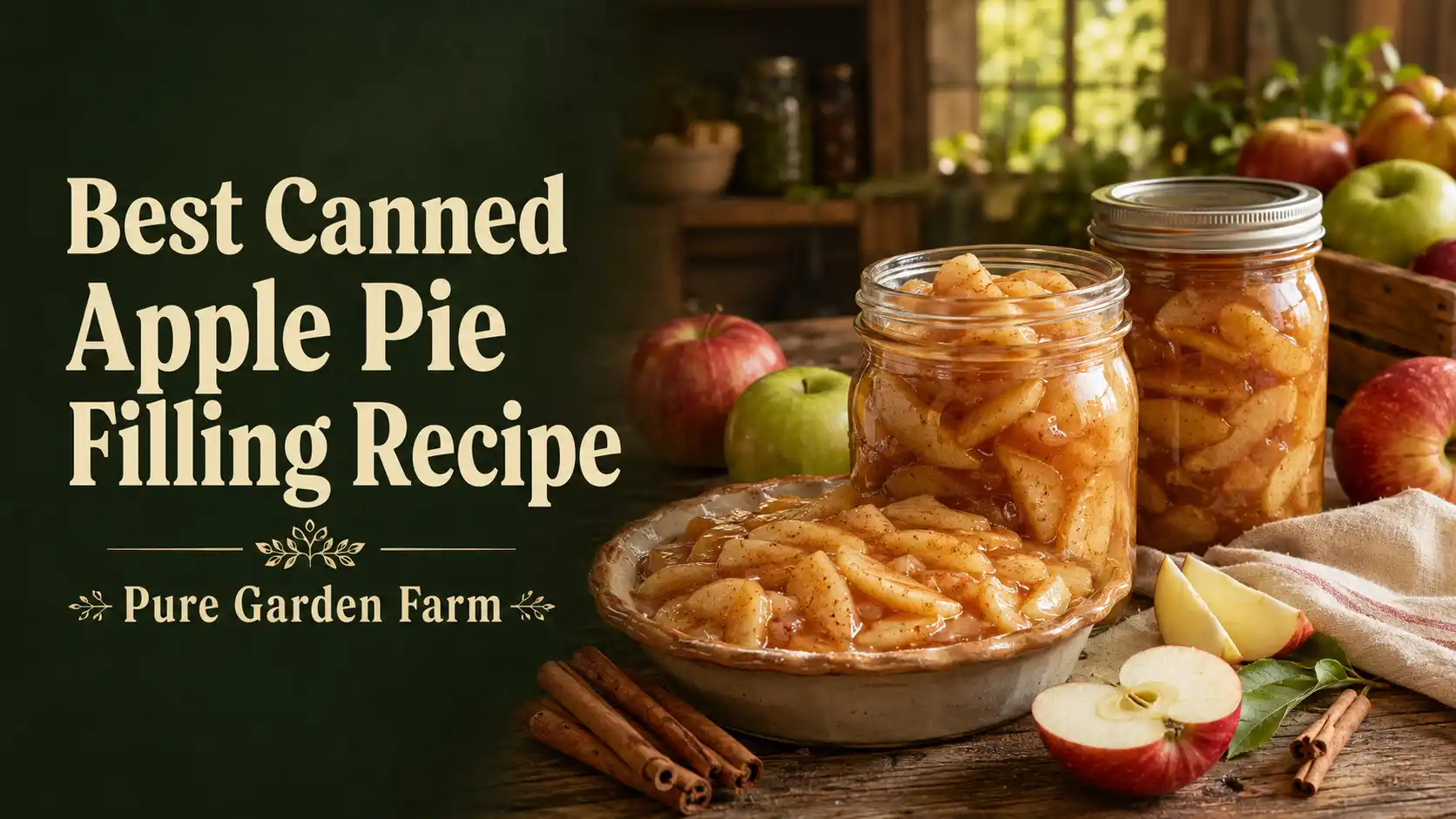
Canned Apple Pie Filling Recipe: Safe, Easy & Pantry-Ready
Turn firm, fresh apples into shelf-stable dessert jars with a tested water-bath method, regular Clear Jel, bottled lemon juice, and altitude-adjusted processing times.
Homemade canned apple pie filling is one of the most useful ways to preserve fresh apples for the months ahead. Once your jars are properly processed, sealed, and stored, you can open one for apple pie, crisp, cobbler, turnovers, pancakes, oatmeal, cheesecake, or a warm ice cream topping.
This guide focuses on tested water-bath canning practices, beginner-friendly steps, and practical dessert use. Because pie filling is thick, it needs the correct starch and tested proportions. For this recipe, use regular cook-type Clear Jel—not flour, cornstarch, tapioca, or Instant Clear Jel.
Canned apple pie filling is sliced apples preserved in a sweet, spiced sauce for pies and desserts. A tested home-canning version uses firm apples, bottled lemon juice, regular Clear Jel, a hot pack, 1-inch headspace, and boiling-water processing adjusted for altitude.
Do not improvise the thickener, lemon juice amount, jar size, or processing schedule. The specific apple pie filling recipe below follows the National Center for Home Food Preservation formula. Sugar and dry spices can be adjusted modestly for taste, but the bottled lemon juice should not be reduced.
Canned Apple Pie Filling Recipe at a Glance
| Recipe Detail | Tested Guidance |
|---|---|
| Recipe type | Hot-pack, boiling-water canned apple pie filling |
| Tested jar sizes | Pints or quarts |
| Main thickener | Regular cook-type Clear Jel |
| Headspace | 1 inch |
| Processing method | Boiling-water canner |
| Best apples | Firm, crisp apples |
| Best-quality storage | Plan to use within about 1 year; store cool, dark, and dry |
| Best uses | Pie, crisp, cobbler, turnovers, oatmeal, pancakes, cheesecake, ice cream |
What Is Canned Apple Pie Filling?
Canned apple pie filling is a hot-packed mixture of sliced apples, sugar, spices, bottled lemon juice, apple juice, water, and a canning-safe thickener. It is packed into jars and processed in a boiling-water canner for shelf storage.
Unlike fresh pie filling, a home-canned version must be made so heat can move through the jar as expected during processing. That is why this tested recipe uses regular Clear Jel. It gives the sauce a stable texture after canning and later baking.
In practical terms, each jar becomes a ready-to-use dessert starter. You do the peeling, slicing, blanching, sauce-making, and canning once, then finish the dessert when you need it.
Why This Recipe Works Well for Beginners
This recipe keeps the process predictable by using a tested ingredient ratio and a clear hot-pack sequence.
Safe Canned Apple Pie Filling Recipe Card
Specific apple pie filling formula based on the National Center for Home Food Preservation tested recipe.
Ingredients for 1 Quart
- 3½ cups blanched, sliced fresh apples
- ¾ cup + 2 tbsp granulated sugar
- ¼ cup regular Clear Jel
- ½ tsp ground cinnamon
- ½ cup cold water
- ¾ cup apple juice
- 2 tbsp bottled lemon juice
- ⅛ tsp ground nutmeg, optional
Ingredients for 7 Quarts
- 6 quarts blanched, sliced fresh apples
- 5½ cups granulated sugar
- 1½ cups regular Clear Jel
- 1 tbsp ground cinnamon
- 2½ cups cold water
- 5 cups apple juice
- ¾ cup bottled lemon juice
- 1 tsp ground nutmeg, optional
Use the specific apple pie filling amounts above. General pie-filling guidance may show different Clear Jel quantities for other fruits or general formulations; the apple-specific tested recipe uses 1½ cups for 7 quarts.
Method
- Prepare apples: Wash, peel, core, and slice about ½ inch wide. Hold slices in an ascorbic-acid solution to limit browning.
- Blanch: Work with 6 cups of sliced apples at a time in 1 gallon of boiling water. Boil for 1 minute after the water returns to a boil. Drain and keep hot.
- Make sauce: Combine sugar, regular Clear Jel, cinnamon, cold water, and apple juice. Cook over medium-high heat, stirring constantly, until thick and bubbling.
- Add acid: Add bottled lemon juice and boil for 1 minute, stirring constantly.
- Fold in apples: Immediately fold the drained hot apple slices into the hot sauce.
- Fill jars: Ladle into hot jars, leaving 1 inch headspace. Remove bubbles, recheck headspace, wipe rims, and apply lids and bands fingertip-tight.
- Process: Process pints or quarts in a boiling-water canner using the altitude table below.
Can You Reduce the Sugar or Change the Flavor?
Can you reduce the sugar?
Yes, the National Center for Home Food Preservation’s general pie-filling guidance allows you to adjust sugar and dry spices to suit preference. A smart approach is to make a single quart first, bake with it, and decide whether you want the next batch sweeter or less sweet.
Do not reduce the bottled lemon juice. Keep the apple quantity, liquids, Clear Jel, jar sizes, headspace, and processing schedule within the tested recipe.
Can you skip the apple juice?
For shelf-stable canning, use the tested apple-juice and water proportions in the recipe rather than inventing a liquid substitution. If you want a different formulation, use another tested preservation recipe.
Can you add vanilla, cloves, or cardamom?
Dry spice adjustments are mainly a flavor choice. Keep additions modest because spices can become more noticeable during storage. Avoid adding butter, dairy, flour, cornstarch, or other untested ingredients before canning.
Best Apples for Canned Apple Pie Filling
The best apples for canning are firm and crisp. The tested NCHFP recipe specifically names Stayman, Golden Delicious, Rome, and similar-quality varieties.
| Apple Variety | Flavor | Texture | Best Use |
|---|---|---|---|
| Granny Smith | Tart | Very firm | Balanced, structured filling |
| Golden Delicious | Sweet | Medium-firm | Softer, sweeter batches |
| Rome | Mild-sweet | Firm | Baking and canning |
| Stayman | Tart-sweet | Firm | Classic pie flavor |
| Braeburn | Sweet-tart | Firm | Rich apple flavor |
| Honeycrisp | Sweet-tart | Crisp | Mixed-variety batches |
| Jonagold | Sweet-tart | Medium-firm | Dessert-style filling |
Should you mix apple varieties?
Yes. Combining a tart apple with a sweeter apple can create a more layered flavor. For example, pair Granny Smith with Golden Delicious, Honeycrisp, or Jonagold.
Which apples should you avoid?
Avoid overripe, bruised, or very mealy fruit. Softer apples are more likely to break down during blanching, canning, storage, and baking.
Why Regular Clear Jel Matters for Canning Safety
Regular Clear Jel is a modified food starch used in tested canned pie-filling recipes because it provides the intended thickness through canning and later baking. Clemson Extension specifically advises using Clear Jel in these recipes and not substituting other starches.
Do not replace regular Clear Jel with Instant Clear Jel, cornstarch, flour, or tapioca in this shelf-stable canned pie filling.
Is regular Clear Jel the same as Instant Clear Jel?
No. Use regular cook-type Clear Jel. Instant Clear Jel behaves differently and is not the product specified for this tested recipe.
What if you cannot find regular Clear Jel?
Do not improvise the thickener. A practical alternative is to can apples using a tested plain-apple method and add sugar, spices, and your preferred thickener after opening when you make the dessert.
| Thickener | Use in This Canned Recipe? | Best Use |
|---|---|---|
| Regular Clear Jel | Yes — tested amount only | Shelf-stable canned pie filling |
| Instant Clear Jel | No | Fresh or refrigerated applications |
| Cornstarch | No | Fresh pie filling |
| Flour | No | Fresh baked fillings |
| Tapioca | No | Fresh pie filling |
Equipment You Need
| Equipment | Why You Need It |
|---|---|
| Boiling-water canner | Processes the filled jars using the tested method |
| Pint or quart canning jars | Tested jar sizes for this filling |
| New lids + clean bands | Creates and secures the closure during processing |
| Jar lifter | Moves hot jars safely |
| Canning funnel | Helps keep jar rims clean |
| Bubble remover/headspace tool | Releases trapped air and checks headspace |
| Large pot | Blanches apples and cooks sauce |
| Peeler/corer/slicer | Speeds up even apple preparation |
| Clean towels | Protects work surfaces and cooling jars |
How to Make Canned Apple Pie Filling Step by Step
Prepare the apples
Wash, peel, core, and slice the apples about ½ inch wide. Keep the slices as even as possible. Place prepared slices in water containing ascorbic acid or use a suitable produce pretreatment to reduce browning.
Blanch in small batches
Place 6 cups of apple slices at a time in 1 gallon of boiling water. Once the water returns to a boil, blanch for 1 minute. Drain and keep the fruit hot in a covered bowl or pot.
Cook the Clear Jel sauce
Combine sugar, regular Clear Jel, cinnamon, cold water, and apple juice. Cook over medium-high heat, stirring constantly, until the mixture thickens and begins to bubble.
Add bottled lemon juice
Add the measured bottled lemon juice. Boil the sauce for 1 minute while stirring constantly.
Fold in hot apples
Immediately fold the drained, hot apple slices into the thickened sauce. Work carefully so the slices remain as intact as possible.
Fill hot jars
Ladle the hot filling into hot jars, leaving 1 inch headspace. Remove trapped bubbles, adjust the headspace if needed, wipe rims, and apply lids and bands fingertip-tight.
Water-Bath Canning Times by Altitude
Process hot-packed pints or quarts according to your elevation.
| Altitude | Processing Time for Pints or Quarts |
|---|---|
| 0–1,000 ft | 25 minutes |
| 1,001–3,000 ft | 30 minutes |
| 3,001–6,000 ft | 35 minutes |
| Above 6,000 ft | 40 minutes |
Use the processing time for your canning location’s elevation. Do not use the 25-minute sea-level time if you live above 1,000 feet.
What should you do after processing?
After the processing time ends, turn off the heat and remove the canner lid carefully. Ball’s current apple pie filling directions call for letting jars stand in the canner for 5 minutes before removal. Then lift jars straight up and place them on a protected surface to cool undisturbed for 12 to 24 hours.
Check the seal after cooling. A properly sealed lid should be concave and should not flex when pressed in the center. Remove bands for storage, label the jars, and keep them in a cool, dark, dry place.
What Can You Change Safely?
| Change | Safe? | Best Guidance |
|---|---|---|
| Add or reduce dry cinnamon | Generally yes | Adjust modestly for flavor |
| Use optional nutmeg | Yes | Use the tested amount or modest dry-spice adjustment |
| Skip optional food coloring | Yes | It is not required |
| Adjust sugar for taste | Yes | NCHFP general pie-filling guidance permits sugar adjustment |
| Use another firm, crisp apple variety | Yes | Choose good-quality firm fruit |
| Reduce bottled lemon juice | No | Do not reduce the acid |
| Replace regular Clear Jel with cornstarch/flour | No | Use regular Clear Jel |
| Increase Clear Jel for thicker filling | No | Keep the tested amount |
| Add butter, cream, or dairy | No | Add after opening if desired |
| Use an untested jar size | No | Use pints or quarts |
How Many Jars Does This Recipe Make?
The tested large batch produces about 7 quarts when made with 6 quarts of blanched sliced apples. NCHFP’s general pie-filling guidance states that one quart makes one 8- to 9-inch pie.
| Dessert | Practical Starting Amount |
|---|---|
| 8- to 9-inch pie | About 1 quart |
| 8×8 apple crisp | About 1 quart |
| 9×13 cobbler | About 2 quarts, depending on depth |
| Turnovers | Use spoonfuls as needed |
| Pancake or ice cream topping | Open a pint or quart based on servings |
Storage, Shelf Life, and Food Safety
Label and date sealed jars and store them in a clean, cool, dark, dry place. For best quality, NCHFP recommends storing home-canned foods around 50–70°F and planning to use what you can within about 1 year.
After opening a jar, refrigerate the filling and use it promptly as you would other cooked fruit leftovers.
Never taste food from a jar that is unsealed or shows signs of spoilage. Warning signs include a failed or bulging seal, leakage, rising bubbles, unnatural color, spurting liquid, off odors, or visible mold.
Should you store jars with the bands on?
After the jars have cooled and you have confirmed the seals, removing the screw bands for storage makes it easier to notice seal failures and residue around the lid area. Wash and dry jars before storing them.
Common Mistakes to Avoid
What happens if you overfill the jars?
Too little headspace can contribute to siphoning, food on the rim, and seal problems. Maintain 1 inch headspace.
Why did my filling leak during processing?
Thick products can siphon when jars are overfilled, bubbles are not removed, or temperature changes are abrupt. Use the correct headspace, keep the filling hot, and follow the full processing and cooling sequence.
Why is my filling too thick?
Common causes include too much Clear Jel or measurement errors. Do not add extra starch to make the canned product thicker.
Why is my filling runny?
Apple varieties release different amounts of juice, and inaccurate starch measurement can also change texture. If the jar is safely processed, sealed, and shows no spoilage signs, a looser filling can still work well in crisps, cobblers, or as a topping.
Why did my apples float?
Fruit contains air. Blanching and hot packing help remove trapped air and reduce floating, although some movement can still happen.
Why did a jar fail to seal?
Possible causes include food on the rim, incorrect headspace, damaged lids or jars, or processing problems. Treat an unsealed jar as refrigerated food rather than shelf-stable food.
Practical Tips for Better Flavor and Texture
- Use firm apples, not soft or mealy fruit.
- Mix tart and sweet apple varieties for more balanced flavor.
- Slice apples evenly so they blanch and pack consistently.
- Keep blanched apples hot while you prepare the sauce.
- Stir the Clear Jel mixture constantly while it heats.
- Add the bottled lemon juice exactly as directed.
- Fill jars while the filling is hot.
- Remove trapped bubbles carefully because thick filling can hold air pockets.
- Avoid over-spicing; you can always add more spice after opening.
- Label each jar with the product and canning date.
- Store sealed jars without bands in a cool, dark, dry location.
How to Use Homemade Canned Apple Pie Filling
| Use | Easy Idea |
|---|---|
| Apple pie | Pour into crust, top, and bake until the crust is done |
| Apple crisp | Add an oat crumble and bake until browned |
| Apple cobbler | Spoon into a baking dish and top with biscuit dough |
| Turnovers | Spoon into puff pastry and seal |
| Cheesecake | Warm slightly and spoon over slices |
| Pancakes or waffles | Serve as a warm fruit topping |
| Oatmeal | Stir in a few spoonfuls |
| Yogurt parfait | Layer with yogurt and granola |
| Bread pudding | Fold into the bread mixture before baking |
| Ice cream | Warm and spoon over vanilla ice cream |
How to Make Apple Pie With Canned Apple Pie Filling
NCHFP notes that one quart of canned fruit pie filling is suitable for an 8- to 9-inch pie. Pour the filling into an unbaked crust, then add a top crust, lattice, or crumb topping.
Bake according to your chosen crust recipe until the crust is fully baked and the filling is hot and bubbling. Because the apples and sauce are already cooked, the crust is the main doneness cue.
After opening the jar, you can personalize the filling with vanilla, extra cinnamon, caramel sauce, butter, or other dessert additions that were intentionally left out of the shelf-stable canning process.
Can You Freeze Apple Pie Filling Instead?
Yes. Freezing is a good alternative when you do not want to follow a shelf-stable canning formula. A freezer recipe can be formulated differently because it does not depend on a tested canning heat process for pantry storage.
Use freezer-safe containers, leave appropriate expansion space, cool the filling before freezing, and thaw it in the refrigerator before use. Freezing takes more appliance space, while canning provides shelf-stable jars when the tested canning method is followed.
Quick Summary: Key Takeaways
- Use firm, crisp apples.
- Use regular cook-type Clear Jel, not Instant Clear Jel.
- Do not substitute cornstarch, flour, or tapioca in this canned filling.
- Keep the tested bottled lemon juice amount.
- Leave 1 inch headspace.
- Process pints or quarts for 25–40 minutes, depending on altitude.
- Store sealed jars in a cool, dark, dry place and aim to use them within about a year for best quality.
- Use the finished filling for pies, crisps, cobblers, turnovers, breakfasts, and dessert toppings.
FAQs About Canned Apple Pie Filling
Can you can apple pie filling without Clear Jel?
Not with this tested thickened filling recipe. If you cannot get regular Clear Jel, use a tested method for canning plain apples and thicken them after opening.
Can I use cornstarch instead of Clear Jel?
No. Cornstarch is not the tested starch for this shelf-stable canned pie filling. Use regular cook-type Clear Jel.
What apples are best for canned apple pie filling?
Choose firm, crisp apples. Stayman, Golden Delicious, and Rome are specifically named by NCHFP, and other firm baking apples can also work well.
How long does canned apple pie filling last?
For best quality, plan to use properly canned food within about one year and store jars in a cool, dark, dry place.
Can apple pie filling be water-bath canned?
Yes, when you use a tested formula, regular Clear Jel, bottled lemon juice, the correct jar size and headspace, and the processing time for your altitude.
How much canned apple pie filling makes one pie?
NCHFP states that one quart of its canned pie filling makes one 8- to 9-inch pie.
Can I reduce the lemon juice?
No. Do not reduce the bottled lemon juice in the tested recipe.
Can I reduce the sugar?
NCHFP’s general pie-filling guidance allows sugar and dry-spice adjustments for taste. Keep the apple, liquid, acid, Clear Jel, jar-size, headspace, and processing requirements unchanged.
Can I add caramel before canning?
Do not add caramel sauce, butter, cream, or dairy to this shelf-stable recipe. Add those ingredients after opening the jar.
Do I need to peel the apples?
Yes for this tested recipe. The NCHFP procedure directs canners to wash, peel, core, and slice the apples before blanching.
Conclusion
This canned apple pie filling recipe is a practical way to preserve fresh apples and make homemade desserts faster throughout the year. The key is treating it as a tested preservation recipe—not as a stovetop filling you can freely modify.
Use firm apples, regular Clear Jel, bottled lemon juice, 1-inch headspace, and the correct altitude-based water-bath processing time. Once the jars are sealed, labeled, and stored correctly, you have a convenient dessert base ready for pies, crisps, cobblers, breakfasts, and toppings.