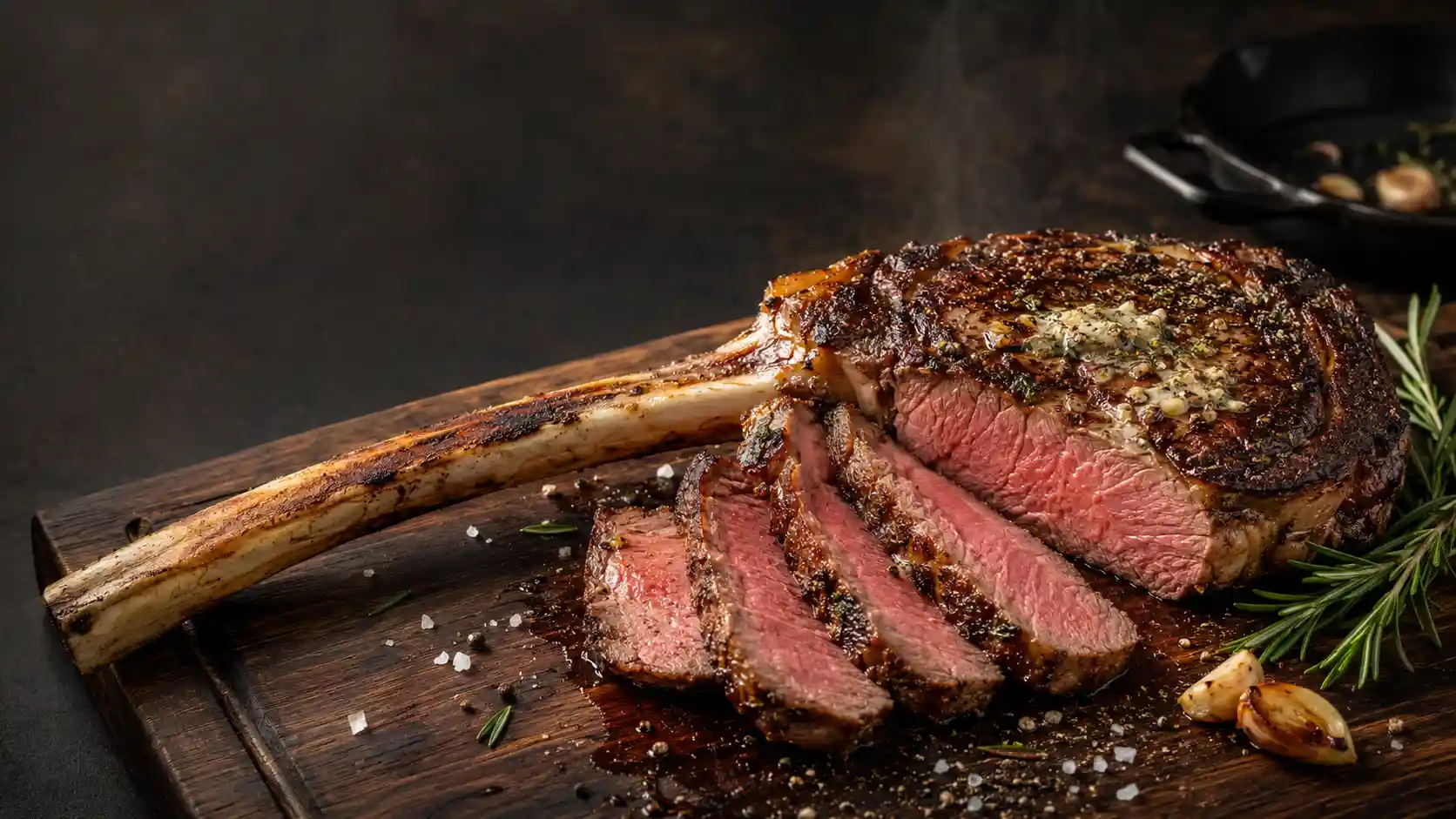
Reverse Seared Tomahawk Steak Recipe: Juicy Center & Steakhouse Crust Every Time
A Reverse Seared Tomahawk Steak is one of the best ways to cook a thick, bone-in ribeye at home. The method is simple: cook the steak slowly at low heat first, then finish it with a fast, hot sear. This gives you a juicy pink center, a deep brown crust, and less risk of overcooking the edges.
A tomahawk steak looks dramatic because the rib bone is left long and exposed. But the real value is the meat. It is usually a thick-cut ribeye with rich marbling, a tender eye, and a flavorful spinalis cap. Because the steak is so thick, it needs a different approach than a thin steak.
This guide explains how to choose, season, dry brine, reverse sear, rest, slice, and serve the best reverse seared tomahawk steak using an oven, smoker, grill, or cast iron pan.
A Reverse Seared Tomahawk Steak is cooked low and slow until it reaches about 10–15°F below the final target temperature, then seared over very high heat for a crisp crust. Use a meat thermometer, dry the surface well, season generously, and rest before slicing for the juiciest result.
Reverse Seared Tomahawk Steak Recipe Overview
Thick tomahawk steaks respond especially well to gentle heat followed by a fast, high-temperature finish.
| Detail | Recommendation |
|---|---|
| Best Cut | Tomahawk ribeye, 2–3 inches thick |
| Best Method | Low heat first, high-heat sear second |
| Oven/Smoker Temp | 225°F to 275°F |
| Best Finish | Grill, cast iron, or hot flat-top |
| Best Doneness | Medium-rare to medium |
| Total Time | About 1 hour 15 minutes to 1 hour 45 minutes |
| Serves | 2–4 people |
| Must-Have Tool | Instant-read or leave-in meat thermometer |
What Is a Tomahawk Steak?
A tomahawk steak is a bone-in ribeye steak with a long rib bone left attached. The meat comes from the rib section of the cow, the same area as ribeye and prime rib.
The long bone gives the steak its famous “tomahawk” shape. It also makes the steak look impressive on a grill, cutting board, or dinner table.
Is a tomahawk steak the same as ribeye?
Yes, the meat is ribeye. The difference is the bone presentation. A tomahawk steak has a long, frenched rib bone, while a regular bone-in ribeye has a shorter bone.
In different regions, similar cuts may be called:
- Bone-in ribeye
- Rib steak
- Cowboy steak
- Côte de boeuf
- Scotch fillet on the bone
- Cattleman’s cutlet
Is the bone worth paying for?
That depends on your goal. If you only want the most edible meat for your money, a thick ribeye may be a better value. If you want a special steak for a celebration, the tomahawk has a huge presentation advantage.
Why Reverse Sear Works So Well
Reverse searing works because thick steaks need time for the center to cook evenly. If you only use high heat, the outside can overcook before the center reaches the right temperature.
Low heat gently warms the steak from edge to center. The final hot sear then creates the crust.
Why is reverse searing better for thick steak?
Reverse searing helps:
- Reduce the gray overcooked band near the crust
- Cook the center more evenly
- Give you better temperature control
- Dry the surface before searing
- Create a deeper crust at the end
- Lower the chance of burning the outside
Can you reverse sear in the oven or smoker?
Yes. Both work well.
Use the oven when you want a simple indoor method. Use a smoker when you want a deeper wood-fired flavor. Finish either version on a ripping-hot grill, cast iron skillet, griddle, or broiler.
How to Choose the Best Tomahawk Steak
A great steak starts before you cook it. Look for thickness, marbling, and freshness.
| What to Check | What to Look For |
|---|---|
| Thickness | 2–3 inches thick |
| Color | Bright red meat, not dull brown |
| Marbling | Thin white fat lines through the meat |
| Spinalis Cap | Large ribeye cap around the eye |
| Bone | Clean, long bone for presentation |
| Grade | USDA Choice or Prime when available |
| Smell | Clean, fresh beef smell |
What size tomahawk steak should I buy?
Most tomahawk steaks weigh 2 to 3 pounds. The bone adds weight, so one steak usually feeds 2 very hungry people or 3–4 people when served with sides.
Where can you buy tomahawk steak?
- Local butcher shops
- Costco or warehouse stores
- High-end grocery meat counters
- Online meat delivery companies
- Specialty beef farms
Ingredients You Need
You do not need many ingredients. Good beef, salt, heat, and timing matter most.
| Ingredient | Purpose |
|---|---|
| Tomahawk steak | Main cut |
| Kosher salt | Seasons deeply and supports dry brining |
| Black pepper | Adds heat and classic steak flavor |
| Garlic powder | Optional savory layer |
| High-heat oil or beef tallow | Helps with searing |
| Butter | Optional finishing richness |
| Rosemary or thyme | Optional aroma |
| Flaky salt | Optional finish after slicing |
Should I use steak rub?
Yes, but keep it simple. A tomahawk steak has bold beef flavor, so it does not need a sweet or heavy rub.
Good seasoning options include:
- Kosher salt and black pepper
- Salt, pepper, and garlic powder
- Coarse steak seasoning
- Beef rub without too much sugar
- Montreal-style steak seasoning
Dry Brining for Better Flavor
Dry brining means salting the steak and letting it rest uncovered before cooking. This helps season the meat and dry the surface.
A drier surface browns better. That means a better crust.
How long should you dry brine a tomahawk steak?
| Time | Result |
|---|---|
| 30–45 minutes | Better than seasoning right before cooking |
| 2–4 hours | Good flavor and surface drying |
| 8–24 hours | Best balance for thick steak |
| Over 24 hours | Can work, but may become too salty if over-seasoned |
How much salt should I use?
Place the steak on a rack over a sheet pan. Refrigerate it uncovered. This lets air move around the steak and helps the surface dry.
Step-by-Step Reverse Seared Tomahawk Steak Method
This is the core method for a juicy tomahawk steak.
Season the Steak
Pat the steak very dry with paper towels. Season all sides with kosher salt and black pepper. Do not forget the thick edges.
For best results, season the steak the night before and refrigerate it uncovered on a rack.
Bring the Steak Closer to Room Temperature
Remove the steak from the refrigerator 45–90 minutes before cooking.
This does not fully bring a giant steak to room temperature, but it helps reduce the chill. A very cold center can cook unevenly.
Cook Low and Slow
Preheat the oven or smoker to 225°F to 275°F.
Place the steak on a wire rack over a baking sheet, or place it directly on the smoker grate. Insert a probe thermometer into the thickest part of the meat. Do not touch the bone.
Cook until the steak is about 10–15°F below your final target temperature.
Rest Briefly Before Searing
Remove the steak and rest it for 5–10 minutes while the grill or skillet gets very hot.
This short pause helps slow the internal temperature rise before the final sear.
Sear Over High Heat
Heat a grill, cast iron skillet, griddle, or flat-top until very hot.
Add a small amount of high-heat oil or beef tallow if using a pan. Sear the steak for 60–90 seconds per side. Sear the edges too.
Flip often if needed to build an even crust without burning.
Add Butter if Desired
For a richer finish, add butter, garlic, rosemary, or thyme during the final minute of pan searing. Spoon the foaming butter over the steak.
Do not add butter too early. It can burn over very high heat.
Rest, Slice, and Serve
Rest the steak for about 10 minutes. Slice it off the bone first, then cut the meat across the grain into thick slices.
Finish with flaky salt and serve right away.
Oven, Smoker, and Grill Reverse Sear Methods
Oven Method
The oven method is the easiest option for beginners.
- Preheat oven to 250°F.
- Place steak on a rack over a baking sheet.
- Cook until it reaches your pull temperature.
- Rest while heating a cast iron skillet.
- Sear 60–90 seconds per side.
- Rest, slice, and serve.
This method gives steady heat and strong control. It is also useful when outdoor grilling is not possible.
Smoker Method
The smoker method adds wood flavor.
Good wood choices include:
- Oak for classic steakhouse flavor
- Hickory for stronger smoke
- Cherry for mild color and sweetness
- Pecan for a balanced nutty taste
Use moderate smoke. Too much smoke can cover the natural ribeye flavor.
Two-Zone Grill Method
You can reverse sear fully on a grill if you set up two heat zones.
Create one cooler side and one hot side. Cook the steak on the cool side with the lid closed.
When it reaches pull temperature, move it to the hot side and sear. This works well on charcoal, gas, and pellet grills.
How do you smoke then sear a tomahawk steak?
Set the smoker to 225°F to 250°F. Smoke the steak until it is about 10–15°F below your final target. Then sear over high heat on grill grates, cast iron, or a griddle.
Tomahawk Steak Doneness and Temperature Chart
Use a thermometer. Do not rely on color alone.
| Doneness | Pull Before Sear | Approx. Final Temp | Notes |
|---|---|---|---|
| Rare | 110–115°F | 120–125°F | Very red center |
| Medium-Rare | 118–123°F | 130–135°F | Warm red-pink center |
| Medium | 128–133°F | 140–145°F | Pink center |
| Medium-Well | 138–143°F | 150–155°F | Slight pink |
| Well Done | 150°F+ | 160°F+ | Firm and fully cooked |
What is carryover cooking?
Carryover cooking means the internal temperature keeps rising after the steak leaves the heat. Thick steaks can rise several degrees during resting and searing.
Common Tomahawk Steak Mistakes to Avoid
A tomahawk steak is expensive, so small details matter.
| Mistake | Why It Hurts | Better Choice |
|---|---|---|
| Skipping the thermometer | Easy to overcook | Use a probe or instant-read thermometer |
| Cooking only over direct heat | Burns outside, undercooks center | Use reverse sear |
| Wet surface before searing | Weak crust | Pat dry and dry brine |
| Too much sugar in rub | Burns fast | Use salt, pepper, garlic |
| Searing too long | Pushes steak past target temp | Use short, hot sears |
| Cutting too soon | Juices run out | Rest before slicing |
| Ignoring the edges | Uneven crust | Sear edges with tongs |
Why did my steak not get a good crust?
The surface was likely too wet, the pan was not hot enough, or the steak was moved too much before browning. Pat it dry, use high heat, and sear in short bursts.
Why is my tomahawk steak overcooked?
It was probably cooked too close to the final temperature before searing. Pull it 10–15°F early so the sear and rest do not push it too far.
Why is the center still cold?
The steak may have gone into the oven straight from the fridge, or the low-temp stage ended too soon. Use a thermometer in the thickest part of the meat.
Best Sauces and Finishes for Tomahawk Steak
A reverse seared tomahawk steak does not need much, but a good finish can make it special.
| Sauce or Finish | Best For |
|---|---|
| Flaky salt | Clean steakhouse finish |
| Garlic herb butter | Rich classic flavor |
| Cowboy butter | Bold, tangy, buttery finish |
| Chimichurri | Fresh and bright |
| Béarnaise sauce | Steakhouse-style richness |
| Peppercorn sauce | Creamy and bold |
| Red wine pan sauce | Elegant dinner |
What to Serve with Tomahawk Steak
Because tomahawk steak is rich, balance it with simple sides.
Good side dishes include:
- Mashed potatoes
- Roasted garlic potatoes
- Grilled asparagus
- Creamed spinach
- Caesar salad
- Roasted mushrooms
- Mac and cheese
- Charred broccolini
- Baked potatoes
- Corn on the cob
How to Slice and Serve a Tomahawk Steak
Presentation matters with this cut.
What is the best way to cut it?
First, run a sharp knife along the bone to remove the meat. Then slice the steak across the grain into strips.
Arrange the slices beside the bone for the classic tomahawk presentation.
Should I slice before serving?
Yes, if serving a group. A tomahawk steak is easier to share when sliced. It also lets you finish the slices with flaky salt and butter.
Tomahawk Steak Leftovers and Reheating
Tomahawk steak is best fresh, but leftovers can still be excellent.
How do you store leftover steak?
Cool the steak, then store it in an airtight container in the refrigerator. Use within 3–4 days for best quality.
How do you reheat without drying it out?
Warm slices gently in a low oven, covered skillet, or sous-vide bag. Avoid microwaving thick pieces for too long because it can make the steak tough.
Leftover tomahawk steak works well in:
- Steak sandwiches
- Steak and eggs
- Tacos
- Salads
- Fried rice
- Philly-style sliders
- Steak quesadillas
Image SEO Suggestions
| Image Type | File Name | Alt Text |
|---|---|---|
| Finished steak | reverse-seared-tomahawk-steak.jpg | Reverse Seared Tomahawk Steak sliced with a brown crust and pink center |
| Raw steak | tomahawk-steak-before-cooking.jpg | Raw tomahawk ribeye steak seasoned with salt and pepper |
| Low-temp cooking | tomahawk-steak-in-oven.jpg | Tomahawk steak cooking low and slow before searing |
| Final sear | searing-tomahawk-steak.jpg | Tomahawk steak searing in a hot cast iron skillet |
| Serving board | best-reverse-seared-tomahawk-steak.jpg | Best Reverse Seared Tomahawk Steak served with herb butter |
Schema Recommendations
Use these schema types:
- Recipe Schema for cook time, ingredients, nutrition, and instructions
- HowTo Schema for reverse sear steps
- FAQ Schema for common questions
- ImageObject Schema for original photos
- Breadcrumb Schema for site navigation
Internal Linking Suggestions
Link this article to related posts such as:
- Ribeye steak guide
- Smoked steak recipe
- Best steak rub
- Garlic herb butter
- Cowboy butter
- Grilled asparagus
- Steakhouse mashed potatoes
- Meat thermometer guide
- Reverse sear steak method
Quick Summary: Key Takeaways
- A Reverse Seared Tomahawk Steak is cooked low first and seared hot at the end.
- Choose a 2–3 inch thick tomahawk with strong marbling.
- Dry brining improves flavor and crust.
- Use a thermometer instead of guessing.
- Pull the steak 10–15°F before your final target temperature.
- Sear fast over high heat for the best crust.
- Rest before slicing so the juices stay in the meat.
- Slice off the bone, cut across the grain, and finish with flaky salt.
FAQs About Reverse Seared Tomahawk Steak
What temperature should I reverse sear a tomahawk steak at?
Use 225°F to 275°F for the low-temperature stage. Lower heat gives more even cooking, while 275°F cooks faster.
How long does it take to reverse sear a tomahawk steak?
Most tomahawk steaks take about 45–75 minutes for the low-temp stage, plus searing and resting. Time depends on thickness, starting temperature, oven accuracy, and target doneness.
Is reverse sear better than grilling directly?
For thick tomahawk steak, yes. Reverse searing gives better edge-to-edge doneness and lowers the risk of burning the outside before the center is cooked.
Do I need to rest a reverse seared steak?
Yes. Resting helps the juices settle and gives you cleaner slices. Rest about 10 minutes before slicing.
Can I reverse sear a frozen tomahawk steak?
It is better to thaw it first. A fully thawed steak seasons more evenly and cooks with more control.
Should I use butter during the sear?
You can, but add butter near the end. Butter burns quickly over high heat. For the main sear, use beef tallow, avocado oil, or another high-heat fat.
What is the best doneness for tomahawk steak?
Medium-rare is the most popular for tenderness and juiciness. Medium is also good if you prefer a warmer pink center. For food safety, USDA recommends 145°F with a 3-minute rest for beef steaks.
How do I keep the long bone from burning?
You can wrap the exposed bone in foil during cooking. This is optional, but it keeps the presentation cleaner.
Can I cook a tomahawk steak without a grill?
Yes. Use the oven for the low-temp stage and a cast iron skillet for the sear. If the pan is too small, let the bone hang over the edge and focus the heat on the meat.
Conclusion
A Reverse Seared Tomahawk Steak is the best method for anyone who wants a thick, juicy, steakhouse-style ribeye at home. The process is simple once you understand the order: season well, cook low and slow, pull before your final target temperature, sear hot, rest, and slice properly.
The tomahawk cut may look dramatic, but the cooking method matters more than the bone. Reverse searing gives you control, which is exactly what you need for a thick and expensive steak. Whether you use an oven, smoker, grill, or cast iron skillet, the same rule applies: gentle heat first, high heat last.
Use this guide as your roadmap, keep a thermometer close, and serve your steak with simple sides that let the beef shine.