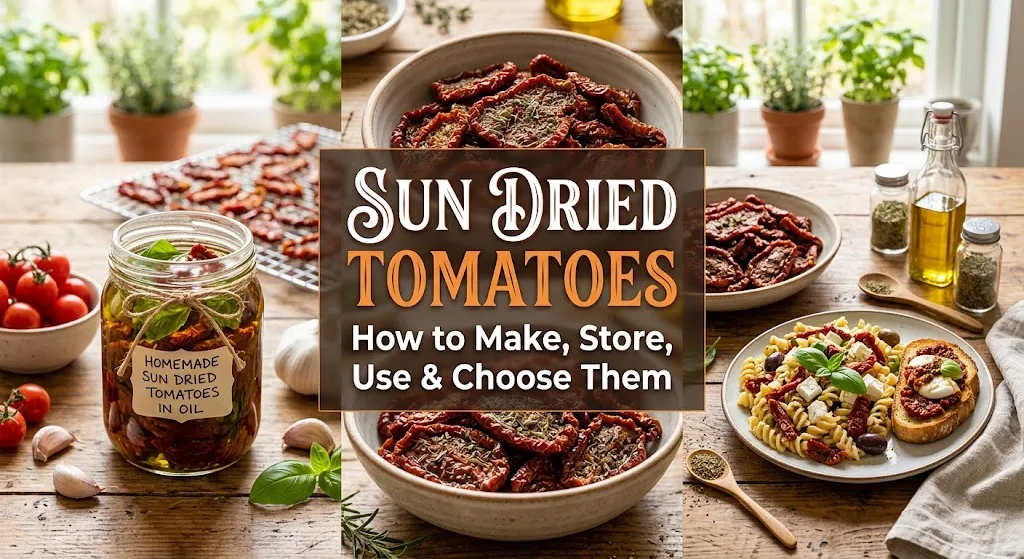
Sun dried tomatoes are fresh tomatoes that have been slowly dried to remove most of their water. This drying process makes their flavor stronger, sweeter, and slightly tangy. Unlike fresh tomatoes, which are juicy and mild, dried tomatoes have a chewy texture and a deep, concentrated taste. They are often used in Mediterranean cooking and Italian dishes to add a rich, savory boost.
You can find them as oil-packed tomatoes or dry-packed sun dried tomatoes. Oil-packed versions are softer and ready to use, while dry ones need to be rehydrated. Because the moisture is removed, the natural sugars and umami flavor become more noticeable. That’s why sun dried tomatoes taste bold and intense compared to roasted or fresh varieties. They are a simple but powerful pantry ingredient.
Sun dried tomatoes are fresh tomatoes that have been slowly dried to remove most of their moisture, creating a chewy texture and concentrated sweet, tangy, savory flavor. They can be made with Roma or plum tomatoes using an oven, dehydrator, or traditional sun-drying method. Oil-packed tomatoes are soft and ready to use, while dry-packed tomatoes should be rehydrated before cooking. They are excellent in pasta, pesto, salads, sandwiches, pizza, sauces, and Mediterranean-inspired dishes.
Sun Dried vs Fresh vs Roasted Tomatoes
When choosing between sun dried tomatoes, fresh tomatoes, and roasted tomatoes, the difference comes down to flavor intensity, texture, and how you plan to use them. Each type works best in different dishes.
Sun dried tomatoes are deeply concentrated because most of their water content has been removed. This makes them bold, slightly sweet, and rich in umami flavor. Fresh tomatoes are juicy and light, perfect for salads or sauces. Roasted tomatoes fall in between — softer than dried tomatoes but more intense than fresh ones.
Here’s a clear comparison:
| Feature | Sun Dried Tomatoes | Fresh Tomatoes | Roasted Tomatoes |
|---|---|---|---|
| Flavor Intensity | Very strong, sweet & tangy | Mild & juicy | Medium, caramelized |
| Texture | Chewy, dense | Soft & watery | Soft, slightly firm |
| Shelf Life | Long (months when stored properly) | Short (few days) | Medium (3–5 days refrigerated) |
| Best Culinary Use | Pasta, pesto, sauces, Mediterranean dishes | Salads, sandwiches, fresh sauces | Pasta, soups, side dishes |
| Cost | Higher (store-bought) | Affordable | Moderate |
| Water Content | Very low | Very high | Reduced but still moist |
If you want a concentrated tomato flavor that adds depth to a dish, sun dried tomatoes are the best choice. For freshness and moisture, stick with fresh. For a balanced, slightly sweet flavor, roasted tomatoes work beautifully.
Why Drying Tomatoes Makes Them More Flavorful
The magic of sun dried tomatoes comes from a simple process: water evaporation. Fresh tomatoes are made up of about 90–95% water. When you dry them using the sun, oven, or dehydrator, most of that moisture slowly disappears. What stays behind are the natural sugars, acids, and flavor compounds.
As the water leaves, sugar concentration increases. This makes dried tomatoes taste sweeter and more intense than fresh ones. At the same time, natural savory compounds become stronger, which boosts umami development — that deep, rich taste often linked to Mediterranean cooking.
Drying also increases the level of lycopene concentration, a powerful antioxidant found in tomatoes. Because nutrients become more concentrated, the flavor feels stronger and fuller.
Finally, the loss of moisture causes a clear texture transformation. The tomatoes shrink, becoming dense and slightly firm. That’s why sun dried tomatoes taste “chewy and intense” — less water, more flavor, and a powerful savory punch in every bite.
Best Tomatoes for Making Sun Dried Tomatoes
Choosing the right tomato makes a big difference when learning how to make sun dried tomatoes. Not all tomatoes dry the same way. The best choice is usually Roma tomatoes or other plum tomatoes. They have thick flesh, fewer seeds, and lower water content, which helps them dry faster and evenly.
Cherry tomatoes can also be used, but they contain more juice. You’ll need extra drying time, especially when using the oven method or a dehydrator. Smaller tomatoes may turn sweeter because their sugar content is naturally higher.
When picking tomatoes, look for firm ones with dense flesh. Flesh thickness matters because thicker walls hold more flavor after drying. Low seed density also helps prevent soggy spots.
Seasonal timing is important too. Late summer tomatoes usually have better flavor and higher natural sugars. Using ripe, in-season tomatoes will give your homemade sun dried tomatoes a richer, more concentrated taste.
How to Make Sun Dried Tomatoes at Home
Learning how to make sun dried tomatoes is simple when you choose the right method. You can use the traditional sun method, a low oven, a dehydrator, or even an air fryer. Each technique removes moisture slowly to create that bold, concentrated tomato flavor.
Traditional Sun Method
This is the classic way of making homemade sun dried tomatoes. It works best in hot, dry climates with low humidity. Temperatures should stay above 85°F (30°C) for several days.
Time required: 3–7 days depending on heat and tomato size.Place sliced Roma or plum tomatoes on a tray and cover them with fine mesh protection to keep insects away. Bring them indoors at night to avoid moisture. Proper airflow is key for safe drying.
Oven Method (Low & Slow)
The oven method is ideal if you live in a humid area. Set the oven to 200°F–250°F (95°C–120°C).
Time breakdown: 4–10 hours depending on thickness.Tomatoes are ready when they look shriveled but still slightly flexible. They should feel leathery, not brittle. This method gives consistent results year-round.
Dehydrator Method
A dehydrator offers the most control. Set it between 125°F–135°F (50°C–57°C).
Dry for 6–12 hours.The steady airflow ensures even moisture removal, making it perfect for larger batches of dehydrated tomatoes.
Air Fryer Method (Modern Addition)
For small batches, use an air fryer on the lowest setting (around 120°C / 250°F). Dry for 2–4 hours, checking often. This method is quick and convenient but works best for limited quantities.
What Properly Dried Tomatoes Should Look Like
One of the biggest challenges when learning how to dry tomatoes is knowing when they are truly done. Underdrying can cause spoilage, while overdrying makes them too hard. Here’s a simple visual timeline to help you judge your sun dried tomatoes correctly.
25% Dried Stage
The tomatoes still look juicy. The edges begin to wrinkle slightly, but the center feels soft and wet. At this stage, the water content is still high.
50% Dried Stage
They start shrinking and curling at the edges. The surface looks less shiny, and the inside feels moist but not watery.
75% Dried Stage
The tomatoes appear smaller and darker. They feel flexible and slightly sticky. Most moisture has evaporated.
Fully Dried Texture Test
Properly dried tomatoes should feel leathery and pliable, not brittle or crispy. They should bend without breaking.
Common Mistakes
- Removing them too early (risk of mold)
- Overdrying until crunchy
- Uneven slicing causing inconsistent drying
Getting this stage right ensures safe, flavorful homemade sun dried tomatoes.
How to Enhance Flavor While Drying
While sun dried tomatoes are naturally rich and sweet, you can boost their taste even more during the drying process. Small additions can turn simple homemade sun dried tomatoes into a bold, gourmet ingredient.
Sea Salt vs Kosher Salt
Salt helps draw out moisture and improves flavor. Sea salt adds a clean, mineral taste, while kosher salt is milder and easier to control. Use lightly to avoid overly salty dried tomatoes.
Garlic Infusion
Thin slices of fresh garlic or a light sprinkle of garlic powder add depth. The slow drying process blends the garlic flavor naturally into the tomatoes.
Italian Herbs
Dried basil, oregano, or thyme give a classic Mediterranean cooking touch. Add herbs before drying for even flavor distribution.
Chili Flakes
For a subtle heat, sprinkle chili flakes on top. This works well for pasta or pizza dishes.
Smoked Salt
A small pinch creates a smoky, savory twist without overpowering the natural tomato sweetness.
Olive Oil Marination
After drying, marinate tomatoes in olive oil with herbs. This softens the texture and adds rich, infused flavor.
Oil-Packed vs Dry Sun Dried Tomatoes
When buying or storing sun dried tomatoes, you’ll usually see two options: oil-packed tomatoes and dry-packed sun dried tomatoes. Both offer the same concentrated flavor, but they differ in texture, storage, and how you use them in cooking.
Oil-packed tomatoes are softer and ready to use straight from the jar. They are often stored in olive oil with herbs, which adds extra flavor. Dry-packed tomatoes, on the other hand, are firmer and need to be rehydrated before use. They last longer in the pantry and are often more budget-friendly.
Here’s a clear comparison:
| Feature | Oil-Packed Sun Dried Tomatoes | Dry-Packed Sun Dried Tomatoes |
|---|---|---|
| Flavor | Rich, infused with oil & herbs | Pure, intense tomato flavor |
| Texture | Soft, tender | Chewy, firm |
| Shelf Life | Shorter once opened (refrigerated) | Longer when stored dry |
| Storage Method | Refrigerate after opening | Store in airtight container |
| Best Use Cases | Pasta, salads, pesto, sandwiches | Cooking, sauces, rehydrating |
| Cost Comparison | Usually more expensive | Often more affordable |
Choosing between them depends on convenience, storage preference, and your recipe needs.
How to Store Sun Dried Tomatoes Safely
Proper storage keeps your sun dried tomatoes flavorful and safe to eat. Whether they are dry-packed or oil-packed, handling them correctly prevents spoilage and protects quality.
Pantry Storage (Dry)
Store dry-packed sun dried tomatoes in an airtight container in a cool, dark place. Keep moisture away, as humidity can lead to mold. Properly dried tomatoes can last several months when stored this way.
Refrigeration (Oil-Packed)
Once opened, oil-packed tomatoes should always be refrigerated. Make sure the tomatoes stay fully covered in olive oil to limit air exposure. Use clean utensils each time to prevent contamination.
Freezing Options
Both dry and oil-packed tomatoes can be frozen. Place them in small freezer-safe bags to extend shelf life up to a year.
Rehydration Method
To soften dry tomatoes, soak them in warm water for 20–30 minutes. This restores texture without affecting flavor.
Preventing Mold
Ensure tomatoes are fully dried before storage. Moisture is the main cause of mold growth.
When storing tomatoes in oil, acidity matters. Tomatoes are naturally acidic, but adding vinegar or lemon juice can increase safety if preserving long-term. Keep oil-packed tomatoes refrigerated and avoid room-temperature storage.
Are Sun Dried Tomatoes Healthy?
Yes, sun dried tomatoes can be a healthy addition to your diet when eaten in moderation. Because most of the water is removed, their nutrients become more concentrated compared to fresh tomatoes.
Calories Per Serving
A small serving (about ¼ cup) contains roughly 100–140 calories, depending on whether they are oil-packed or dry. Oil-packed versions have more calories due to added olive oil.
Sodium Comparison (Store vs Homemade)
Store-bought sun dried tomatoes often contain higher sodium for preservation. Homemade sun dried tomatoes allow you to control salt levels, making them a healthier option.
Fiber
Dried tomatoes are a good source of dietary fiber, which supports digestion and helps you feel full.
Antioxidants (Lycopene)
They are rich in lycopene, a powerful antioxidant linked to heart health and reduced inflammation.
Keto & Low-Carb Compatibility
Sun dried tomatoes are generally keto-friendly in small portions because they are low in carbs but concentrated in flavor.
Portion Control Advice
Since nutrients and sodium are concentrated, enjoy them in small amounts. A little adds strong flavor without overdoing calories or salt.
10 Best Substitutes for Sun Dried Tomatoes
If you don’t have sun dried tomatoes, don’t worry. The best substitute for sun dried tomatoes depends on the dish you’re making. Below are smart swaps organized by cooking scenario, with quick ratio tips.
For Pasta Sauces
-
Tomato Paste + Olive Oil
Mix 1 tablespoon tomato paste with 1 teaspoon olive oil to replace 1 tablespoon chopped sun dried tomatoes. -
Roasted Tomatoes
Use 2 tablespoons roasted tomatoes for every 1 tablespoon dried. -
Tomato Confit
Similar deep flavor. Use a 1:1 ratio.
For Salads
-
Roasted Red Peppers
Mild and slightly sweet. Use 1:1, but add a pinch of salt for intensity. -
Cherry Tomatoes (Oven-Dried Quickly)
Bake briefly to reduce moisture. Use slightly more to match flavor strength.
For Pesto
-
Tomato Paste + Balsamic Vinegar
Add ½ teaspoon balsamic to boost tanginess. -
Fresh Tomatoes (Seeded & Reduced)
Cook down first to remove excess water content.
For Umami Boost
-
Anchovy Paste + Tomato Paste
A tiny amount adds deep savory flavor. Start small. -
Mushroom Powder
Great for savory depth in sauces.
Non-Tomato Alternatives
-
Dried Cranberries (Unsweetened)
Add slight sweetness and chew. Best in salads.
Choosing the right substitute depends on flavor intensity and texture. Adjust seasoning as needed to match the bold taste of sun dried tomatoes.
Store-Bought vs Homemade Sun Dried Tomatoes
Both store-bought sun dried tomatoes and homemade sun dried tomatoes have their place in the kitchen. The right choice depends on budget, convenience, and how much control you want over ingredients.
Here’s a clear comparison:
| Feature | Store-Bought | Homemade |
|---|---|---|
| Cost per Ounce | Usually higher, especially oil-packed | Lower, especially in tomato season |
| Ingredient Quality | Depends on brand | Fully controlled by you |
| Additives / Preservatives | May contain sulfites or added salt | No preservatives unless added |
| Flavor Intensity | Consistent but sometimes overly salty | Fresh, customizable flavor |
| Shelf Life | Long unopened; shorter after opening | Several months if properly dried |
| Sodium Content | Often high | Adjustable based on your salt use |
Homemade versions give you full control over salt levels, oil quality, and herbs. Store-bought options offer convenience and longer shelf stability.
What to Look for on Labels
Choose brands with simple ingredients: tomatoes, olive oil, salt, and herbs. Avoid unnecessary additives or high sodium levels when possible.
15 Easy Ways to Use Sun Dried Tomatoes
One of the best things about sun dried tomatoes is how easily they add bold, concentrated tomato flavor to everyday meals. Whether you’re using oil-packed tomatoes or rehydrated dry ones, just a small amount can completely transform a dish. Their rich, slightly sweet, and umami flavor makes them a powerful pantry staple.
Breakfast
Chop and stir into scrambled eggs for a savory, slightly sweet boost. They pair beautifully with spinach, feta, or goat cheese.
Mix into a baked frittata with herbs and cheese for a simple Mediterranean-style breakfast.
Add to wraps with eggs, avocado, and grilled vegetables for extra depth.
Lunch
Toss into cold pasta salad with olives and olive oil for a bright, tangy flavor.
Blend into cream cheese, hummus, or mayo for a bold spread.
Sprinkle over quinoa or rice bowls to enhance flavor without adding extra sauce.
Dinner
Add to cream-based sauces for rich chicken dishes.
Stir in near the end for a deep, savory taste.
Use instead of fresh tomatoes for stronger flavor.
Combine with cheese and herbs for a flavorful filling.
Blend into pesto for a richer twist.
Snacks & Appetizers
Mix into yogurt or sour cream dips.
Blend with softened butter for bread or steak.
Add to focaccia or rolls.
Chop finely and mix with olive oil and garlic.
How to Choose the Best Sun Dried Tomatoes
Buying high-quality sun dried tomatoes makes a big difference in flavor and nutrition. Since many brands vary in salt level, oil quality, and preservatives, it helps to know what to look for.
Oil-Packed vs Dry-Packed
Oil-packed tomatoes are softer and ready to use. They often come in olive oil with herbs. Dry-packed sun dried tomatoes are firmer, more concentrated, and usually more affordable. Choose oil-packed for convenience and dry-packed for longer shelf life.
Avoiding Sulfites
Some store-bought versions contain sulfites to preserve color. If you’re sensitive to additives, look for labels that say “no added sulfites” or “preservative-free.”
Organic vs Conventional
Organic options may reduce exposure to pesticides. While both can be safe, organic tomatoes often appeal to those wanting cleaner ingredients.
Packaging Type
Glass jars are better for oil-packed tomatoes. Resealable bags work well for dry varieties.
Price Indicators of Quality
Very low prices may mean higher sodium or lower-quality oil. Check ingredient lists—simple is better: tomatoes, olive oil, salt, herbs.
Troubleshooting Sun Dried Tomatoes
Even when you follow the steps carefully, small issues can happen with sun dried tomatoes. The good news is that most problems are easy to fix.
Too Salty → Soaking Fix
If your sun dried tomatoes taste too salty, soak them in warm water for 20–30 minutes. This helps remove excess salt. You can also rinse oil-packed tomatoes lightly before using them in recipes.
Too Hard → Rehydration Method
Dry-packed tomatoes can sometimes become very firm. To soften them, soak in warm water, broth, or olive oil for about 30 minutes. This restores moisture and improves texture.
If you see white, green, or fuzzy spots, discard the tomatoes immediately. Mold usually forms from excess moisture or improper storage.
Oil Turning Cloudy
Cloudy olive oil often happens when refrigerated. Let the jar sit at room temperature for a few minutes. If the smell is fresh and normal, it’s safe.
Over-Drying Fix
If tomatoes become brittle, chop them finely and use in sauces where moisture can soften them during cooking.
Common Mistakes to Avoid
Making sun dried tomatoes is simple, but small mistakes can affect flavor, texture, and safety. Avoid these common errors to get the best results every time.
Overcrowding Trays
When slices are placed too close together, airflow is reduced. This slows water evaporation and causes uneven drying. Always leave space between tomato pieces so they dry evenly.
Too High Oven Temperature
Using high heat may seem faster, but it cooks the tomatoes instead of slowly drying them. This changes the texture and reduces that classic chewy, concentrated flavor. Keep your oven low and slow.
Improper Storage in Oil
Storing tomatoes in oil at room temperature can increase spoilage risk. Always refrigerate oil-packed sun dried tomatoes after opening and ensure they stay fully covered in oil.
Using Watery Tomatoes
High-moisture tomatoes take longer to dry and may spoil. Choose Roma or plum tomatoes with thicker flesh and lower water content.
Skipping Salt Control
Too much salt can overpower flavor. Too little can reduce preservation quality. Use salt lightly and adjust based on taste.
FAQs About Sun Dried Tomatoes
How long do sun dried tomatoes last?
Dry-packed sun dried tomatoes can last 6–12 months when stored in an airtight container in a cool, dark place. Oil-packed tomatoes last several weeks in the refrigerator after opening. Always check for mold or unusual smell before using.
Can you freeze sun dried tomatoes?
Yes, you can freeze both dry and oil-packed sun dried tomatoes. Place them in airtight freezer-safe bags or containers. They can last up to one year in the freezer without losing much flavor.
Are sun dried tomatoes keto friendly?
In small portions, sun dried tomatoes are generally keto-friendly. They are low in carbs but concentrated in flavor. However, check labels for added sugar in store-bought versions.
Why are they salty?
Store-bought sun dried tomatoes often contain added salt for preservation and flavor. Because the water content is removed, the salt taste becomes more concentrated.
Do you need a dehydrator?
No, you don’t need a dehydrator to make homemade sun dried tomatoes. You can use the oven or traditional sun method successfully.
Can you make them in humid climates?
Yes, but avoid the sun method. Use the oven method or dehydrator for safe, even drying in humid areas.
How do you soften them quickly?
Soak dry tomatoes in warm water, broth, or olive oil for 20–30 minutes. This restores moisture and improves texture.
Are oil-packed tomatoes shelf stable?
Unopened jars are shelf stable. After opening, oil-packed sun dried tomatoes must be refrigerated and kept fully covered in oil.
Final Pro Tips & Verdict
If you want the best flavor and value, make a double batch during tomato season. Late-summer tomatoes have higher natural sugar, which gives your sun dried tomatoes a richer, sweeter taste. Always choose firm, seasonal Roma tomatoes for the best texture and lower water content. Adjust salt to your personal preference, especially when making homemade sun dried tomatoes.
This helps control sodium levels and keeps the flavor balanced. Store finished tomatoes in small jars to reduce air exposure and maintain freshness. Don’t be afraid to experiment. Try different herbs, garlic, or even a touch of chili flakes to create your own signature blend. You can also pack them in quality olive oil for added depth.
Finally, consider sharing them as edible gifts. A jar of homemade sun dried tomatoes feels thoughtful, flavorful, and practical. With the right method and storage, this simple ingredient becomes a powerful, versatile pantry staple you’ll use all year.