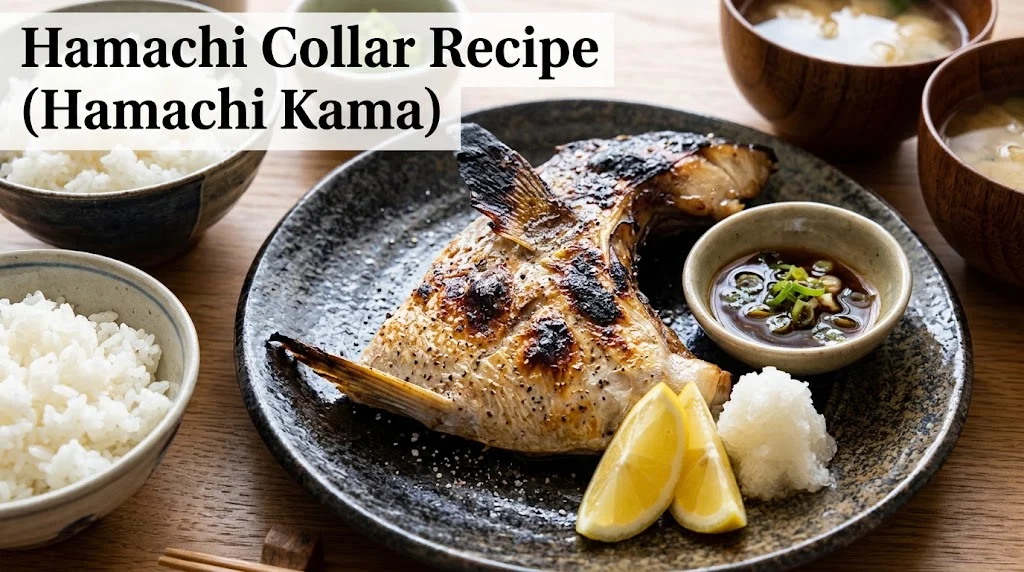
Make rich, tender hamachi collar with beautifully browned skin using a simple high-heat broiler method, then finish it with lemon, ponzu, grated daikon, and scallions.
Quick Answer: How Do You Cook Hamachi Collar?
Hamachi collar, also called hamachi kama, is best cooked with high, direct heat. Pat the fish very dry, season lightly with salt, broil it skin-side down, and cook until the thickest meat reaches 145°F (63°C). Serve immediately with lemon, ponzu, grated daikon, and rice.
Hamachi Collar at a Glance
*Cooking time varies with collar size, thickness, starting temperature, and broiler strength. Use 145°F as the primary doneness target.
What Is Hamachi Collar?
Hamachi collar is the meaty shoulder section located behind the fish’s head. In Japanese cooking, this cut is commonly called kama.
Compared with a typical fillet, the collar contains more naturally rich tissue, fat, connective tissue, and bones. Those characteristics make it especially flavorful when cooked over strong heat.
Hamachi kama is not a boneless cut. The best meat is tucked around the bones and along the shoulder, giving the finished dish a particularly tender texture.
Ingredients for Hamachi Collar
For the Fish
- 2 hamachi collars, fresh or safely thawed
- ½ teaspoon kosher salt, or enough to lightly season
- 1 teaspoon neutral cooking oil, only if the surface looks very dry
- Lemon wedges, for serving
Quick Ponzu-Style Sauce
- 2 tablespoons soy sauce
- 1 tablespoon fresh lemon juice
- 1 teaspoon rice vinegar
- ½ teaspoon mirin, optional
- 1 teaspoon water, if needed to mellow the flavor
Optional Toppings
- Grated daikon
- Thinly sliced scallions
- Toasted sesame seeds
- Shichimi togarashi
- Fresh grated ginger
Allergy Note
Soy sauce contains soy and commonly contains wheat. If needed, use certified gluten-free tamari. Check packaged ponzu, miso, mirin, and spice blends for additional allergens.
How to Prepare Hamachi Collar
Proper preparation makes a noticeable difference. The most important step is drying the fish thoroughly before it reaches the heat.
If using frozen hamachi kama, thaw it safely in the refrigerator overnight. For faster thawing, keep the seafood sealed and place it in cold water, then cook it immediately after thawing.
- Thaw completely if the collars are frozen.
- Pat both sides very dry with paper towels.
- Check for loose scales or small pieces of debris.
- Place the collars skin-side down on a foil-lined broiler pan or rimmed sheet.
- Season lightly with kosher salt.
- Allow the fish to sit while the broiler preheats.
Food Safety: Never Thaw Seafood on the Counter
Thaw frozen seafood in the refrigerator or use a sealed package in cold water when you can cook it immediately afterward. Keeping seafood cold throughout preparation helps reduce food-safety risks.
How to Make Hamachi Collar in the Broiler
This broiled hamachi kama method is an easy home-kitchen starting point. Strong overhead heat browns the skin quickly while the rich meat cooks underneath.
- Preheat your broiler according to your oven’s instructions.
- Position the rack for strong direct heat without placing the fish against the heating element.
- Line a rimmed pan with foil for easier cleanup.
- Arrange the hamachi collars skin-side down.
- Season lightly with salt.
- Place the pan beneath the broiler.
- Cook until the skin is deeply browned and the flesh is opaque.
- Begin checking the thickest section early because collar sizes vary.
- Insert an instant-read thermometer into the thickest meat, avoiding the bone.
- Remove the fish when it reaches 145°F (63°C).
- Serve immediately with lemon and ponzu.
How to Make Crispy Hamachi Collar
Crispy skin starts with dry fish. Surface moisture must evaporate before the skin can brown effectively.
For Better Browning
- Pat the collar completely dry.
- Keep the skin exposed to strong heat.
- Use direct, high heat.
- Avoid wet sauces before cooking.
- Don’t move the fish repeatedly.
- Serve shortly after cooking.
If the Skin Stays Soft
The most common causes are excess moisture, insufficient heat, or too much sauce. Keep the surface dry and add ponzu or other sauces after cooking.
Hamachi Collar Cooking Methods Compared
| Method | Best For | Main Advantage | Main Concern |
|---|---|---|---|
| Broiler | Crisp skin | Fast, strong direct heat | Can brown quickly |
| Grill | Smoky flavor | Charred edges and skin | Fat can cause flare-ups |
| Oven | Controlled cooking | Steady heat | Skin may be less crisp |
| Air Fryer | Small portions | Strong circulating heat | Cooking time varies by appliance |
For a first attempt, broiling is a straightforward option because it provides strong direct heat without requiring an outdoor grill.
Grilled Hamachi Collar
Grilling gives hamachi collar smoky flavor and attractive char. Because the collar contains natural fat, dripping fat can create flare-ups.
- Preheat the grill and clean the grates.
- Lightly oil the grates.
- Pat the hamachi collar dry.
- Season lightly with salt.
- Place the collar over moderate heat.
- Watch for flames caused by dripping fat.
- Move the fish to a cooler zone if flare-ups become aggressive.
- Turn carefully only when needed.
- Check the thickest meat with a thermometer.
- Remove at 145°F and serve immediately.
Baked Hamachi Collar
Baking is useful when you want steady oven heat without managing grill flare-ups. The surface can brown nicely, although the skin may not become as crisp as it does under a broiler.
Oven Method
- Heat the oven to 425°F.
- Line a rimmed baking sheet with foil.
- Pat the collars dry.
- Place them skin-side down.
- Season with salt.
- Bake until the thickest portion reaches 145°F.
- Check early because collar thickness varies.
- Finish with lemon and ponzu.
- Add scallions or daikon just before serving.
The Best Sauces for Hamachi Collar
Rich fish cuts benefit from something bright, salty, and acidic. Ponzu is a natural pairing, but several sauces work well.
Ponzu
Best for: A bright Japanese-style finish.
Mix soy sauce, lemon juice, and rice vinegar. Add mirin for gentle sweetness.
Lemon-Soy Sauce
Best for: A simple pantry option.
Combine soy sauce and fresh lemon juice for an easy finishing sauce.
Miso Glaze
Best for: Deeper savory flavor.
Combine white miso with a small amount of mirin and brush on near the end.
Teriyaki
Best for: Sweet-savory flavor.
Use a thin layer near the end because sugary sauces darken quickly.
Yuzu Kosho
Best for: Citrus flavor with heat.
Use conservatively because yuzu kosho can be salty and spicy.
Garlic-Lemon
Best for: A familiar American-style seafood finish.
Combine garlic, lemon, neutral oil, and scallions.
Hamachi Collar With Ponzu and Daikon
For a traditional-feeling plate, serve the hot collar with ponzu, grated daikon, lemon, and steamed rice. Daikon’s fresh, peppery flavor helps balance the richness of the fish.
Simple Serving Plate
- Place one cooked collar on each plate.
- Add a small mound of grated daikon.
- Put ponzu in a dipping dish.
- Add a lemon wedge.
- Scatter sliced scallions over the fish.
- Serve with hot short-grain rice.
- Add Japanese pickles or cucumber salad if desired.
- Finish with a small pinch of shichimi togarashi.
What to Serve With Hamachi Collar
You don’t need an elaborate spread. Choose sides that add freshness, acidity, or mild savory flavor.
Fresh vs. Frozen Hamachi Collar
Frozen hamachi kama can be a practical option because collars are not always available at conventional U.S. supermarkets. Look for yellowtail collar or hamachi kama at Japanese markets, Asian supermarkets, seafood counters, and specialty fish shops.
What to Look For
- Firm flesh
- Intact packaging
- No strong sour or ammonia-like odor
- Minimal excessive ice buildup
- Proper refrigeration or freezing
- Similar-sized pieces when buying several collars
Safe Thawing
Refrigerator thawing overnight is the simplest approach. For faster thawing, keep the fish sealed and place it in cold water, then cook it immediately.
Never thaw fish on the counter.
Common Hamachi Collar Mistakes
Skin Won’t Crisp
Likely cause: Too much surface moisture.
Pat the collar thoroughly dry and keep sauce away from the skin until serving.
Outside Burns First
Likely cause: Excessive direct heat or sugary sauce.
Move the fish farther from the heating element and delay sweet glazes.
Fish Tastes Too Salty
Likely cause: Salty seasoning combined with salty dipping sauce.
Season lightly and let diners add sauce at the table.
Fish Is Dry
Likely cause: Overcooking.
Use a thermometer and remove the fish once the thickest portion reaches 145°F.
Fish Sticks to the Grill
Clean and lightly oil the grates. Allow the surface to brown before moving the fish.
Hamachi Collar Food Safety
Treat hamachi collar like other raw finfish. Keep it cold, separate it from ready-to-eat foods, and use clean cutting boards and utensils.
- Keep raw seafood refrigerated until preparation.
- Wash hands after handling raw fish.
- Keep raw seafood away from ready-to-eat foods.
- Use clean utensils and cutting boards.
- Never thaw seafood on the counter.
- Cook finfish to 145°F (63°C).
- Refrigerate leftovers within 2 hours.
- If outdoor temperatures exceed 90°F, refrigerate within 1 hour.
- Discard seafood with an abnormal sour, rancid, or ammonia-like odor.
How to Store and Reheat Hamachi Collar
Hamachi collar is best immediately after cooking because reheating can soften the skin. If you have leftovers, transfer them to a shallow container and refrigerate promptly.
Cooked fish can generally be refrigerated for 3–4 days when properly stored.
Best Reheating Method
- Preheat an oven or toaster oven to about 300°F.
- Place the fish on a small baking sheet.
- Cover loosely if the meat seems dry.
- Heat until warmed through.
- Avoid repeatedly reheating the same portion.
The skin will rarely be as crisp as it was when freshly cooked. Leftover hamachi collar is also excellent flaked over rice or added to a simple bowl.
Hamachi Collar Variations
Classic Japanese-Style
Salt + lemon + ponzu + grated daikon
Keeps the natural flavor of the fish front and center.
Miso-Glazed
White miso + mirin + ginger
Brush on near the end for a savory, lightly sweet finish.
Spicy Citrus
Yuzu kosho + lemon + scallions
Use a small amount because yuzu kosho contributes both salt and heat.
Teriyaki-Style
Teriyaki sauce + sesame + scallions
Apply the sauce late to prevent scorching.
Garlic-Lemon
Garlic + lemon + neutral oil + scallions
A less traditional option with familiar American-style seafood flavors.
Frequently Asked Questions
Is hamachi collar the same as yellowtail collar?
Yes. Hamachi collar commonly refers to the shoulder or collar section of yellowtail, while hamachi kama is the Japanese term commonly used for this cut.
Why is hamachi collar so fatty?
The collar sits near the fish’s shoulder and contains naturally rich tissue. That richness contributes to the tender texture associated with hamachi kama.
Can I cook hamachi collar from frozen?
Thaw it safely before cooking for more even results. Refrigerator thawing is the simplest method; sealed cold-water thawing is another option when you cook the fish immediately afterward.
Should I rinse hamachi collar?
Rinsing is not necessary. Instead, handle the seafood safely and pat the surface dry before seasoning and cooking.
Can I eat the skin?
Yes. The skin is edible when properly cooked, and high heat can make it crisp and deeply savory.
Does hamachi collar have bones?
Yes. Hamachi kama contains bones unlike a boneless fillet. Eat carefully and pick the tender meat from around the bones.
What temperature should hamachi collar reach?
Cook finfish to 145°F (63°C). Check the thickest part of the meat with an instant-read thermometer.
What is the best way to cook hamachi collar?
Broiling is a simple home method because direct heat browns the skin quickly. Grilling adds smoky flavor, while baking provides steadier oven cooking.
Broiled Hamachi Kama Recipe
Crispy-skinned hamachi collar with lemon, ponzu-style sauce, daikon, and scallions.
Ingredients
- 2 hamachi collars
- ½ teaspoon kosher salt, or to taste
- 2 tablespoons soy sauce
- 1 tablespoon fresh lemon juice
- 1 teaspoon rice vinegar
- ½ teaspoon mirin, optional
- Lemon wedges
- Grated daikon and scallions, optional
Instructions
- Safely thaw the collars if frozen.
- Pat the fish thoroughly dry.
- Line a rimmed broiler pan or baking sheet with foil.
- Place the collars skin-side down.
- Season lightly with kosher salt.
- Preheat the broiler.
- Place the pan under the broiler with appropriate clearance.
- Broil until the skin is browned and the meat is opaque.
- Check the thickest portion with an instant-read thermometer.
- Remove when the fish reaches 145°F.
- Mix soy sauce, lemon juice, rice vinegar, and mirin.
- Serve immediately with lemon, sauce, daikon, and scallions.
Doneness & Safety
Collar size and broiler strength vary, so cooking time is only a guide. Check the thickest meat and cook finfish to 145°F (63°C).
*Cooking time varies depending on collar thickness, starting temperature, oven/broiler strength, and distance from the heating element.
Final Tips for the Best Hamachi Collar
A great hamachi collar recipe does not require a complicated marinade or long preparation. The essentials are simple: keep the collar dry, use strong heat, season lightly, and check the thickest meat for 145°F.
Start with the broiled hamachi kama method and serve it with lemon, ponzu, grated daikon, and rice. Once you understand how the collar cooks, experiment with grilled, miso, teriyaki, or spicy yuzu kosho finishes.
For the best eating experience, choose good-quality hamachi collar, thaw frozen pieces safely, and serve the fish while the skin is still crisp.
Read More :