
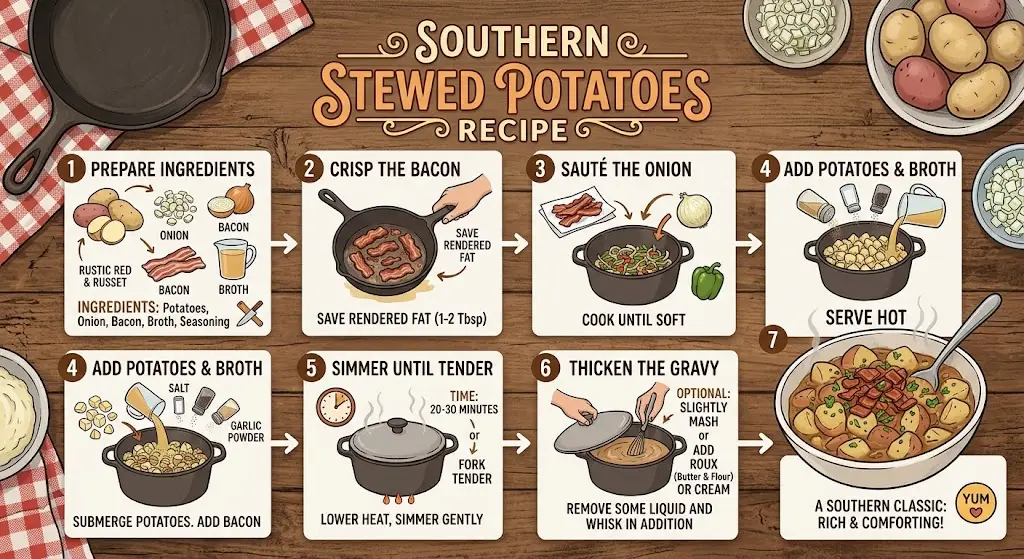
Southern stewed potatoes are a simple old-fashioned side dish made by gently simmering potato chunks until tender, then finishing them with butter, onion, salt, and pepper. The result falls somewhere between boiled potatoes and mashed potatoes—soft, buttery, rustic, and spoonable without being completely mashed.
This easy stewed potatoes recipe explains how to choose the best potatoes, control the cooking liquid, prevent mushiness, and create the thick, buttery texture that makes this classic-style side so comforting.
Quick Answer: How Do You Make Stewed Potatoes?
The best stewed potatoes recipe uses peeled potato chunks simmered until fork-tender, then finished with butter, onion, salt, and pepper. Russet potatoes create a thicker, starchier cooking liquid, while Yukon Gold potatoes produce firmer, creamier chunks.
Southern Stewed Potatoes Recipe
Old-fashioned stovetop potatoes with butter, onion, and a naturally thickened cooking liquid.
Ingredients
- 3 pounds Russet potatoes, peeled and cut into large chunks
- 1 medium yellow onion, finely diced
- 4 tablespoons unsalted butter
- 4 cups water or unsalted chicken broth, plus more if needed
- 1½ teaspoons kosher salt, divided
- ½ teaspoon black pepper
- 1–2 tablespoons bacon grease, optional
- 2 tablespoons fresh parsley, chopped, optional
Instructions
- Peel the potatoes and cut them into roughly 1½-inch chunks.
- Place the potatoes and diced onion in a large heavy-bottomed pot or Dutch oven.
- Add water or broth. The liquid should come close to covering the potatoes without creating excessive broth.
- Season with about 1 teaspoon of the salt.
- Bring to a boil, then reduce the heat to maintain a steady simmer.
- Cook for about 20–25 minutes, depending on the size of the potato pieces.
- If the pot becomes too dry before the potatoes are tender, add a small amount of hot water.
- Once tender, reduce the heat and add the butter, remaining salt, black pepper, and bacon grease if using.
- Stir gently. Avoid vigorous stirring so the potatoes retain their shape.
- For a thicker consistency, lightly crush two or three potato pieces against the side of the pot and stir them into the liquid.
- Taste and adjust the seasoning.
- Garnish with parsley if desired and serve hot.
What Are Southern Stewed Potatoes?
Southern stewed potatoes are a rustic potato side dish made by gently cooking potato chunks in water or broth until tender. Butter, onion, salt, and pepper are then added to create a rich, savory finish.
Unlike mashed potatoes, the potato pieces remain visible. Unlike potato soup, the finished dish contains much less liquid and is thick enough to spoon onto a dinner plate.
Why These Ingredients Work
Russet Potatoes
Russets are naturally starchy, which helps give the cooking liquid more body and creates a soft, creamy texture.
Yellow Onion
Diced yellow onion adds sweetness and savory depth while becoming tender during the simmer.
Butter
Butter provides the rich, familiar finish associated with old-fashioned stewed potatoes.
Water or Broth
Water keeps the recipe simple, while unsalted chicken broth gives the potatoes a deeper savory flavor.
How to Make Stewed Potatoes
1. Peel and Cut the Potatoes
Peel the potatoes and cut them into roughly equal 1½-inch chunks. Uniform pieces cook at approximately the same rate, which helps prevent some pieces from becoming mushy while others remain firm.
2. Add the Potatoes and Onion
Place the potatoes and finely diced onion into a large heavy-bottomed pot or Dutch oven.
3. Add the Cooking Liquid
Pour in water or unsalted broth until the liquid comes close to covering the potatoes. Avoid flooding the pot with unnecessary liquid.
4. Season and Simmer
Add about one teaspoon of salt, bring the pot to a boil, then reduce the heat to maintain a steady simmer.
5. Cook Until Fork-Tender
Simmer for approximately 20–25 minutes. Cooking time depends on the potato variety and size of the chunks.
6. Finish With Butter
Once the potatoes are tender, reduce the heat and stir in butter, remaining salt, black pepper, and optional bacon grease.
7. Thicken Naturally
If you want a thicker cooking liquid, gently crush a few potato pieces against the side of the pot and stir them back into the dish.
8. Taste and Serve
Taste the potatoes and adjust the seasoning. Finish with fresh parsley if desired and serve immediately.
How to Tell When Stewed Potatoes Are Done
A fork should slide easily into the center of a potato chunk. The pieces should be very tender but not completely falling apart.
If the potatoes are tender but the liquid remains thin, don’t immediately add flour. Simmer uncovered for a few minutes or mash a few potato pieces directly into the liquid.
Which Potatoes Are Best for Stewed Potatoes?
Potato variety has a major effect on the finished texture. Russets are especially useful when you want a soft, creamy dish with naturally thickened cooking liquid.
| Potato | Texture | Cooking Liquid | Best For |
|---|---|---|---|
| Russet | Soft and starchy | Thickest | Classic creamy texture |
| Yukon Gold | Creamy and firm | Moderately thick | Chunky stewed potatoes |
| Red potatoes | Firm and waxy | Thinner | Pieces that hold their shape |
| White potatoes | Soft and mild | Moderate | Everyday substitutions |
How to Get Thick, Buttery Stewed Potatoes
The goal is not to make potato soup. You want enough cooking liquid to coat the potatoes while potato starch naturally gives that liquid body.
For Chunky Potatoes
- Use larger pieces.
- Maintain a steady simmer.
- Stir only when necessary.
- Avoid vigorous mashing.
- Reduce excess liquid before serving.
For Creamier Potatoes
- Use Russet potatoes.
- Cook until very tender.
- Mash a few pieces into the pot.
- Add extra butter.
- Let the liquid reduce slightly.
For a Soupier Version
- Add more broth or water.
- Use slightly smaller pieces.
- Keep more cooking liquid.
- Mash several pieces into the broth.
Stewed Potatoes vs. Mashed Potatoes
| Feature | Stewed Potatoes | Mashed Potatoes |
|---|---|---|
| Potato shape | Chunky pieces remain | Potatoes are mashed |
| Cooking liquid | Usually retained or partly reduced | Usually drained |
| Texture | Soft and rustic | Smooth or fluffy |
| Thickening | Potato starch and reduction | Mashing plus butter or dairy |
| Flavor | Simple and savory | Often richer and dairy-forward |
Old-Fashioned Stewed Potatoes With Bacon and Onion
Bacon and onion add a deeper savory flavor without making the recipe complicated. Bacon grease can also provide extra richness.
Easy Bacon Variation
- Cook several bacon strips until crisp.
- Reserve 1–2 tablespoons of the rendered grease.
- Prepare the potatoes and onion as directed.
- Add bacon grease near the end.
- Finish with butter and black pepper.
- Top with crumbled crispy bacon.
Best Pairings
Bacon stewed potatoes are especially good with fried chicken, pork chops, meatloaf, braised greens, and cornbread.
How to Make Creamy Stewed Potatoes
For a richer version, finish the potatoes with a small amount of whole milk. The potatoes should cook primarily in water or broth before dairy is added.
- Cook the potatoes until almost completely tender.
- Reduce the heat to low.
- Add butter.
- Stir in a small splash of whole milk.
- Gently simmer until the liquid coats the potatoes.
- Season with salt and black pepper.
Vegetarian and Vegan Stewed Potatoes
This recipe is easy to adapt. For vegetarian stewed potatoes, use vegetable broth and regular butter. For vegan potatoes, replace butter with plant-based butter or extra-virgin olive oil and skip the bacon grease.
Vegan Flavor Boosters
- Garlic
- Fresh parsley
- Thyme
- Smoked paprika
- Green onions
- Nutritional yeast
Common Stewed Potato Mistakes and How to Fix Them
Potatoes Cut Too Small
Small pieces can break apart before the cooking liquid develops enough flavor. Use larger, evenly sized chunks.
Too Much Water
Excess water can create a thin, bland broth. Start with a moderate amount and add more only when necessary.
Boiling Too Hard
A vigorous boil can break down the outside of the potatoes. Reduce the heat to a steady simmer.
Stirring Too Much
Repeated stirring can turn tender potato chunks into mash. Stir gently and only when needed.
Butter Added Too Early
Add most of the butter near the end for a fresher, richer finish.
Overcooking
Potatoes continue softening while hot. Remove them from high heat once they are fork-tender.
How to Season Stewed Potatoes
Because potatoes have a mild flavor, salt is especially important. Season the cooking liquid early, then taste again after adding butter.
| Style | Seasoning Combination |
|---|---|
| Classic | Salt, black pepper, butter |
| Southern | Salt, pepper, onion, bacon grease |
| Herbed | Parsley, thyme, black pepper |
| Garlic | Garlic, parsley, butter |
| Smoky | Smoked paprika, black pepper, bacon |
| Spicy | Hot sauce, black pepper, green onion |
| Vegan | Olive oil, garlic, parsley, vegetable broth |
| Richer | Butter, whole milk, black pepper |
What to Serve With Stewed Potatoes
Stewed potatoes are an especially useful comfort-food side because they pair with both crisp fried foods and slow-cooked meats.
Southern-Style Pairings
- Fried chicken
- Chicken-fried steak
- Pork chops
- Meatloaf
- Roast chicken
- Southern green beans
- Cornbread
- Collard greens
- Fried cabbage
- Black-eyed peas
Simple Comfort-Food Plate
Build an easy dinner with stewed potatoes, green beans, cornbread, and roasted or fried chicken.
The potatoes also work beautifully as a base for leftover gravy or flavorful pan juices.
Best Toppings and Garnishes
- Fresh parsley for brightness
- Green onions for a mild onion bite
- Crispy bacon for smoky richness
- Shredded cheddar for extra comfort-food richness
- Hot sauce for heat
- Cracked black pepper for extra bite
- Sour cream for a creamy finish
- Chopped chives for a mild herbal flavor
How to Make Stewed Potatoes Ahead
Stewed potatoes are best fresh, but they can be prepared ahead when necessary. Cook them until just tender rather than allowing them to completely fall apart.
Let them cool promptly, transfer them to a shallow container, cover, and refrigerate. When reheating, add a small splash of water or broth if the sauce has thickened too much.
Can You Freeze Stewed Potatoes?
Yes, but freezing can change the texture. Very tender potatoes may become softer or slightly grainy after thawing, and dairy-based versions may experience additional texture changes.
- Cool the potatoes promptly.
- Use an airtight freezer-safe container.
- Leave a little room for expansion.
- Thaw in the refrigerator when practical.
- Reheat gently with a splash of broth or water.
- Stir carefully instead of aggressively.
For the best texture, fresh or short-term refrigerated stewed potatoes are preferable to frozen leftovers.
Dietary Substitutions
| Diet | Easy Adjustment |
|---|---|
| Dairy-Free | Use olive oil or dairy-free butter. |
| Vegan | Use plant-based butter or olive oil and vegetable broth. |
| Gluten-Free | Use naturally gluten-free ingredients and check broth, seasoning, and packaged ingredients for gluten or cross-contact. |
| Vegetarian | Use vegetable broth and regular butter. |
| Lower-Sodium | Use unsalted broth and butter and add salt gradually. |
Food Safety & Storage
Refrigerate cooked stewed potatoes within 2 hours, or within 1 hour when temperatures exceed 90°F (32°C).
Cooked leftovers are generally best used within 3–4 days. Reheat leftovers to 165°F (74°C) before serving.
Keep refrigerated leftovers covered and use clean utensils when serving.
Frequently Asked Questions About Stewed Potatoes
Do you have to peel potatoes for stewed potatoes?
No. Peeling is recommended for the smoothest traditional texture, but thin-skinned potatoes can also be scrubbed thoroughly and cooked with the skins on.
Why are my stewed potatoes watery?
The most common reason is too much cooking liquid. Simmer uncovered for a few minutes to reduce the liquid, or gently mash a few potato pieces into the sauce.
Why did my stewed potatoes turn mushy?
They may have been overcooked, cut too small, or stirred too aggressively. Use larger chunks, maintain a gentle simmer, and stop cooking once they become fork-tender.
Can I use Yukon Gold potatoes instead of Russets?
Yes. Yukon Gold potatoes are an excellent substitute when you want chunks that hold their shape better and have a naturally buttery flavor.
Do stewed potatoes need flour?
No. Flour is not necessary for the basic recipe. Potato starch and gentle reduction can naturally thicken the cooking liquid.
Are stewed potatoes the same as potato soup?
Not quite. Stewed potatoes are thicker and contain larger potato pieces, while potato soup contains more liquid and is designed to be eaten as a soup.
How long do cooked stewed potatoes last in the refrigerator?
Refrigerate them within 2 hours and use them within 3–4 days. Reheat leftovers to 165°F (74°C) before serving.
Can I make stewed potatoes without butter?
Yes. Replace the butter with olive oil or plant-based butter for a dairy-free or vegan version.
How can I make stewed potatoes thicker without flour?
Use starchy Russet potatoes, reduce excess liquid, and gently mash a few cooked potato pieces into the broth. This creates thickness without a separate flour slurry.
Final Thoughts
A great stewed potatoes recipe doesn’t need a long ingredient list or complicated technique. The key is choosing the right potato, cutting the pieces evenly, controlling the cooking liquid, and stopping at the right moment.
Start with Russet potatoes, butter, onion, salt, and pepper for a classic Southern-style side. Once you have the basic texture down, try bacon and onion, creamy milk, fresh herbs, or a vegan variation.
Serve these tender potatoes alongside fried chicken, pork chops, meatloaf, green beans, cornbread, or roast chicken for an easy comfort-food dinner.
The secret is simple: gentle simmering, controlled liquid, and just enough stirring to make the potatoes creamy without turning them into mashed potatoes.
Read More :

23 thoughts on “Southern Stewed Potatoes Recipe”