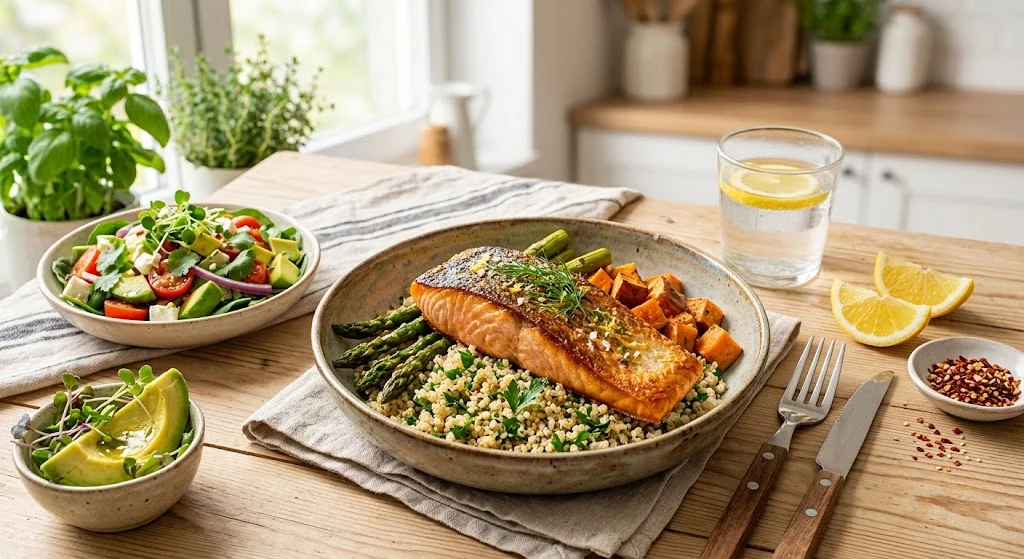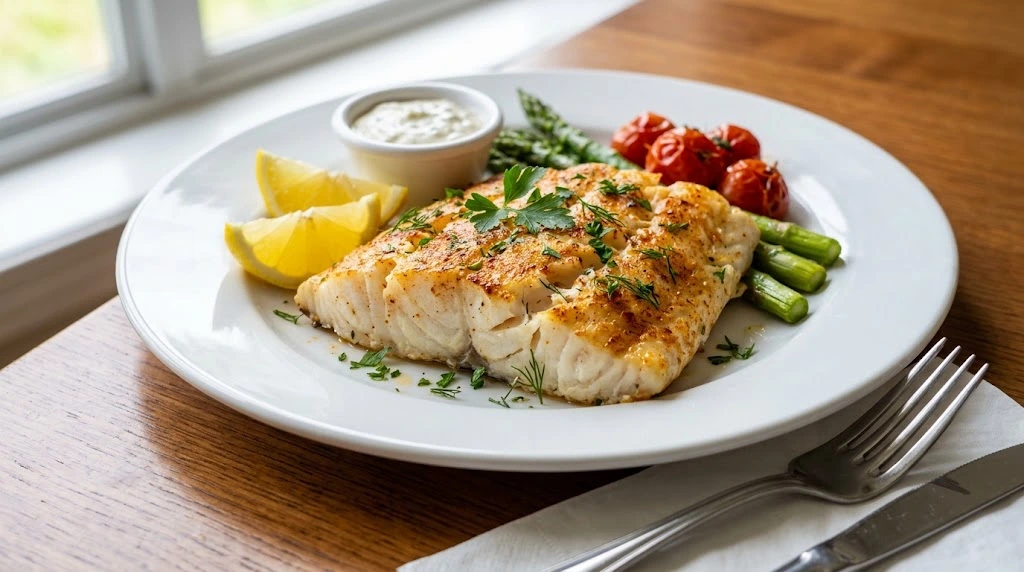
This baked orange roughy recipe delivers tender, flaky fish with lemon, garlic, olive oil, parsley, and simple seasonings—all in one dish for an easy weeknight seafood dinner.
Quick Answer: How Long Do You Bake Orange Roughy?
Bake seasoned orange roughy fillets at 400°F until the thickest part reaches 145°F. For fillets about ¾ to 1 inch thick, start checking around 10–12 minutes; many fillets finish in roughly 12–18 minutes.
The exact time depends on thickness, starting temperature, and the baking dish. An instant-read thermometer is more reliable than using the clock alone.
Why You’ll Like This Baked Orange Roughy
Orange roughy has a mild flavor and firm, flaky texture, making it a useful base for bright seasonings. Lemon and parsley keep the dish fresh, while garlic and olive oil add savory depth.
Baked Orange Roughy Recipe
Easy lemon-garlic orange roughy with a tender, flaky finish.
Ingredients
- 1½ pounds orange roughy fillets, preferably similar in thickness
- 1½ tablespoons extra-virgin olive oil
- 1 tablespoon unsalted butter, melted
- 2 garlic cloves, finely minced
- 1 teaspoon lemon zest
- 1 tablespoon fresh lemon juice
- ½ teaspoon paprika
- ½ teaspoon kosher salt
- ¼ teaspoon black pepper
- 2 tablespoons chopped fresh parsley
- 1 lemon, cut into wedges for serving
How to Make It
- Heat the oven. Heat the oven to 400°F. Lightly grease a baking dish large enough to hold the fillets in one layer.
- Pat the fish dry. Use paper towels to remove surface moisture so the seasoning adheres better and excess liquid does not collect in the dish.
- Make the seasoning mixture. Stir together the olive oil, melted butter, garlic, lemon zest, lemon juice, paprika, salt, and black pepper.
- Season the fillets. Place the orange roughy in the prepared dish and spoon the lemon-garlic mixture evenly over the fish.
- Bake uncovered. Cook until the thickest part of the fish reaches 145°F. Start checking thinner fillets around 10–12 minutes.
- Finish and serve. Sprinkle with fresh parsley and serve with lemon wedges.
How to Tell When Orange Roughy Is Done
The most reliable test is an instant-read thermometer inserted into the thickest part of the fillet.
How Long to Bake Orange Roughy at 400°F
There isn’t one universal baking time. Fillet thickness matters more than weight alone, and very cold or previously frozen fish can also change the timing.
| Fillet Thickness | Start Checking Around | Important Note |
|---|---|---|
| ½ inch | 8–10 minutes | Thin fillets can cook quickly; check early. |
| ¾ inch | 10–12 minutes | Use temperature as the final test. |
| 1 inch | 12–15 minutes | Check the center, not just the surface. |
| 1¼ inches | 15–20 minutes | Thickness and starting temperature can shift the timing. |
These ranges are practical starting points, not guarantees. Begin checking early and cook until the thickest portion reaches 145°F.
How to Keep Baked Orange Roughy Moist
The easiest way to avoid dry fish is to control moisture, thickness, and cooking time. Orange roughy is relatively lean, so overcooking can quickly make it firm and dry.
- Pat the fish dry before seasoning.
- Use enough olive oil or butter to lightly coat the surface.
- Bake fillets of similar thickness together.
- Start checking the temperature before the estimated finish time.
- Don’t keep baking simply because the top hasn’t browned.
- Add fresh lemon juice after baking for a brighter finish.
- Use a light sauce or tomato topping when you want additional moisture.
- Avoid packing several fillets tightly into a small dish.
Fresh vs. Frozen Orange Roughy
Both fresh and frozen orange roughy can work. Proper thawing and thorough drying make a noticeable difference in seasoning, browning, and texture.
Fresh Fish
- Clean, mild smell
- Moist rather than dried-out appearance
- Firm flesh
- Free from excessive discoloration
- Relatively even thickness
Frozen Fish
- Thaw in the refrigerator.
- Drain away excess liquid.
- Pat the surface thoroughly dry.
- Check the center temperature while cooking.
- Don’t judge doneness by browning alone.
Lemon Garlic Orange Roughy
The basic recipe already uses lemon and garlic, but you can emphasize those flavors for a brighter dinner without overwhelming the mild fish.
- Increase lemon zest rather than adding a large amount of lemon juice before baking.
- Finish with fresh lemon juice after baking.
- Add extra parsley for a fresh finish.
- Use dill instead of some of the parsley.
- Add a small pinch of red pepper flakes for heat.
- Replace butter with additional olive oil for a dairy-free version.
- Serve with roasted asparagus or green beans.
- Put lemon wedges on the table so diners can adjust the acidity.
Crispy Panko Baked Orange Roughy
Panko is an easy way to add crunch without frying the fish. Mix panko with Parmesan, paprika, garlic powder, parsley, and black pepper. Brush the fish lightly with olive oil, then press the crumb mixture onto the top.
For Better Crisping
- Pat the fish very dry first.
- Keep the crumb layer relatively thin.
- Don’t crowd the fillets.
- Lightly drizzle or spray the crumbs with oil.
- Use a lightly greased sheet pan for more exposed heat.
- Watch the topping closely near the end.
- Use certified gluten-free panko for a gluten-free preparation.
Parmesan Baked Orange Roughy
Parmesan creates a savory crust without requiring a heavy cream sauce. Combine finely grated Parmesan, panko, parsley, paprika, and garlic powder, then add the mixture to lightly oiled fillets.
For gluten-free preparation, use gluten-free panko. For dairy-free preparation, skip the Parmesan and use seasoned panko with olive oil.
Tomato Herb Baked Orange Roughy
Tomatoes are useful when you want a moister, saucier fish dinner. Use chopped fresh tomatoes or well-drained canned tomatoes with garlic, onion, basil, parsley, and oregano.
Orange Roughy With Lemon and Herbs
Fresh herbs can change the character of the basic recipe without requiring another sauce. Parsley is an all-purpose choice, while dill gives the fish a softer, classic seafood profile.
| Herb Combination | Flavor Direction |
|---|---|
| Parsley + lemon + garlic | Classic, bright, fresh |
| Dill + lemon + black pepper | Fresh seafood profile |
| Basil + tomato + garlic | Mediterranean-inspired |
| Parsley + oregano + paprika | Savory and aromatic |
| Chives + lemon zest + butter | Mild and rich |
Because orange roughy has a mild flavor, a focused combination of herbs usually works better than using too many strong flavors at once.
What to Serve With Baked Orange Roughy
Match the side dishes to the seasoning. Rich garlic-butter fish benefits from crisp vegetables, while tomato-herb fish pairs naturally with rice or couscous.
Easy Dinner Combinations
- 30-minute meal: Baked orange roughy + roasted asparagus + brown rice.
- Family dinner: Lemon-garlic fish + mashed potatoes + green beans.
- Mediterranean-style plate: Tomato-herb orange roughy + couscous + cucumber salad.
- Crisp fish dinner: Panko orange roughy + roasted potatoes + cabbage slaw.
Best Fish Substitutes for Orange Roughy
If orange roughy isn’t available or isn’t appropriate for your household, several mild white fish can work with the same general cooking approach.
| Substitute | Flavor | Texture | Best Use |
|---|---|---|---|
| Pollock | Mild | Tender, flaky | Simple baked fish |
| Cod | Mild, clean | Firm, flaky | Lemon-garlic or panko |
| Haddock | Mild, slightly sweet | Firm | Breadcrumb crusts |
| Hake | Mild | Delicate | Light herb preparations |
| Tilapia | Very mild | Softer | Quick seasoned fillets |
Orange Roughy Mercury and Fish-Safety Information
Why the Fish Choice Matters
Orange roughy is not simply interchangeable with lower-mercury white fish from a dietary-safety perspective. The FDA currently classifies orange roughy as a fish to avoid because of its high mercury level. FDA technical data lists an average mercury concentration of approximately 0.57 ppm.
FDA advises people who are pregnant, breastfeeding, might become pregnant, and young children to avoid orange roughy.
For those groups, lower-mercury choices listed by FDA include pollock, salmon, tilapia, shrimp, sole, trout, and whitefish.
| Situation | Practical Consideration |
|---|---|
| Pregnant or might become pregnant | Avoid orange roughy and choose a lower-mercury fish instead. |
| Breastfeeding | FDA advises avoiding orange roughy. |
| Young children | Choose fish from lower-mercury options rather than orange roughy. |
| Other adults | Consider the FDA’s current fish-consumption guidance when selecting seafood. |
Safe Handling Reminders
- Keep raw fish refrigerated until you’re ready to cook it.
- Wash your hands after handling raw seafood.
- Use separate utensils for raw and cooked fish.
- Don’t return cooked fish to a plate that held raw fish.
- Thaw frozen seafood safely in the refrigerator when possible.
- Cook finfish to 145°F.
- Refrigerate leftovers promptly.
- Discard seafood that develops an unusual sour, rancid, or ammonia-like odor.
How to Store and Reheat Baked Orange Roughy
Cooked fish is best shortly after baking, but leftovers can be stored safely when handled promptly. Transfer leftovers to a shallow covered container and refrigerate them. For better texture, reheat gently instead of using very high heat.
Common Baked Orange Roughy Mistakes
| Mistake | What Happens | Better Approach |
|---|---|---|
| Baking by the clock alone | Different thicknesses finish at different times. | Check the thickest part with a thermometer. |
| Using wet fish | Seasoning can become diluted and browning can suffer. | Pat fillets thoroughly dry. |
| Adding too much lemon juice before baking | The mild fish can become dominated by acidity. | Use zest before cooking and save some juice for serving. |
| Overcrowding the dish | Fish releases moisture and can steam rather than roast. | Keep fillets in one layer with some space between them. |
| Waiting for a very dark crust | The fish may overcook before the topping becomes deeply browned. | Monitor internal temperature instead. |
| Using different-sized fillets together | Thin pieces can dry out while thick pieces finish. | Group similar-sized pieces or remove thinner ones when ready. |
Easy Ways to Change the Recipe
| Goal | Simple Change |
|---|---|
| Dairy-free | Use olive oil instead of butter. |
| Gluten-free | Use gluten-free panko or skip breadcrumbs. |
| Spicy | Add cayenne or red pepper flakes. |
| Mediterranean | Add oregano, tomatoes, parsley, and olive oil. |
| Garlic-forward | Add roasted garlic to the finished fish. |
| Herb-forward | Use dill, parsley, and chives. |
| Crispy | Add a thin panko topping. |
| Cheesy | Add Parmesan to the breadcrumb mixture. |
| Saucier | Bake with tomato, garlic, and herbs. |
| Simple | Use olive oil, salt, pepper, lemon zest, and parsley. |
Frequently Asked Questions
What temperature should orange roughy be cooked to?
Cook orange roughy and other finfish to an internal temperature of 145°F. The thickest part should be opaque and separate easily into flakes.
How long does orange roughy take to bake at 400°F?
Many ¾- to 1-inch fillets take roughly 12–18 minutes at 400°F, but thickness and starting temperature can change the timing. Begin checking early and use 145°F as the final doneness test.
Can I bake orange roughy from frozen?
For the most predictable cooking and browning, thaw the fish in the refrigerator first. Pat it dry after thawing because surface moisture can interfere with seasoning and crisping.
Why did my orange roughy turn out dry?
Overcooking is the most common reason. Thin fillets can finish much sooner than thick ones, so check their temperature early instead of waiting for a fixed timer.
Can I use cod instead of orange roughy?
Yes. Cod is a mild, firm white fish that works well with the lemon-garlic and panko methods. Check the cod’s thickness and adjust the cooking time accordingly.
Is orange roughy high in mercury?
Yes. The FDA currently lists orange roughy among fish with the highest mercury levels and advises people who are pregnant, breastfeeding, might become pregnant, and young children to avoid it.
What fish is a lower-mercury substitute for orange roughy?
Pollock is one practical option. FDA currently lists pollock among its lower-mercury Best Choices, along with options such as salmon, tilapia, sole, trout, shrimp, and whitefish.
Final Takeaway
This baked orange roughy recipe keeps dinner simple with lemon, garlic, olive oil, herbs, and a hot oven. The most important technique is checking the thickest part of the fish instead of depending on one fixed cooking time.
For extra crunch, choose panko. For a saucier dinner, use tomatoes and herbs. If orange roughy isn’t suitable for your household because of its mercury level, pollock or another lower-mercury fish can use the same basic cooking method.
Read More :