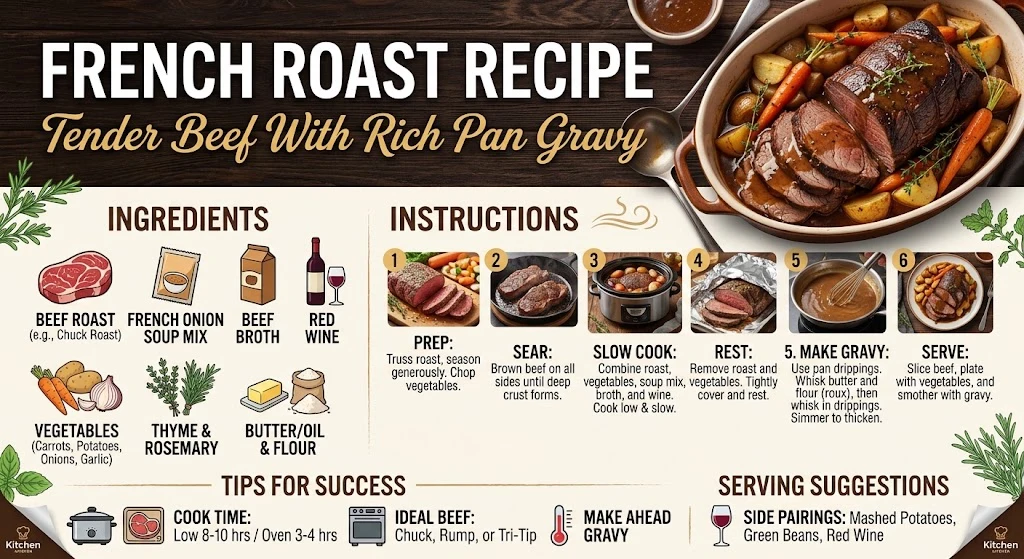
Make a deeply savory French roast recipe with chuck-style beef, onions, garlic, herbs, beef broth, and optional red wine. The roast is seared first, then slowly braised until fork-tender and finished with a rich homemade gravy.
Quick Answer: How to Make French Roast
For a tender French roast, use a 3½- to 4-pound chuck-style roast. Pat it dry, season generously, and sear it on all sides in a Dutch oven. Add onions, garlic, beef broth, herbs, Dijon mustard, and optional red wine. Cover and braise at 325°F for roughly 3½ to 4½ hours, checking early. The roast is ready when a fork slides easily into the thickest part.
USDA recommends that beef roasts reach at least 145°F with a three-minute rest. Because chuck is being cooked for tenderness here, the roast will normally cook well beyond that minimum temperature.
Why This French Roast Recipe Works
The key is treating a chuck-style French roast as a braising cut rather than cooking it like a tenderloin or rib roast.
The initial sear develops browned flavors, while the covered cooking environment gives connective tissue time to soften. The result can be sliced when moderately tender or pulled apart when cooked longer.
- Use chuck-style beef for the long-braising method.
- Dry the roast thoroughly before seasoning and searing.
- Brown the beef well before adding liquid.
- Keep the pot covered during the main cooking stage.
- Judge chuck by tenderness, not the clock alone.
- Save the cooking liquid for gravy.
- Rest the roast before slicing for cleaner portions.
What Is a French Roast?
The term French roast can be confusing because it does not identify one universally consistent beef cut. Some recipes use beef chuck French roast, while others use boneless chuck or rolled rump roast. French-style roast beef recipes can also use leaner cuts and substantially shorter roasting times.
Always check the cut description on the package. If a butcher or grocery store simply labels a roast “French roast,” confirm what cut it actually is before using a long braising schedule.
For This Recipe, Use
A 3½- to 4-pound boneless chuck roast or chuck-style French roast.
Chuck is especially useful because it responds well to long, moist cooking and develops a rich, tender texture as connective tissue softens.
French Roast vs. Pot Roast
| French Roast | Pot Roast |
|---|---|
| Can describe different beef cuts or preparations | Usually describes a slow-cooked beef dish |
| May be sold as a chuck-style roast in some markets | Commonly made with chuck or similar braising cuts |
| May be roasted or braised depending on the cut | Usually cooked with moist heat |
| The terminology can vary by butcher or market | The cooking style is more consistent |
| Always check the package description | Usually focuses on tender, slow-cooked beef |
French Roast Recipe
Slow-braised chuck roast with onion, garlic, herbs, and rich gravy.
For the Beef
- 3½ to 4 pounds boneless chuck roast or chuck-style French roast
- 2 tablespoons olive oil or vegetable oil
- 2 teaspoons kosher salt
- 1 teaspoon freshly ground black pepper
For the Braising Liquid
- 2 medium yellow onions, sliced
- 5 garlic cloves, minced
- 2 cups low-sodium beef broth
- 1 cup dry red wine, or additional beef broth
- 1 tablespoon Dijon mustard
- 2 teaspoons dried thyme
- 1 teaspoon dried rosemary
- 1 bay leaf
Optional Vegetables
- 3 carrots, cut into large pieces
- 2 celery stalks, cut into large pieces
- 1 pound Yukon Gold potatoes, cut into large chunks
For the Gravy
- 2 tablespoons all-purpose flour
- 3 tablespoons cold water
For gluten-free gravy, use a cornstarch slurry and verify that the broth and other packaged ingredients are gluten-free when necessary.
How to Make French Roast
Prepare the Roast
Remove the beef from its packaging and pat the surface thoroughly dry with paper towels. Season all sides with kosher salt and black pepper.
Sear the Beef
Heat a large Dutch oven over medium-high heat and add the oil. Place the roast in the hot pot and brown it on all major sides, allowing several minutes per side.
Aim for a deep brown crust, not a pale gray surface. Transfer the roast to a plate.
Cook the Onions and Garlic
Reduce the heat to medium. Add the sliced onions and cook for about 5 minutes, stirring occasionally, until they begin to soften.
Add the garlic and cook for about 30 seconds. Avoid aggressively browning the garlic because it can become bitter.
Deglaze the Pot
Pour in the red wine if using. Scrape the bottom of the Dutch oven with a wooden spoon to loosen the browned bits left behind by the beef.
Let the wine simmer for several minutes. If you are skipping wine, use some of the beef broth instead.
Build the Cooking Liquid
Add the remaining beef broth, Dijon mustard, thyme, rosemary, and bay leaf. Stir until the mustard is incorporated.
Return the browned roast to the pot. The liquid should come partway up the sides of the beef rather than completely cover it.
Cover and Braise
Cover the Dutch oven tightly and place it in a 325°F oven. Cook for approximately 3½ to 4½ hours, depending on the size and shape of the roast.
Begin checking before the end of the estimated range. The roast is ready when a fork enters the thickest portion with very little resistance.
Add Vegetables if Desired
For vegetables that retain some shape, add carrots, celery, and potatoes during the later part of cooking. Adding them at the beginning can make them very soft after several hours.
Rest the Beef
Transfer the finished roast to a cutting board and let it rest for about 15 to 20 minutes before slicing or shredding.
Keep some cooking liquid warm while the beef rests.
Make the Gravy
Remove the bay leaf. Strain the cooking liquid for a smooth gravy or leave some softened onions in the sauce for a rustic finish.
In a small bowl, whisk the flour with cold water until smooth. Bring about 2 cups of cooking liquid to a gentle simmer and slowly whisk in the slurry. Cook for several minutes until thickened.
Food Safety: Temperature vs. Tenderness
USDA recommends a minimum internal temperature of 145°F followed by a three-minute rest for beef roasts. For this chuck-braising recipe, that temperature is a safety minimum rather than the tenderness target.
Use a food thermometer to verify safety, then continue cooking the chuck until the connective tissue has softened and the meat is fork-tender.
How to Know When French Roast Is Done
A thermometer is essential for checking food safety, but it is not the only useful tool for judging the texture of braised chuck.
Look for These Signs
- A fork slides easily into the thickest section.
- The meat gives way without significant resistance.
- Fibers begin separating when pressed with a fork.
- The roast can be sliced without fighting the grain.
- For shredding, the meat separates easily with two forks.
Don’t Judge Safety by Color
Beef color is not a reliable substitute for thermometer measurements. Use a food thermometer to verify the internal temperature.
French Roast for Slicing vs. Shredding
| For Sliceable Beef | For Shredded Beef |
|---|---|
| Stop when the roast is tender but still holds together. | Continue cooking until connective tissue has softened substantially. |
| Rest before slicing. | Use two forks to separate the meat. |
| Cut against the grain. | Pull into large pieces rather than tiny shreds. |
French Roast in a Dutch Oven
A Dutch oven is an excellent all-around method because you can sear the beef, soften the onions, build the sauce, and finish the roast in the same pot.
Why Use a Dutch Oven?
- Excellent browning before braising
- Even heat during long cooking
- A heavy lid helps retain moisture
- Easy sauce and gravy preparation
- One-pot cleanup
- Excellent for make-ahead meals
Best choice: Use this method when browned beef and rich pan gravy are priorities.
Slow Cooker French Roast
A slow cooker is useful when you want a mostly hands-off dinner. Searing the beef first adds another layer of flavor, but the recipe can still work without searing when convenience matters more.
Slow Cooker Method
- Season and sear the roast if time allows.
- Place sliced onions in the bottom of the cooker.
- Place the beef on top.
- Add garlic, herbs, Dijon, and beef broth.
- Use enough liquid for a moist environment without completely drowning the roast.
- Cook on LOW until the beef is fork-tender.
- Start checking the roast before you expect it to finish.
- Transfer the beef to a board and rest before serving.
- Strain and thicken some of the cooking liquid for gravy.
French Roast With Red Wine
Red wine gives the gravy a darker, more complex flavor and pairs naturally with beef, onions, thyme, and mushrooms.
| Wine | Flavor Direction |
|---|---|
| Cabernet Sauvignon | Bold and structured |
| Merlot | Softer and fruitier |
| Pinot Noir | Lighter and more delicate |
| No wine | Use additional beef broth |
French Roast With Mushrooms
Mushrooms add earthy depth to the gravy. For better texture, brown them separately rather than crowding them into the Dutch oven while the roast is searing.
Simple Mushroom Variation
- Use 8 ounces of sliced cremini mushrooms.
- Brown them in a little oil or butter.
- Season lightly with salt and pepper.
- Add minced garlic near the end.
- Stir the mushrooms into the finished gravy.
- Spoon them over the sliced beef before serving.
For stronger mushroom flavor, add a small amount of rehydrated dried porcini and use the strained soaking liquid in the sauce.
French Roast With Root Vegetables
Root vegetables turn this roast into a complete dinner. The key is cutting them into large pieces so they hold their shape during long cooking.
Good Choices
- Carrots: sweet and familiar
- Parsnips: earthy and slightly nutty
- Turnips: mild and peppery
- Yukon Gold potatoes: creamy and buttery
- Celery root: savory and earthy
- Pearl onions: sweet and elegant
Control the Texture
Add vegetables according to the texture you want. Firm vegetables should be added later, while vegetables intended to become very soft can be added earlier.
French Roast Gravy
The cooking liquid is one of the best parts of this recipe. It carries the flavors of browned beef, onions, garlic, herbs, broth, and wine.
For a Smooth Gravy
- Remove the beef.
- Remove the bay leaf.
- Strain the cooking liquid.
- Skim excess fat if desired.
- Return about 2 cups of liquid to the pot.
- Bring it to a gentle simmer.
- Whisk in the prepared flour slurry.
- Cook until thickened.
- Taste before adding more salt.
For Gluten-Free Gravy
Replace the flour with cornstarch. Mix the cornstarch with cold water first, then whisk it into simmering liquid.
French Roast vs. French-Style Roast Beef
These preparations should not automatically be treated as the same recipe. A slow-braised chuck French roast is designed for several hours of moist cooking, while a French-style roast beef preparation may use a much more tender cut and a substantially shorter cooking time.
| If Your Beef Is… | Better Approach |
|---|---|
| Chuck roast | Long, covered braising |
| Chuck-style French roast | Long, covered braising |
| Rolled rump | Follow a method specific to that cut |
| Eye fillet / tenderloin | Shorter roasting |
| Sirloin roast | Use a roast-beef method suited to the cut |
| Unknown cut | Check the package or ask your butcher first |
Don’t Use a Chuck Schedule for Every Roast
A lean tender roast does not automatically benefit from several hours of braising. Always match the cooking method to the actual cut of beef.
Best Side Dishes for French Roast
Rich roast dinners benefit from a combination of creamy, fresh, crisp, and green sides.
Classic Pairings
- Mashed potatoes for soaking up gravy
- Roasted carrots for sweetness
- Green beans for freshness
- Buttered egg noodles for a simple family meal
More Options
- Roasted Brussels sprouts
- Crusty bread for dipping
- Simple green salad
- Creamed spinach
Make-Ahead French Roast
French roast is an excellent make-ahead dinner because the beef and gravy can be stored together. Chilled beef also holds its shape better, making slicing easier.
Make-Ahead Method
- Cook the roast until tender.
- Let it cool with some cooking liquid.
- Transfer it to shallow containers.
- Refrigerate promptly.
- Slice the chilled beef.
- Store it with enough gravy to keep the slices moist.
- Reheat gently until thoroughly hot.
Leftover Safety
Refrigerate perishable leftovers within 2 hours and use most cooked leftovers within 3 to 4 days.
How to Store and Reheat French Roast
| Storage Method | Best Practice |
|---|---|
| Refrigerator | Store airtight with gravy or cooking juices and use within 3–4 days. |
| Freezer | Freeze sliced or shredded beef with enough sauce to reduce moisture loss. |
| Portioning | Divide large amounts into meal-sized portions before freezing. |
| Reheating | Reheat gently with broth or gravy and bring leftovers to 165°F. |
Reheating Safety
Reheat leftovers to 165°F. Warm only the amount you plan to eat rather than repeatedly reheating the entire batch.
Leftover French Roast Ideas
- French dip sandwiches with warm au jus
- Roast beef hash with potatoes and onions
- Beef quesadillas with cheese and peppers
- Gravy-topped mashed potatoes
- Shredded beef tacos with fresh salsa
- Beef and vegetable soup
- Hot roast beef sandwiches
- Beef-filled baked potatoes
For sandwiches, slice the beef thinly and warm it briefly in gravy. For tacos or quesadillas, shred the beef and remove excess gravy before assembling.
French Roast Substitutions
| Ingredient | Substitution |
|---|---|
| Red wine | Replace with beef broth. For acidity, add a small amount of balsamic vinegar to the finished sauce. |
| Rosemary | Use additional thyme for a softer herbal flavor. |
| All-purpose flour | Use cornstarch for gluten-free gravy. |
| Butter | Use olive oil for a dairy-free finish. |
| Vegetables | Swap carrots, celery, potatoes, parsnips, or turnips according to preference. |
| Beef broth | Low-sodium broth gives you better control over final seasoning. |
French Roast Troubleshooting
Why is my French roast tough?
If you’re using chuck, toughness usually means the collagen has not softened enough. Keep the roast covered and continue cooking until a fork slides into the meat easily.
Why is my gravy too thin?
Remove the beef and simmer the cooking liquid uncovered to concentrate it. You can also use a small flour or cornstarch slurry.
Why is my gravy too thick?
Whisk in warm beef broth a little at a time. Taste again after thinning because extra broth can reduce the sauce’s seasoning intensity.
Why didn’t my beef brown?
Surface moisture is a common cause. Pat the beef very dry before searing and avoid overcrowding the pot.
Why did my vegetables become mushy?
They probably cooked too long. Add firmer vegetables later in the braise or cook them separately.
Why is the roast dry?
Check whether the cooking vessel lost too much liquid. Keep the Dutch oven tightly covered, avoid repeatedly opening it, and make sure you are using a cut suited to long cooking.
French Roast Food Safety
Raw beef should be handled separately from ready-to-eat foods. Use separate cutting boards or thoroughly wash and sanitize surfaces after handling raw meat.
USDA recommends cooking beef roasts to a minimum internal temperature of 145°F followed by at least three minutes of rest.
Important Safety Points
- Use a food thermometer rather than judging safety by color.
- Keep raw beef separate from vegetables and ready-to-eat foods.
- Wash hands and surfaces after handling raw beef.
- Refrigerate leftovers within two hours.
- Use refrigerated leftovers within 3 to 4 days.
- Reheat leftovers to 165°F.
- Follow package instructions for mechanically tenderized beef.
If the package says the beef was mechanically tenderized, pay particular attention to the label’s cooking instructions because mechanical tenderization can move surface bacteria into the interior of the meat.
Frequently Asked Questions
Is French roast the same as chuck roast?
Not always. “French roast” can refer to different cuts or preparations depending on the butcher, recipe, or market. For this recipe, use a 3½- to 4-pound chuck-style French roast or boneless chuck roast.
What is the best cut for a French roast recipe?
For a slow-braised French roast, chuck is a practical choice because it works well with long, moist cooking. If the package says rump, sirloin, eye fillet, or another lean roast, use a method designed specifically for that cut.
How long does French roast take to cook?
A 3½- to 4-pound chuck-style roast will usually need around 3½ to 4½ hours at 325°F in a covered Dutch oven. Treat this as a starting range rather than a guarantee. The roast is ready when it becomes fork-tender and has reached the safe minimum internal temperature.
Why is my French roast still tough after hours of cooking?
Chuck can remain tough for a while before becoming much more tender. If the roast has reached a safe temperature but still resists a fork, keep it covered and continue braising until the connective tissue softens.
Can I make French roast in a slow cooker?
Yes. Chuck-style French roast works well in a slow cooker. Searing first adds browned flavor, while low, moist cooking provides the long cooking environment needed for tenderness.
Can I make French roast ahead of time?
Yes. Cook it, cool it with some cooking juices, refrigerate it, and slice it when chilled. Reheat the slices gently in gravy or broth to help keep them moist.
What should I serve with French roast?
Mashed potatoes, roasted carrots, green beans, egg noodles, and crusty bread are all good options. For a balanced dinner, combine one rich side with one green or fresh side.
Final Takeaway
The best French roast recipe starts with the right cut and the right cooking method. For this version, a chuck-style roast, thorough searing, flavorful braising liquid, and slow covered cooking produce tender beef with rich onion-and-herb gravy.
The most important lesson is to cook by texture, not just by the clock. Confirm the beef reaches the USDA safe temperature, then continue cooking the chuck until a fork slides easily into the meat.
Serve it with mashed potatoes and vegetables for a classic dinner, or turn leftovers into sandwiches, hash, tacos, quesadillas, or soup.
Read More :