Learn how to make Jamaican sweet potato pudding with finely grated sweet potatoes, coconut milk, warm spices, and brown sugar. This traditional-style recipe explains how to get the signature soft pon top, choose the right potatoes in U.S. grocery stores, use yellow yam, and know exactly when the pudding is done.
Quick Answer: What Makes Jamaican Sweet Potato Pudding Different?
Jamaican sweet potato pudding is a dense, moist Caribbean dessert made with finely grated raw sweet potatoes, coconut milk, sugar, flour or starch, and warm spices. Unlike American sweet potato pie, it has a firm, slightly chewy texture and traditionally may have a softer upper layer known as “soft pon top.”
Jamaican Sweet Potato Pudding at a Glance
| Cuisine | Jamaican / Caribbean |
|---|---|
| Course | Dessert |
| Prep Time | 35–45 minutes |
| Bake Time | About 1½–2 hours |
| Oven | 350°F |
| Yield | 10–12 servings |
| Texture | Dense, moist, slightly chewy |
| Flavor | Sweet potato, coconut, cinnamon, nutmeg, and vanilla |
| Best Potatoes | Caribbean, Jamaican, or Japanese sweet potatoes |
| Optional Additions | Yellow yam, raisins, and dark rum |
| Dietary Options | Vegan and gluten-free adaptations |
What Is Jamaican Sweet Potato Pudding?
Jamaican sweet potato pudding is a baked dessert made from finely grated sweet potatoes rather than mashed potatoes. Coconut milk, sugar, flour or starch, and warm spices bind the mixture into a dense pudding that can be sliced after cooling.
The texture is quite different from American sweet potato pie. Sweet potato pie is usually smooth and custardy, while Jamaican pudding is more substantial, moist, and slightly chewy. Some traditional versions also contain yellow yam, raisins, rum, or coconut, depending on the recipe and family tradition.
The dessert has a strong place in Jamaican food culture and is especially associated with Christmas, Easter, family gatherings, Sunday meals, celebrations, and community events. King Arthur Baking’s recipe developer Tiffany-Anne Parkes also describes sweet potato pudding as a significant part of Jamaican-American holiday tables. King Arthur Baking
What Does “Hell A Top, Hell A Bottom” Mean?
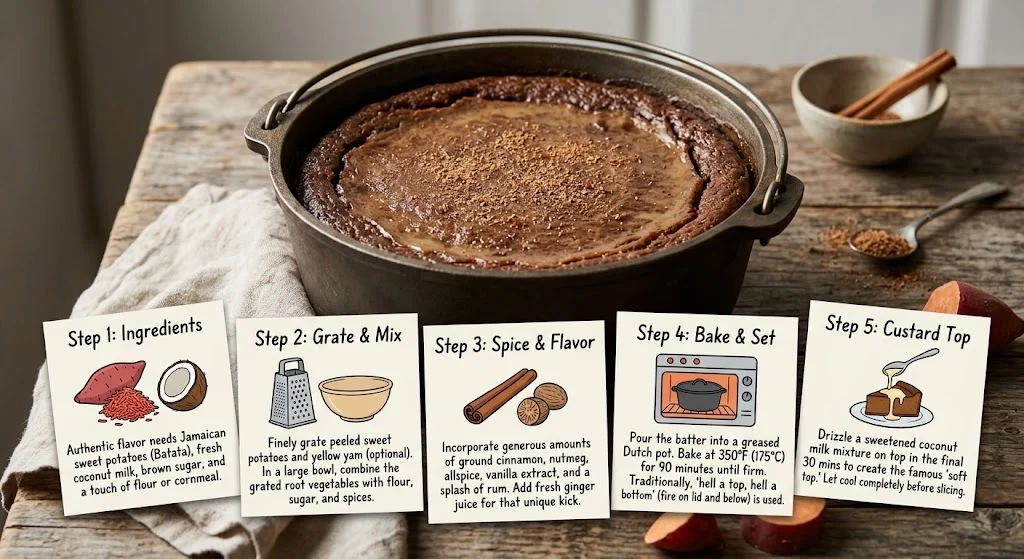
The famous Jamaican saying associated with this pudding is “hell a top, hell a bottom, hallelujah in the middle.” It refers to the traditional method of cooking the pudding with heat underneath and above the pot.
Traditional Jamaican cooking could use a Dutch pot or coal stove, with hot coals supplying heat from both directions. The result helped cook the pudding thoroughly while creating the characteristic softer layer near the top. Food.com and Jamaican Cookery document this traditional cooking concept.
Modern ovens don’t reproduce the coal-stove method exactly. Instead, a soft coconut topping can be added during the bake to create a similar contrast between the firmer pudding and softer top.
The Best Sweet Potatoes for Jamaican Pudding
The choice of sweet potato can make a noticeable difference in the finished pudding. Caribbean and Japanese sweet potatoes are generally denser and starchier than common orange-fleshed varieties, which helps produce a firm but moist dessert. King Arthur Baking
Which Potatoes Can You Use?
- Caribbean/Jamaican sweet potatoes: The closest choice for traditional flavor and texture.
- Japanese sweet potatoes: A strong U.S. substitute with dense, starchy flesh.
- Orange-fleshed sweet potatoes: Easy to find and naturally sweeter, with a brighter color.
- Boniato or batata: White-fleshed Caribbean-style sweet potatoes found in some U.S. markets.
- U.S. “yams”: Often actually orange sweet potatoes rather than true yams.
- Purple sweet potatoes: Usable, but they’ll produce a very different color and flavor.
- Very watery sweet potatoes: Less desirable because they can loosen the batter.
- Soft or damaged potatoes: Avoid them because freshness affects both flavor and food quality.
My Pick for U.S. Grocery Stores
If Jamaican sweet potatoes aren’t available, choose Japanese sweet potatoes first for a dense pudding. Use orange sweet potatoes when they’re the easiest option.
The important point is not the name on the produce sticker alone. Look for firm, dense-fleshed potatoes rather than very watery ones.
Jamaican Sweet Potato Pudding Recipe
Dense, moist, coconut-rich pudding with warm Caribbean-inspired spices and a soft top.
For the Pudding
- 2½ pounds peeled sweet potatoes, preferably Caribbean or Japanese
- ½ cup all-purpose flour
- ¼ cup fine yellow cornmeal
- 1¼ cups packed dark brown sugar
- 2½ cups full-fat coconut milk
- 4 tablespoons unsalted butter, melted
- 1½ teaspoons ground cinnamon
- 1 teaspoon freshly grated nutmeg
- ½ teaspoon ground allspice
- ½ teaspoon ground ginger
- 1 teaspoon vanilla extract
- ½ teaspoon fine salt
- ½ cup raisins, optional
- 2 tablespoons dark rum, optional
- ½ pound finely grated yellow yam, optional
For the Soft Top
- ¾ cup full-fat coconut milk
- 2 tablespoons brown sugar
- ½ teaspoon cinnamon
- ½ teaspoon vanilla
- 1 tablespoon melted butter, optional
The finished pudding should be firm enough to slice but still moist and dense. The soft top should be tender and glossy rather than liquid or frosting-like.
Why These Ingredients Matter
Sweet potato supplies the body and natural sweetness.
Coconut milk provides moisture and richness. Full-fat coconut milk is preferable because the pudding depends on both liquid and coconut fat.
Brown sugar gives the pudding a deeper flavor than plain granulated sugar.
Fine cornmeal adds structure without making the finished pudding coarse. Keep the amount moderate because too much can create a gritty texture.
Warm spices provide the familiar Jamaican-style flavor profile. Cinnamon, nutmeg, ginger, and allspice work together rather than competing with the sweet potato.
Flour helps the pudding set, but too much can make it rubbery. King Arthur’s recipe developer specifically notes that flour quantity can dramatically affect the texture. King Arthur Baking
How to Make Jamaican Sweet Potato Pudding
The most important preparation step is finely grating the raw sweet potatoes. The finished pudding should have a cohesive texture rather than obvious hard strands.
Prepare the Pan
Heat the oven to 350°F.
Grease a deep 9-inch round baking pan or another deep oven-safe dish of similar capacity. Line the bottom with parchment if you want easier removal.
Grate the Sweet Potatoes
Peel the sweet potatoes and rinse them well.
Grate them using the fine or medium-fine side of a box grater. You want fine shreds rather than mashed potato.
A food processor can save time, and Food Network uses a grater attachment in its Jamaican sweet potato pudding recipe. Food Network
However, don’t process the potatoes into a smooth purée. The grated structure is part of what gives the pudding its characteristic texture.
Prepare the Optional Yam
If using yellow yam, peel it carefully and grate it finely.
Keep the yam as a supporting ingredient rather than allowing it to dominate the sweet potato. The yam contributes starch and body.
Combine the Dry Ingredients
In a large bowl, whisk together:
- Flour
- Fine cornmeal
- Brown sugar
- Cinnamon
- Nutmeg
- Allspice
- Ginger
- Salt
Break up any brown-sugar lumps before continuing.
Add the Sweet Potato
Add the grated sweet potatoes and optional yam.
Toss everything together until the dry ingredients coat the shreds evenly.
Add the Coconut Mixture
Pour in the coconut milk, melted butter, and vanilla.
Add the raisins and rum if using them.
Stir thoroughly until the mixture becomes a thick, heavily moistened batter. It should not look watery or soupy.
Let the mixture stand for about 5 minutes before transferring it to the pan. The sweet potato and dry ingredients will absorb some of the coconut milk.
Start Baking
Spread the batter evenly in the prepared pan.
Bake at 350°F for about 60 minutes before checking the surface.
At this point, the edges should be noticeably firmer while the middle remains moist.
Add the Soft Top
Whisk together the coconut milk, brown sugar, cinnamon, and vanilla.
Carefully pour this mixture over the partially baked pudding. Don’t stir it into the pudding.
Return the pan to the oven and continue baking for approximately 35–60 minutes, depending on the depth of the pan and the moisture of the sweet potatoes.
This staged soft-top technique is also used by Jamaican recipe developers, including That Girl Cooks Healthy, which adds a coconut mixture after the first baking stage. That Girl Cooks Healthy
Check for Doneness
Don’t rely on the clock alone.
- The edges should be firmly set.
- The surface should look cooked rather than liquid.
- The center should be moist but not runny.
- The soft top should look absorbed and glossy.
- A gentle movement of the pan should produce only slight movement in the center.
- The pudding should feel substantially firmer than the original batter.
A completely dry center is not the goal. Jamaican sweet potato pudding should remain moist after cooling.
Cool Before Cutting
Remove the pudding from the oven and place it on a heat-safe surface.
Allow it to cool thoroughly before slicing.
This step matters because the interior continues to firm as it cools. Cutting too soon can make a properly baked pudding look underdone.
How to Get the Signature Soft Top
The soft top, sometimes called “sof pon top,” is one of the defining characteristics many people look for in Jamaican sweet potato pudding. Food.com describes the softer top as the “hallelujah” part of the traditional riddle. Food.com
- Bake the pudding until the edges have begun to set.
- Mix the coconut topping separately.
- Pour it gently over the surface.
- Don’t stir after adding the topping.
- Return the pudding to the oven.
- Continue baking until the surface is glossy and no longer liquid.
- Allow the pudding to cool before judging the final texture.
Don’t expect the soft top to resemble frosting. It should remain tender and moist while the pudding underneath becomes firm enough to slice.
How Do You Know Jamaican Sweet Potato Pudding Is Done?
This is one of the most important parts of the recipe.
Different sweet potatoes contain different amounts of moisture and starch. That means two pans made with the same ingredients can finish at slightly different times.
Too raw: The center looks wet and flows when the pan moves.
Nearly done: The edges are firm while the middle has a slight wobble.
Done: The pudding looks cohesive, the top is set, and the center remains moist rather than liquid.
Overbaked: The surface becomes dry and the center loses its soft, dense texture.
Give the pudding time to cool before deciding that it has failed. The texture changes substantially as it cools.
Jamaican Sweet Potato Pudding With Yellow Yam
Yellow yam is found in many traditional Jamaican versions, although it isn’t mandatory.
It contributes additional starch and can make the pudding feel denser. Food.com uses grated yam alongside sweet potato, while several modern recipes offer yam-free versions. Food.com
When to Use Yam
- You can find fresh, good-quality yam.
- You want a denser traditional-style texture.
- You enjoy a more substantial pudding.
- You’re comfortable peeling and grating the root.
When to Skip It
- It’s unavailable locally.
- You want a simpler ingredient list.
- You’re making the pudding for the first time.
- You prefer a softer sweet-potato-forward texture.
Don’t replace yam with an equal amount of flour. Yam contributes starch and moisture differently, so a direct flour substitution can make the pudding heavy.
Jamaican Sweet Potato Pudding Without Yam
A no-yam version is completely practical for American kitchens.
Jamaican Cookery publishes a yam-free version and demonstrates both oven and traditional coal-stove approaches. Jamaican Cookery
- Use dense sweet potatoes.
- Grate them finely.
- Keep the flour moderate.
- Use full-fat coconut milk.
- Don’t overdo the cornmeal.
- Allow the batter to stand briefly before baking.
- Watch the center rather than relying only on baking time.
- Cool completely before slicing.
The result will still have the recognizable coconut, sweet potato, and warm-spice profile of the dessert.
Jamaican Sweet Potato Pudding With Cornmeal
Cornmeal appears in some modern versions but isn’t required for every traditional-style recipe.
It gives the pudding a slightly different structure. Fine cornmeal works better than coarse cornmeal because coarse grains can remain noticeable after baking.
- Choose a finely ground yellow cornmeal.
- Keep the quantity modest.
- Don’t replace all the flour with cornmeal.
- Give the mixture several minutes to hydrate.
- Watch the moisture level carefully.
- Avoid adding extra dry ingredients simply because the batter looks loose.
More cornmeal doesn’t automatically make the pudding more authentic or better. Different Jamaican families and recipe developers use different formulas.
Can You Use Orange Sweet Potatoes?
Yes.
Orange sweet potatoes are one of the easiest substitutions for U.S. cooks. Food Network’s Jamaican version specifically uses white-fleshed sweet potatoes called boniato or batata, while King Arthur recommends Caribbean or Japanese sweet potatoes for their dense texture. Food Network King Arthur Baking
What Orange Sweet Potatoes Change
- A brighter orange color
- A sweeter flavor
- A somewhat softer texture
- Easier grocery shopping
If you’re trying to get closer to the dense texture associated with Caribbean varieties, Japanese sweet potatoes are another strong option.
Vegan Jamaican Sweet Potato Pudding
The recipe can be made vegan with one straightforward change.
Replace the butter with a plant-based baking butter or another suitable vegan baking fat.
The coconut milk already provides the main dairy-free liquid and richness.
- Use full-fat coconut milk.
- Replace butter with vegan baking butter.
- Check vanilla and other packaged ingredients.
- Use raisins if desired.
- Omit rum for an alcohol-free version.
- Verify that any flour or cornmeal meets your dietary requirements.
Several current Jamaican sweet potato pudding recipes use vegan ingredients, including a version from That Girl Cooks Healthy. That Girl Cooks Healthy
Gluten-Free Jamaican Sweet Potato Pudding
For a gluten-free pudding, replace the all-purpose flour with a reliable cup-for-cup gluten-free baking blend.
If you’re cooking for someone with celiac disease or a serious wheat allergy, check every packaged ingredient and prevent cross-contact in your kitchen.
- Choose a blend designed for baking.
- Use fine cornmeal.
- Check labels for gluten cross-contact if needed.
- Keep the coconut milk and sweet potato quantities unchanged initially.
- Expect a slightly different crumb from the wheat-flour version.
Jamaican Sweet Potato Pudding for Christmas
This pudding is particularly well suited to Christmas and other holiday gatherings because it can be prepared ahead and sliced into small portions.
Jamaican-American holiday tables commonly feature sweet potato pudding, according to King Arthur’s recipe developer Tiffany-Anne Parkes. King Arthur Baking
- Add raisins for chewy sweetness.
- Use cinnamon and nutmeg generously but carefully.
- Add a small amount of rum if appropriate for your guests.
- Use orange zest for a brighter flavor.
- Serve small slices because the pudding is rich.
- Pair it with vanilla ice cream.
- Offer whipped cream for a lighter topping.
- Serve with coffee or black tea.
- Bake several hours before dessert service.
- Refrigerate leftovers promptly.
Rum Raisin Jamaican Sweet Potato Pudding
Rum and raisins are optional additions that work especially well for Christmas.
If children will be eating the pudding, simply leave out the rum.
For a deeper raisin flavor, soak the raisins briefly in warm water or rum, then drain them before adding them to the batter.
Flavor-Building Options
- Cinnamon: Sweet and familiar.
- Nutmeg: Rich and aromatic.
- Allspice: Warm and peppery.
- Ginger: Brighter and slightly sharper.
- Vanilla: Softens the spice blend.
- Orange zest: Adds fresh citrus aroma.
- Rum: Adds depth and a festive character.
Don’t add every possible spice at once. The sweet potato and coconut should remain recognizable.
Common Jamaican Sweet Potato Pudding Problems
The Pudding Is Too Dry
Possible causes include:
- Too much flour
- Too much cornmeal
- Overbaking
- Low-moisture ingredients without enough coconut milk
Next time, pay closer attention to the batter consistency and center appearance.
The Center Is Still Runny
Give it additional baking time. If the edges are already dark, loosely cover the surface with foil while the center continues cooking.
The Pudding Is Rubbery
Excess flour is a likely culprit.
King Arthur’s recipe developer specifically discusses how flour can make or break the texture of sweet potato pudding. King Arthur Baking
The Pudding Is Too Soft
First, let it cool completely.
If it remains loose after cooling, the batter may have contained too much liquid or the pudding may have needed more baking.
The Top Is Too Wet
The soft top should be moist, but it shouldn’t remain liquid. Continue baking until the coconut mixture has been absorbed and the surface looks set.
The Texture Is Grainy
Possible causes include:
- Coarse cornmeal
- Coarsely grated sweet potato
- Excessive dry ingredients
- Insufficient hydration
Use finer ingredients and mix thoroughly.
The Pudding Falls Apart When Sliced
Don’t cut it while hot. Cooling is part of the setting process. Give the pudding enough time to firm before slicing.
Can You Make Jamaican Sweet Potato Pudding in a Food Processor?
Yes, but use the correct attachment.
Food Network’s recipe specifically uses a grater attachment to prepare the sweet potatoes. Food Network
The goal is grated potato, not purée. Avoid processing until the potato becomes wet and smooth.
A food processor is useful when you’re preparing several pounds of sweet potato, but avoid processing until the potato becomes wet and smooth.
For the most traditional texture, some Jamaican cooks prefer hand-grating. A current Jamaican Cookery recipe specifically recommends hand-grating and warns against liquefying the potato. Jamaican Cookery
How to Serve Jamaican Sweet Potato Pudding
The pudding is rich enough to serve by itself.
For a traditional-style presentation, cut it into modest squares or wedges and serve it slightly cool or at room temperature.
Good Pairings
- Hot black coffee
- Unsweetened tea
- Vanilla ice cream
- Lightly whipped cream
- Toasted coconut
- A little orange zest
- Freshly grated nutmeg
- Warm milk, a serving tradition noted by Jamaican Cookery
For a holiday table, keep the garnish simple. The dark, spiced pudding already makes a strong visual statement.
How to Store Jamaican Sweet Potato Pudding
Because this is a moist cooked dessert, handle leftovers as a perishable prepared food.
For a conservative U.S. food-safety approach, refrigerate leftovers within two hours and keep the refrigerator at 40°F or below. USDA guidance recommends using refrigerated leftovers within 3–4 days or freezing them for longer storage. USDA AskUSDA
Refrigerator
- Cool the pudding enough for safe handling.
- Divide large amounts into smaller portions.
- Use airtight containers.
- Refrigerate promptly.
- Eat within 3–4 days.
Freezer
Individual portions freeze more conveniently than a whole pudding.
Wrap each portion tightly, place it in a freezer-safe container or bag, and label the date.
For best quality, use frozen portions within a few months. USDA notes that frozen leftovers remain safe for longer periods when continuously frozen, although quality can decline. USDA AskUSDA
Reheating
Thaw frozen pudding in the refrigerator.
Reheat individual portions gently in a microwave or conventional oven. USDA recommends reheating leftovers to 165°F throughout. USDA AskUSDA
Don’t repeatedly heat and cool the entire pudding.
Jamaican Sweet Potato Pudding vs. Sweet Potato Pie
These desserts share an ingredient but have very different personalities.
| Feature | Jamaican Sweet Potato Pudding | American Sweet Potato Pie |
|---|---|---|
| Potatoes | Usually finely grated raw | Usually cooked and mashed |
| Texture | Dense and moist | Smooth and custardy |
| Coconut Milk | Common | Less typical |
| Crust | No pastry crust | Usually pastry crust |
| Yam | Sometimes included | Rare |
| Soft Top | Characteristic of many versions | Not typical |
| Spices | Warm Caribbean-style spices | Cinnamon, nutmeg, ginger |
| Serving | Slices or squares | Pie wedges |
If you want a sliceable, coconut-rich dessert without a pastry crust, Jamaican sweet potato pudding offers a distinctly different experience from traditional sweet potato pie.
Jamaican Sweet Potato Pudding FAQs
Is Jamaican sweet potato pudding the same as sweet potato pie?
No. Jamaican pudding is generally denser and more substantial, with grated sweet potato and coconut milk playing major roles.
Sweet potato pie usually uses cooked mashed sweet potatoes and a pastry crust.
Do I need Jamaican sweet potatoes?
No. Caribbean sweet potatoes are ideal when available, but Japanese sweet potatoes and orange sweet potatoes can work well in U.S. kitchens.
For a dense texture, Japanese or Caribbean varieties are preferable because they tend to be starchier. King Arthur Baking
Do I have to use yellow yam?
No. Yellow yam is traditional in some versions but can be omitted.
A carefully balanced yam-free pudding can still produce the dense, moist texture associated with Jamaican sweet potato pudding. Jamaican Cookery
Why is my Jamaican sweet potato pudding wet in the middle?
A slightly moist center is normal, especially while the pudding is hot. It should not remain liquid after baking and cooling.
If it stays loose, continue baking and check whether your sweet potatoes or coconut milk created a wetter-than-expected batter.
Why does Jamaican sweet potato pudding have a soft top?
The soft top reflects the traditional idea of “hell a top, hell a bottom, hallelujah in the middle.”
Modern oven recipes can recreate the softer upper layer by adding a coconut mixture during the later stage of baking. Food.com
Can I make Jamaican sweet potato pudding without rum?
Absolutely. Rum is optional.
For a family-friendly version, leave it out. If you want the flavor and don’t want alcohol, use extra vanilla and soak raisins in warm water instead.
Can I freeze Jamaican sweet potato pudding?
Yes. Freeze individual portions in airtight freezer packaging, then thaw them in the refrigerator.
For reheating, bring the portion thoroughly to 165°F rather than warming it only until the outside feels hot. USDA AskUSDA
How long does Jamaican sweet potato pudding last?
Keep it refrigerated and use it within 3–4 days for a conservative leftover-storage window. USDA AskUSDA
The Secret to Great Jamaican Sweet Potato Pudding
A good Jamaican sweet potato pudding recipe is all about texture. Use a dense sweet potato, grate it finely, keep the batter balanced, and don’t judge the pudding before it has cooled.
For the most traditional-style experience, look for Caribbean sweet potatoes and yellow yam. If your supermarket doesn’t carry them, Japanese sweet potatoes are an excellent alternative, while orange sweet potatoes make a convenient and sweeter version.
Start with the yam-free recipe if you’re new to this dessert, then try raisins, rum, or yellow yam once you’ve learned the texture you like.
Recipe & Food-Safety References
- King Arthur Baking — Jamaican Sweet Potato Pudding
- King Arthur Baking — Jamaican pudding and holiday tradition
- Food Network — Sweet Potato Pudding
- Food.com — Jamaican Sweet Potato Pudding
- That Girl Cooks Healthy — Jamaican Sweet Potato Pudding
- Jamaican Cookery — Jamaican Sweet Potato Pudding, No Yam
- Jamaican Cookery — Traditional Jamaican White Sweet Potato
- USDA AskUSDA — Handling Leftovers Safely
- USDA AskUSDA — Leftover Storage
- USDA AskUSDA — Reheating Leftovers Safely
Read More :