Learn how to make tender vegan cabbage rolls with tomato sauce using simple ingredients, flexible fillings, and easy stovetop or oven-baked methods.
These stuffed cabbage rolls without meat are great for family dinners, meal prep, or special occasions when you want something hearty but wholesome. Whether you prefer baked vegan cabbage rolls or a simple stovetop method, this guide walks you through every step with clear tips and simple instructions.
Quick Answer
Vegan cabbage rolls with tomato sauce are made by stuffing softened cabbage leaves with a flavorful plant-based filling, rolling them tightly, and cooking them in a rich tomato sauce until tender. They’re a comforting, meat-free dinner perfect for baking or stovetop cooking.
Why You’ll Love These Vegan Cabbage Rolls
These vegan cabbage rolls with tomato sauce are the kind of meal that feels warm, filling, and satisfying—without using meat or dairy. They deliver the same cozy comfort as traditional cabbage rolls, but in a fully plant-based and lighter way that’s easy to enjoy any day of the week.
Fully Plant-Based
Made without meat or dairy while still delivering a hearty, comforting meal.
Budget-Friendly
Cabbage, rice, lentils, vegetables, and pantry staples keep the meal practical.
Meal-Prep Friendly
The rolls store and reheat well, making them useful for make-ahead dinners.
Best of all, you can cook these stuffed cabbage rolls without meat your way—either gently simmered on the stovetop or as baked vegan cabbage rolls in the oven.
What Are Vegan Cabbage Rolls? (Quick Explanation)
Vegan cabbage rolls are a plant-based version of the classic comfort dish made by stuffing soft cabbage leaves with a flavorful filling, then cooking them slowly in tomato sauce until tender.
What Makes Them Vegan?
Instead of meat, these stuffed cabbage rolls vegan-style use ingredients such as rice, lentils, quinoa, or vegetables to create a filling and satisfying meal.
The main difference between traditional cabbage rolls and cabbage rolls without meat is the filling. Traditional versions often rely on meat and dairy, while vegan cabbage rolls focus on plant-based ingredients.
The tomato sauce is essential because it adds moisture, richness, and balanced acidity, helping the cabbage soften while bringing the flavors together.
Choosing the Right Cabbage
Choosing the right cabbage makes a big difference when learning how to make vegan cabbage rolls. The best choices are green cabbage and savoy cabbage.
| Cabbage Type | Texture | Why Use It? |
|---|---|---|
| Green cabbage | Sturdy and classic | Reliable leaves that hold their shape well. |
| Savoy cabbage | Softer and flexible | Easy to roll and less likely to tear. |
Look for a medium to large cabbage that feels heavy for its size. Avoid cabbages with dry or cracked outer leaves, as these are more likely to tear during rolling.
Ingredients Overview & Easy Substitutions
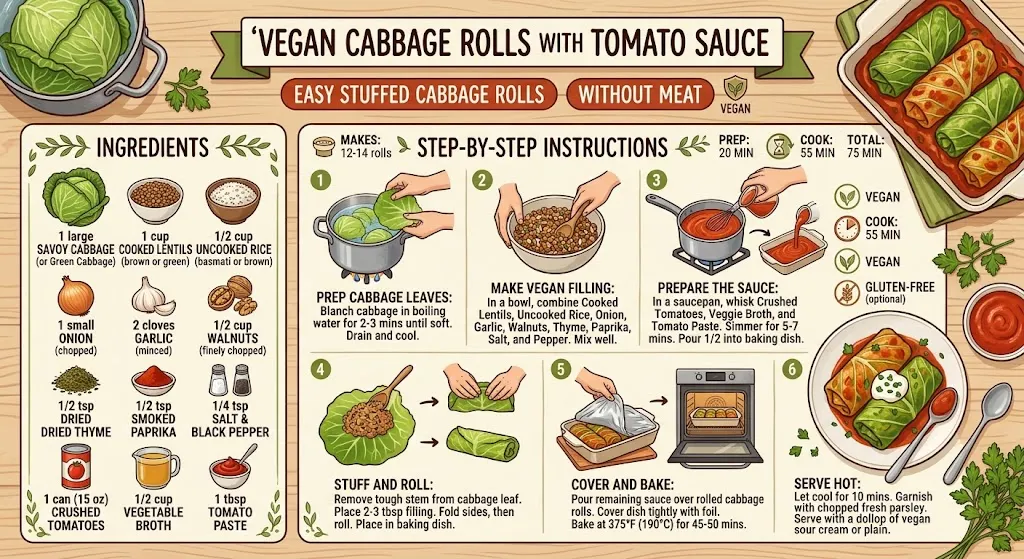
To make these vegan cabbage rolls with tomato sauce, you only need simple, pantry-friendly ingredients. The filling can be adjusted according to your preferences.
Vegan Cabbage Rolls — Recipe at a Glance
A flexible meat-free cabbage roll formula with tomato sauce.
For the Cabbage Rolls
- Cabbage leaves, softened and flexible
- Rice for a classic texture
- Lentils for a heartier, higher-protein filling
- Quinoa for a lighter, nutty variation
- Optional vegetables and seasonings
For the Tomato Sauce
- Fresh tomatoes
- Onion
- Garlic
- Oregano or parsley
- Optional smoked paprika or chili flakes
- Optional small amount of sugar to balance acidity
Best Vegan Filling Options: Choose What Works for You
One of the best things about stuffed cabbage rolls vegan-style is how flexible the filling can be. You can choose based on taste, nutrition, or what you already have in your kitchen.
| Filling | Texture & Flavor | Best For |
|---|---|---|
| Rice | Soft and classic | Traditional-style comfort food |
| Lentils | Hearty and satisfying | Higher-protein vegan filling |
| Quinoa | Light with a slightly nutty flavor | A lighter variation |
| Vegetables | Fresh and textured | Veggie-packed versions |
This flexibility is why easy vegan cabbage rolls are especially useful for beginners and meal-prep cooks.
How to Soften Cabbage Leaves Without Tearing
Soft cabbage leaves are key to perfect vegan cabbage rolls with tomato sauce. Start by coring the cabbage properly so the leaves can separate more easily.
Beginner-Friendly Tip
Blanching is the most common method. Place the whole cabbage in boiling water for a few minutes until the leaves become soft and flexible. You can also peel the leaves individually and dip them in hot water until softened.
The goal is simple: the leaves should be flexible enough to fold without cracking, but still sturdy enough to hold the filling.
How to Roll Cabbage Rolls: Step-by-Step Beginner Guide
Lay the Leaf Flat
Place a softened cabbage leaf flat on your work surface.
Add the Filling
Add about 1–2 tablespoons of filling, depending on the size of the leaf. Avoid overfilling.
Fold the Sides
Fold the sides of the leaf inward over the filling.
Roll Tightly
Gently roll from the bottom upward, keeping the filling securely enclosed.
Place Seam-Side Down
Arrange the finished stuffed cabbage rolls without meat seam-side down so they remain secure during cooking.
How to Make Vegan Cabbage Rolls With Tomato Sauce
Once the cabbage leaves and filling are ready, you can choose between a gentle stovetop method or oven-baked vegan cabbage rolls.
Stovetop Method
- Add a thin layer of tomato sauce to the bottom of a large pot.
- Arrange the stuffed cabbage rolls in a tight layer.
- Pour more sauce over the rolls until they are mostly covered.
- Cover and simmer gently over low heat for approximately 45–60 minutes.
- Cook until the cabbage is tender and the filling has absorbed the sauce.
Oven-Baked Method
- Preheat the oven to 180°C (350°F).
- Arrange the rolls in a baking dish.
- Cover generously with tomato sauce.
- Cover the dish tightly with foil.
- Bake for approximately 60–75 minutes.
- For a thicker sauce, uncover during the final 10–15 minutes.
🍅 Cooking Tip
Keep the rolls surrounded by enough sauce to prevent them from drying out, but avoid flooding the dish with unnecessary liquid. Gentle cooking helps the cabbage become tender without falling apart.
How Long to Cook Vegan Cabbage Rolls?
| Cooking Method | Temperature / Heat | Approximate Time | What to Look For |
|---|---|---|---|
| Stovetop | Low, gentle simmer | 45–60 minutes | Soft cabbage and tender filling |
| Oven | 180°C / 350°F | 60–75 minutes | Tender cabbage and slightly thickened sauce |
| Slow cooker | Low | 6–8 hours | Very soft, flavorful rolls |
How Do You Know When Cabbage Rolls Are Done?
There are several easy ways to check your cabbage rolls without meat.
✓ Tender Cabbage Test
The cabbage leaves should be soft and easy to cut with a fork. If they remain firm or resistant, continue cooking.
✓ Check the Sauce
A good tomato sauce for cabbage rolls should be rich and slightly reduced rather than watery.
Common Mistakes & How to Avoid Them
| Problem | Likely Cause | How to Fix It |
|---|---|---|
| Soggy cabbage rolls | Too much liquid or excessive cooking | Use enough sauce to keep them moist without flooding the pot. |
| Undercooked cabbage | Leaves were not softened enough | Blanch or pre-soften the cabbage properly before rolling. |
| Dry filling | Insufficient moisture or cooking time | Season well and allow the rolls to absorb the tomato sauce. |
| Torn leaves | Leaves are too thick, dry, or under-softened | Choose fresh cabbage and soften the leaves until flexible. |
Make-Ahead, Storage & Freezing Instructions
These vegan cabbage rolls with tomato sauce are especially useful for meal prep because they store and reheat well.
| Storage Method | How to Store | Time |
|---|---|---|
| Refrigerator | Store in an airtight container with extra sauce. | Up to 4–5 days |
| Freezer | Cool completely and freeze in a freezer-safe container with sauce. | Up to 2–3 months |
| Reheating | Warm gently on the stovetop or in the oven with a little water or sauce. | Until heated through |
🧊 Storage Safety
Refrigerate cooked leftovers promptly in a covered container. When reheating, heat the portion thoroughly and avoid repeatedly warming and cooling the same batch.
Healthy & Dietary Variations
| Goal | Simple Adjustment |
|---|---|
| Gluten-free | Use naturally gluten-free fillings and avoid wheat-based fillers. |
| Oil-free | Sauté ingredients with a splash of water or vegetable broth instead of oil. |
| Lower-calorie | Use more vegetables and less rice while keeping the tomato sauce light. |
| Higher-protein | Choose a lentil-based filling or combine lentils with quinoa. |
What to Serve With Vegan Cabbage Rolls
These easy vegan cabbage rolls are hearty enough to serve on their own, but simple side dishes can turn them into a complete dinner.
Steamed Vegetables
A simple vegetable side keeps the meal fresh and balanced.
Roasted Potatoes
A hearty option that pairs naturally with tomato sauce.
Fresh Green Salad
Adds a crisp, refreshing contrast to the tender rolls.
Crusty bread is another excellent choice for soaking up the rich tomato sauce, while a light soup can create an especially comforting meal.
FAQs About Vegan Cabbage Rolls
Can I freeze vegan cabbage rolls?
Yes. Store cooked cabbage rolls with extra tomato sauce in an airtight freezer-safe container for up to 2–3 months.
Can I make vegan cabbage rolls without rice?
Yes. Replace rice with lentils, quinoa, or finely chopped vegetables for a lighter or higher-protein variation.
Can I use store-bought tomato sauce?
Yes. Store-bought tomato sauce works well, although homemade sauce can provide a fresher, more customized flavor.
Can I cook vegan cabbage rolls in a slow cooker?
Yes. Arrange the rolls with tomato sauce in the slow cooker and cook on low for approximately 6–8 hours for very soft and flavorful results.
Final Thoughts
These vegan cabbage rolls with tomato sauce are a simple, comforting, and versatile meal that anyone can enjoy. Whether you choose the stovetop, oven-baked, or slow-cooker method, the result is tender, flavorful, and satisfying.
This easy vegan cabbage rolls recipe is especially useful for beginners, families, and meal-prep cooks because it is budget-friendly and highly customizable. Choose rice for a classic filling, lentils for a heartier option, or quinoa and vegetables for a lighter variation.
Once you have the basic rolling technique down, you can easily customize the filling, sauce, and cooking method to create your own favorite version of this plant-based comfort food.
Read More :