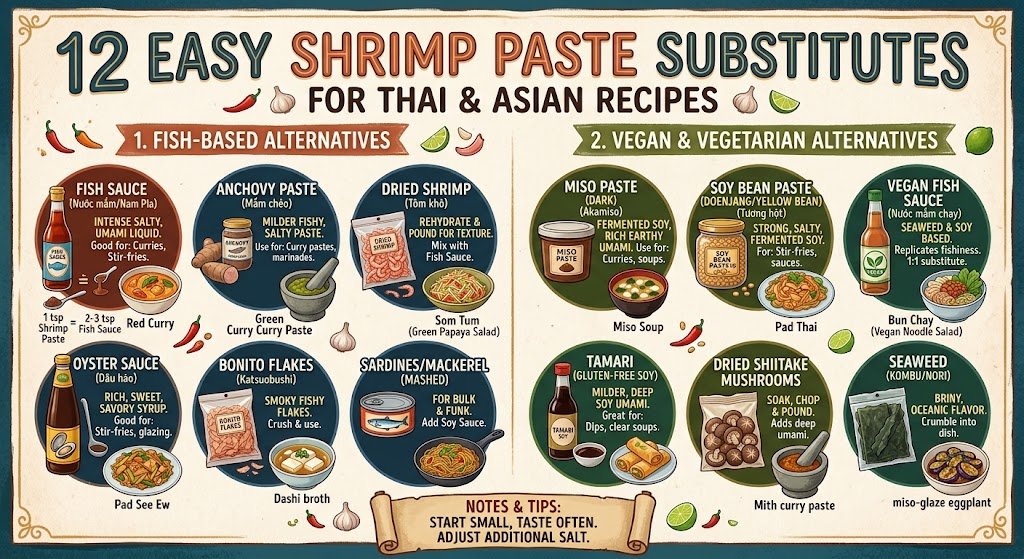
Discover the best shrimp paste substitutes for Thai curry, Pad Thai, sambal, laksa, stir-fries, and more—including easy vegan shrimp paste alternatives made with miso, seaweed, soy sauce, and mushroom powder.
Quick Answer: Best Shrimp Paste Substitutes
If you do not have shrimp paste available, several ingredients can replace its salty, fermented, savory character. The best choice depends on whether you want seafood flavor, fermented umami, saltiness, or a completely plant-based alternative.
- Fish sauce – A close seafood-based alternative with strong salty umami.
- Anchovy paste – Concentrated seafood flavor that works especially well in sauces.
- Miso paste – A fermented, plant-based option with deep umami.
- Soy sauce – An easy pantry substitute that adds saltiness and savory depth.
- Fermented soybean paste – Useful when you want thick texture and fermented flavor.
- Worcestershire sauce – Adds fermented complexity, although many versions contain anchovies.
- Seaweed paste – A plant-based way to add mild ocean-like notes.
- Mushroom powder – Adds concentrated savory umami without seafood.
Shrimp paste is a powerful ingredient used in many Thai, Malaysian, and Southeast Asian recipes. It contributes deep umami flavor, saltiness, and a rich fermented character that helps dishes such as curry, sambal, and Pad Thai taste more complex.
However, shrimp paste may be difficult to find, too intense for some cooks, or unsuitable for people avoiding seafood. Fortunately, ingredients such as fish sauce, anchovy paste, miso, soy sauce, fermented bean paste, seaweed, and mushroom powder can help reproduce different parts of its flavor profile.
What Is Shrimp Paste?
Shrimp paste is a traditional fermented seafood condiment widely used throughout Southeast Asian cooking. It is generally made by combining small shrimp with salt and allowing the mixture to ferment until it develops a concentrated flavor and paste-like texture.
Its flavor is typically salty, savory, deeply umami-rich, and strongly aromatic. A relatively small quantity can make a noticeable difference in curry pastes, sambal, sauces, stir-fries, and noodle dishes.
How Shrimp Paste Is Made
Traditional shrimp paste production begins with small shrimp mixed with salt. The mixture is allowed to ferment, sometimes with periods of drying or exposure to sunlight depending on the regional method.
Once fermentation develops the desired flavor, the shrimp mixture is ground into a thick paste. Some varieties are formed into blocks or cakes, while others are sold as softer pastes.
Flavor Profile of Shrimp Paste
- Strong umami flavor
- Salty fermented taste
- Distinct seafood richness
- Concentrated savory depth
- Powerful aroma that mellows during cooking
- Complexity that supports chili, garlic, lime, and spices
Types of Shrimp Paste Used in Asian Cuisine
Belacan — Malaysia
Belacan is a Malaysian shrimp paste commonly sold in firm blocks. It is often toasted before being added to recipes, which helps develop its flavor and changes its aroma.
Kapi — Thailand
Thai kapi is generally a softer shrimp paste used in curry pastes, dipping sauces, relishes, and stir-fries.
Terasi — Indonesia
Terasi is a concentrated Indonesian shrimp paste commonly associated with sambal and other traditional spice mixtures.
Why Shrimp Paste Is Used in Cooking
Umami Flavor Enhancement
One of the main purposes of shrimp paste is to deliver intense savory umami. It acts as a concentrated flavor booster in soups, sauces, curry pastes, and stir-fries.
Fermented Ingredient in Southeast Asian Cuisine
Fermentation creates layers of flavor that are difficult to reproduce with plain salt alone. This is why fermented alternatives such as miso and fermented soybean paste can be useful when replacing shrimp paste.
Traditional Role in Thai, Malaysian, and Indonesian Dishes
- Thai cuisine uses shrimp paste in curry pastes, sauces, and stir-fries.
- Malaysian cooking uses belacan in sambal and vegetable dishes.
- Indonesian cooking commonly uses terasi in sambal and spice mixtures.
Why You Might Need a Shrimp Paste Substitute
Shellfish Allergies
Because shrimp paste is made from shrimp, it is not appropriate for people with shrimp or shellfish allergies. A seafood-free substitute should be selected carefully.
Vegan and Vegetarian Diets
Traditional shrimp paste is not vegan or vegetarian. For plant-based cooking, options such as miso, seaweed, soy sauce, mushroom powder, and fermented bean paste can provide savory depth without seafood.
Shrimp Paste Is Not Available Locally
Shrimp paste may be easier to find at Asian specialty markets than at conventional grocery stores. Pantry staples such as soy sauce or miso can be more convenient substitutes.
Reducing Strong Seafood Flavor
If you enjoy the umami effect but prefer less seafood character, miso, soy sauce, mushroom powder, or a combination of plant-based ingredients can provide savory depth with a different aroma.
⚠️ Allergy & Dietary Safety
Fish sauce and anchovy paste are not seafood-free. Worcestershire sauce commonly contains anchovies as well, although formulations vary. If you have a seafood or shellfish allergy, check the complete ingredient label and choose a verified seafood-free alternative.
Best Shrimp Paste Substitutes
1. Fish Sauce
Fish sauce is one of the closest flavor alternatives because it is also a fermented seafood seasoning. It delivers strong saltiness and umami, although it is much thinner than shrimp paste.
Best for: Thai curry, noodle dishes, soups2. Anchovy Paste
Anchovy paste provides concentrated seafood umami and works especially well when a recipe needs a strong savory base. Start conservatively because its flavor is intense.
Best for: Sambal, sauces, stir-fries3. Miso Paste
Miso is a fermented soybean paste with deep umami. It is one of the most useful vegan shrimp paste substitutes and also contributes body to sauces and curry pastes.
Best for: Soups, sauces, curry pastes4. Soy Sauce
Soy sauce is widely available and adds saltiness and savory depth. It does not reproduce shrimp paste’s seafood character, but it works well in many everyday recipes.
Best for: Stir-fries, noodles, marinades5. Fermented Soybean Paste
Fermented soybean pastes provide thick texture and concentrated fermented umami. They can be especially useful in sauces, stews, and curry-style preparations.
Best for: Stews, sauces, curry pastes6. Worcestershire Sauce
Worcestershire sauce contains fermented ingredients and can add complexity to savory dishes. Because many versions contain anchovies, it is not normally a vegan substitute.
Best for: Sauces, marinades, noodles7. Seaweed Paste
Seaweed can provide mild ocean-like notes while remaining plant-based. It works best when combined with another umami-rich ingredient such as miso.
Best for: Vegan sauces, dips, sambal-style dishes8. Mushroom Powder
Mushroom powder adds concentrated savory flavor and is particularly useful in vegan cooking. Combine it with soy sauce for a more complete substitute.
Best for: Stir-fries, noodles, saucesBest Vegan Shrimp Paste Substitutes
For a plant-based recipe, focus on recreating three characteristics: umami, fermented depth, and a subtle savory or ocean-like note.
Miso Paste
Fermented miso provides strong umami and works particularly well in sauces, curry pastes, soups, and noodles.
Seaweed Paste
Seaweed adds a subtle ocean-like quality without using seafood. Combine it with miso for greater depth.
Soy Sauce + Mushroom Powder
Soy sauce supplies saltiness while mushroom powder adds concentrated savory flavor. Together they form a useful pantry-friendly vegan blend.
Fermented Bean Paste
Fermented bean products can provide thickness and complex savory flavor in sauces, curries, and vegetable dishes.
Shrimp Paste Substitute Ratio Guide
Ratios are starting points rather than exact rules. Different brands and products vary significantly in saltiness and concentration, so taste and adjust as you cook.
| Original Amount | Substitute | Starting Amount | Best Flavor Contribution |
|---|---|---|---|
| 1 tsp shrimp paste | Fish sauce | About 1 tsp | Seafood umami + saltiness |
| 1 tsp shrimp paste | Anchovy paste | About ½ tsp | Strong seafood umami |
| 1 tsp shrimp paste | Miso paste | About 1 tsp | Fermented plant-based umami |
| 1 tsp shrimp paste | Soy sauce | About 1 tsp | Saltiness + savory depth |
| 1 tsp shrimp paste | Fermented soybean paste | About 1 tsp | Fermented umami + body |
| 1 tsp shrimp paste | Worcestershire sauce | About ¾ tsp | Fermented complexity |
| 1 tsp shrimp paste | Seaweed paste | About ½ tsp | Mild ocean-like flavor |
| 1 tsp shrimp paste | Soy sauce + mushroom powder | About 1 tsp soy sauce + pinch mushroom powder | Vegan saltiness + umami |
Flavor Comparison of Shrimp Paste Substitutes
| Substitute | Umami Intensity | Saltiness | Fermented Character |
|---|---|---|---|
| Fish sauce | High | High | Medium |
| Anchovy paste | Very high | High | Medium |
| Miso paste | High | Medium | High |
| Soy sauce | Medium | High | Low |
| Fermented soybean paste | High | Medium | High |
| Worcestershire sauce | Medium | Medium | Medium |
| Seaweed paste | Medium | Low | Low |
| Soy sauce + mushroom powder | High | Medium | Low |
Understanding the Flavor Differences
Umami intensity: Anchovy paste, fish sauce, miso, and fermented soybean paste are particularly useful when a recipe needs a strong savory foundation.
Saltiness: Soy sauce and fish sauce can contribute a substantial amount of salt, so additional seasoning should be added gradually.
Fermented flavor: Miso and fermented soybean paste are useful when the missing characteristic is fermentation rather than seafood.
How to Replicate the Umami Flavor of Shrimp Paste
One of the biggest challenges when replacing shrimp paste is recreating its combination of umami, saltiness, fermentation, and seafood richness. Instead of searching for one ingredient that does everything, you can combine complementary ingredients.
Umami Ingredients
- Miso paste – fermented plant-based umami.
- Anchovy paste – concentrated seafood umami.
- Mushroom powder – plant-based savory intensity.
- Fish sauce – fermented seafood seasoning.
- Soy sauce – saltiness and savory depth.
Fermented Flavors
Fermented ingredients can make a substitute taste more complex. Miso, fermented soybean paste, and fish sauce are useful choices depending on whether seafood is acceptable in the recipe.
Balancing Salty and Savory Ingredients
The most convincing replacement often comes from combining ingredients rather than adding more of one highly salty ingredient.
- Fish sauce + miso: seafood umami + fermented richness.
- Soy sauce + mushroom powder: vegan saltiness + savory depth.
- Seaweed + miso: mild ocean notes + fermented umami.
Best Substitute Combinations for Similar Flavor
Fish Sauce + Miso Shrimp Paste Substitute
Ingredients
- ½ teaspoon fish sauce
- ½ teaspoon miso paste
Method
- Combine the fish sauce and miso in a small bowl.
- Stir until evenly blended.
- Add to the recipe and adjust gradually to taste.
Best for: Thai curry, sauces, noodle dishes, sambal, and stir-fries.
Vegan Soy Sauce + Mushroom Substitute
Ingredients
- 1 teaspoon soy sauce
- A small pinch of mushroom powder
Method
- Combine the soy sauce and mushroom powder.
- Stir until the mushroom powder is evenly dispersed.
- Add gradually and taste before adding more salt.
Seaweed + Miso Substitute
Ingredients
- ½ teaspoon seaweed paste
- ½ teaspoon miso paste
Method
- Mix the seaweed paste and miso until smooth.
- Taste a small amount before adding it to the main dish.
- Adjust according to the saltiness of your recipe.
Best Shrimp Paste Substitutes for Popular Recipes
| Recipe | Useful Substitute | Why It Works |
|---|---|---|
| Pad Thai | Fish sauce or soy sauce + mushroom powder | Adds savory depth to the sauce |
| Thai curry | Fish sauce + miso | Combines seafood umami with fermentation |
| Sambal | Anchovy paste or seaweed + miso | Provides concentrated savory depth |
| Laksa | Fish sauce + miso or fermented soybean paste | Adds complexity to the broth or paste |
| Stir-fries | Soy sauce + mushroom powder | Easy pantry-friendly umami replacement |
Substitute for Shrimp Paste in Pad Thai
Pad Thai benefits from a balanced combination of sweet, sour, salty, and savory flavors. Fish sauce can supply seafood-based umami, while soy sauce + mushroom powder is a useful vegan option.
Substitute for Shrimp Paste in Thai Curry
Thai curry pastes often benefit from a substitute with both fermented depth and umami. Fish sauce combined with miso can provide a layered alternative, while fermented soybean paste offers a plant-based option.
Substitute for Shrimp Paste in Sambal
Traditional sambal can depend heavily on shrimp paste for its characteristic depth. Anchovy paste can provide seafood intensity, while seaweed plus miso can be used when avoiding animal ingredients.
Substitute for Shrimp Paste in Laksa
Laksa benefits from layered savory flavor. A combination of fish sauce and miso, or a fermented soybean paste, can add complexity to the broth or curry base.
How to Choose the Right Shrimp Paste Substitute
Recipe Type
Strongly seasoned recipes such as curry pastes and sambal generally benefit from concentrated substitutes. Noodle dishes and stir-fries can often use milder options.
Flavor Strength
| Flavor Level | Examples |
|---|---|
| Strong | Anchovy paste, fish sauce, fermented soybean paste |
| Medium | Miso paste, Worcestershire sauce |
| Milder | Soy sauce, seaweed paste |
Dietary Preference
- Vegan: Miso, seaweed, soy sauce, mushroom powder, fermented bean paste.
- Seafood-friendly: Fish sauce or anchovy paste.
- Shellfish avoidance: Choose a seafood-free product and check labels carefully.
Cooking Tips When Using Shrimp Paste Alternatives
Adjust Salt Levels
Fish sauce, soy sauce, and anchovy paste can be quite salty. Start with a smaller quantity and taste before adding additional salt.
Balance Umami Flavor
If one substitute tastes too simple, combine complementary ingredients. Miso plus mushroom powder, or soy sauce plus mushroom powder, can add multiple layers of savory flavor.
Avoid Overpowering Substitutes
Strong ingredients should be introduced gradually. This is particularly important with fish sauce and anchovy paste because too much can dominate the entire dish.
⚠️ Label Check Before Substituting
If the goal is a vegan or allergen-conscious substitute, do not assume that every fermented sauce is suitable. Check labels for fish, shellfish, anchovies, oyster ingredients, and other animal-derived ingredients.
Common Mistakes When Replacing Shrimp Paste
Using Too Much Fish Sauce
Fish sauce is concentrated and salty. Using it in a one-for-one volume without tasting can make the dish excessively salty.
Ignoring Fermented Flavor
Simply replacing shrimp paste with salt may restore saltiness but not the complexity of fermentation. Miso or fermented soybean paste can help fill that gap.
Not Adjusting Seasoning
Every substitute has its own salt level and flavor intensity. Taste the dish during cooking and adjust gradually rather than automatically using the same amount of every substitute.
When You Should NOT Substitute Shrimp Paste
Authentic Sambal Recipes
Some traditional sambal recipes rely heavily on terasi or another shrimp paste. A substitute can reproduce some characteristics but may change the traditional flavor substantially.
Fermented Sauces
When shrimp paste is a defining component of a fermented sauce or spice paste, another ingredient may not reproduce the same aroma and depth.
Traditional Dishes Requiring Shrimp Paste
- Thai curry pastes
- Sambal sauces
- Certain Malaysian stir-fries
- Traditional Indonesian spice mixtures
How to Make a Homemade Shrimp Paste Substitute
Easy Homemade Vegan Shrimp Paste Substitute
Ingredients
- 1 teaspoon soy sauce
- 1 teaspoon miso paste
- ½ teaspoon seaweed paste or finely ground seaweed
- A pinch of mushroom powder
How to Prepare
- Combine the soy sauce and miso paste in a small bowl.
- Add the seaweed paste or finely ground seaweed.
- Sprinkle in a small amount of mushroom powder.
- Mix thoroughly until a thick, cohesive paste forms.
- Taste and adjust the seaweed or mushroom powder if needed.
How to Use It
Start with 1 teaspoon of the mixture for every 1 teaspoon of shrimp paste called for, then adjust according to the dish.
It works especially well in:
- Thai curry pastes
- Pad Thai sauces
- Sambal-style chili sauces
- Stir-fries
- Noodle dishes
Shrimp Paste Storage and Shelf Life
Proper storage helps maintain the quality of shrimp paste and keeps its strong aroma from spreading throughout the refrigerator.
Storage Tips
- Store opened shrimp paste in a tightly sealed container.
- Refrigerate after opening and follow the product’s label instructions.
- For block-style products, wrap securely before placing in a container.
- Always use a clean utensil to remove the paste.
Shelf Life
Fermentation can give shrimp paste a relatively long shelf life, but the exact storage period varies by product, packaging, formulation, and storage conditions. Follow the manufacturer’s date and storage instructions whenever available.
⚠️ When to Discard Shrimp Paste
Do not rely on the normal strong smell alone to judge freshness. However, if you notice unexpected mold, unusual discoloration, damaged packaging, or other signs of spoilage, discard the product rather than tasting it to determine whether it is safe.
How Substitutes Differ
| Substitute | Storage Consideration |
|---|---|
| Fish sauce | Follow the product label; refrigerate if directed. |
| Miso paste | Keep tightly sealed and follow the manufacturer’s storage instructions. |
| Soy sauce | Store according to the label; some products can be kept at room temperature after opening. |
| Seaweed paste | Follow product-specific refrigeration and use-by guidance. |
| Mushroom powder | Keep tightly sealed in a cool, dry place unless the label states otherwise. |
FAQs About Shrimp Paste Substitutes
What is the closest substitute for shrimp paste?
Fish sauce or anchovy paste can provide a close seafood umami profile. For a plant-based option, miso is particularly useful because it contributes fermented umami without seafood.
Can fish sauce replace shrimp paste?
Yes. Fish sauce can replace shrimp paste in many recipes, but it is thinner and can be quite salty. Start with a modest amount and adjust gradually.
What is the best vegan substitute for shrimp paste?
Miso paste is a convenient vegan option because its fermentation provides substantial umami. Soy sauce with mushroom powder, seaweed, and fermented bean paste are other useful choices.
Can I skip shrimp paste in recipes?
Yes, but the finished dish may have less savory and fermented depth. Replacing it with an appropriate umami-rich ingredient can help preserve the overall balance.
What does shrimp paste taste like?
Shrimp paste is generally salty, fermented, savory, intensely umami-rich, and strongly aromatic. Its aroma is usually more pronounced before cooking and becomes integrated into the dish as it cooks.
Is Worcestershire sauce vegan?
Many traditional Worcestershire sauces contain anchovies, so they are generally not vegan. Always check the specific product label if you need a plant-based substitute.
Can I use soy sauce instead of shrimp paste?
Yes. Soy sauce is especially useful when the main goal is to add saltiness and savory depth. For a richer vegan replacement, combine it with mushroom powder or miso.
What can I use instead of shrimp paste in Thai curry?
Fish sauce plus miso can provide layered umami, while fermented soybean paste can be used when you want a plant-based alternative.
What is a good shrimp paste substitute for sambal?
Anchovy paste or fish sauce can provide seafood-based depth. For a vegan version, try a combination of seaweed and miso.
Final Thoughts
Finding the right shrimp paste substitute is easier when you understand what shrimp paste contributes to a recipe. Its distinctive combination of umami, saltiness, fermented depth, and seafood character can be recreated partially or more completely by combining complementary ingredients.
For seafood-based recipes, fish sauce or anchovy paste can provide a strong savory foundation. For plant-based cooking, miso, seaweed, soy sauce, mushroom powder, and fermented bean paste are useful alternatives.
The most important technique is to start with a small amount, taste, and adjust. This prevents overly salty or overpowering results and lets you build the balance your recipe needs.
Whether you are making Thai curry, Pad Thai, sambal, laksa, or a simple stir-fry, the right shrimp paste alternative can help preserve the rich, savory character of the dish—even when traditional shrimp paste is not available or suitable for your diet.
Read More :