Learn how to make rice paper rolls with crisp vegetables, fresh herbs, vermicelli noodles, and your choice of shrimp, chicken, pork, or tofu. This easy guide covers the best fillings, rolling techniques, dipping sauces, storage tips, and fresh-versus-steamed rice roll differences.
Quick Answer
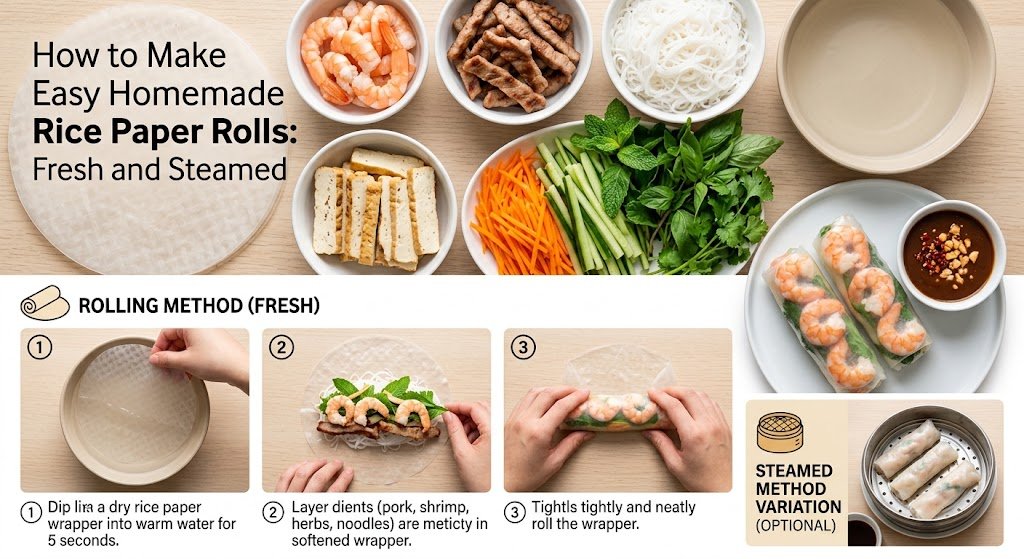
Rice paper rolls are fresh Vietnamese-style rolls made with softened rice paper wrappers, vegetables, herbs, vermicelli noodles, and fillings such as shrimp, chicken, pork, or tofu. Briefly soften each wrapper in warm water, layer the fillings in the center, fold in the sides, and roll gently but firmly. Serve fresh with peanut sauce, hoisin sauce, sweet chili sauce, or Vietnamese fish sauce. For the best texture, avoid oversoaking and overfilling the wrappers.
Rice paper rolls are one of the most loved dishes in Vietnamese cuisine, known for their fresh flavors, light texture, and colorful fillings. These delicate rolls are made using thin rice paper wrappers filled with crisp vegetables, herbs, vermicelli noodles, and proteins such as shrimp, chicken, pork, or tofu.
Many people enjoy them as fresh rice paper rolls, also called Vietnamese spring rolls or summer rolls, while other rice-based dishes are prepared as steamed rice rolls.
Learning how to make rice paper rolls at home is easier than you might think. With the right ingredients and a simple rolling technique, you can create a fresh meal, snack, or appetizer without deep frying. This guide walks you through the fillings, preparation, rolling method, sauces, storage, and useful troubleshooting tips.
Why You Will Love This Rice Paper Rolls Recipe
🌿 Fresh & Light
Crisp vegetables, herbs, noodles, and fresh fillings create a refreshing texture without the heaviness of deep-fried appetizers.
🥕 Easy to Customize
Build your rolls with shrimp, chicken, pork, tofu, avocado, mango, vegetables, or whatever combination suits your meal.
🥢 Great for Parties
Arrange colorful rolls on a platter and serve several dipping sauces so everyone can choose their favorite combination.
⚡ Simple Preparation
Once the fillings are prepared, the actual assembly is quick. The main skill is learning how to soften and roll the wrappers correctly.
One of the biggest advantages of homemade rice paper rolls is their flexibility. You can make classic Vietnamese-style rolls with shrimp and pork, vegetarian rolls with tofu, or modern combinations such as mango and avocado.
What Are Rice Paper Rolls?
Rice paper rolls are fresh rolls made with thin rice paper wrappers and fillings such as vegetables, herbs, vermicelli noodles, and cooked protein. The wrappers are softened briefly in water, filled, folded, and rolled.
Unlike fried spring rolls, fresh rice paper rolls are generally served without frying after assembly. This preserves the fresh, crisp character of the vegetables and herbs.
🇻🇳 Origin of Vietnamese Rice Paper Rolls
The Vietnamese fresh roll commonly known as Gỏi Cuốn is traditionally associated with combinations of rice paper, vermicelli, herbs, vegetables, and ingredients such as shrimp and pork. Modern versions vary widely, with tofu and other fillings frequently used.
Why They Are Called Fresh Spring Rolls
The term fresh spring rolls is commonly used for rolls that are assembled with softened rice paper and fresh ingredients rather than being deep-fried. Their soft wrapper and visible colorful fillings distinguish them from crispy fried spring rolls.
Why Rice Paper Rolls Are Popular Worldwide
Their popularity comes from their combination of fresh ingredients, customizable fillings, attractive presentation, and simple preparation. They can also be adapted for vegetarian and vegan meals.
Fresh vs. Steamed Rice Paper Rolls
The phrase rice paper rolls usually refers to fresh Vietnamese-style rolls. However, rice-based steamed rolls are another category of Asian rice dish. Although both can involve rice-based sheets, their preparation and textures are different.
| Feature | Fresh Rice Paper Rolls | Steamed Rice Rolls |
|---|---|---|
| Wrapper | Prepared rice paper wrapper softened in water | Usually a steamed rice batter or rice sheet |
| Cooking | Assembled without frying | Rice sheet or batter is steamed |
| Serving | Usually fresh, chilled, or at room temperature | Usually served warm |
| Texture | Soft, flexible wrapper with crisp fillings | Soft, silky, and slightly chewy |
| Common fillings | Shrimp, pork, chicken, tofu, herbs, vegetables, noodles | Cooked meat, shrimp, mushrooms, tofu, vegetables |
Easy Fresh Rice Paper Rolls Recipe
A flexible Vietnamese-inspired recipe with crunchy vegetables, vermicelli noodles, herbs, and your choice of protein.
Ingredients
- 8 rice paper wrappers
- 3 oz (85 g) rice vermicelli noodles
- 1 cup shredded lettuce
- 1 carrot, cut into thin matchsticks
- 1 cucumber, cut into thin strips
- 1/2 bell pepper, thinly sliced
- 1/2 cup fresh mint
- 1/2 cup cilantro
- 8–12 cooked shrimp, sliced in half lengthwise, or an equivalent amount of cooked chicken, pork, or tofu
- Warm water for soaking wrappers
Optional Additions
- Thai basil
- Avocado
- Mango
- Bean sprouts
- Extra cooked vegetables
Instructions
- Prepare the noodles. Cook the vermicelli according to the package directions. Drain thoroughly and rinse with cool water. Set aside.
- Prepare the vegetables. Wash the vegetables and cut them into thin, manageable strips. Keep the herbs clean and dry.
- Prepare the protein. Make sure shrimp, chicken, pork, or tofu is fully cooked. Slice into pieces that fit comfortably inside the wrappers.
- Soften one wrapper. Dip a rice paper wrapper briefly in warm water—about 3–5 seconds is a useful starting point. It will continue softening on the work surface.
- Build the filling. Place lettuce, herbs, noodles, vegetables, and protein in the lower-center portion of the wrapper.
- Fold the wrapper. Fold the bottom edge over the filling, then fold both sides inward.
- Roll gently but firmly. Continue rolling forward until the wrapper forms a compact cylinder. Do not pull aggressively on the delicate wrapper.
- Repeat and serve. Continue with the remaining wrappers and fillings. Serve immediately with your preferred dipping sauce.
Ingredients for Rice Paper Rolls
The best rice paper rolls combine contrasting textures: crisp vegetables, fragrant herbs, soft noodles, and a satisfying protein. The exact combination can be changed according to your preferences.
Rice Paper Wrappers
Thin rice paper wrappers are softened in water before filling. Choose wrappers that feel sturdy and flexible rather than extremely brittle.
Fresh Vegetables & Herbs
Lettuce, carrots, cucumber, bell peppers, mint, cilantro, and Thai basil add crunch, freshness, fragrance, and color.
Protein
Shrimp, cooked chicken, pork, or tofu can turn the rolls into a more substantial meal while keeping the filling customizable.
Vermicelli Noodles
Thin rice vermicelli provides a soft, delicate texture that balances the crunchy vegetables and fresh herbs.
Best Rice Paper Brands to Use
Popular rice paper brands include Three Ladies, Blue Dragon, and Bánh Tráng-style Vietnamese rice papers. Availability varies by country and store.
Kitchen Tools Needed
🥣 Shallow Bowl
For briefly soaking the rice paper wrappers in warm water.
🔪 Sharp Knife
For cutting vegetables and cooked protein into neat strips.
🪵 Cutting Board
Provides a clean preparation and rolling surface.
🍽️ Large Plate
Useful for assembling and serving finished rolls.
🧻 Clean Damp Towel
Can help keep the work surface and finished rolls from drying.
♨️ Steamer
Needed only if you are preparing a separate steamed rice-roll dish.
Best Fillings for Rice Paper Rolls
Choosing the right rice paper roll filling ideas is all about balance. Combine something crisp, something fresh, something soft, and a protein or flavorful plant-based ingredient.
| Filling Category | Good Choices | What It Adds |
|---|---|---|
| Protein | Shrimp, chicken, pork, tofu | Body, protein, savory flavor |
| Vegetables | Carrot, cucumber, lettuce, bell pepper | Crunch, color, freshness |
| Herbs | Mint, cilantro, Thai basil | Fragrance and bright flavor |
| Noodles | Rice vermicelli | Soft texture and substance |
| Creative extras | Mango, avocado, sprouts | Sweetness, creaminess, or extra crunch |
Traditional Vietnamese Fillings
Classic combinations often include shrimp, pork, vermicelli noodles, lettuce, carrots, cucumber, mint, cilantro, and other fresh herbs. These ingredients create the familiar fresh spring-roll profile.
Vegetarian and Vegan Fillings
For plant-based versions, use tofu, avocado, cucumber, carrots, lettuce, bell peppers, mushrooms, and fresh herbs. Check sauces carefully because fish sauce and some prepared sauces are not vegan.
Protein Fillings
Shrimp, chicken, pork, and tofu are among the most useful protein choices. Cooked ingredients should be cooled appropriately before assembly so the wrapper remains easy to handle.
How to Prepare the Fillings
Cooking Vermicelli Noodles
- Prepare the noodles according to their package directions.
- Drain thoroughly.
- Rinse with cool water if appropriate for the noodle type.
- Allow excess water to drain before adding them to the rolls.
Preparing Fresh Vegetables
Wash vegetables well and cut them into thin, uniform pieces. Long, manageable strips are easier to arrange and roll than large chunks.
Cooking Protein Fillings
Shrimp, chicken, pork, and other animal proteins should be fully cooked before being added to the rolls. Slice them thinly after cooking so they fit neatly without putting excessive pressure on the wrapper.
⚠️ Food Safety Reminder
Keep raw and cooked ingredients separate during preparation. Use clean utensils and cutting boards, and refrigerate perishable ingredients promptly. Cook poultry to 165°F (74°C); ground meats to 160°F (71°C); and whole cuts of pork to 145°F (63°C) with a 3-minute rest. For seafood such as shrimp, cook until properly done and opaque.
How to Make Rice Paper Rolls: Step-by-Step
- Soften the rice paper wrapper. Fill a shallow bowl with warm water. Dip one wrapper briefly, starting around 3–5 seconds, then place it on the rolling surface.
- Arrange the fillings. Place lettuce and herbs first, followed by vermicelli, vegetables, and protein. Keep the pile compact rather than spreading ingredients across the entire wrapper.
- Fold the bottom edge. Bring the lower edge of the wrapper up and over the filling.
- Fold in the sides. Tuck both sides inward so the filling is enclosed.
- Roll forward. Roll toward the top edge using steady, gentle pressure.
- Serve. Place finished rolls seam-side down and serve with your preferred sauce.
How to Roll Rice Paper Without Tearing
Start with a brief 3–5 second dip. The wrapper continues softening after it leaves the water.
A smaller, compact filling is easier to wrap and places less stress on the wrapper.
Apply enough pressure to keep the filling together, but avoid pulling hard on the wrapper.
Drain noodles and wet ingredients well. Excess water can make the wrapper sticky and difficult to handle.
A clean, smooth, slightly damp surface can make assembly easier.
Your first few rolls may not look perfect. The technique becomes much easier after several attempts.
How to Make Steamed Rice Rolls
Steamed rice rolls are a different preparation from fresh Vietnamese rice paper rolls. Instead of simply hydrating a packaged wrapper, thin rice batter or rice sheets are steamed and then filled or rolled.
Steamed Rice Roll Basics
- Prepare a seasoned filling such as cooked pork, shrimp, mushrooms, or tofu.
- Steam a thin rice sheet or rice batter until tender.
- Add the prepared filling.
- Roll carefully while the sheet is still warm.
- Serve with a savory sauce.
The result is generally soft, silky, and slightly chewy, making steamed rice rolls quite different from fresh rolls filled with crisp vegetables.
Best Dipping Sauces for Rice Paper Rolls
🥜 Classic Peanut Sauce
A creamy combination commonly made with peanut butter, hoisin sauce, garlic, lime juice, and water or another liquid for consistency.
🌶️ Vietnamese Fish Sauce
A bright sweet-salty dipping sauce commonly made with fish sauce, lime, sugar, garlic, and chili. Traditional recipes vary by household.
🌶️ Sweet Chili Sauce
A convenient sweet and mildly spicy option that works with both fresh rolls and many vegetable-based variations.
🥢 Hoisin Sauce
Thick, sweet, and savory, hoisin can be served as a dip or loosened with other ingredients to create a pourable sauce.
Rice Paper Rolls vs. Fried Spring Rolls
| Feature | Fresh Rice Paper Rolls | Fried Spring Rolls |
|---|---|---|
| Wrapper | Softened rice paper | Typically a pastry-style wrapper |
| Cooking | Assembled fresh | Deep-fried or otherwise fried |
| Texture | Soft wrapper with fresh, crisp fillings | Crispy exterior |
| Serving | Fresh, chilled, or room temperature | Usually hot |
| Flavor profile | Fresh, herbal, crisp, light | Rich, savory, fried, crisp |
The two dishes can share some filling ideas, but the preparation method and final texture are distinctly different.
Healthy Benefits of Rice Paper Rolls
Fresh rice paper rolls can be a nutritious meal or appetizer when built around vegetables, herbs, a sensible portion of noodles, and a protein source. Their nutritional profile depends heavily on the filling and dipping sauce.
🥕 Vegetables
Carrots, cucumber, lettuce, peppers, and herbs contribute vitamins, minerals, fiber, color, and texture.
🍤 Protein
Shrimp, chicken, pork, and tofu can make the rolls more satisfying.
🍚 Rice Paper
Rice-based wrappers provide the delicate structure that holds the filling together.
Calories in Rice Paper Rolls
There is no single calorie count for a rice paper roll because size, wrapper, noodles, protein, vegetables, and sauces vary considerably. A roll with mostly vegetables and shrimp will have a different calorie profile from one packed with noodles, avocado, and peanut sauce.
Pro Tips for Perfect Rice Paper Rolls
Brief soaking is usually enough. The wrapper becomes more flexible as it rests on the work surface.
Avoid building an oversized mound. A compact filling creates a neater and stronger roll.
Excess moisture from noodles and vegetables can make wrappers harder to handle.
Place finished rolls seam-side down on the serving plate whenever possible.
Mint and cilantro can dramatically improve the aroma and freshness of the finished rolls.
Fresh rolls generally have their best wrapper texture shortly after assembly.
Creative Rice Paper Roll Variations
Lemongrass Chicken Rice Paper Rolls
Pair cooked lemongrass-seasoned chicken with cucumber, lettuce, herbs, and vermicelli noodles for a fragrant variation.
Vegetarian Rice Paper Rolls
Combine tofu, cucumber, carrots, lettuce, bell pepper, avocado, and fresh herbs for a colorful meat-free version.
Vegan Rice Paper Rolls
Use tofu, mushrooms, vegetables, herbs, and a vegan dipping sauce. Check prepared sauces carefully for animal-derived ingredients.
Mango Avocado Rice Paper Rolls
Sweet mango and creamy avocado create a modern sweet-savory variation that works especially well with fresh herbs.
Common Mistakes When Making Rice Paper Rolls
| Problem | Why It Happens | Simple Fix |
|---|---|---|
| Wrapper tears | Too much filling or overly soft wrapper | Soak briefly and use a smaller amount of filling |
| Wrapper is sticky | Too much soaking or excess moisture | Reduce soaking time and drain wet ingredients |
| Roll falls apart | Wrapper was rolled too loosely | Tuck the sides and roll with steady pressure |
| Roll looks bulky | Too many noodles or vegetables | Use smaller portions and distribute ingredients evenly |
| Rolls stick together | Placed too close together while moist | Separate them and use suitable parchment or wrapping between rolls |
How to Store Rice Paper Rolls
Fresh rice paper rolls are best eaten soon after assembly because the wrappers can gradually dry out, become sticky, or change texture.
Storing in the Refrigerator
If you need to store prepared rolls, place them in a clean airtight container and keep them refrigerated. Prevent the rolls from touching excessively, as the hydrated wrappers can stick to one another.
A suitable barrier such as parchment paper can help separate individual rolls. If using a damp paper towel, it should be clean and only lightly damp rather than wet enough to make the wrappers soggy.
Meal Prep Tips
- Prepare vegetables ahead of time.
- Cook and chill proteins safely.
- Prepare vermicelli in advance.
- Keep fillings stored separately.
- Assemble the rolls as close to serving time as practical.
How Long Rice Paper Rolls Last
For the best quality, enjoy fresh rolls the same day. If they contain perishable fillings such as cooked shrimp, chicken, or pork, keep them refrigerated and follow standard food-safety practices rather than leaving them at room temperature for extended periods.
⚠️ Important Storage Safety
Refrigerate perishable prepared foods within 2 hours (or within 1 hour when the surrounding temperature is above 90°F/32°C). Keep the refrigerator at or below 40°F (4°C).
Can Rice Paper Rolls Be Frozen?
Fresh rice paper rolls are generally not ideal for freezing. The wrapper and fresh vegetables can change texture after freezing and thawing, becoming tougher, wetter, or less crisp.
Some separately prepared cooked or steamed rice-roll dishes may freeze better, depending on their wrapper and filling. For fresh Vietnamese-style rolls, refrigeration and short-term storage are usually preferable.
Rice Paper Rolls Serving Ideas
🎉 Party Platter
Arrange shrimp, chicken, tofu, and vegetable rolls together with several dipping sauces.
🥗 Healthy Lunch
Serve several vegetable-and-protein rolls with a flavorful dipping sauce for a light but satisfying meal.
🧺 Picnic Food
Prepare compact rolls shortly before leaving and keep perishable fillings properly chilled during transport.
FAQs About Rice Paper Rolls
What are rice paper rolls made of?
Rice paper rolls are made with thin rice paper wrappers filled with ingredients such as vermicelli noodles, lettuce, herbs, carrots, cucumber, shrimp, chicken, pork, tofu, or other vegetables.
How do you keep rice paper rolls from sticking?
Keep finished rolls separated rather than stacking them directly on one another. A suitable sheet of parchment between rolls can help, and an airtight container can reduce drying.
What sauce goes with rice paper rolls?
Popular choices include peanut sauce, Vietnamese fish sauce dipping sauce, sweet chili sauce, and hoisin sauce. Choose a vegan or gluten-free version when required.
Can you make rice paper rolls ahead of time?
Yes. They can be assembled a few hours ahead, although their texture is usually best when eaten relatively soon after assembly. Keep perishable fillings refrigerated.
Are rice paper rolls healthy?
They can be a nutritious choice when filled with plenty of vegetables, herbs, and a suitable protein. Calories and overall nutrition depend on the noodles, protein, avocado, and especially the dipping sauce.
Why does my rice paper keep tearing?
Common causes include oversoaking, overfilling, excessive moisture, or pulling too hard while rolling. Try soaking for less time and using a smaller, more compact filling.
Can I make rice paper rolls without vermicelli noodles?
Absolutely. Vermicelli is traditional in many Vietnamese-style versions, but you can make rolls with extra vegetables, tofu, avocado, herbs, or other fillings instead.
Are rice paper rolls gluten-free?
Rice paper wrappers are rice-based, but the finished dish is not automatically gluten-free because sauces and other packaged ingredients may contain wheat. Always check labels when strict gluten avoidance is necessary.
Final Thoughts
Rice paper rolls are a wonderful example of how simple ingredients can create a fresh, colorful, and satisfying meal. Delicate rice paper wrappers hold together crisp vegetables, fragrant herbs, vermicelli noodles, and your choice of shrimp, chicken, pork, or tofu.
The secret to successful homemade rice paper rolls is surprisingly simple: prepare your fillings first, briefly soften the wrapper, avoid overfilling, and roll with gentle but steady pressure. Once you master the technique, you can easily create traditional Vietnamese-inspired combinations or experiment with creative fillings such as mango, avocado, tofu, and lemongrass chicken.
Serve your rolls with peanut sauce, Vietnamese fish sauce, sweet chili sauce, or hoisin sauce and enjoy them as a light lunch, refreshing snack, or colorful party appetizer.
Read More :