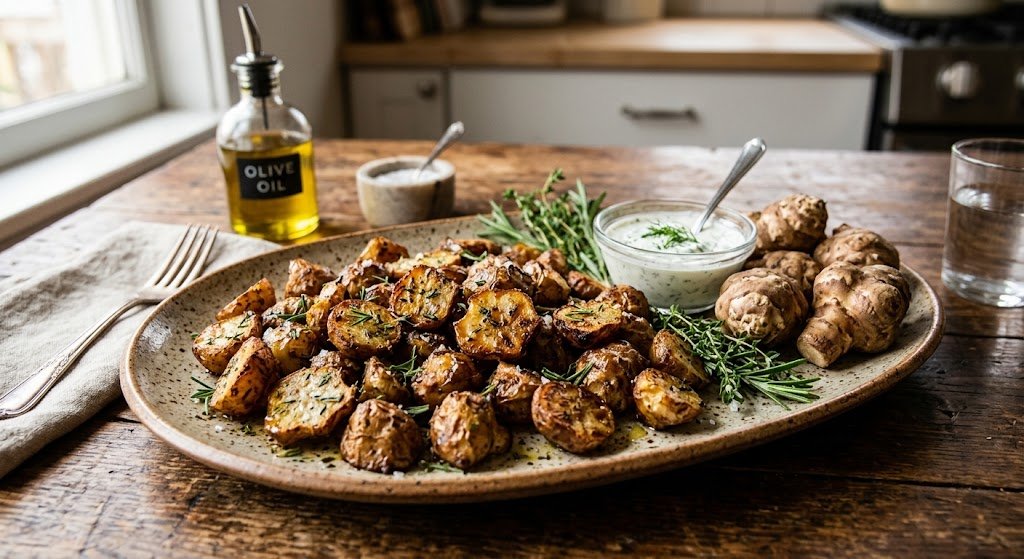
Looking for an easy way to turn an underrated root vegetable into a delicious side dish? This roasted Jerusalem artichokes recipe creates beautifully crispy, golden edges and a tender, nutty center with simple ingredients like olive oil, garlic, herbs, salt, and pepper.
Quick Answer: How Do You Roast Jerusalem Artichokes?
Roasted Jerusalem artichokes, also called roasted sunchokes, are made by washing and cutting the tubers, tossing them with olive oil, salt, garlic, and herbs, and roasting them at 400°F (200°C) for approximately 25–35 minutes. Roast them in a single layer and flip halfway through for the best crispy, caramelized exterior and tender interior.
What Are Jerusalem Artichokes (Sunchokes)?
Jerusalem artichokes, also called sunchokes, are underground tubers from the sunflower family. Despite their name, they are not related to globe artichokes. They come from the plant Helianthus tuberosus.
These knobby root vegetables have thin skin and an irregular shape. Once cooked, they develop a nutty, earthy, slightly sweet flavor. They are particularly delicious when roasted because high oven heat encourages browning and caramelization.
Native to North America, Jerusalem artichokes were cultivated by Indigenous peoples before becoming popular in Europe and other parts of the world. Unlike globe artichokes, which are flower buds, sunchokes are edible tubers that grow underground.
What Do Jerusalem Artichokes Taste Like?
Jerusalem artichokes have a distinctive nutty, earthy, and mildly sweet flavor. Roasting brings out their natural sweetness and produces a richer caramelized taste.
Their cooked texture is often compared with potatoes, although sunchokes can have a slightly more delicate or creamy interior and a distinctive crisp bite. Their flavor works particularly well with olive oil, garlic, thyme, rosemary, lemon, and black pepper.
Flavor at a Glance
| Characteristic | Jerusalem Artichokes |
|---|---|
| Flavor | Nutty, earthy, mildly sweet |
| Roasted exterior | Golden, caramelized, and crisp |
| Interior | Tender with a creamy or slightly crisp bite |
| Good pairings | Garlic, thyme, rosemary, lemon, Parmesan, chili |
Why Roasting Is One of the Best Ways to Cook Jerusalem Artichokes
Roasting Jerusalem artichokes is an excellent cooking method because dry, high heat concentrates their flavor while encouraging the surface to brown. The result is a delicious contrast between crispy edges and a tender center.
Roasting also allows the natural sugars in the tubers to brown, creating the characteristic golden color and caramelized flavor that makes roasted sunchokes so appealing.
Unlike boiling, roasting does not leave the vegetables waterlogged. A simple coating of olive oil and seasonings is enough to create a flavorful and satisfying roasted root vegetable side dish.
Why You Will Love This Roasted Jerusalem Artichokes Recipe
🌿 Simple Ingredients
Fresh sunchokes, olive oil, garlic, herbs, salt, and pepper create plenty of flavor.
🔥 Crispy & Caramelized
A hot oven helps the edges brown while the centers remain tender.
🥬 Plant-Based
The base recipe is naturally vegan and works well with plant-based meals.
🍽️ Versatile Side Dish
Serve them with chicken, fish, steak, salads, grain bowls, or other roasted vegetables.
Ingredients for Roasted Jerusalem Artichokes
Fresh Jerusalem Artichokes
Choose firm, fresh tubers without soft spots. Their thin skin can usually be left on after thorough washing and scrubbing.
Olive Oil
Olive oil coats the vegetables, helps seasonings adhere, and encourages browning and crisping.
Garlic
Fresh garlic adds a savory, aromatic flavor that complements the naturally sweet and nutty sunchokes.
Thyme or Rosemary
Both herbs pair especially well with roasted root vegetables and add an aromatic herbal note.
Salt & Black Pepper
Simple seasoning brings out the natural flavor of the Jerusalem artichokes.
Optional Flavor Boosters
Try lemon zest, Parmesan, chili flakes, smoked paprika, parsley, or lemon juice.
How to Prepare Jerusalem Artichokes for Roasting
Wash and Scrub Thoroughly
Jerusalem artichokes grow underground, so they can have soil trapped in their irregular surfaces. Wash them under cold running water and use a vegetable brush or scrubber to remove dirt.
Do You Need to Peel Sunchokes?
No, peeling is usually unnecessary. The thin skin becomes tender during roasting and can contribute extra texture. If a tuber has particularly thick, rough, or damaged skin, you can peel it.
Cut Into Even Pieces
Cut the sunchokes into similarly sized halves, quarters, or thick rounds. Uniform pieces roast at roughly the same rate and make it easier to achieve a tender center without burning smaller pieces.
How to Roast Jerusalem Artichokes Perfectly
Preheat the Oven
Preheat the oven to 400°F (200°C). A fully preheated oven is important for good browning and caramelization.
Cut the Sunchokes Evenly
Wash and scrub the tubers, then cut them into evenly sized pieces for consistent cooking.
Toss With Oil and Seasonings
Toss the sunchokes with olive oil, garlic, salt, pepper, and herbs until every piece is lightly coated.
Arrange in a Single Layer
Spread the vegetables across a baking sheet with enough room around them. Do not overcrowd the pan.
Roast for 25–35 Minutes
Roast until the pieces are golden brown and crisp around the edges. Cooking time will vary according to the size of the pieces.
Flip Halfway Through
Turn the pieces halfway through cooking so multiple surfaces have a chance to brown evenly.
Sunchokes contain inulin, a fermentable fiber that can cause gas or bloating in some people. If you are new to Jerusalem artichokes, start with a small serving and increase gradually according to your tolerance.
Pro Tips for Perfect Crispy Sunchokes
- Avoid overcrowding: Give the pieces space so moisture can escape instead of causing steaming.
- Use a hot oven: Around 400°F (200°C) promotes browning and crisp edges.
- Cut evenly: Similar-sized pieces cook more consistently.
- Use enough oil: A light, even coating helps promote browning.
- Flip halfway: Turning the pieces helps expose more surfaces to the hot pan.
- Serve promptly: Roasted vegetables are at their best while hot and crisp.
Best Herbs and Seasonings for Roasted Sunchokes
| Seasoning | Flavor Contribution | Best Use |
|---|---|---|
| Thyme | Mild, earthy, herbal | Classic roasted sunchokes |
| Rosemary | Strong, aromatic, pine-like | Hearty roasted vegetable meals |
| Garlic | Savory, aromatic, slightly sweet when roasted | Everyday garlic-herb version |
| Smoked Paprika | Warm and lightly smoky | Bold, savory variation |
| Lemon Zest | Bright and citrusy | Finishing roasted sunchokes |
| Chili Flakes | Spicy and warming | Hot and bold variation |
Flavor Variations to Try
Garlic Herb Roasted Sunchokes
Toss the sunchokes with olive oil, minced garlic, thyme, and rosemary before roasting. Finish with a little fresh herb for extra aroma.
Parmesan Roasted Jerusalem Artichokes
Add grated Parmesan during the final minutes of roasting so it melts and develops a savory golden crust.
Spicy Chili Roasted Sunchokes
Add chili flakes or chili powder to the seasoning for a gentle spicy kick that contrasts with the natural sweetness of the roasted tubers.
Mediterranean-Style Roasted Sunchokes
Combine olive oil, garlic, oregano, lemon zest, and black pepper. Finish with parsley or a squeeze of fresh lemon juice.
Air Fryer Roasted Jerusalem Artichokes
An air fryer is a convenient alternative when you want crispy roasted Jerusalem artichokes in less time. Strong hot-air circulation helps brown the exterior while keeping the interior tender.
| Method | Temperature | Approx. Time | Texture |
|---|---|---|---|
| Oven | 400°F / 200°C | 25–35 minutes | Deep caramelization and crisp edges |
| Air Fryer | 380–400°F / 195–200°C | 12–18 minutes | Very crisp exterior and tender center |
For the air fryer method, toss the sliced sunchokes with olive oil and seasonings, then cook in a suitable single layer. Shake the basket halfway through cooking.
What to Serve With Roasted Jerusalem Artichokes
Roasted Chicken
The savory flavor of roasted poultry pairs beautifully with caramelized sunchokes.
Grilled Fish
Salmon, cod, and sea bass complement the earthy sweetness of the vegetables.
Steak
Crispy sunchokes make a rustic alternative to traditional roasted potatoes.
Vegan Grain Bowls
Combine with quinoa, brown rice, vegetables, and tahini dressing.
Salads
Add warm roasted sunchokes to greens, nuts, cheese, and vinaigrette.
Nutrition and Health Benefits of Jerusalem Artichokes
Jerusalem artichokes provide fiber and several vitamins and minerals. They are especially notable for their inulin content, a type of fermentable fiber.
Important About Inulin
Inulin acts as a prebiotic fiber, meaning it can be fermented by beneficial microorganisms in the gut. However, the same fermentable fiber can cause gas or bloating in some people, particularly when eaten in large portions.
Fiber
The fiber in Jerusalem artichokes can contribute to a balanced, fiber-rich diet and support normal digestive function.
Vitamins and Minerals
Sunchokes provide nutrients including potassium, vitamin C, iron, and magnesium, although exact amounts depend on serving size and preparation.
Antioxidant Compounds
Jerusalem artichokes also contain naturally occurring antioxidant compounds that contribute to their overall nutritional profile.
Are Jerusalem Artichokes Keto or Low Carb?
Jerusalem artichokes contain carbohydrates, so they should not automatically be considered a keto-friendly vegetable. Their carbohydrate profile is unusual because they contain a significant amount of inulin, a type of fiber.
If you follow a very-low-carbohydrate ketogenic diet, check the carbohydrate information for your portion and account for the way your particular nutrition plan handles fiber. Portion size matters.
Jerusalem Artichokes vs. Potatoes
| Feature | Jerusalem Artichokes | Potatoes |
|---|---|---|
| Flavor | Nutty, earthy, mildly sweet | Mild and relatively neutral |
| Roasted texture | Crispy outside with a tender, distinctive interior | Crispy outside with soft or fluffy interior depending on variety |
| Notable fiber | Contains inulin | Contains dietary fiber, especially with the skin |
| Popular uses | Roasting, soups, salads, vegetable dishes | Roasting, fries, baking, mashing, casseroles |
How to Reduce Gas From Jerusalem Artichokes
Because sunchokes contain inulin, some people experience gas or bloating after eating them. Individual tolerance varies considerably.
- Start with a small portion if you are new to sunchokes.
- Increase portions gradually as your tolerance becomes clearer.
- Cook them thoroughly and pair them with flavors such as thyme, rosemary, ginger, or fennel if you enjoy those combinations.
Soaking is sometimes suggested as a way to make sunchokes easier to tolerate, but it should not be relied upon as a guaranteed method for removing their fermentable carbohydrates. If sunchokes consistently cause significant digestive symptoms, reducing the portion or avoiding them may be more appropriate.
Common Mistakes When Roasting Jerusalem Artichokes
| Mistake | What Happens | Better Approach |
|---|---|---|
| Uneven pieces | Small pieces can burn while large pieces remain firm. | Cut pieces to a similar size. |
| Overcrowded pan | Vegetables release moisture and steam instead of browning. | Use a single layer with space between pieces. |
| Low oven temperature | Less browning and weaker caramelization. | Use a well-preheated 400°F / 200°C oven. |
| Under-seasoning | The naturally mild flavor can taste flat. | Season evenly with salt, pepper, garlic, and herbs. |
How to Store Fresh Jerusalem Artichokes
Refrigerator Storage
Store fresh sunchokes in the refrigerator, ideally in a paper bag or perforated produce bag in the crisper drawer. Keep them whole until you are ready to prepare them.
How Long Do Fresh Sunchokes Last?
When stored properly, fresh Jerusalem artichokes can generally keep for around 1–2 weeks. For the best quality, use firm tubers before they become noticeably soft or wrinkled.
Whole vs. Cut Sunchokes
Whole tubers generally store better. Once cut, place the pieces in an airtight container in the refrigerator and use them within approximately 1–2 days for best quality.
Storage and Reheating Tips for Roasted Jerusalem Artichokes
| Storage/Reheating Method | Recommended Approach |
|---|---|
| Refrigerator | Store leftovers in an airtight container for about 3–4 days. |
| Oven reheating | Reheat at about 375°F / 190°C for 8–10 minutes, until hot. |
| Air fryer | Reheat at about 375°F / 190°C for 4–6 minutes. |
| Freezer | Can be frozen, but texture may soften after thawing. Use within about 2 months for best quality. |
Refrigerate cooked leftovers promptly rather than leaving them at room temperature for extended periods. When reheating leftovers, heat them until they are steaming hot throughout.
Frequently Asked Questions
Do You Peel Jerusalem Artichokes Before Roasting?
Usually, no. The thin skin can be left on after thoroughly washing and scrubbing. Peel only if the skin is particularly thick, rough, or damaged.
How Long Does It Take to Roast Sunchokes?
At 400°F (200°C), similarly sized pieces generally take about 25–35 minutes. The exact time depends on their size and your oven.
What Do Jerusalem Artichokes Taste Like?
They have a nutty, earthy, mildly sweet flavor. Roasting makes the flavor deeper and more caramelized.
Are Jerusalem Artichokes Healthy?
They can be a nutritious addition to a balanced diet and provide fiber, inulin, potassium, vitamin C, iron, and other nutrients. Their high inulin content can also cause digestive discomfort for some people.
Can You Eat Jerusalem Artichoke Skin?
Yes. The skin is generally edible. The important step is to wash and scrub the tubers thoroughly before cooking.
Can You Make Jerusalem Artichokes in an Air Fryer?
Yes. Air fry sliced sunchokes at approximately 380–400°F (195–200°C) for 12–18 minutes, shaking halfway through.
Recipe Card: Roasted Jerusalem Artichokes
Crispy, golden roasted sunchokes with garlic and fresh herbs.
Ingredients
- 1 lb (450 g) fresh Jerusalem artichokes
- 2 tablespoons olive oil
- 2 cloves garlic, minced
- 1 teaspoon fresh thyme or rosemary
- ½ teaspoon salt
- ¼ teaspoon black pepper
Optional Additions
- 1 teaspoon lemon zest
- 2 tablespoons grated Parmesan
- ½ teaspoon chili flakes
Instructions
Preheat
Heat the oven to 400°F (200°C).
Prepare
Wash and scrub the sunchokes thoroughly, then cut them into evenly sized pieces.
Season
Toss the sunchokes with olive oil, garlic, thyme, salt, and pepper.
Arrange
Spread the pieces on a baking sheet in a single layer. Avoid overcrowding.
Roast
Roast for 25–35 minutes, turning the pieces halfway through, until golden and crisp around the edges.
Serve
Serve immediately while warm. Finish with lemon zest, fresh herbs, or Parmesan if desired.
Approximate Nutrition Per Serving
| Nutrient | Approximate Amount |
|---|---|
| Calories | 120 |
| Carbohydrates | 20 g |
| Fiber | 3–4 g |
| Protein | 3 g |
| Fat | 4 g |
| Potassium | Approx. 400 mg |
Nutrition values are estimates and can vary depending on ingredient brands, portion size, and preparation.
Final Thoughts
Roasted Jerusalem artichokes are an easy way to turn an unusual root vegetable into a flavorful side dish. At 400°F (200°C), the tubers develop beautifully golden, caramelized edges while the centers become tender and nutty.
The recipe is flexible enough for everyday dinners and special meals alike. Serve roasted sunchokes alongside chicken, grilled fish, steak, salads, or vegan grain bowls, or experiment with garlic, rosemary, Parmesan, lemon, smoked paprika, or chili.
If you have never cooked sunchokes before, this easy roasted Jerusalem artichokes recipe is an excellent place to start. With a handful of ingredients, a hot oven, and a little attention to spacing on the pan, you can make a deliciously crispy and caramelized roasted vegetable side dish.
Read More :