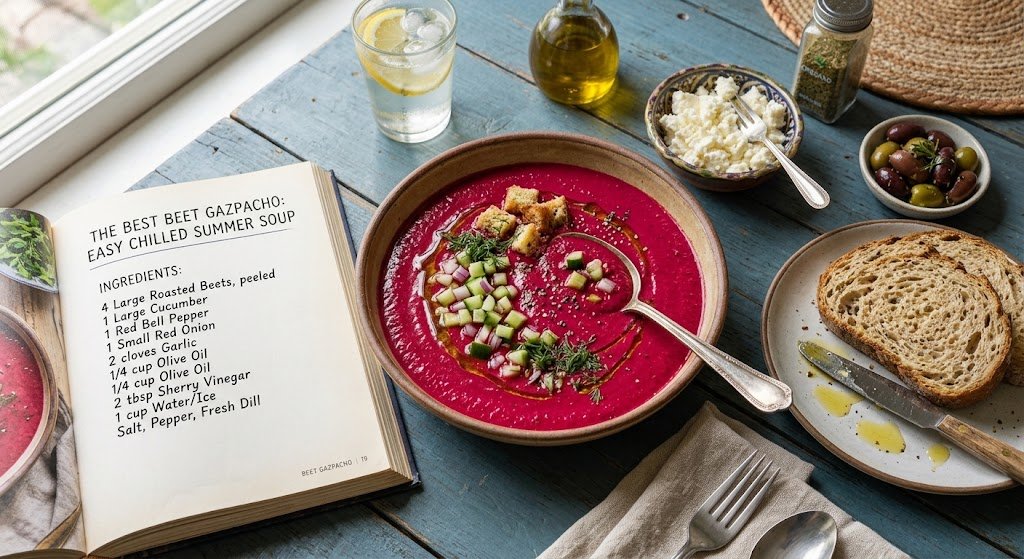
This beet gazpacho recipe transforms earthy-sweet beets, crisp cucumber, garlic, olive oil, and vinegar into a vibrant, refreshing cold beet soup. It is simple, naturally vegan, colorful, and perfect for warm-weather lunches, appetizers, and Mediterranean-inspired meals.
🥣 Quick Answer: What Is Beet Gazpacho?
Beet gazpacho is a chilled vegetable soup inspired by traditional Spanish gazpacho. Instead of relying mainly on tomatoes, this version uses cooked beets as the star ingredient, combined with cucumber, garlic, olive oil, vinegar, and seasoning. The result is a smooth, earthy-sweet, tangy, and refreshing cold beet soup that is especially enjoyable in warm weather.
What Is Beet Gazpacho?
Beet gazpacho is a vibrant chilled soup inspired by traditional Spanish gazpacho. Classic gazpacho commonly features tomatoes, cucumber, peppers, garlic, olive oil, and vinegar. This variation puts beets at the center, creating a naturally beautiful red or pink soup with earthy sweetness and refreshing acidity.
The beets create a smooth base when blended, while cucumber contributes freshness, garlic adds savory depth, olive oil supplies richness, and vinegar keeps the flavor bright. The finished soup is light enough for summer yet flavorful enough to serve as an elegant appetizer.
💡 Why It Works
The key to a balanced beet gazpacho is controlling the relationship between earthy sweetness, acidity, salt, freshness, and olive oil. If the beets taste too sweet, increase the acidity gradually. If the soup tastes too sharp, add a little more beet or olive oil.
Why You’ll Love This Beet Gazpacho Recipe
- Refreshing: Served chilled, making it ideal for warm weather.
- Easy: Once the beets are cooked, the ingredients simply go into a blender.
- Vibrant: Beets naturally give the soup an eye-catching red or pink color.
- Flexible: Adjust the vinegar, herbs, texture, and garnishes to your preference.
- Vegan-friendly: The basic recipe contains no dairy or animal products.
- Gluten-free: The soup itself contains no wheat or flour.
- Make-ahead friendly: Chilling allows the flavors to meld before serving.
What Does Beet Gazpacho Taste Like?
The flavor combines the earthy sweetness of beets with the freshness of cucumber and the sharpness of garlic. Vinegar provides the acidity needed to keep the soup lively, while olive oil gives it a smoother mouthfeel.
Compared with traditional tomato gazpacho, beet gazpacho is generally more earthy and naturally sweet. The soup should still taste bright rather than heavy, which is why seasoning and acidity are particularly important.
Ingredients You Need
| Ingredient | Purpose | Practical Note |
|---|---|---|
| 2 medium beets | Color, earthy sweetness, body | Roast or boil until tender |
| 1 cucumber | Freshness and hydration | Peel if the skin is tough |
| 1 small garlic clove | Savory depth | Use less for a milder flavor |
| 2 tbsp olive oil | Richness and smoothness | Extra virgin olive oil works well |
| 1 tbsp vinegar | Acidity and balance | Sherry or red wine vinegar |
| 1 cup cold water or vegetable broth | Controls consistency | Add gradually if needed |
| Salt | Enhances all flavors | Adjust to taste |
Optional Toppings
- Finely chopped cucumber
- Fresh dill, parsley, or cilantro
- A small yogurt swirl
- Extra virgin olive oil
- Avocado cubes
Choosing the Best Beets
Fresh vs. Pre-Cooked Beets
Fresh beets offer excellent flavor but require cooking. Pre-cooked beets are a convenient shortcut for an easy beet gazpacho recipe and can be blended immediately once cooled.
Roasting vs. Boiling
🔥 Roasted Beets
- Deeper flavor
- More pronounced natural sweetness
- Excellent for a richer gazpacho
💧 Boiled Beets
- Simple and convenient
- Soft texture
- Light, clean beet flavor
Ingredient Substitutions
| Original | Substitute | Expected Result |
|---|---|---|
| Sherry vinegar | Red wine vinegar | Similar bright acidity |
| Sherry vinegar | Apple cider vinegar | Slightly fruitier flavor |
| Vinegar | Fresh lemon juice | Brighter, sharper acidity |
| Yogurt | Coconut yogurt or cashew cream | Dairy-free creaminess |
| Dill | Parsley or cilantro | Different but fresh herbal note |
| Water | Vegetable broth | More savory depth |
Kitchen Tools You’ll Need
- Blender: Best for a smooth, silky soup.
- Food processor: Works well but may produce a slightly less silky texture.
- Knife and cutting board: For preparing the vegetables.
- Airtight container: For chilling and storing the soup.
How to Make Beet Gazpacho
Step 1 — Cook the Beets
Roast or boil the beets until completely tender. Allow them to cool enough to handle, then peel and roughly chop them.
Step 2 — Prepare the Vegetables
Chop the cucumber and garlic into smaller pieces. This makes blending easier and helps distribute the flavors evenly.
Step 3 — Blend
Add the beets, cucumber, garlic, olive oil, vinegar, and cold water or vegetable broth to a blender. Blend until smooth.
Step 4 — Season
Taste before serving. Add salt gradually, then adjust the vinegar or olive oil until the soup tastes balanced rather than overly sweet or acidic.
Step 5 — Chill
Transfer the soup to an airtight container and refrigerate for at least 1 hour. Stir before serving.
Expert Tips for the Best Beet Gazpacho
1. Balance the Acidity
Beets naturally bring sweetness, so acidity is essential. Add vinegar gradually and taste as you go.
2. Control the Texture
Start with less liquid and add more as needed. This gives you better control over the final consistency.
3. Chill Before Serving
Allowing the soup to rest gives the garlic, vinegar, vegetables, and olive oil time to integrate.
4. Strain for Restaurant-Style Smoothness
For an exceptionally silky soup, pass the blended gazpacho through a fine-mesh sieve before chilling.
How to Adjust the Texture
| If Your Gazpacho Is… | Try This |
|---|---|
| Too thick | Add cold water or vegetable broth one tablespoon at a time. |
| Too thin | Add more cooked beet or a small amount of avocado. |
| Not smooth enough | Blend longer or strain through a fine-mesh sieve. |
| Too sweet | Add vinegar gradually and re-season with salt. |
| Too sharp | Add more beet, cucumber, or olive oil to soften the acidity. |
Flavor Variations
Roasted Beet Gazpacho
Use roasted beets for a deeper, sweeter flavor and a slightly more complex finished soup.
Vegan Beet Gazpacho
Keep the basic vegetable-based recipe dairy-free. If you want a creamy garnish, use a plant-based yogurt instead of dairy yogurt.
Spicy Beet Gazpacho
Add a small amount of jalapeño, chili flakes, or cayenne for a spicy contrast against the beets’ natural sweetness.
Mediterranean-Style Beet Gazpacho
Finish with fresh herbs, extra virgin olive oil, cucumber, and a light yogurt swirl for a Mediterranean-inspired presentation.
Pomegranate Variation
A small drizzle of pomegranate molasses can introduce a sweet-tangy contrast. Use it sparingly because both beets and pomegranate molasses are naturally sweet.
Best Garnishes for Beet Gazpacho
- Chopped cucumber: Adds fresh crunch.
- Fresh dill or parsley: Brightens the earthy beet flavor.
- Yogurt swirl: Adds tangy creaminess.
- Olive oil: Creates a glossy restaurant-style finish.
- Avocado: Adds richness and soft texture.
What to Serve With Beet Gazpacho
- Crusty bread or toasted sourdough
- Fresh salads with cucumber and greens
- Grilled vegetables
- Olives and Mediterranean-style tapas
- Light sandwiches or wraps
Health & Nutrition
This healthy beet soup combines vegetables, olive oil, and vinegar in a light chilled preparation. Beets provide naturally occurring plant compounds and nutrients, while cucumber contributes water and freshness. Olive oil supplies unsaturated fat.
⚠️ Nutrition Note
Nutrition values vary considerably depending on beet size, oil quantity, garnishes, and optional ingredients. Treat calorie and nutrient estimates as general guidance rather than exact laboratory measurements.
*Approximate values depend on exact ingredients and serving size.
Common Mistakes to Avoid
| Mistake | Why It Matters | Better Approach |
|---|---|---|
| Over-blending | Can make the soup thinner than desired. | Blend until smooth, then stop. |
| Too much beet | Can make the flavor overly earthy or sweet. | Balance with cucumber and acidity. |
| Too much vinegar | Can overpower the delicate vegetables. | Add gradually and taste. |
| Not enough seasoning | Makes the soup taste flat. | Adjust salt and acidity before chilling. |
| Serving immediately | Flavors may not be fully integrated. | Chill for at least 1 hour. |
How to Store Beet Gazpacho
Transfer leftover beet gazpacho to an airtight container and keep it refrigerated. Stir gently before serving because ingredients can settle or separate slightly during storage.
For best quality, use the refrigerated soup within approximately 2–3 days. If freezing, use a freezer-safe container with room for expansion and expect some texture change after thawing.
🧊 Food Safety Reminder
Keep beet gazpacho refrigerated rather than leaving it at room temperature for extended periods. If it has been left out for too long, especially in hot conditions, discard it rather than relying on smell or appearance alone.
History of Gazpacho
Gazpacho is strongly associated with southern Spain, particularly Andalusia. Early forms were simple preparations based on ingredients such as bread, olive oil, garlic, vinegar, and water. Over time, tomatoes, cucumbers, peppers, and other vegetables became central to many modern versions.
Modern cooks have continued adapting the basic concept with different fruits and vegetables. Beet gazpacho is one such variation, preserving the refreshing chilled format while introducing the distinctive color and earthy-sweet character of beets.
Restaurant-Style Beet Gazpacho Presentation
For an elegant presentation, serve the soup in a wide shallow bowl or chilled glass. Create a simple garnish using finely diced cucumber, fresh herbs, and a small drizzle of olive oil.
For stronger visual contrast, add a small yogurt swirl or pale garnish against the deep red beet base. Keep the garnish restrained so the vibrant soup remains the focal point.
🥣 Traditional Beet Gazpacho Recipe
A simple, vibrant chilled beet soup with cucumber, garlic, olive oil, and vinegar.
Ingredients
- 2 medium beets, roasted or boiled
- 1 cucumber, chopped
- 1 small garlic clove
- 2 tablespoons olive oil
- 1 tablespoon sherry vinegar or red wine vinegar
- 1 cup cold water or vegetable broth
- Salt, to taste
Optional Garnishes
- Chopped cucumber
- Fresh herbs
- Yogurt swirl
- Olive oil
Instructions
Frequently Asked Questions About Beet Gazpacho
Can beet gazpacho be made ahead of time?
Yes. In fact, making it ahead can improve the flavor because the ingredients have time to meld. Refrigerate it in an airtight container and stir before serving.
Can I make beet gazpacho without tomatoes?
Absolutely. The recipe works well with beets, cucumber, garlic, olive oil, and vinegar without tomatoes. The result is earthier and naturally sweeter than classic tomato gazpacho.
Is beet gazpacho healthy?
It can be a nutritious choice because it is built around vegetables and olive oil. Exact nutritional value depends on the ingredients and serving size.
Can I use pre-cooked beets?
Yes. Pre-cooked beets are a convenient shortcut and work particularly well when you want a quick easy beet gazpacho recipe.
How long does beet gazpacho last in the refrigerator?
For best quality, use homemade beet gazpacho within approximately 2–3 days when kept properly refrigerated in an airtight container.
Can beet gazpacho be frozen?
Yes, although freezing can alter the texture. Thaw it slowly in the refrigerator, then stir or briefly blend it again before serving.
How do I make beet gazpacho smoother?
Use a high-powered blender and blend until silky. For a restaurant-style finish, strain the soup through a fine-mesh sieve.
What if my beet gazpacho tastes too sweet?
Add vinegar gradually, then taste again. A small increase in salt can also help balance the natural sweetness of the beets.
🌿 Final Takeaway
Beet gazpacho is an easy way to turn cooked beets and fresh vegetables into an elegant, refreshing summer soup. The secret is simple: use flavorful beets, balance their natural sweetness with acidity, control the liquid carefully, and give the finished soup enough time to chill.
Serve it with a drizzle of olive oil, fresh herbs, and crisp cucumber for a beautiful cold beet soup that works equally well as a light lunch, appetizer, or Mediterranean-inspired starter.
Read More :