If you have never tried Ajo Blanco, you are in for something truly special. This traditional Andalusian cold soup combines almonds, garlic, extra virgin olive oil, bread, and sherry vinegar into a silky, refreshing chilled almond soup. Unlike tomato-based gazpacho, this classic Spanish recipe is completely tomato-free.
What Is Ajo Blanco?
Ajo Blanco, also spelled ajoblanco, is a traditional Andalusian cold soup made with almonds, garlic, olive oil, bread, and vinegar. The ingredients are blended into a smooth, creamy soup and served thoroughly chilled. Often called Spanish white gazpacho, it is nutty, lightly garlicky, refreshing, and ideal for hot weather.
The Origins of Ajo Blanco Before Tomatoes Reached Spain
Long before tomatoes became central to Spanish cooking, Ajo Blanco was already part of Andalusian cuisine. The soup reflects the deep historical influence of Al-Andalus, where almonds, garlic, bread, and olive oil were important ingredients.
Because tomatoes arrived in Europe after the Columbian exchange, traditional ajoblanco developed without them. Its simple combination of bread, almonds, garlic, and olive oil made it an economical and satisfying rural dish.
The soup is particularly associated with Málaga and Granada and remains a beloved warm-weather specialty. Its pale color and chilled preparation explain why it is often described as Spanish white gazpacho.
Why This Ajo Blanco Recipe Works
The secret to excellent ajo blanco is balance. Garlic should provide character without dominating the almonds, while the olive oil should create a silky emulsion rather than separating from the liquid.
- Balanced garlic: enough for flavor without excessive bitterness.
- Fine almond texture: finely ground almonds produce a smoother soup.
- Slow oil streaming: helps create a stable, creamy emulsion.
- Quality ingredients: fresh almonds and good extra virgin olive oil make a noticeable difference.
- Proper chilling: at least two hours allows the flavors to meld.
Traditional Ingredients Explained
How to Make Authentic Ajo Blanco
- Soak the bread. Place the day-old bread in a bowl and cover with water. Soak for 5–10 minutes, then squeeze out the excess water.
- Blend the almonds and garlic. Add the blanched almonds and garlic to a blender and process until very finely ground.
- Add the bread and water. Add the soaked bread and cold water. Blend until the mixture becomes as smooth as possible.
- Stream in the olive oil. With the blender running, slowly drizzle in the extra virgin olive oil. This gradual addition helps form a creamy emulsion.
- Add vinegar and salt. Add the sherry vinegar and salt. Blend briefly, then taste and adjust the seasoning.
- Chill thoroughly. Transfer the soup to an airtight container and refrigerate for at least 2 hours.
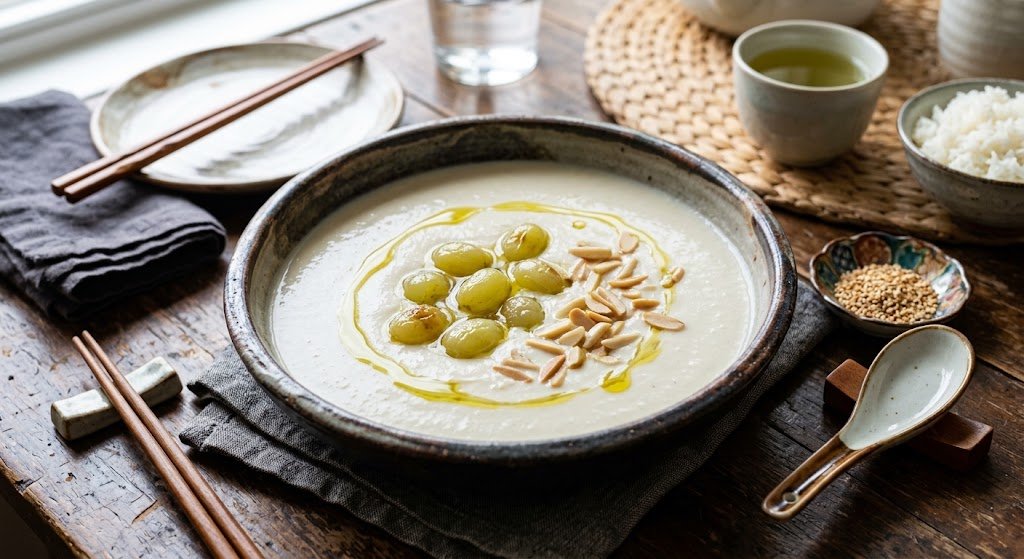
- Serve cold. Pour into chilled bowls or glasses and garnish with green grapes, sliced almonds, melon, or a small drizzle of olive oil.
Traditional Mortar & Pestle Method
Before electric blenders, ajo blanco was prepared with a mortar and pestle. This historical approach creates a more rustic texture and connects the recipe to its traditional Andalusian preparation.
| Method | Texture | Flavor | Best For |
|---|---|---|---|
| Blender | Very smooth and creamy | Clean and consistent | Everyday preparation |
| Mortar & Pestle | More rustic and slightly thicker | Deep, traditional character | Historical-style preparation |
How to Make Ajo Blanco Ultra Creamy
A great Spanish white gazpacho should be silky rather than gritty. The biggest texture improvements come from finely grinding the almonds and controlling the olive-oil addition.
Why Can Ajo Blanco Turn Grainy?
- Almonds were not blended finely enough.
- Almond skins were left on.
- The oil was added too quickly.
- The mixture was not blended long enough.
How to Fix Separated Soup
If the soup separates, blend it again gradually. A small additional stream of olive oil can help rebuild the emulsion. Avoid pouring a large amount of oil in at once.
Should You Strain It?
Straining is optional, but it is an excellent technique if you want an exceptionally smooth, restaurant-style ajo blanco.
What Does Ajo Blanco Taste Like?
Ajo blanco is surprisingly balanced. The almonds create a soft, buttery nuttiness, garlic adds savory depth, olive oil contributes richness, and sherry vinegar provides brightness.
- Creamy yet refreshing
- Nutty and buttery
- Lightly garlicky
- Bright and gently acidic
How to Serve Ajo Blanco Traditionally
Serve ajoblanco very cold. The classic garnish is fresh green grapes, whose natural sweetness provides a beautiful contrast to the savory almond-and-garlic base.
Restaurant-Style Plating Guide
- Use shallow white bowls to emphasize the soup’s pale color.
- Arrange halved grapes neatly in the center or slightly off-center.
- Add a few sliced almonds for visual and textural contrast.
- Finish with a very thin olive-oil drizzle.
- For a modern presentation, add a few delicate microgreens.
- Chill serving bowls before plating for the best experience.
Regional Variations Across Andalusia
| Region | Typical Character | Common Garnish |
|---|---|---|
| Málaga | Classic, refreshing preparation | Green grapes |
| Granada | Can be somewhat thicker and more strongly seasoned | Grapes or melon |
Modern Chef Twists
Ajo Blanco vs Gazpacho vs Salmorejo
| Feature | Ajo Blanco | Gazpacho | Salmorejo |
|---|---|---|---|
| Main Base | Almonds, bread, garlic, olive oil | Tomatoes, cucumber, peppers, olive oil | Tomatoes, bread, olive oil |
| Tomato-Free? | Yes | No | No |
| Texture | Smooth and creamy | Usually thinner and more vegetable-forward | Thick and dense |
| Flavor | Nutty, garlicky, refreshing | Fresh, tangy, vegetal | Rich, savory, slightly sweet |
| Classic Garnish | Grapes or melon | Vegetables or olive oil | Egg or cured ham |
Is Ajo Blanco Healthy?
Ajo Blanco is naturally plant-based and dairy-free. Almonds and extra virgin olive oil contribute unsaturated fats, while the simple ingredient list fits comfortably into a Mediterranean-style eating pattern.
- Vegan: the recipe contains no animal products.
- Dairy-free: no cream or milk is required.
- Nut-based: almonds provide richness and texture.
- Gluten-free adaptable: use certified gluten-free bread.
How to Store, Freeze & Make Ahead
| Storage Method | Recommendation |
|---|---|
| Refrigerator | Store covered and chilled for up to 3–4 days. |
| Make Ahead | Prepare several hours ahead or the day before for deeper flavor. |
| Freezer | Possible, but freezing may change the creamy texture. |
| After Thawing | Thaw in the refrigerator and gently re-blend before serving. |
Best Wine & Drink Pairings
- Dry Sherry: complements the almonds, garlic, and Spanish character.
- Albariño: crisp and refreshing alongside the creamy soup.
- Spanish Rosé: a bright warm-weather pairing.
- Sparkling Water: an excellent non-alcoholic option.
Choosing the Best Almonds & Olive Oil
For the best homemade ajo blanco, use fresh, plump blanched almonds and a good-quality extra virgin olive oil with a mild-to-fruity profile.
Ajo Blanco Recipe Card
Ingredients
- 1 cup blanched almonds or Marcona almonds
- 2–3 garlic cloves, adjusted to taste
- 2 slices day-old white bread, crust removed
- 3/4 cup cold water
- 1/2 cup extra virgin olive oil
- 2 tsp sherry vinegar
- 1/2 tsp salt, or to taste
- 1/4 cup seedless green grapes, for garnish
- Optional: sliced almonds or diced melon
Instructions
- Soak the bread for 5–10 minutes and squeeze out excess water.
- Blend almonds and garlic until very finely ground.
- Add the bread and cold water and blend until smooth.
- Slowly stream in the olive oil while blending.
- Add sherry vinegar and salt. Blend briefly and adjust to taste.
- Refrigerate for at least 2 hours.
- Serve thoroughly chilled with grapes and a small olive-oil drizzle.
Recipe Notes
- Use gluten-free bread for a gluten-free version.
- Remove the garlic germ if you prefer a milder garlic flavor.
- Prepare the soup several hours ahead to allow the flavors to develop.
- Add delicate garnishes immediately before serving.
Approximate Nutrition Per Serving
| Calories | ~180 kcal |
| Fat | 14 g |
| Carbohydrates | 10 g |
| Protein | 5 g |
| Fiber | 3 g |
| Sugar | 2 g |
Nutrition values are approximate and can vary depending on the exact ingredients and serving size.
Frequently Asked Questions About Ajo Blanco
Can you make ajo blanco without bread?
Yes. Bread provides body, but you can use gluten-free bread or experiment with additional almonds for a thicker texture.
Why is my ajo blanco bitter?
Excessive garlic, almond skins, or strongly bitter olive oil can contribute to bitterness. Use blanched almonds, moderate the garlic, and taste the olive oil before using it.
Can I use almond milk?
Almond milk can replace some of the water, but it changes the flavor and texture. For the most traditional result, cold water is the better choice.
How long does ajo blanco last?
Keep it covered in the refrigerator and use it within approximately 3–4 days. The flavor can become more integrated after resting overnight.
Is ajo blanco an appetizer or main dish?
Traditionally, it is served as a starter or tapas-style dish. A larger bowl can also work as a light summer meal.
Can children eat ajo blanco?
It can be served to children who can safely eat all of the ingredients, but remember that almonds are a major allergen. Adjust the garlic for younger palates if desired.
Pro Tips for the Best Ajo Blanco
- Moderate the garlic: start conservatively and add more if needed.
- Use blanched almonds: they produce a cleaner color and smoother texture.
- Blend thoroughly: finely processed almonds are essential for silkiness.
- Stream the oil slowly: this is one of the most important emulsification steps.
- Chill for at least 2 hours: cold temperature improves the final experience.
- Season at the end: taste after blending and adjust salt and vinegar.
- Strain if desired: a fine-mesh sieve creates an exceptionally polished texture.
Read More :