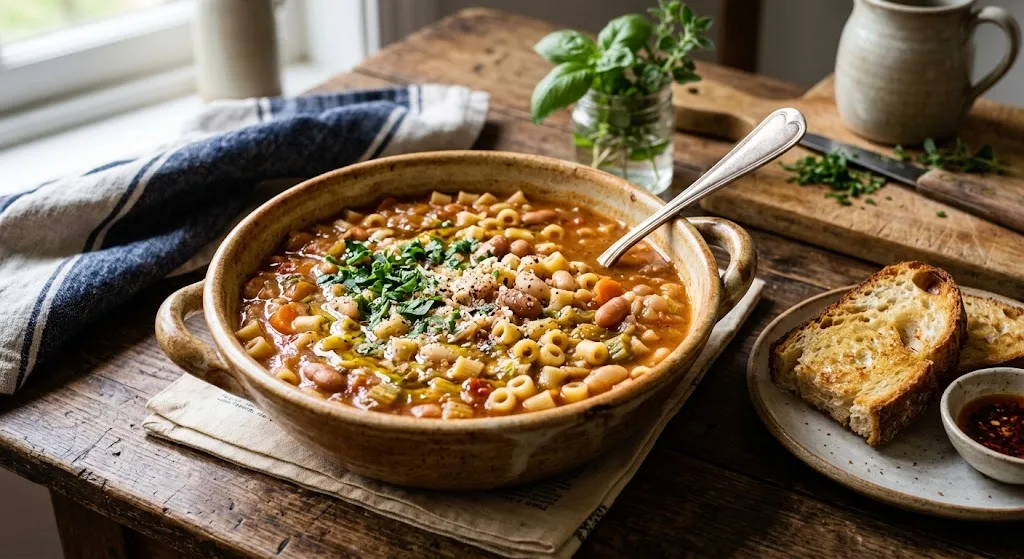
There is something deeply comforting about a warm bowl of Vegan Pasta e Fagioli. This classic Italian pasta and beans soup comes from simple roots, yet it delivers rich flavor and real nourishment. This plant-based version keeps that rustic soul while staying completely dairy free and satisfying.
Quick Answer: What Is Vegan Pasta e Fagioli?
Vegan Pasta e Fagioli is a hearty Italian soup made with beans, small pasta, vegetables, tomato paste, herbs, and vegetable broth. The beans naturally thicken the broth, while tomato paste and browned aromatics create deep savory flavor without meat, dairy, or cream.
This vegan pasta e fagioli recipe is not just another bean soup. It is a hearty, protein-packed meal made with cannellini beans, tender pasta, tomato broth, and Italian herbs. It works beautifully for weeknight dinners, meal prep, or cozy winter nights. If you are searching for an easy vegan pasta fagioli, a healthy Italian vegan bean soup, or a one-pot comfort dish, you are in the right place.
Vegan Pasta e Fagioli
Key Ingredients
- Cannellini beans
- Small pasta, such as ditalini
- Onion, carrot, and celery
- Garlic
- Tomato paste
- Vegetable broth
- Dried Italian herbs
- Fresh parsley or basil
- Olive oil
- Optional nutritional yeast
Method Overview
- Build the mirepoix flavor base.
- Add garlic and tomato paste.
- Cook the tomato paste until slightly darker.
- Simmer beans, herbs, and vegetable broth.
- Cook pasta separately for the best meal-prep texture.
- Mash some beans to naturally thicken the soup.
- Finish with fresh herbs, black pepper, and olive oil.
What Is Pasta e Fagioli Traditionally?
Pasta e Fagioli (say it like PAH-stah eh fah-JOH-lee) literally means “pasta and beans” in Italian. It is a classic Italian pasta and beans dish that sits somewhere between a soup and a stew. In many homes, it was never meant to be fancy— just warm, filling, and made with what was available.
Cucina Povera Background
This recipe comes from cucina povera, meaning “poor kitchen” or peasant-style cooking. Families used pantry staples like beans, pasta, onions, garlic, herbs, and broth to create a hearty meal without relying on expensive ingredients.
Regional Italian Variations
Pasta shapes vary too, but small types such as ditalini pasta and tiny shells are especially well suited to the dish.
Is Traditional Pasta e Fagioli Vegan?
Not always. Many traditional versions can include:
- Pancetta or sausage
- Meat broth
- Parmesan rind
The basic concept is highly adaptable to plant-based cooking, but whether the traditional version is vegan depends on the household and region.
How Modern Versions Changed
Modern versions often become:
- More vegetable-heavy
- More tomato-based
- Quicker and more suited to one-pot cooking
- Adapted for gluten-free or oil-free diets
Why Most Vegan Versions Lack Depth—and How This One Fixes It
Many people try a vegan pasta e fagioli recipe and feel something is missing. The soup tastes fine, but it lacks the deep, slow-cooked flavor associated with traditional versions.
Missing Umami
Traditional versions can get savory depth from pancetta, sausage, or Parmesan rind. In a plant based pasta e fagioli, that depth can be developed by:
- Browning the aromatics well
- Using quality tomato paste
- Allowing the beans to simmer properly
- Adding a touch of nutritional yeast, if desired
The Importance of Caramelizing Tomato Paste
One of the biggest mistakes in an easy vegan pasta fagioli is adding tomato paste and immediately moving on. Cook it for about 2–3 minutes, until it darkens slightly and smells sweet and savory. This helps develop deeper flavor and reduces the raw tomato taste.
Bean Starch Thickening Science
Beans naturally release starch as they simmer. That starch contributes to the creamy texture associated with authentic Italian pasta and beans. Mashing a small portion of the cannellini beans makes the broth thicker without cream.
Proper Herb Timing
- Dried herbs: Add early so their flavor has time to develop.
- Fresh herbs: Add near the end to preserve their brightness.
Broth Layering Strategy
- Build flavor with onion, garlic, and carrots plus celery.
- Toast the tomato paste.
- Simmer the beans with flavorful vegetable broth.
- Adjust salt and acidity near the end.
Ingredient Breakdown: Why Each One Matters
The Best Beans for Texture and Protein
Beans are the heart of pasta e fagioli. Their creamy interior, starch, and protein make them essential to the dish’s characteristic texture.
Cannellini Beans
- Creamy texture
- Mild flavor
- Traditional in many versions
- Excellent for thickening
- Approximately 7–8g protein per ½ cup
Kidney Beans
- Firmer texture
- Stronger flavor
- Add visual contrast
- Similar protein contribution
Borlotti Beans
Borlotti beans are a traditional Italian choice with a soft texture and nutty flavor. They can be harder to find outside Italy but make an excellent alternative.
Choosing the Right Pasta
Ditalini Pasta
Small tube-shaped ditalini is one of the most natural choices for this soup because it distributes evenly throughout the broth.
Small Shells
Small shells can hold some of the broth and provide a slightly softer, cozy texture.
Whole Wheat Pasta
Whole wheat pasta works well when you want a more filling, fiber-rich bowl.
Gluten-Free Swaps
- Brown rice pasta
- Chickpea pasta
- Lentil pasta
If you need the entire dish to be gluten-free, check the labels of the pasta, broth, tomato products, and other packaged ingredients for gluten or cross-contact statements. Cooking gluten-free pasta separately can also help control its texture.
Building a Rich, Rustic Broth
Mirepoix Base
Onion, carrot, and celery provide sweetness, aroma, and savory depth.
Vegetable Broth Quality
Choose a flavorful, preferably low-sodium vegetable broth. Taste the broth before adding it so you understand its salt level.
Tomato Paste Depth
Tomato paste adds richness and body. Cooking it until slightly darker gives the broth more depth.
Nutritional Yeast
A small amount of nutritional yeast is optional but can add extra savory character reminiscent of the Parmesan element found in some traditional versions.
How to Make Vegan Pasta e Fagioli: Step-by-Step
This vegan pasta e fagioli recipe is simple, but the order of operations matters. These checkpoints help build a richer final bowl.
Heat olive oil in a large pot. Add onion, carrot, and celery with a pinch of salt. Cook until soft and slightly golden. Add garlic and cook for about 30 seconds, until fragrant.
Texture checkpoint: The vegetables should be tender without being excessively browned.
Stir in tomato paste and cook until it darkens slightly and smells sweet and savory. This is one of the most important flavor-building steps.
Add cannellini beans, herbs, and flavorful vegetable broth. Bring the mixture to a gentle boil, then lower to a simmer.
Flavor checkpoint: Taste after about 10 minutes and adjust seasoning as needed.
Simmer uncovered so the flavors combine and the beans can release some of their natural starch. This naturally thickens the soup.
For the best meal-prep texture, cook ditalini pasta separately. If you prefer a one-pot version, add the pasta directly to the soup and monitor it closely.
- Cook together: Thicker and starchier.
- Cook separately: Better texture for leftovers and meal prep.
Mash a small portion of the beans for creaminess. Finish with black pepper, fresh parsley, and a drizzle of olive oil. The finished soup should be thick but spoonable.
Texture Control Guide: Soup vs. Stew Consistency
The ideal vegan pasta fagioli should feel hearty without becoming gluey. Because both beans and pasta contribute starch, texture needs some attention.
How to Thicken Naturally
- Mash some beans into the broth.
- Simmer uncovered.
- Use pasta starch if cooking pasta directly in the soup.
Avoid relying on flour or cream. Traditional-style pasta e fagioli can achieve its body naturally through beans and starch.
How to Thin Without Losing Flavor
- Add warm vegetable broth.
- Stir gently.
- Recheck the seasoning after thinning.
How to Prevent Mushy Pasta
- Cook pasta separately for meal prep.
- Slightly undercook pasta if adding it directly to the soup.
- Avoid prolonged simmering after the pasta is cooked.
Starch Management
Too much starch can make the soup overly thick or gluey. Control it by:
- Rinsing canned beans lightly.
- Cooking pasta separately.
- Stirring gently.
Restaurant-Style Creamy Finish
For a silky finish, blend about ½ cup of the soup and stir it back into the pot. An optional spoonful of nutritional yeast can add another layer of savory flavor.
Nutrition Breakdown and Health Benefits
One reason people search for a healthy vegan pasta e fagioli is that it combines comfort with nutrient-dense pantry staples.
Roughly 300–350 calories per 1½-cup serving.
Roughly 12–15g of plant protein per serving.
Roughly 10–12g of fiber per bowl.
Beans, vegetables, pasta, herbs, and olive oil form the core.
Nutrition values are estimates and can vary substantially with pasta type, bean quantity, broth, olive oil, serving size, and other ingredients.
Mediterranean Diet Alignment
The recipe naturally emphasizes beans, vegetables, olive oil, herbs, and grains, ingredients commonly associated with Mediterranean-style eating patterns.
Protein and Amino Acid Pairing
Beans and grains complement one another nutritionally. Eating a varied plant-based diet across the day provides a broad range of essential amino acids; there is no need to combine proteins perfectly at every individual meal.
Fiber and Satiety
Beans contribute substantial dietary fiber, which can support fullness and digestive health. If your diet is not usually high in fiber, increase portions gradually and drink enough fluids.
Customization Paths for Different Needs
High-Protein Athlete Version
- Use chickpea or lentil pasta.
- Add extra white beans.
- Stir in nutritional yeast.
- Serve with whole-grain bread.
Weight-Loss Friendly Version
- Use less pasta and more vegetables.
- Add zucchini or spinach.
- Reduce olive oil slightly.
- Choose whole wheat or legume pasta.
Gluten-Free Version
Use brown rice, chickpea, or lentil pasta. Cooking it separately helps prevent gluten-free pasta from breaking down in the soup.
Oil-Free Version
Sauté the vegetables in a splash of vegetable broth rather than oil. Add extra tomato paste or other flavorful seasonings to compensate for the missing richness.
Budget Pantry Version
Use canned beans, regular pasta, dried herbs, and everyday vegetables. Skip specialty ingredients when necessary. The recipe remains filling and flavorful.
Kid-Friendly Mild Version
- Reduce garlic and black pepper.
- Skip red pepper flakes.
- Mash more beans for a smoother broth.
- Use small pasta such as ditalini.
Cost Breakdown Per Serving
One reason vegan pasta e fagioli has remained popular is that it turns inexpensive pantry staples into a satisfying meal.
| Ingredient | Approximate U.S. Cost |
|---|---|
| 2 cans cannellini beans | $2.00 |
| 1 cup small pasta | $1.00 |
| Onion, carrot, and celery | $2.00 |
| Tomato paste | $0.75 |
| Vegetable broth | $2.00 |
| Garlic, herbs, and olive oil | $1.25 |
| Estimated Total | $9–10 |
Estimated Cost Per Bowl
If the pot makes five servings, the estimated cost is approximately $2 per bowl. Actual costs vary by store, brand, region, and ingredient choices.
Why It Is Budget-Friendly
- Beans are inexpensive and filling.
- Pasta is widely available and low-cost.
- Vegetables are everyday staples.
- No expensive meat or cheese is required.
Home-Cooked vs. Restaurant Soup
Restaurant portions can cost substantially more than a homemade bowl. Making plant based pasta e fagioli at home also gives you more control over sodium, portion size, and ingredients.
Pasta e Fagioli vs. Minestrone vs. Tuscan Bean Soup
These Italian soups can look similar, but their focus and texture are different.
| Feature | Vegan Pasta e Fagioli | Minestrone | Tuscan Bean Soup |
|---|---|---|---|
| Thickness | Thick, stew-like | Lighter and brothy | Medium to thick |
| Pasta | Moderate amount; small pasta | Small amount or optional | Often no pasta |
| Beans | Cannellini, borlotti, or other varieties | Often mixed beans | Frequently cannellini |
| Protein | Moderate to high from beans + pasta | Moderate, depending on ingredients | Bean-focused |
| Broth Style | Hearty and often tomato-forward | Vegetable-heavy and lighter | Often herb-forward |
| Best For | Filling comfort-food dinner | Light vegetable soup | Rustic bean-focused meal |
Make-Ahead, Freezer and Meal Prep Strategy
Vegan pasta e fagioli is especially useful for meal prep because the bean-and-broth base can be prepared ahead and reheated.
Should You Store the Pasta Separately?
Yes, if possible.
- Store the soup base and pasta separately.
- Combine them when serving.
- Expect the soup to thicken as it sits.
Best Freezing Method
Beans and broth generally freeze better than cooked pasta. For the best texture, freeze the bean-and-broth base without the pasta and add freshly cooked pasta when reheating.
The article’s suggested freezer window is up to 2–3 months when stored appropriately in airtight freezer-safe containers.
Refrigerate leftovers promptly in shallow containers and keep your refrigerator at 40°F / 4°C or below. For the most conservative quality and safety approach, use refrigerated leftovers within 3–4 days or freeze them sooner.
Reheating Tips
- Reheat gently on the stove.
- Add warm vegetable broth if the soup has become too thick.
- Stir gently to avoid breaking the beans.
- If using a microwave, stir halfway through heating.
Batch Cooking Guide
The recipe scales well for larger batches. Use a sufficiently large pot, keep seasoning balanced, and make final salt adjustments near the end.
How the Flavor Changes Over Several Days
| Storage Period | Typical Change |
|---|---|
| Day 1–2 | Fresh herbs and bright flavors are most noticeable. |
| Day 3 | Flavors deepen and become richer. |
| Day 4 | Broth becomes thicker and more stew-like. |
| Day 5 | Texture and overall quality may begin to decline. |
Common Mistakes That Ruin Pasta e Fagioli
Overcooking Pasta
Small pasta such as ditalini cooks quickly. Overcooking can make the soup overly starchy and soft. Slightly undercook it if adding it directly to the pot.
Underseasoning
Beans can absorb seasoning, so a soup that starts underseasoned can taste flat. Taste throughout cooking and make final adjustments near the end.
Adding Fresh Herbs Too Early
Fresh herbs lose some of their brightness when simmered for a long time. Add them near the end.
Watery Broth
Thin soup can result from too much liquid or insufficient simmering. Try:
- Simmering uncovered.
- Mashing several beans.
- Checking the bean-to-broth balance.
Not Balancing Acidity
Tomato-based soups need balance. If the flavor seems sharp, adjust seasoning and add a small amount of olive oil for richness.
Skipping the Final Olive Oil Drizzle
A small drizzle of quality olive oil at the end can add richness and a smoother mouthfeel.
Troubleshooting Guide
Too Thick?
- Add warm vegetable broth, not just water.
- Stir gently.
- Recheck salt after thinning.
Too Thin?
- Mash some cannellini beans.
- Simmer uncovered for several minutes.
- Avoid using flour or cream simply to force thickness.
Too Bland?
- Add a pinch of salt.
- Add a small squeeze of lemon.
- Try a little nutritional yeast.
- Finish with fresh parsley or basil.
Too Salty?
- Add more unsalted beans or broth.
- Increase the overall volume of the soup.
- Rebalance the herbs and acidity.
Tip: A low-sodium broth gives you more control from the beginning.
Too Acidic?
- Add a small drizzle of olive oil.
- Adjust salt carefully.
- Stir in a small amount of mashed beans.
What to Serve With Vegan Pasta e Fagioli
Crusty Italian Bread
Warm, crusty bread is perfect for soaking up the thick, tomato-rich broth and makes the meal feel especially rustic.
Vegan Parmesan
A sprinkle of homemade or store-bought vegan Parmesan can provide an extra savory finish without dairy.
Arugula Salad
A simple arugula salad with lemon and olive oil adds freshness and contrast to the hearty soup.
Roasted Vegetables
Roasted zucchini, eggplant, or bell peppers make excellent vegetable sides.
Wine or Non-Alcoholic Pairing
For adults who drink alcohol, a light Chianti or medium-bodied red can complement the tomato base. Sparkling water with lemon is an excellent non-alcoholic alternative.
Serving Ideas for Different Occasions
Cozy Winter Dinner
- Crusty Italian bread
- Extra virgin olive oil
- Fresh cracked black pepper
- Chopped parsley
Family Weeknight Meal
Serve the soup with garlic bread, steamed green beans, roasted carrots, or vegan Parmesan. It makes a filling and affordable family dinner.
Meal Prep Lunch
- Store soup and pasta separately when possible.
- Portion into airtight containers.
- Add fresh herbs after reheating.
Holiday Appetizer
Serve smaller portions in small soup cups or mini bowls. A tiny drizzle of olive oil and fresh basil can make the presentation feel festive without making the soup heavy.
Dinner Party Starter
Blend a small portion for extra creaminess, garnish with fresh herbs or microgreens, and serve with toasted crostini. A light red wine can complement the tomato base for guests who drink.
Frequently Asked Questions About Vegan Pasta e Fagioli
Is pasta e fagioli traditionally vegan?
Not necessarily. The basic concept uses plant-based ingredients, but many traditional recipes include pancetta, sausage, meat broth, or Parmesan rind. A vegan version replaces these with plant-based ingredients while preserving the rustic character of the dish.
Can I freeze vegan pasta e fagioli?
Yes. For the best texture, freeze the bean-and-broth base without the pasta. Cook fresh pasta when reheating so it does not become overly soft.
How do I make pasta e fagioli thicker?
Mash a small portion of the beans directly into the broth and simmer uncovered. The beans’ natural starch creates body without cream or flour.
What beans are most authentic?
Borlotti beans are a traditional Italian choice, while cannellini beans are widely used and easy to find. Both work beautifully in a vegan pasta e fagioli recipe.
Is vegan pasta e fagioli high in protein?
It can be a protein-rich meal because it combines beans and pasta. The article’s estimated serving provides approximately 12–15g of plant protein, although the actual amount depends on the ingredients and portion size.
Can I make pasta e fagioli gluten-free?
Absolutely. Use brown rice, chickpea, or lentil pasta. Cooking the pasta separately is usually the easiest way to maintain good texture.
How long does vegan pasta e fagioli last in the fridge?
For best safety and quality, refrigerated leftovers should generally be used within 3–4 days when promptly refrigerated and properly stored. The soup will thicken as it sits, so add a splash of vegetable broth when reheating.
Read More :