Discover Fasole Bătută, a beloved Romanian white bean spread made with tender beans, fresh garlic, sunflower oil, and sweet caramelized onions. Creamy, hearty, naturally vegan, and deeply comforting, this traditional Romanian fasting dish turns humble ingredients into something incredibly satisfying.
Fasole Bătută, also called fasole batuta, fasole frecată, fasole făcăluită, or fasole sleită in different Romanian regions, is a traditional white bean garlic dip. Cooked white beans are blended with garlic, sunflower oil, and salt until smooth and creamy, then commonly finished with golden caramelized onions.
Traditional Fasole Bătută Recipe
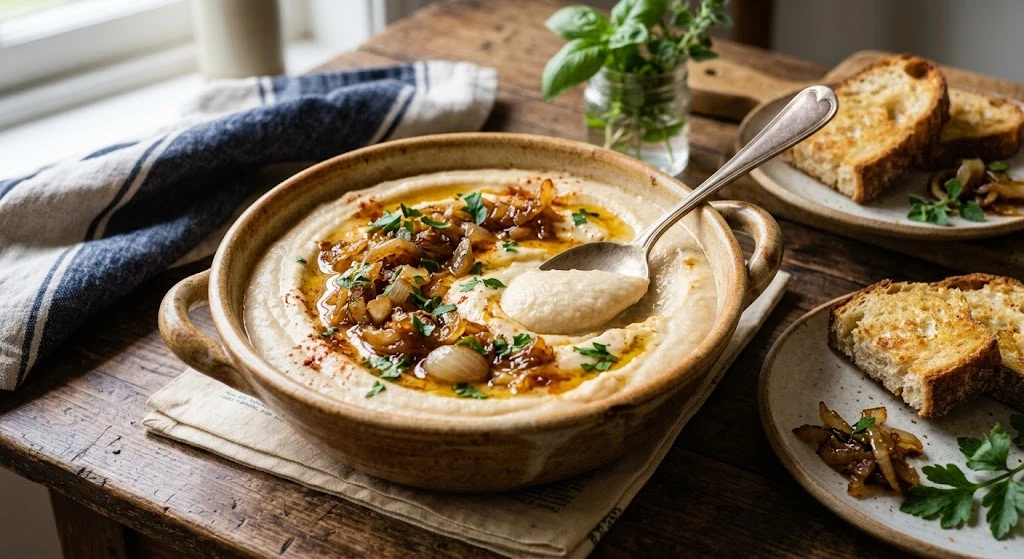
Silky Romanian white bean dip finished with sweet caramelized onions.
Ingredients
For the Bean Dip
- 3 cups cooked white beans, such as navy or cannellini
- 3–4 cloves fresh garlic, finely crushed
- ⅓ cup neutral sunflower oil, plus more if needed
- ½ teaspoon salt, or to taste
- ¼–½ cup reserved bean cooking liquid, as needed
For the Caramelized Onions
- 2 medium yellow onions, thinly sliced
- 2 tablespoons sunflower oil
- Pinch of salt
To Serve
- Rustic bread or toasted sourdough
- Romanian-style pickles
- Optional fresh herbs or paprika for a modern finish
Instructions
If starting with dried beans, cook them thoroughly until completely tender before making the dip. Store prepared fasole bătută promptly in the refrigerator and keep it refrigerated rather than leaving it at room temperature for extended periods.
What Is Fasole Bătută?
Fasole Bătută, also written as fasole batuta, is a traditional Romanian white bean dip made by crushing or blending cooked white beans with garlic, oil, and salt until smooth.
The name reflects the preparation. Bătută can be understood as “beaten” or “whipped,” while names such as frecată and făcăluită refer to beans being rubbed, ground, or mashed. Whatever regional name is used, the result is the same basic idea: a humble bean dish transformed into a creamy, savory spread.
Why It Is Different From Hummus
Although both dishes are creamy bean spreads, fasole bătută is not simply Romanian hummus. Traditional fasole bătută uses white beans, garlic, and neutral oil rather than chickpeas and tahini. Its flavor is more directly bean-forward, garlicky, and rustic.
The classic version is also frequently finished with sweet caramelized onions, an element that gives the dish its distinctive Romanian character.
Spread fasole bătută over fresh country bread, spoon warm caramelized onions over the top, and serve alongside pickles. It can be enjoyed cold or at room temperature.
The History & Cultural Roots of Fasole Bătută
Romanian Peasant Food
Beans have long been valued as an affordable, filling ingredient in Romanian cooking. Their ability to be stored and cooked in large quantities made them especially practical for family meals and colder months. Fasole bătută grew from this tradition of turning inexpensive pantry ingredients into deeply satisfying food.
Orthodox Fasting Traditions
Romanian Orthodox fasting traditions often avoid meat and dairy during designated fasting periods. Because traditional fasole bătută is made without animal products, it naturally fits into a Romanian fasting menu and is commonly associated with mâncare de post.
Regional Character
Transylvanian Style
Often associated with a more pronounced garlic flavor and a hearty consistency.
Moldavian Style
Often described as especially smooth and creamy, with the beans blended thoroughly.
Wallachian Influence
Generous amounts of golden or caramelized onion are especially appealing in this style of serving.
The Common Thread
Across variations, the foundation remains beans, garlic, oil, salt, and a creamy texture.
Traditional Romanian Ingredients Explained
The ingredient list for fasole batuta is short, but each ingredient has a specific job. Choosing creamy beans, properly preparing the garlic, and adding oil gradually are the keys to a successful white bean puree.
Best White Beans to Use
| Bean | Texture | Best Use |
|---|---|---|
| Navy beans | Small, tender, creamy | A classic choice for a traditional-style preparation |
| Cannellini beans | Larger and especially creamy | Excellent for a silky, smooth dip |
Dried vs. Canned Beans
Dried Beans
- Excellent depth of flavor
- Very soft texture when fully cooked
- Ideal for a traditional preparation
- Provides flavorful cooking liquid for thinning
Canned Beans
- Much faster and convenient
- Rinse and drain before blending
- Choose low-sodium when preferred
- Add water or unsalted bean liquid to adjust texture
Garlic Preparation
Garlic provides the signature savory bite. Raw garlic gives the strongest, most pungent character, while briefly sautéing or roasting the garlic produces a sweeter, gentler result.
Crush the garlic into a fine paste with a little salt before blending. This distributes the garlic evenly and prevents unpleasant pieces from remaining in the finished dip.
Why Sunflower Oil Is Traditionally Used
Sunflower oil is prized for its relatively neutral flavor, allowing the beans and garlic to remain the focus. Adding it gradually while blending also helps create the characteristic creamy texture.
The Role of Caramelized Onions
Golden onions provide sweetness and depth that balance the savory beans and pungent garlic. For fasole bătută cu ceapă călită, the onion topping is more than decoration: it creates the signature contrast between creamy beans and sweet, soft onions.
The Secret to Perfectly Creamy Fasole Bătută
The defining characteristic of excellent fasole bătută is its texture. It should be smooth, fluffy, creamy, and spreadable rather than grainy, dry, or greasy.
1. Fully Cook the Beans
Beans that are only partially cooked will not break down properly during blending. Cook them until they are completely tender and easily crushed between your fingers or with a spoon.
2. Blend While Slightly Warm
Slightly warm beans are generally easier to blend into a smooth puree. Avoid working with beans that have become completely cold and firm if you are aiming for an especially silky texture.
3. Add Oil Gradually
Slowly incorporating oil allows it to disperse throughout the bean mixture rather than pooling on top. If you add too much oil too quickly, the finished dip can become greasy or separated.
4. Remove the Skins for an Extra-Smooth Finish
Removing bean skins is optional. For a very fine texture, gently rub fully cooked beans in water and remove loose skins that float to the surface. This can produce a particularly refined puree.
Immersion Blender vs. Food Processor
| Method | Result | Best For |
|---|---|---|
| Immersion blender | Light and fluffy | Small batches and a smooth spread |
| Food processor | Dense and very smooth | Larger batches and fast processing |
Too thick? Add reserved bean liquid one tablespoon at a time. Too grainy? Make sure the beans are fully tender, then re-blend while slightly warm. Too oily? Continue blending to help the mixture come back together.
Common Fasole Bătută Mistakes & How to Fix Them
Too Thick
Add 1–2 tablespoons of reserved bean liquid at a time and blend until the consistency becomes smooth and spreadable.
Too Watery
Blend in additional cooked beans until the dip reaches the desired consistency.
Strong or Bitter Garlic
Use less raw garlic next time or briefly sauté or roast it first for a milder flavor.
Oily Texture
The oil may have been added too quickly. Blend longer and incorporate future oil additions more slowly.
Bland Flavor
Taste for salt first. A small amount of lemon juice can also provide a modern touch of acidity.
Grainy Texture
The most common causes are undercooked beans, cold beans, or insufficient blending.
Fasole Bătută vs. Hummus: What’s the Difference?
Both are creamy bean-based spreads, but their ingredients, culinary traditions, and flavor profiles are distinctly different.
| Feature | Fasole Bătută | Hummus |
|---|---|---|
| Main ingredient | White beans | Chickpeas |
| Primary fat | Traditionally sunflower oil | Typically tahini, often with olive oil |
| Flavor | Mild, garlicky, bean-forward | Nutty, savory, often tangy |
| Culinary tradition | Romanian cuisine | Middle Eastern cuisine |
| Classic topping | Caramelized onions | Olive oil, spices, herbs, or other garnishes |
| Tahini | Not traditionally used | Core ingredient in classic hummus |
The biggest takeaway is simple: fasole bătută has its own identity. Its creamy white beans, garlic, sunflower oil, and caramelized onion topping give it a flavor and cultural character all its own.
Authentic & Modern Fasole Bătută Variations
Smoked Paprika
A small sprinkle adds warmth and smokiness. This is best treated as a modern variation rather than an essential traditional ingredient.
Roasted Garlic
Roasted garlic creates a sweeter, softer flavor and is ideal if raw garlic tastes too intense.
Oil-Light Version
Reduce the oil and use more bean cooking liquid. The result remains creamy but has a lighter mouthfeel.
Crispy Onions
Replace soft caramelized onions with crispy fried onions when you want a stronger textural contrast.
Is Fasole Bătută Healthy?
Fasole bătută can be a nutritious plant-based spread because its foundation is white beans, which provide protein, carbohydrates, fiber, vitamins, and minerals. The nutritional profile will vary depending on the amount of oil and the foods served alongside it.
Plant Protein
White beans contribute plant protein, making this a satisfying option for vegetarian and vegan meals.
Dietary Fiber
Beans are naturally rich in dietary fiber, which supports digestive health and contributes to satiety.
Naturally Gluten-Free
The traditional dip contains no wheat or flour. Choose certified gluten-free accompaniments if required.
Healthy Fats
Oil contributes fat and calories, so the final nutritional profile depends partly on how much is added.
What to Serve With Fasole Bătută
Traditional Pairings
Rustic Bread
Thick slices of fresh country-style bread are one of the simplest traditional pairings.
Pickles
Pickled cucumbers or cabbage add acidity and crunch that balance the creamy beans.
Zacuscă
This roasted vegetable spread complements the mild, savory flavor of the bean dip.
Non-Fasting Meal
Outside fasting periods, it can accompany heartier dishes such as smoked sausages.
Modern Serving Ideas
- Spread it on toasted sourdough for a quick lunch.
- Serve it as a party dip with vegetables and crackers.
- Use it as a protein-rich alternative to mayonnaise in sandwiches.
- Add it to a rustic mezze-style platter with olives and roasted vegetables.
Storage, Freezing & Meal Prep Guide
| Storage Method | Recommendation | Texture Tip |
|---|---|---|
| Refrigerator | Store in an airtight container for about 3–4 days. | Stir before serving. |
| Freezer | Freeze in a suitable airtight container for up to about 2 months. | Leave expansion space and thaw in the refrigerator. |
| After thawing | Mix thoroughly before serving. | Add a small amount of water or bean liquid if it has thickened. |
Refrigerate the dip promptly after preparation or serving. Do not rely on room-temperature storage for keeping the finished bean dip safe for extended periods. When in doubt, discard food that has been left out too long or shows signs of spoilage.
Frequently Asked Questions About Fasole Bătută
Is fasole batuta vegan?
Yes. Traditional fasole bătută is naturally vegan, using white beans, garlic, sunflower oil, and salt. It is also commonly served during Romanian Orthodox fasting periods.
Can I use canned beans?
Yes. Canned navy or cannellini beans are a convenient shortcut. Drain and rinse them thoroughly, then blend until creamy. Dried beans can provide a deeper flavor and flavorful cooking liquid.
Why is my fasole bătută grainy?
Graininess usually means the beans were not cooked until completely tender, the beans were too cold, or the mixture was not blended sufficiently. Fully soften the beans and blend while they are slightly warm.
How long does fasole bătută last?
Properly refrigerated in an airtight container, it is best used within approximately 3–4 days.
Can I freeze fasole bătută?
Yes. Freeze it in a freezer-safe airtight container for up to about 2 months. Thaw it in the refrigerator and stir thoroughly before serving.
Can I make fasole bătută without oil?
Yes, although the texture will be different. Oil contributes richness and helps create the classic creamy consistency. Replace some of the oil with reserved bean liquid for a lighter version.
What does fasole bătută mean?
The word bătută refers to the beans being beaten, mashed, or whipped into a smooth preparation. Related regional names describe similar methods of crushing or grinding the beans.
What is fasole frecată?
Fasole frecată is a regional name associated with the same general Romanian preparation of cooked beans mashed or worked into a smooth, creamy spread.
Why Fasole Bătută Remains a Romanian Classic
Fasole Bătută proves that extraordinary comfort food does not require a long ingredient list. Tender white beans, pungent garlic, neutral sunflower oil, and sweet onions create a dish that is humble, creamy, filling, and deeply satisfying.
Its connection to Romanian home cooking and fasting traditions gives it a meaning that goes beyond the plate. It is the kind of recipe that can remind people of family kitchens, shared meals, countryside cooking, and generations of practical home cooks.
Whether you serve it as a traditional Romanian fasting dish, a party dip, a toast spread, or a simple plant-based lunch, the combination of silky beans, bold garlic, and golden caramelized onions makes fasole bătută a classic worth making.
Read More :