Learn how to make authentic mutabal with deeply charred eggplant, creamy tahini, fresh lemon, garlic, and extra virgin olive oil. This smoky Middle Eastern eggplant dip is silky, flavorful, naturally vegan, and perfect for a traditional mezze spread.
What Is Mutabal? — Quick Answer
Mutabal is a traditional Middle Eastern eggplant dip made from smoky roasted eggplant, tahini, garlic, lemon juice, olive oil, and salt. It is typically smoother, creamier, and more tahini-forward than baba ganoush. The signature flavor comes from properly charred eggplant combined with a balanced amount of sesame tahini.
What Makes Authentic Mutabal Different?
The heart of a great mutabal recipe is simplicity. Roasted eggplant provides smoky depth, while tahini contributes richness and a nutty sesame character. Garlic adds warmth, lemon provides acidity, and olive oil rounds everything out.
Core Ingredients
- Roasted eggplant — the smoky foundation.
- Tahini — creates richness and the signature creamy body.
- Fresh garlic — adds savory sharpness.
- Fresh lemon juice — balances richness and brightens the dip.
- Extra virgin olive oil — adds silkiness and fruity depth.
- Salt — brings the flavors into balance.
Texture Identity
Authentic mutabal should be smooth, creamy, and slightly fluffy. It should never be watery or excessively heavy. Hand-mashing produces a slightly rustic texture, while careful processing creates a smoother restaurant-style finish.
Why Is Mutabal Smoother Than Baba Ganoush?
The biggest distinction is the role of tahini. Mutabal generally emphasizes tahini and creamy texture, while baba ganoush can feature more herbs, vegetables, and other additions. The result is a richer and more unified sesame- eggplant flavor in mutabal.
Key Takeaway
For a rich, creamy, smoky eggplant dip, mutabal is the better choice. For a lighter, more herb-forward eggplant dip, baba ganoush may be preferable.
The Levantine Roots of Mutabal
Mutabal is deeply associated with the Levant, particularly Lebanon, Syria, Palestine, and Jordan. Preparation varies between households, but the central idea remains the same: charred eggplant combined with tahini.
Regional Styles
- Lebanese: often very smooth with generous tahini.
- Syrian: may emphasize garlic and deep smoky roasting.
- Palestinian: some family versions include yogurt.
- Jordanian: may emphasize strong smoky flavor from roasting.
Mutabal, Moutabal, or Mutabbal?
You may see mutabal, moutabal, or mutabbal. These spellings are English transliterations of an Arabic name. The spelling varies, but the dish generally refers to a creamy roasted eggplant preparation associated with the Levant.
Mutabal vs Baba Ganoush: What Is the Real Difference?
| Feature | Mutabal | Baba Ganoush |
|---|---|---|
| Tahini | Usually a prominent ingredient | Often less dominant |
| Texture | Smooth and creamy | Often more textured |
| Flavor | Rich, nutty, smoky | Lighter and often more herb-forward |
| Add-ins | Simple eggplant-tahini base | May include parsley, onion, tomato, or other additions |
Ingredients Explained: Why Each One Matters
Eggplant
Choose large globe eggplants that feel firm and heavy for their size, with shiny skin and no soft spots. They provide plenty of flesh and develop excellent flavor when charred.
Tahini
Tahini provides the distinctive nutty richness of mutabal. Use smooth, pourable tahini and stir it thoroughly before measuring because natural oil separation is normal.
Garlic
Use 1–2 small fresh cloves. For a gentler garlic flavor, mash the garlic with lemon juice before incorporating it into the dip.
Lemon Juice
Fresh lemon juice balances tahini and roasted eggplant. Add it gradually so the finished dip has a gentle tang rather than a sharp sourness.
Extra Virgin Olive Oil
Good olive oil contributes fruity depth and a silky mouthfeel. Save some for the traditional finishing drizzle.
Optional Yogurt
Some regional or family versions use yogurt for extra tang and creaminess. However, yogurt is not required for a classic vegan-style mutabal.
Ingredient Substitutions & Customization
| Ingredient | Traditional | Possible Substitute | Expected Result |
|---|---|---|---|
| Eggplant | Globe eggplant | Italian eggplant | Slightly sweeter flavor |
| Tahini | Pure sesame paste | Sunflower seed butter | Milder and less traditional |
| Garlic | Fresh raw garlic | Roasted garlic | Softer, sweeter flavor |
| Lemon | Fresh lemon juice | Lime juice | Sharper acidity |
| Olive oil | Extra virgin olive oil | Light olive oil | Less fruity depth |
| Yogurt | Optional plain yogurt | Greek yogurt | Thicker and tangier |
How to Roast Eggplant for Maximum Smokiness
The most important flavor-building step is proper charring. Softening the eggplant is not enough; direct high heat helps create the smoky character that makes mutabal special.
1. Direct Flame — Most Traditional
Place whole eggplants over a gas flame and turn them regularly until the skin is deeply blackened and the flesh is completely soft. The charred exterior is expected and contributes to the smoky flavor.
2. Charcoal Grill
Charcoal provides exceptionally deep roasted aromas. Turn the eggplants until the skin is blackened and the interior collapses into a very soft texture.
3. Oven Broiler
A high broiler is a practical alternative. Place eggplants close to the heat source and turn them every few minutes until the skin blisters and blackens.
4. Air Fryer
An air fryer is convenient for softening eggplant, but it generally produces less authentic smokiness than flame or charcoal.
How to Char the Skin Properly
- Keep the eggplant whole while roasting.
- Do not wrap it in foil when seeking a deeply charred exterior.
- Allow the skin to become thoroughly blackened.
- Let the roasted juices drain naturally.
The Perfect Tahini-to-Eggplant Ratio
A reliable starting point is about 2 large eggplants, yielding roughly 2 cups mashed pulp, to ¼–⅓ cup tahini. Add lemon juice, garlic, and salt gradually according to the moisture and flavor of your eggplant.
| If Your Mutabal Is… | Try This |
|---|---|
| Too thick | Add warm water or olive oil one tablespoon at a time. |
| Too thin | Add tahini gradually and allow the mixture to rest. |
| Too bitter | Try lemon, salt, olive oil, and additional eggplant in small amounts. |
| Too tahini-heavy | Add more mashed roasted eggplant. |
Step-by-Step Authentic Mutabal Method
Roast
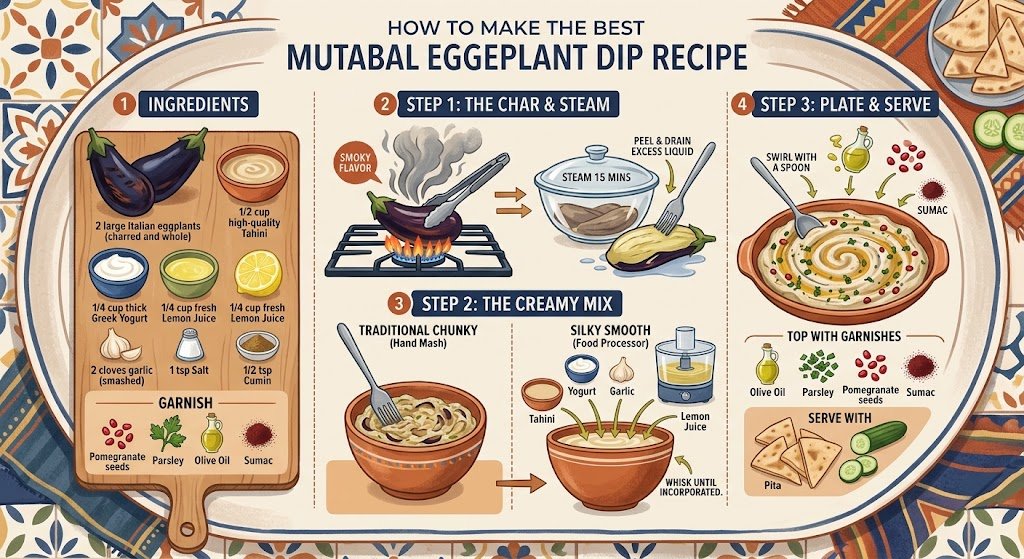
Char the eggplants using flame, grill, or broiler until the skin is deeply blackened and the flesh is completely soft.
Rest & Drain
Let the eggplant cool enough to handle, then open it and allow excess liquid to drain for several minutes. This is one of the easiest ways to prevent watery mutabal.
Peel
Remove the burnt skin gently. Do not rinse the flesh, because washing can remove some of the smoky flavor. A few tiny charred pieces are perfectly acceptable.
Mash
Hand-mash the eggplant for a traditional, slightly rustic texture. A food processor can create an ultra-smooth dip, but process only until combined.
Combine
Mix in tahini, garlic, lemon juice, olive oil, and salt. Add tahini and lemon gradually so you can control both flavor and texture.
Taste & Finish
Adjust lemon for brightness, tahini for richness, and salt for balance. Finish with olive oil and your preferred garnish.
Authentic Mutabal Recipe Card
Ingredients
- 2 large eggplants
- ¼–⅓ cup tahini
- 1–2 tbsp fresh lemon juice
- 1–2 small garlic cloves
- Salt, to taste
- Extra virgin olive oil, for mixing and serving
- Optional: parsley, paprika, or sumac for garnish
- Optional: a spoonful of yogurt for a non-vegan variation
Method
- Char whole eggplants until the skin is blackened and the flesh is very soft.
- Cool slightly, split open, and drain excess liquid.
- Remove the skin without rinsing the smoky flesh.
- Mash the eggplant by hand or process briefly.
- Gradually mix in tahini, lemon, garlic, olive oil, and salt.
- Taste and adjust the balance.
- Spread into a shallow bowl and finish with olive oil and garnish.
Texture Mastery: Smooth vs Rustic Mutabal
| Method | Texture | Advantages | Potential Problem |
|---|---|---|---|
| Hand mashed | Slightly rustic and creamy | Traditional; preserves texture and smoky character | Less silky |
| Food processor | Very smooth | Fast and restaurant-style | Can become loose if over-processed |
Why Over-Processing Is a Problem
Processing the eggplant for too long can make the mixture excessively loose. Stop as soon as the ingredients are incorporated and the desired consistency is reached.
Moisture Removal
- Let the roasted eggplant rest.
- Drain excess liquid.
- Lightly squeeze the pulp if it is exceptionally wet.
- Never rinse away the smoky flesh.
Why Tahini and Lemon Create Creaminess
Tahini contributes body and fat, while lemon juice helps create a thicker, emulsified texture when incorporated gradually. Olive oil adds additional richness and silkiness.
Common Mistakes That Ruin Mutabal
Too Much Tahini
Excess tahini can make the dip heavy and may overpower the smoky eggplant. Add it gradually and taste as you go.
Under-Roasting
Pale, lightly cooked eggplant will not deliver the deep smoky character expected from an authentic mutabal.
Skipping Salt
Salt brings together smoky eggplant, sesame, garlic, and lemon. An under-salted dip can taste surprisingly flat.
Watery Texture
Excess moisture, too much lemon, or over-processing can turn creamy mutabal into a thin dip. Proper draining is the easiest prevention.
Bitter Tahini
If the tahini itself tastes unpleasantly bitter or stale, it can dominate the final dip. Choose fresh, smooth tahini and taste it before using.
Mutabal Troubleshooting Guide
| Problem | Possible Cause | Fix |
|---|---|---|
| Too bitter | Tahini, seasoning, or eggplant flavor | Add small amounts of lemon, salt, olive oil, and/or eggplant. |
| Too thin | Excess moisture or lemon | Add tahini and allow the dip to rest. |
| Too thick | Too much tahini or low moisture | Add warm water or olive oil gradually. |
| Too garlicky | Too much raw garlic | Add eggplant, tahini, or a little olive oil. |
| Too sour | Excess lemon juice | Add eggplant, tahini, and a small pinch of salt. |
Is Mutabal Healthy?
Mutabal is made from relatively simple, minimally processed ingredients and can fit comfortably into many balanced eating patterns.
Vegan
The basic combination of eggplant, tahini, garlic, lemon, and olive oil is vegan. Omit yogurt when making a vegan version.
Gluten-Free
The dip itself contains no wheat or flour. Check packaged ingredients and choose suitable accompaniments when preparing a completely gluten-free meal.
Fiber
Eggplant contributes dietary fiber, while tahini and olive oil contribute fats that make the dip satisfying.
Healthy Fats
Sesame tahini and olive oil provide predominantly unsaturated fats, making mutabal a flavorful alternative to many heavier creamy dips.
Restaurant-Style vs Homemade Mutabal
Oil Drizzle
Save some extra virgin olive oil for the top rather than mixing every drop into the dip. The finishing drizzle creates the classic glossy mezze presentation.
Garnish
Try paprika, sumac, fresh parsley, or a few drops of olive oil. Keep the garnish restrained so it does not overpower the eggplant and tahini.
Presentation
Spread the mutabal into a shallow bowl, use the back of a spoon to create a gentle swirl, then add the olive oil and garnish.
5 Delicious Ways to Serve Mutabal
1. Mezze Platter
Serve with hummus, olives, vegetables, and warm pita for a classic spread.
2. Sandwich Spread
Use smoky mutabal instead of mayonnaise with grilled vegetables or chicken.
3. Wrap Filling
Add it to falafel or grilled-meat wraps for richness and smoky flavor.
4. Breakfast Toast
Spread onto toast and top with tomatoes or a soft-boiled egg.
5. Side for Grilled Meats
The creamy tahini-based dip works especially well with grilled chicken, lamb, and kofta.
What to Serve With Mutabal
- Warm pita bread
- Cucumber, carrots, and bell peppers
- Grilled chicken
- Kofta
- Falafel
- Olives and other mezze dishes
Its smoky, creamy, nutty flavor makes mutabal flexible enough for both vegetarian spreads and meat-centered meals.
Make-Ahead, Storage & Freezing Guide
How Long Does Mutabal Last?
For best quality, use homemade mutabal within 3–4 days when properly refrigerated. Keep it covered in an airtight container.
Does It Taste Better the Next Day?
Often, yes. Resting allows the garlic, lemon, tahini, and smoky eggplant flavors to blend. Stir before serving and adjust seasoning if necessary.
Can You Freeze Mutabal?
Mutabal can be frozen, although the texture may change slightly and the tahini and oil may separate. Freeze in an airtight freezer-safe container, thaw slowly in the refrigerator, then stir thoroughly.
Best Storage Container
Use a clean glass container with a tight-fitting lid or another suitable airtight food-storage container. Avoid leaving the dip uncovered.
How to Scale Mutabal for a Party
When making mutabal for a gathering, increase the eggplant first and then adjust tahini gradually. Because eggplants vary in size and water content, blindly doubling every ingredient can produce an unbalanced dip.
Keeping It Fresh
- Keep extra portions refrigerated.
- Do not leave the dip in direct sunlight.
- For outdoor service, keep the serving dish properly chilled.
- Add olive oil and fresh garnishes immediately before serving.
Regional Variations Across the Levant
Lebanese Style
Lebanese preparations are often very smooth, creamy, and generous with tahini.
Syrian Style
Syrian family versions may emphasize garlic and especially deep roasted eggplant flavor.
Palestinian Style
Some Palestinian household versions include yogurt for additional creaminess and tang.
Yogurt vs No Yogurt
There is no single household variation that represents every Levantine kitchen. If you want a vegan mutabal recipe, omit yogurt. If you prefer a tangier, creamier variation, a small amount can be incorporated.
Modern Mutabal Variations
Spicy Mutabal
Add finely chopped chili or red pepper flakes for extra heat.
Smoked Paprika Mutabal
A small sprinkle of smoked paprika can reinforce the roasted character and add color.
Pomegranate Molasses Mutabal
A light drizzle of pomegranate molasses creates a sweet-tangy contrast and a modern mezze presentation.
Roasted Garlic Mutabal
Replace raw garlic with roasted garlic for a sweeter, softer, less pungent flavor.
Frequently Asked Questions About Mutabal
Is mutabal served cold or warm?
Mutabal is generally served cool or at room temperature, rather than hot. Chilling it briefly allows the flavors to meld before serving.
Can I make mutabal without tahini?
You can make an eggplant dip without tahini, but it will no longer have the characteristic creamy, nutty profile associated with classic mutabal.
Why is my mutabal bitter?
Bitter tahini is one possible cause. Strong eggplant flavors, insufficient seasoning, or an imbalance of ingredients can also contribute. Add small amounts of lemon, salt, olive oil, or additional eggplant to rebalance it.
What eggplant works best?
Large globe eggplants are a practical choice because they provide plenty of flesh and roast well. Choose firm, heavy eggplants with healthy-looking skin.
Can I freeze mutabal?
Yes. Freeze it in an airtight container and thaw it gradually in the refrigerator. Stir thoroughly after thawing because the texture may separate slightly.
How do you pronounce mutabal?
A common English approximation is “moo-tah-BAL.” You may also encounter the spellings moutabal and mutabbal.
Final Thoughts: Make the Best Authentic Mutabal at Home
Mutabal is a beautiful example of how a handful of simple ingredients can create an exceptionally flavorful dish. Deeply charred eggplant, creamy tahini, fresh lemon, garlic, and olive oil come together to create a smoky, creamy Middle Eastern eggplant dip that belongs on any mezze table.
The three most important techniques are:
- Char the eggplant thoroughly for deep smoky flavor.
- Add tahini gradually to control richness and texture.
- Drain excess eggplant moisture to prevent a watery dip.
Master those three details and you can make a beautifully balanced authentic mutabal recipe at home — creamy, smoky, nutty, bright, and perfect with warm pita or a complete Levantine mezze spread.
Read More :