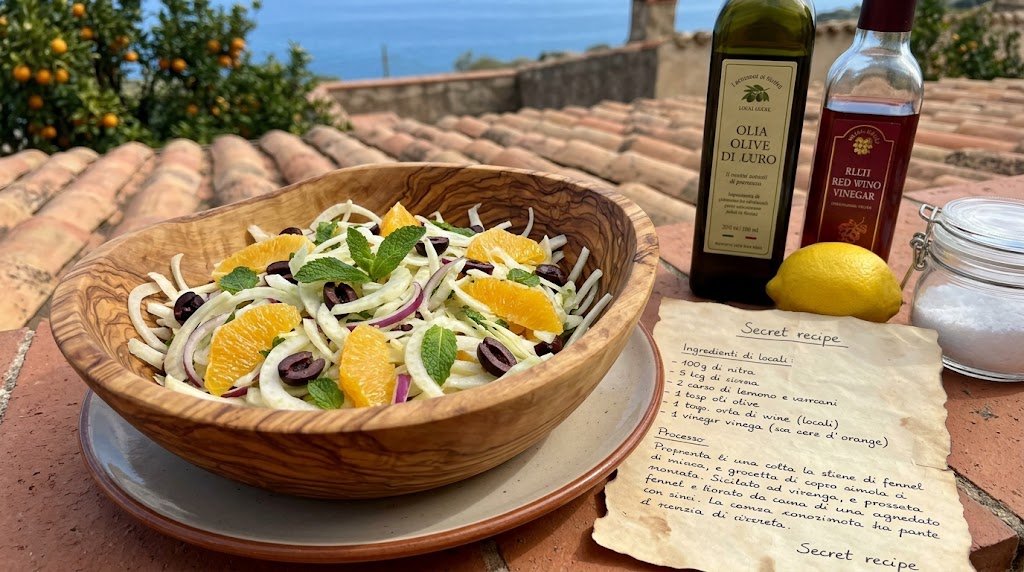
Crisp raw fennel, juicy orange segments, fruity extra virgin olive oil, and a touch of salt come together in this refreshing Sicilian fennel and orange salad inspired by Insalata di Finocchi e Arance.
Quick Answer
Sicilian Fennel and Orange Salad, known as Insalata di Finocchi e Arance, is a classic Sicilian-inspired winter salad made with thinly sliced raw fennel, sweet oranges, extra virgin olive oil, and salt. Black olives, mint, pistachios, or other Mediterranean ingredients can be added depending on the variation.
The secret is simple: slice the fennel very thin, use sweet and juicy citrus, choose a flavorful extra virgin olive oil, and let the assembled salad rest for about 10–15 minutes before serving. The result is crisp, juicy, naturally vegan, gluten-free, and wonderfully refreshing.
Why You’ll Love This Sicilian Fennel and Orange Salad
Ready in About 10 Minutes
This is a true no-cook Italian salad. Once the fennel and oranges are prepared, everything comes together quickly.
Bright Mediterranean Flavor
Crisp fennel, sweet citrus, fruity olive oil, and a little salt create an exceptionally clean and balanced flavor profile.
Naturally Vegan & Gluten-Free
The basic salad relies on vegetables, fruit, olive oil, and seasoning, making it naturally suitable for many dietary styles.
Perfect for Winter
The combination celebrates winter citrus and crisp fennel while bringing brightness to heavier cold-weather meals.
What Is Sicilian Fennel and Orange Salad?
Sicilian fennel and orange salad, known in Italian as Insalata di Finocchi e Arance, is a simple Mediterranean salad built around thinly sliced raw fennel and sweet orange segments.
A classic preparation can include extra virgin olive oil, salt, black olives, and fresh mint. The combination is crisp, juicy, slightly aromatic, and refreshing.
A Seasonal Sicilian Combination
Fennel and citrus are a natural pairing: fennel contributes crunch and a mild anise-like aroma, while oranges contribute sweetness, juice, and acidity. Together they create a salad that feels both rustic and elegant.
Unlike heavy winter dishes, this Sicilian winter citrus salad celebrates fresh seasonal ingredients and the Mediterranean tradition of keeping food simple.
The Cultural Roots – Why This Salad Is Truly Sicilian
Sicily has a strong agricultural tradition centered around citrus, vegetables, herbs, and olive oil. Oranges, lemons, and mandarins are closely associated with the island’s food culture, while fennel is widely used in Southern Italian cooking.
Sicilian cuisine also reflects centuries of Mediterranean cultural exchange. Arab influence played an important role in shaping the island’s ingredients, agriculture, and characteristic sweet-and-savory combinations.
This salad reflects the broader Mediterranean seasonal cooking philosophy: use fresh ingredients when they are naturally available and let their flavors remain visible.
Seasonal Cooking at Its Simplest
Crisp fennel and fragrant winter citrus need very little manipulation. That simplicity is part of what makes this salad so appealing.
Ingredient Breakdown, Substitutions & Pro Tips
Choosing the Best Fennel Bulb
For the best raw fennel salad, look for bulbs that are:
- Firm and heavy for their size
- Pale white or light green
- Free from major brown spots or cracks
- Finished with fresh-looking green fronds
Avoid fennel that feels soft, dry, or excessively blemished. Trim the base and remove any tough outer layer. For a more delicate salad, halve the bulb and remove the thick inner core before slicing.
Best Oranges to Use
| Orange | Flavor & Appearance | Best For |
|---|---|---|
| Blood oranges | Sweet, aromatic, berry-like notes and striking color | A classic Sicilian-inspired presentation |
| Navel oranges | Sweet, juicy, and widely available | Everyday preparation |
| Cara Cara oranges | Naturally sweet with pinkish flesh | A colorful modern variation |
| Pink grapefruit | More tart and pleasantly bitter | A modern, bolder interpretation |
Olive Oil & Seasoning
Since this is a no-cook Italian salad, ingredient quality matters. Choose a good extra virgin olive oil with a fruity, balanced flavor. A little sea salt enhances the citrus, while freshly cracked black pepper can add gentle heat.
Optional Traditional-Style Additions
Black or Kalamata Olives
Add salty depth that contrasts with sweet oranges.
Pistachios
Provide crunch and a distinctly Sicilian-inspired touch.
Pine Nuts
Add a delicate buttery crunch.
Fresh Mint
Brings a cool, aromatic finish.
Red Onion
Provides sharpness and additional color.
Anchovies
Add savory depth for a non-vegetarian variation.
Ingredient Substitutions
Flexible Swaps
- Mix fennel with thinly sliced celery if you want a milder flavor.
- Add arugula for peppery greens.
- Use shaved cabbage when you want extra crunch.
- Skip nuts completely for a nut-free version.
- Use fewer olives for a lower-sodium variation.
What Does Fennel Taste Like? A Beginner Guide
Yes, you can absolutely eat fennel raw in salad. Raw fennel has a crisp texture and a mild anise or licorice-like aroma, but the flavor is much more delicate than many beginners expect.
| Preparation | Texture | Flavor |
|---|---|---|
| Raw fennel | Crisp and crunchy | Fresh, aromatic, lightly sweet |
| Cooked fennel | Soft and tender | Sweeter and less sharp |
If fennel tastes too strong, slice it very thinly, add a small pinch of salt, let it rest briefly, and pair it with sweet orange segments.
How to Make Sicilian Fennel and Orange Salad
Slice the Fennel Very Thin
For the best texture, slice the fennel bulb as thinly as possible. Thin slices make the vegetable more delicate and allow it to blend naturally with the oranges.
For an optional texture adjustment, toss the sliced fennel with a small pinch of salt and let it rest for about 5 minutes.
Choose a Knife or Mandoline
A sharp knife gives you excellent control and allows slightly thicker slices. A mandoline produces especially thin and even slices.
Mandoline Safety
Always use the manufacturer’s hand guard or another appropriate protective method when slicing with a mandoline.
Segment the Oranges
Cut away the top and bottom of each orange. Remove the peel and as much white pith as practical, then cut between the membranes to release clean orange segments.
Combine the Ingredients
Arrange the fennel and orange segments in a serving bowl. Add your chosen extra virgin olive oil, salt, and optional olives, mint, pistachios, or black pepper.
Rest Before Serving
Let the finished salad rest for approximately 10–15 minutes. This allows citrus juices and olive oil to mingle while the fennel softens slightly.
Flavor Science – Why Fennel and Orange Work So Well Together
Sweet + Aromatic
Fennel’s light anise aroma is softened by the natural sweetness and juiciness of oranges.
Bitterness + Acidity
Citrus acidity provides contrast and helps make fennel’s mild bitterness feel more balanced.
Olive Oil’s Role
Fruity extra virgin olive oil adds richness and connects the sweet, aromatic, and savory elements.
Salt Enhances Sweetness
A modest amount of salt can make the oranges taste sweeter while bringing the fennel’s flavor into sharper focus.
Is Sicilian Fennel and Orange Salad Healthy?
This Sicilian fennel and orange salad is a fresh, vegetable-and-fruit-based dish that fits naturally into a Mediterranean-style eating pattern.
Mediterranean Diet Friendly
The basic preparation emphasizes vegetables, fruit, olive oil, and simple seasoning.
Light & Fresh
A typical serving can be relatively light in calories, with the exact amount depending largely on how much olive oil and optional ingredients are used.
Fiber
Both fennel and oranges contribute dietary fiber, helping make the salad more satisfying.
Vegan & Gluten-Free
The basic recipe is naturally vegan and gluten-free when all optional additions meet those requirements.
A Note About the Calorie Estimate
The original recipe description estimates roughly 120–160 calories per serving. Actual nutrition will vary according to portion size, orange size, olive oil quantity, and optional additions.
Make-Ahead, Storage & Meal Prep Guide
How Far in Advance Can You Prep It?
The fennel can be sliced and the oranges segmented up to about 24 hours ahead. For the best texture, keep them separate in airtight containers until closer to serving.
When Should You Add the Dressing?
Add extra virgin olive oil and salt about 10–15 minutes before serving. This helps preserve the crisp texture of the fennel.
How to Prevent a Watery Salad
- Drain excess orange juice before assembling.
- Avoid salting the salad too far in advance.
- Do not leave the fully dressed salad sitting for several hours.
- Serve relatively soon after the brief resting period.
Best Storage Window
Store leftovers in an airtight container in the refrigerator. The salad is best eaten the same day, although it can remain usable for about 24 hours with some loss of crispness.
Seasonal & Modern Variations
Classic Traditional-Style
Keep it simple with thinly sliced fennel, sweet seasonal oranges, extra virgin olive oil, salt, and optionally a few black olives.
Olives & Pistachios
Add salty olives and crunchy pistachios for a richer salad that works especially well for entertaining.
Arugula Version
Add fresh arugula for a peppery element and a more substantial lunch-style salad.
Mint-Heavy Summer Version
Increase fresh mint and add lemon zest for a lighter, cooling variation.
Grapefruit Twist
Replace some or all of the oranges with pink grapefruit for a more tart and bitter flavor profile.
Protein-Boosted Salad
Add grilled shrimp, roasted chicken, or seared white fish to turn the salad into a more complete meal.
What to Serve With Sicilian Fennel and Orange Salad
Grilled Fish
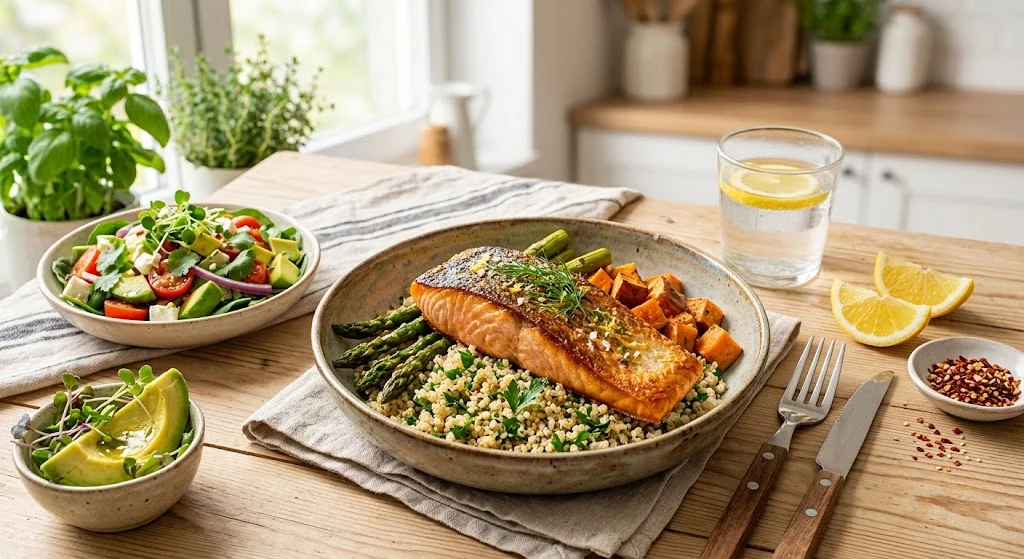
Sea bass, salmon, and branzino pair beautifully with the citrusy freshness of the salad.
Roasted Chicken
The crisp salad provides a refreshing contrast to warm roasted chicken and herbs.
Seafood Pasta
Serve alongside a light seafood pasta to refresh the palate between bites.
Italian Holiday Menus
Its bright color and fresh flavor make it an excellent counterpoint to richer holiday foods.
Mediterranean Mezze Board
Pair it with olives, cheeses, hummus, and grilled vegetables for a colorful Mediterranean spread.
Light Lunch
Add arugula, pistachios, shrimp, or another protein to make it more filling.
Common Mistakes to Avoid
1. Slicing Fennel Too Thick
Thick pieces can feel chewy and make the anise flavor more prominent. Thin slicing creates a more delicate bite.
2. Overdressing
Too much olive oil can make this otherwise light salad feel greasy. Aim for a light coating.
3. Using Under-Ripe Oranges
Dry or sour citrus can throw off the sweet-and-aromatic balance. Choose juicy, ripe fruit.
4. Skipping Salt
A small amount of salt helps bring out the natural sweetness of the oranges and the flavor of the fennel.
5. Letting It Sit Too Long
A short rest improves flavor, but several hours can lead to excess liquid and softer fennel.
Troubleshooting Guide
| Problem | Likely Cause | Quick Fix |
|---|---|---|
| Too bitter | Fennel is too thick or strong | Slice thinner and add sweeter orange segments. |
| Too watery | Excess citrus juice or early seasoning | Drain excess juice and serve sooner. |
| Too acidic | Very tart citrus | Add a little more olive oil and adjust salt. |
| Too bland | Insufficient seasoning | Add a little salt, olives, or fresh mint. |
Sicilian Version vs. Modern Interpretations
Traditional Simplicity
The simplest version focuses on raw fennel, seasonal oranges, extra virgin olive oil, and salt, with olives sometimes included. The goal is to showcase the produce rather than hide it beneath a heavy dressing.
Contemporary Additions
Which Version Is Most Authentic?
If your goal is the most traditional approach, keep the ingredient list short and let fennel, citrus, olive oil, and salt lead. Additional ingredients can create delicious modern variations, but they move the dish away from the minimalist style.
The Core Rule
Modern additions are welcome, but the heart of the salad remains the same: crisp fennel + sweet citrus + quality olive oil + balanced seasoning.
Recipe Card: Sicilian Fennel and Orange Salad
A crisp, bright Mediterranean salad inspired by the classic Insalata di Finocchi e Arance.
Core Ingredients
- Fresh fennel bulb, thinly sliced
- Sweet oranges, preferably blood oranges when available
- Extra virgin olive oil
- Sea salt
- Freshly cracked black pepper, optional
Optional Additions
- Black or Kalamata olives
- Fresh mint
- Pistachios
- Pine nuts
- Thinly sliced red onion
- Arugula
Note: The source article focuses on the ingredient method rather than specifying fixed gram or cup measurements. Adjust quantities according to the number of people you’re serving and your preferred fennel-to-orange ratio.
Instructions
- Prepare the fennel: Remove damaged outer layers, trim the base, and slice the bulb very thinly.
- Prepare the oranges: Cut away the ends, remove the peel and white pith, then segment the fruit between the membranes.
- Combine: Arrange fennel and orange segments in a serving bowl. Add extra virgin olive oil, sea salt, and optional black pepper.
- Add extras: Fold in olives, mint, pistachios, arugula, or red onion if desired.
- Rest: Let the salad stand for approximately 10–15 minutes so the flavors can blend.
- Serve: Enjoy fresh as a starter, side dish, or part of a Mediterranean-style meal.
Recipe Success Tip
The most important technique is very thin fennel slicing. It makes the fennel more delicate and lets the citrus shine.
Frequently Asked Questions About Sicilian Fennel and Orange Salad
Can you eat fennel raw in salad?
Yes. Raw fennel is crisp, lightly sweet, and mildly aromatic. Thinly slicing it makes it especially good for this Sicilian salad.
What protein pairs best with fennel orange salad?
Grilled fish, shrimp, roasted chicken, and seared white fish all work beautifully. The citrus and fennel provide freshness alongside richer proteins.
Can I make this salad ahead?
Yes. Slice the fennel and segment the oranges ahead of time, but add the olive oil and salt closer to serving to preserve the best texture.
Is it traditional to add olives?
Olives are a common style of addition to fennel-and-orange salads, although the exact preparation can vary. The minimalist version can be made without them.
Is fennel orange salad good for a light diet?
It can be a light and satisfying choice because it centers on fruit and vegetables. The total calories depend largely on the amount of olive oil and optional toppings.
What oranges work best?
Blood oranges are an excellent choice for a Sicilian-inspired presentation, but navel and Cara Cara oranges are also delicious when they are sweet and juicy.
How long does fennel orange salad last in the fridge?
It is best enjoyed the same day. Properly refrigerated leftovers can remain usable for approximately 24 hours, although the fennel will gradually lose some crispness.
Final Thoughts – Why This Salad Defines Mediterranean Simplicity
The beauty of Sicilian fennel and orange salad is that it doesn’t need a complicated dressing or a long ingredient list. Crisp raw fennel, sweet orange segments, fruity extra virgin olive oil, and a little salt are enough to create something bright and memorable.
The dish captures the spirit of Mediterranean cooking: seasonal ingredients, simple preparation, natural flavor, and thoughtful balance. The contrast between aromatic fennel and sweet citrus is what makes every bite feel refreshing.
Serve it beside grilled fish, roasted chicken, seafood pasta, or a Mediterranean mezze spread, or enjoy it on its own as a light starter. Whether you keep it traditional or add pistachios, olives, mint, arugula, or grapefruit, the essential formula remains beautifully simple.
Fresh fennel + sweet citrus + quality olive oil = a timeless Sicilian-inspired salad.
Read More :