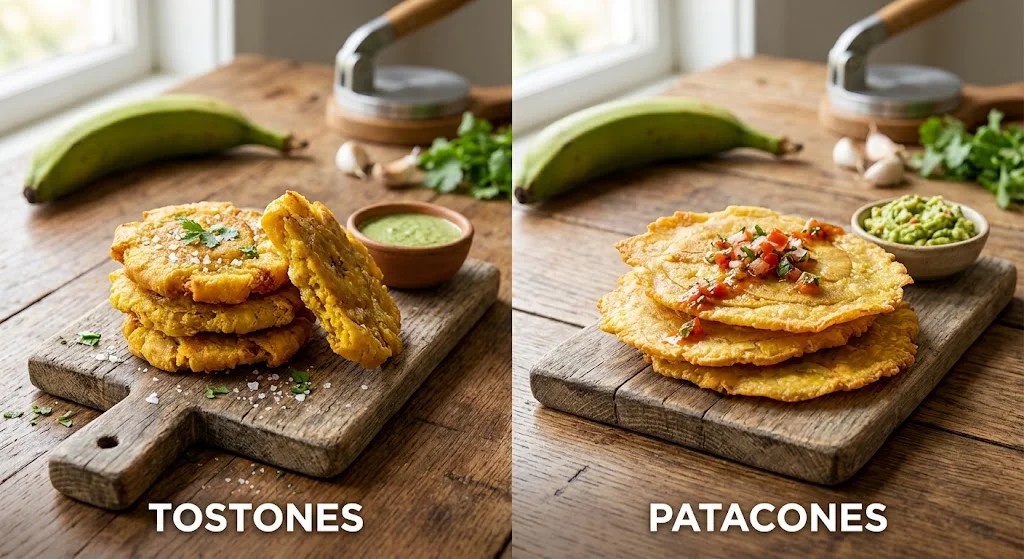
Many people search “tostones vs patacones” because they want to know the real difference between tostones and patacones. The simple answer? They are both made from green plantains and use the same twice-fried plantains method. In most cases, tostones and patacones are the same thing, just called by different names in different countries.
In the Caribbean, especially Puerto Rico, Cuba, and the Dominican Republic, they are known as tostones. In Colombia, Venezuela, and Panama, the same fried green plantains are called patacones.
The cooking method stays the same: slice unripe plantains, fry them once, press them flat, and fry again until crispy. Some regions make them slightly thicker or serve them with different toppings, but the base recipe does not change.
Quick Answer: Tostones vs Patacones
Tostones and patacones are essentially the same dish: both are made from green, unripe plantains that are fried twice and flattened to create a crispy outside and soft center. The main difference is regional naming. They are commonly called tostones in Puerto Rico, Cuba, and the Dominican Republic, while patacones is the more common name in Colombia, Venezuela, Panama, and Ecuador. Minor differences in thickness, toppings, and serving styles can vary by country.
Tostones vs Patacones at a Glance
Below is a quick comparison showing the main similarities and differences between tostones and patacones.
| Feature | Tostones | Patacones |
|---|---|---|
| Name Used In | Puerto Rico, Cuba, Dominican Republic | Colombia, Panama, Venezuela, Ecuador |
| Main Ingredient | Green plantains | Green plantains |
| Cooking Method | Twice fried | Twice fried |
| Typical Shape | Medium, flattened rounds | Often larger and thicker flattened rounds |
| Typical Serving | Side dish, appetizer, garlic sauce | Side dish, topped dish, sandwich-style base |
| Culinary Region | Caribbean cuisine | Northern South American cuisine |
What Do Tostones and Patacones Have in Common?
When comparing tostones vs patacones, the biggest truth is simple: they share the same foundation. If you are wondering, “are tostones and patacones the same thing?” — in cooking method, yes, they are almost identical.
Both dishes use unripe green plantains, not ripe or sweet ones. Green plantains are firm and high in starch, which makes them ideal for frying. The process follows a classic double-frying technique.
🌱 Green Plantains
Both dishes start with firm, unripe green plantains. Their high starch content gives the finished dish its characteristic savory texture.
🍳 First Fry
The plantain slices are fried until partially cooked and tender enough to flatten without falling apart.
🥄 Flattening
After the first fry, the plantains are pressed flat using a plate, heavy flat surface, or plantain press.
✨ Second Fry
The flattened pieces return to hot oil, creating the crispy golden exterior that defines both dishes.
The Key Differences Between Tostones and Patacones
While the basic cooking method is the same, regional traditions can create noticeable differences in size, presentation, toppings, and serving style.
- Naming differences: Tostones is especially common in the Caribbean, while patacones is widely used in parts of northern South America.
- Regional serving styles: Tostones are often served as a side dish with garlic sauce, while patacones may be used as a base for substantial toppings.
- Size and thickness: Patacones can be made larger and thicker, although this is a regional tendency rather than a strict rule.
- Toppings: Caribbean preparations are often relatively simple, while some South American preparations feature meat, cheese, avocado, vegetables, or sauces.
What Are Tostones?
Tostones are crispy slices of green plantains that are fried twice until golden and crunchy. They are made from unripe plantains, which are firm and not sweet. This produces their classic savory flavor and crisp texture.
Tostones have strong Caribbean roots and are especially popular in Puerto Rico, Cuba, and the Dominican Republic. They are commonly enjoyed as part of everyday meals and family-style cooking.
Typical Tostones Profile
- Made with green, unripe plantains
- Fried twice for maximum crispness
- Usually flattened into round pieces
- Often seasoned with salt
- Frequently paired with garlic mojo or dipping sauces
- Works well beside seafood, rice, beans, and grilled meats
What Are Patacones?
Patacones are a beloved dish made from twice-fried green plantains. The technique is fundamentally the same as the one used for tostones, although local preparation and serving traditions can differ.
Patacones are especially popular in Colombia, Venezuela, and Panama. They may be made larger and thicker, creating a hearty base for toppings.
🥑 Topped Patacones
Patacones can be topped with combinations of shredded meat, cheese, avocado, vegetables, sauces, or other regional ingredients.
🥪 Patacón-Style Sandwiches
In some preparations, large fried plantain discs can replace bread and hold substantial fillings such as shredded meat, cheese, avocado, or vegetables.
Regional Tostones & Patacones Across Latin America
Even though tostones and patacones share the same cooking method, the way they are named and served varies from place to place.
🇵🇷 Puerto Rico
Tostones are a staple of Caribbean cuisine and are often served with garlic mojo or dipping sauces alongside rice, beans, seafood, and other savory dishes.
🇨🇺 Cuba
Cuba also uses the name tostones, with the dish commonly served as a crunchy side alongside savory meals.
🇩🇴 Dominican Republic
Tostones are a familiar part of Dominican cooking and may also be referred to as fritos verdes or plátano frito.
🇨🇴 Colombia
Patacones are widely enjoyed and may be made large enough to serve as a substantial base for meats, cheese, vegetables, or other toppings.
🇻🇪 Venezuela
Patacones are enjoyed alongside local dishes and can be served with meats, cheese, sauces, or other savory toppings.
🇵🇦 Panama
Panama commonly uses the term patacones, which are often served as a savory side dish with rice, beans, or grilled foods.
🇪🇨 Ecuador
Ecuador also uses patacones. Local versions can vary in size, texture, sauces, and serving style.
🌎 Across Latin America
The core technique remains recognizable: green plantains are fried, flattened, and fried again until crisp, while local traditions determine the name and presentation.
The Science Behind Crispy Plantains
Understanding why tostones and patacones turn crispy starts with the green plantain itself. Unlike ripe plantains, unripe plantains are high in starch and lower in sugar.
This high starch content helps green plantains maintain their structure during cooking. When the slices are fried and then flattened, the increased surface area allows the second fry to develop more crispness.
The first fry cooks the interior and softens the plantain enough to flatten it. Flattening increases the surface area exposed to the hot oil. The second fry then develops the golden, crunchy exterior while leaving the center tender.
Cooking Technique Breakdown
How the Double-Fry Method Works
Making excellent tostones or patacones is primarily about controlling the first fry, flattening correctly, and finishing with a sufficiently hot second fry.
First Fry
Fry slices of green plantain until they become tender enough to press. This partially cooks the interior without fully crisping the plantain.
Press Flat
Carefully flatten each piece with a plantain press or flat plate. Aim for medium thickness so the pieces remain sturdy while developing crisp edges.
Second Fry
Return the flattened plantains to hot oil and fry until golden and crisp. A temperature around 350°F / 175°C is a useful general target.
⚠️ Hot Oil Safety
Work carefully around hot oil. Lower plantain pieces gently into the pan, avoid dropping wet food into hot oil, do not overcrowd the pan, and keep handles turned away from the edge of the stove. Never leave hot oil unattended.
Tostones vs Patacones: Taste & Texture Comparison
| Characteristic | Tostones | Patacones |
|---|---|---|
| Crispness | Very crisp, especially when thinner | Very crisp, with a heartier bite when thicker |
| Texture | Crisp exterior with a tender center | Crisp exterior with a potentially thicker center |
| Thickness | Often medium-sized rounds | Often larger or thicker pieces |
| Flavor | Savory and mildly starchy | Savory and mildly starchy |
| Common Pairings | Garlic mojo, seafood, rice, beans | Meat, cheese, avocado, vegetables, sauces |
These are tendencies rather than strict rules. A thinner patacón and a thicker tostón can have almost identical textures. Preparation matters just as much as regional naming.
Serving Styles Compared
🍽️ Side Dish
Both dishes work beautifully alongside rice, beans, seafood, grilled meats, and other savory meals.
🥣 Appetizer
Serve hot and crisp with garlic sauce, dipping sauces, or spicy salsa for an easy appetizer.
🥪 Sandwich Base
Larger patacones can be used as a bread replacement and layered with hearty fillings.
🧄 Garlic Sauce
Caribbean-style tostones are especially well suited to garlic mojo and other savory dipping sauces.
🥩 Shredded Beef
Shredded beef can turn a crispy plantain base into a more substantial meal.
🥑 Cheese & Avocado
Creamy avocado and cheese contrast nicely with the crunchy plantain surface.
Nutrition & Dietary Comparison
The nutritional profile of tostones and patacones depends heavily on portion size, oil absorption, preparation method, and toppings.
| Nutrition / Diet Factor | General Consideration |
|---|---|
| Calories | A serving of about 3–4 pieces may provide roughly 150–200 calories, depending on size and oil absorption. |
| Carbohydrates | Green plantains are naturally carbohydrate-rich and provide starch. |
| Gluten-Free | Plain plantains are naturally gluten-free; check sauces and toppings for added ingredients. |
| Vegan | Plain tostones and patacones can be vegan when cooked in plant-based oil and served without dairy or meat toppings. |
| Resistant Starch | Green plantains contain resistant starch, although the amount can change with ripeness and cooking. |
| Frying Oil | The type and amount of oil used can significantly affect the finished nutritional profile. |
Can You Make Tostones and Patacones Healthier?
Yes. If you love the crispy texture but want to use less oil, alternative cooking methods can make a lighter version.
Air Fryer
Air-frying the flattened plantains with a light coating of oil can produce a crisp exterior with substantially less oil than deep frying.
Oven-Baked
Brush the plantains lightly with oil and bake on a suitable baking sheet until golden and crisp.
Control Oil Absorption
Keep the oil sufficiently hot and avoid overcrowding. Drain finished plantains promptly on paper towels or a suitable draining surface.
Choose Toppings Carefully
Fresh avocado, vegetables, salsa, or lighter sauces can add flavor without relying entirely on heavy toppings.
Common Mistakes When Making Tostones or Patacones
| Common Mistake | What Happens | Better Approach |
|---|---|---|
| Using ripe plantains | The pieces become too soft and sweet. | Use firm green plantains. |
| Oil too cold | Plantains can absorb more oil and become greasy. | Maintain an appropriate frying temperature. |
| Pressing too thin | The plantain can break or burn more easily. | Aim for a sturdy medium thickness. |
| Overcrowding | Oil temperature drops and frying becomes uneven. | Cook in manageable batches. |
| Waiting too long to season | Salt may not adhere as well. | Season shortly after frying. |
Tostones vs Patacones vs Maduros
Another important plantain comparison is tostones and patacones vs maduros. Unlike tostones and patacones, maduros are made from ripe plantains.
| Feature | Tostones | Patacones | Maduros |
|---|---|---|---|
| Plantain Ripeness | Green / unripe | Green / unripe | Yellow to black / ripe |
| Flavor | Savory | Savory | Sweet |
| Typical Texture | Crispy outside, tender inside | Crispy outside, tender inside | Soft, tender, caramelized |
| Cooking Style | Typically fried twice | Typically fried twice | Often fried or baked |
| Best Uses | Side dish, appetizer | Side dish, topped dish, sandwich base | Sweet side, breakfast, accompaniment |
Why Do They Have Different Names?
One reason people ask “are tostones and patacones the same thing?” is that the same basic preparation has different names across Latin America.
- Regional Spanish usage: Different countries developed their own culinary vocabulary and traditions.
- Local food culture: Communities adapted familiar plantain preparations to local ingredients and serving customs.
- Migration and cultural exchange: Plantain dishes traveled across the Caribbean and Latin America, while names and preparation styles evolved.
- Cultural identity: Food names can communicate regional identity and culinary heritage even when two dishes share a similar preparation.
FAQs About Tostones and Patacones
1. Are tostones and patacones the same?
Yes, they are essentially the same type of dish: green plantains that are fried twice and flattened. The main distinction is regional naming and culinary style.
2. Which countries call them patacones?
Colombia, Venezuela, Panama, and Ecuador commonly use the term patacones, although terminology and preparation can vary by region.
3. Are patacones thicker than tostones?
They can be. Patacones are often made larger or somewhat thicker, particularly when they are intended to carry substantial toppings. However, thickness is not a universal rule.
4. Can you use ripe plantains for tostones?
Traditional tostones require green, unripe plantains. Ripe plantains are softer and sweeter and are generally used for dishes such as maduros.
5. What oil is best for frying tostones?
A neutral cooking oil suitable for frying can work well. Choose an oil appropriate for the heat level you are using and follow its manufacturer’s guidance.
6. Why are my tostones soggy?
Common causes include oil that is too cool, overcrowding the pan, insufficient second frying, or overly thick pieces. Fry in batches and make sure the oil is adequately heated.
7. Can you freeze green plantains?
Green plantains can be peeled and sliced for later use. For the best texture, prepare and fry them carefully after thawing rather than expecting previously fried pieces to remain perfectly crisp after freezing.
8. Which is more authentic: tostones or patacones?
Both are authentic within their respective culinary traditions. Tostones are strongly associated with Caribbean cuisines, while patacones are strongly associated with several northern South American cuisines.
Final Verdict: Tostones vs Patacones
After exploring tostones vs patacones, the answer is straightforward: these dishes share the same fundamental preparation. Both use green plantains that are fried, flattened, and fried again to create a crispy exterior and tender center.
The biggest difference is regional naming. In much of the Caribbean, the dish is known as tostones, while patacones is widely used in Colombia, Venezuela, Panama, and Ecuador.
Regional differences in thickness, toppings, presentation, and meal pairings can make one version feel different from another, but those variations do not change the fundamental identity of the dish.