If you’ve ever tried making vegan cacio e pepe, you probably know the struggle — the sauce turns watery, doesn’t stick, or just doesn’t taste right. This classic Italian pasta dish is simple, but making a creamy vegan version without cheese can feel tricky.
The good news? You don’t need complicated ingredients or chef skills to get it right. This guide shows you how to make a smooth, rich, flavorful vegan cacio e pepe using simple ingredients such as cashew cream, nutritional yeast, freshly cracked black pepper, and starchy pasta water.
Quick Answer: What Is Vegan Cacio e Pepe?
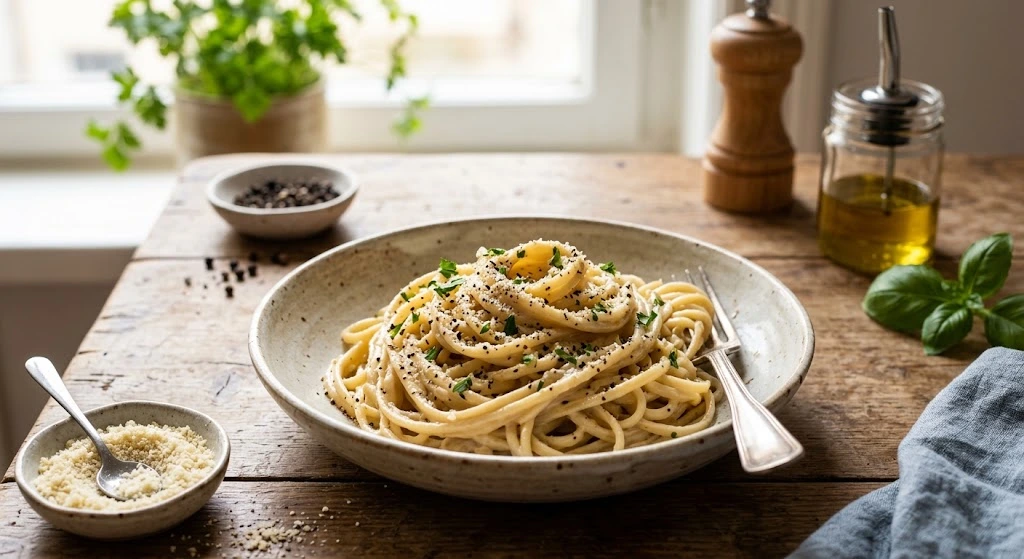
Vegan cacio e pepe is a dairy-free pasta recipe inspired by the classic Italian dish. Instead of pecorino cheese, it uses ingredients such as cashew cream and nutritional yeast to create a rich, savory, cheesy-style flavor.
The signature creamy texture comes from combining the sauce with starchy pasta water and using gentle heat to encourage emulsification. The result is a smooth, silky sauce that clings to the pasta instead of becoming watery.
Vegan Cacio e Pepe Recipe
A creamy, peppery and satisfying dairy-free pasta made with simple ingredients.
Ingredients
- Spaghetti or bucatini
- Freshly cracked black pepper
- Cashew cream or nutritional yeast-based sauce
- Nutritional yeast for savory, cheesy flavor
- Salt, as needed
- Garlic, optional
- Olive oil or vegan butter, optional
- Lemon juice, optional
- Plant-based milk, optional for loosening
Keep at least 1 cup of starchy pasta water before draining. You may not need all of it, but it gives you control over the final sauce texture.
Method
- Prepare the creamy base. Soak and blend cashews until completely smooth, or prepare your preferred nutritional yeast-based dairy-free sauce.
- Cook the pasta. Boil the spaghetti or bucatini in salted water until al dente. Reserve at least 1 cup of pasta water before draining.
- Bloom the pepper. Add freshly cracked black pepper to a pan over gentle heat. Lightly toasting it helps release its aroma.
- Build the sauce. Add the cashew cream or dairy-free base and stir gently. Keep the heat low to help prevent the sauce from breaking.
- Combine the pasta. Add the hot pasta directly to the pan and toss thoroughly.
- Emulsify. Add pasta water a little at a time while continuously tossing or stirring. Stop when the sauce becomes glossy, smooth and coats the pasta.
- Finish and serve. Adjust black pepper, salt and nutritional yeast to taste. Serve immediately while the sauce is creamy.
What Is Vegan Cacio e Pepe?
Vegan cacio e pepe is a plant-based version of classic Cacio e Pepe made without dairy. Traditional Cacio e Pepe relies on pecorino romano and black pepper, while the vegan version uses dairy-free ingredients to create a similarly rich and savory experience.
Traditional vs. Vegan Version
| Feature | Traditional Cacio e Pepe | Vegan Cacio e Pepe |
|---|---|---|
| Cheese | Pecorino Romano | Cashew cream, nutritional yeast or vegan cheese |
| Main flavor | Salty, peppery and cheesy | Peppery, savory and cheesy-style |
| Creaminess | Cheese + pasta water | Creamy base + starchy pasta water |
| Dairy-free | No | Yes, when dairy-free ingredients are used |
Flavor & Texture Expectations
A good vegan cacio e pepe should taste creamy, slightly nutty, savory and rich, with a noticeable kick from freshly cracked black pepper. The sauce should be smooth and silky, not watery or dry.
Why You’ll Love This Recipe
Quick & Easy
This vegan cacio e pepe recipe comes together in about 20 minutes, making it ideal for a busy day or last-minute dinner.
Minimal Ingredients
You only need a handful of simple ingredients to make this easy vegan pasta recipe.
Creamy Without Dairy
Cashew cream and nutritional yeast provide richness and savory depth without traditional cheese.
Beginner-Friendly
The key technique is simple: control the heat, reserve pasta water, and emulsify gradually.
Why Most Vegan Cacio e Pepe Recipes Fail
Learning how to make vegan cacio e pepe is mostly about controlling liquid, heat and emulsification. Here are the most common problems:
| Problem | Likely Cause | Fix |
|---|---|---|
| Sauce is watery | Too much liquid or insufficient emulsification | Add pasta water gradually and toss until glossy |
| Sauce doesn’t stick | Not enough starch or inadequate mixing | Use reserved pasta water and toss thoroughly |
| Flavor is bland | Not enough pepper, salt or umami | Add freshly cracked pepper and nutritional yeast |
| Sauce breaks | Excessive heat | Lower the heat and combine gently |
Ingredients for Vegan Cacio e Pepe
Core Ingredients
- Pasta: Spaghetti or bucatini works especially well.
- Black pepper: Freshly cracked for the strongest flavor.
- Cashew cream or nutritional yeast: Adds richness and savory depth.
- Garlic: Optional for extra flavor.
- Salt: Enhances the overall flavor.
Optional Ingredients
- Olive oil or vegan butter for extra richness
- Lemon juice for brightness
- Plant-based milk for loosening the sauce
- Vegan parmesan for additional cheesy flavor
Ingredient Substitutions
| If You Don’t Have | Try This Instead |
|---|---|
| Cashews | Nutritional yeast with a suitable plant-based milk or vegan cheese |
| Nutritional yeast | Vegan cheese or vegan parmesan |
| Regular pasta | Gluten-free pasta |
| Oil or vegan butter | Skip it and rely on the creamy base and starchy pasta water |
Best Vegan Cheese Substitutes
| Option | Best For | Advantages | Considerations |
|---|---|---|---|
| Cashew Cream | Creamy texture | Smooth, rich and relatively neutral | Requires soaking and blending |
| Nutritional Yeast | Cheesy flavor | Easy to use and savory | Doesn’t provide the same creaminess by itself |
| Store-Bought Vegan Cheese | Convenience | Quick and familiar cheese-style flavor | Some varieties may be processed or salty |
For creaminess, choose cashew cream. For cheesy flavor, choose nutritional yeast. For speed and convenience, vegan cheese is an easy option.
For the most balanced result, combine cashew cream + nutritional yeast.
The Science Behind a Creamy Vegan Cacio e Pepe Sauce
What Is Emulsification?
Emulsification means bringing fat and water together into a more uniform sauce. In pasta dishes, the combination of a creamy base, fat and starchy pasta water helps create a smooth coating.
The Role of Pasta Water
- It contains starch released from the pasta.
- It helps the sauce ingredients come together.
- It helps create a glossy, cohesive texture.
- It gives you control over the final consistency.
Fat and Starch Balance
| Component | Role | Too Much Can Cause |
|---|---|---|
| Fat | Richness and mouthfeel | A heavy sauce |
| Starchy water | Helps bind and loosen the sauce | A watery sauce if overused |
| Creamy base | Body and texture | A thick or heavy sauce if excessive |
Keep the sauce over low to gentle heat. Excessive heat can cause a dairy-free sauce to become oily, grainy or separated.
How to Make Vegan Cacio e Pepe Step by Step
1. Prep the Ingredients
Prepare everything before you start cooking. Blend your cashew cream until smooth or measure your nutritional yeast. Freshly grind the black pepper so its aroma is at its best.
2. Cook the Pasta Properly
Cook the pasta in salted water until al dente. Before draining, reserve at least 1 cup of starchy pasta water.
3. Bloom the Black Pepper
Add freshly cracked black pepper to a pan over gentle heat. Lightly toasting the pepper helps release its aroma and gives the finished pasta a deeper pepper flavor.
4. Build the Sauce
Add the cashew cream or dairy-free base and stir gently. Keep the temperature low so the sauce remains smooth.
5. Combine the Pasta and Sauce
Add the cooked pasta directly to the pan. Add a small amount of starchy pasta water and toss continuously.
6. Emulsify Until Glossy
Continue tossing while adding pasta water gradually. Stop when the sauce becomes smooth, glossy and thick enough to cling to every strand.
When cooking pasta, use a stable pot and handle hot water carefully. If using homemade cashew cream or other perishable ingredients, refrigerate leftovers promptly and keep them properly chilled.
Pro Tips for Creamy, Restaurant-Quality Results
Use Fresh Pepper
Freshly cracked black pepper provides a much stronger aroma and flavor than pre-ground pepper.
Add Water Slowly
Don’t pour all the pasta water in at once. Add it gradually until the sauce reaches the desired consistency.
Control the Heat
Gentle heat helps protect the texture of the sauce and reduces the risk of separation.
Toss Continuously
Mixing the hot pasta with the sauce helps distribute starch and creates a more cohesive coating.
How to Fix Vegan Cacio e Pepe
| Problem | Why It Happens | How to Fix It |
|---|---|---|
| Sauce is too watery | Too much liquid was added. | Use less liquid next time; add more creamy base if needed. |
| Sauce is too thick | Not enough pasta water. | Add a small splash of starchy pasta water and toss. |
| Sauce won’t stick | Insufficient starch or mixing. | Add pasta water gradually and toss thoroughly. |
| Flavor is bland | Not enough pepper, salt or umami. | Add black pepper, nutritional yeast, salt or a little lemon juice. |
How to Make Vegan Cacio e Pepe Taste More “Cheesy”
Umami Boosters
Nutritional yeast is one of the easiest ways to add a savory, cheese-like note. You can also use small amounts of miso paste, garlic or lemon juice to build additional depth.
Flavor Layering
Build flavor instead of relying on one ingredient. Start with toasted black pepper, add your creamy base, then finish with nutritional yeast. This creates a more balanced flavor profile.
Ingredient Combinations That Work
| Combination | What It Adds |
|---|---|
| Cashew cream + nutritional yeast | Creamy texture + savory cheesy flavor |
| Vegan butter + black pepper | Richness + peppery depth |
| Nutritional yeast + lemon juice | Sharpness + savory flavor |
Vegan Cacio e Pepe Variations
Creamy Version
Add extra cashew cream or a small splash of plant-based milk for an especially rich sauce.
Oil-Free Version
Skip oil or vegan butter and rely on the creamy base plus starchy pasta water.
Gluten-Free Version
Replace traditional pasta with your favorite gluten-free pasta and follow the same sauce method.
High-Protein Version
Add tofu, chickpeas or lentil pasta for a more filling meal.
Spicy Version
Add more freshly cracked black pepper or chili flakes for extra heat.
What to Serve With Vegan Cacio e Pepe
Fresh & Light Sides
- Fresh green salad
- Roasted vegetables
- Garlic bread
Protein Add-Ons
- Grilled tofu
- Tempeh
- Roasted chickpeas
Storage, Reheating & Meal Prep
How to Store
Allow leftover vegan cacio e pepe to cool appropriately and place it in an airtight container in the refrigerator. It is best consumed within 2–3 days. The sauce will naturally become thicker after refrigeration.
Best Reheating Method
Reheat gently in a pan over low heat. Add a small splash of water or plant-based milk and stir until the sauce becomes smooth again. Avoid high heat because it can make the sauce dry or cause separation.
Can You Meal Prep It?
Yes, although this pasta is best fresh. For better texture, consider storing the pasta and sauce separately. When reheating, combine them with a little liquid to restore the creamy consistency.
Refrigerate leftovers promptly rather than leaving cooked pasta at room temperature for extended periods. Keep refrigerated leftovers properly chilled and discard them if they show signs of spoilage.
Nutritional Value
The nutritional profile of vegan cacio e pepe depends heavily on the pasta, creamy base, oil and toppings you choose. It is naturally dairy-free when prepared with plant-based ingredients.
| Nutrient | What Influences It |
|---|---|
| Calories | Pasta, cashews, oil and vegan cheese |
| Protein | Cashews, tofu, chickpeas or lentil pasta can increase protein |
| Fats | Cashews, olive oil and vegan butter contribute fat |
| Carbohydrates | Primarily provided by the pasta |
Because ingredients vary significantly, use the nutrition information on the specific products you choose if you need an exact nutritional calculation.
FAQs About Vegan Cacio e Pepe
Can You Make Cacio e Pepe Without Cheese?
Yes. You can make vegan cacio e pepe without cheese using ingredients such as cashew cream and nutritional yeast. They provide richness and savory flavor while keeping the dish dairy-free.
What Is the Best Vegan Substitute for Pecorino?
A combination of cashew cream and nutritional yeast is a useful option when you want both creamy texture and cheesy-style flavor.
Why Is My Vegan Cacio e Pepe Not Creamy?
The most common reasons are insufficient starchy pasta water, poor emulsification or excessive heat. Add pasta water gradually and toss the pasta gently over low heat.
Is Vegan Cacio e Pepe Healthy?
It can fit into a balanced diet, but its nutritional profile depends on portion size and ingredients. Using whole-food ingredients and adding vegetables or plant protein can make the meal more substantial.
Can I Make Vegan Cacio e Pepe Without Cashews?
Yes. Try nutritional yeast with plant-based milk, vegan cheese or another dairy-free creamy base that suits your dietary needs.
Final Thoughts
Making the best vegan cacio e pepe recipe doesn’t have to be complicated. With the right ingredients and a few simple techniques, you can create a creamy, flavorful dairy-free pasta that is satisfying and easy enough for a weeknight dinner.
The biggest secret is learning to balance texture, flavor, starch and heat. Save your pasta water, toast your black pepper, keep the sauce gentle, and add liquid gradually. Once you understand those techniques, this easy vegan cacio e pepe becomes a reliable comfort meal you can customize again and again.
Read More :