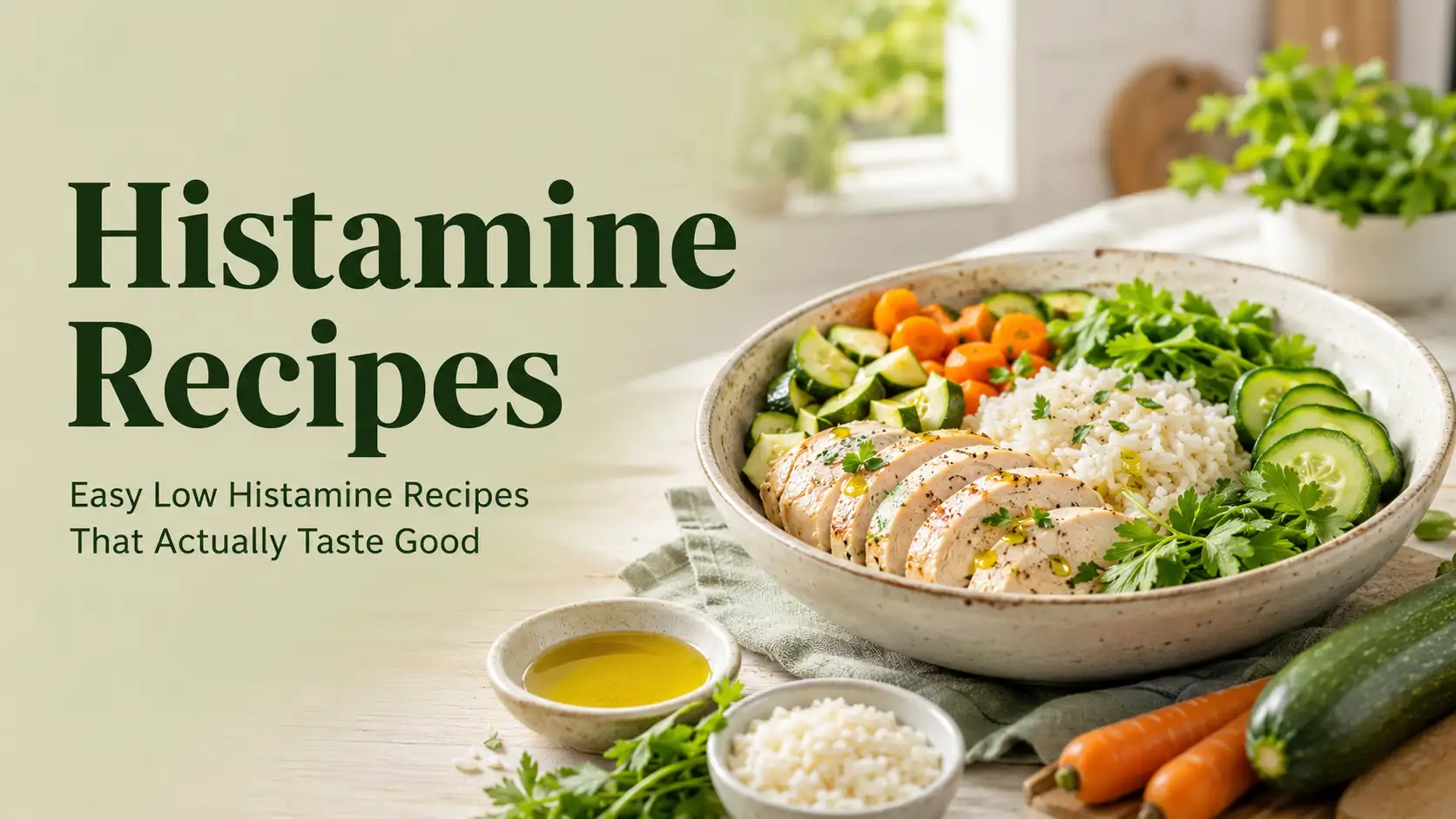
Histamine Recipes: Easy Low Histamine Recipes That Actually Taste Good
Fresh meal ideas, simple swaps, freezer-friendly prep, and practical guidance for breakfasts, lunches, dinners, snacks, desserts, sauces, and smoothies.
Quick Answer
Low histamine recipes emphasize fresh, minimally processed foods and often limit fermented foods, aged cheese, vinegar, alcohol, cured meats, canned fish, and long-stored leftovers. Beginner-friendly ideas include oatmeal bowls, rice bowls, sheet-pan chicken, turkey skillets, soups, smoothies, and promptly frozen portions made with personally tolerated ingredients.
Finding reliable histamine recipes can feel exhausting when food lists disagree. This guide keeps the focus on fresh meals, simple ingredients, quick freezing, and recipes you can cook today.
You will find a recipe index, food swaps, shopping tips, a three-day meal plan, storage guidance, and common mistakes to avoid.
Important Safety Note
This article is for education and recipe planning only. A low histamine diet can become restrictive. Work with a doctor or registered dietitian if symptoms are severe, confusing, or affecting nutrition.
- Do not remove major food groups indefinitely without guidance.
- Do not use this diet for weight loss.
- Seek urgent medical care for breathing trouble, fainting, chest symptoms, or severe swelling.
- Track patterns rather than judging a single meal.
- Reintroduce foods slowly when appropriate.
- Get professional help if your safe-food list keeps shrinking.
There is no universally accepted low histamine food list. Freshness, storage, processing, portion size, and personal tolerance can all matter.
15 Easy Low Histamine Recipes at a Glance
| Recipe | Meal | Time | Freezer-Friendly | Best For |
|---|---|---|---|---|
| Blueberry Oatmeal Bowl | Breakfast | 10 min | Yes | Weekday breakfast |
| Mango Chia Smoothie | Breakfast | 5 min | No | No-cook mornings |
| Zucchini Egg Skillet | Breakfast | 12 min | No | Protein-rich start |
| Chicken Rice Bowl | Lunch | 25 min | Chicken only | Work lunch |
| Turkey Cucumber Wraps | Lunch | 20 min | Turkey only | Packed lunch |
| Carrot Zucchini Soup | Lunch | 30 min | Yes | Gentle comfort meal |
| Sheet Pan Herb Chicken | Dinner | 40 min | Yes | Family dinner |
| Turkey Sweet Potato Skillet | Dinner | 30 min | Yes | One-pan meal |
| Creamy Zucchini Rice Pasta | Dinner | 25 min | Best fresh | Tomato-free pasta |
| Lamb Potato Bowl | Dinner | 35 min | Yes | Higher-protein meal |
| Apple Oat Energy Bites | Snack | 10 min | Yes | Quick snack |
| Pear Rice Cakes | Snack | 5 min | No | Crunchy snack |
| Baked Pear Crumble | Dessert | 25 min | No | Warm dessert |
| Mango Coconut Pops | Dessert | 10 min + freeze | Yes | Frozen treat |
| Creamy Basil Herb Sauce | Sauce | 5 min | Best fresh | Tomato-free flavor |
The 5-5-5 Low Histamine Meal System
Build simple meals from a few personally tolerated parts instead of memorizing a giant list.
| Choose | Options to Test |
|---|---|
| 5 Bases | Rice, oats, quinoa, potatoes, rice noodles |
| 5 Proteins | Fresh chicken, fresh turkey, eggs, lamb, freshly cooked white fish if tolerated |
| 5 Vegetables | Zucchini, carrots, cucumber, broccoli, lettuce |
| 5 Fruits | Blueberries, apples, pears, mango, melon |
| 5 Flavor Boosters | Olive oil, basil, parsley, thyme, garlic-infused oil |
What Makes a Recipe Low Histamine?
Recipes described as low histamine generally use fresh ingredients and avoid or reduce frequently reported triggers. Commonly limited foods include:
- Aged cheese and fermented foods
- Alcohol, especially wine and beer
- Cured, smoked, deli, or processed meats
- Canned or smoked fish
- Vinegar and pickled foods
- Tomatoes, spinach, eggplant, chocolate, and some nuts for some people
- Cooked leftovers stored for extended periods
Why does freshness matter?
Histamine can increase in some foods as they age, ferment, spoil, or sit after cooking. In practice, freshly cooked chicken may be better tolerated than chicken stored for several days. Cool cooked food briefly, portion it, and freeze promptly when planning ahead.
Low Histamine Breakfast Recipes
Blueberry Oatmeal Bowl
Ingredients
- ½ cup rolled oats
- 1 cup water or tolerated milk
- ½ cup blueberries
- 1 tsp chia seeds, if tolerated
- 1 tsp maple syrup
- Pinch of sea salt
Instructions
Cook oats with water and salt until soft. Stir in blueberries near the end. Top with chia and maple syrup.
Storage: Eat fresh or freeze single portions rather than refrigerating for several days.
Why it works: A simple, filling breakfast without fermented dairy or citrus.
Mango Chia Smoothie
Ingredients
- 1 cup oat or coconut milk
- ½ cup mango
- ½ cup blueberries
- 1 tbsp chia, if tolerated
- Ice as needed
Instructions
Blend until smooth. Add more milk if needed. Use pear instead of mango for a milder flavor.
Why it works: Avoids citrus, yogurt, banana, and flavored protein powders that some people report as triggers.
Zucchini Egg Skillet
Ingredients
- 2 fresh eggs
- ½ cup chopped zucchini
- ¼ cup chopped kale, if tolerated
- 1 tsp olive oil
- Fresh parsley and sea salt
Instructions
Cook zucchini in olive oil until soft. Add kale for one minute, then add eggs and scramble gently. Finish with parsley.
Egg-free swap: Use cooked rice and freshly cooked turkey.
Why it works: Adds protein and vegetables without aged cheese, hot sauce, or processed breakfast meat.
Low Histamine Lunch Recipes
Fresh Chicken Rice Bowl
Ingredients
- 1 fresh chicken breast
- 2 cups cooked rice
- ½ cup cucumber
- ½ cup grated carrot
- 1 tbsp olive oil
- Parsley and sea salt
Instructions
Cook chicken fully and slice. Divide rice, cucumber, carrot, parsley, and chicken between bowls. Drizzle with olive oil.
Storage: Freeze extra chicken in single portions after brief cooling.
Why it works: Avoids deli meat, vinegar dressing, bottled sauces, and long-stored leftovers.
Turkey Cucumber Wraps
Ingredients
- ½ lb fresh ground turkey
- Lettuce leaves or tolerated wraps
- Cucumber sticks
- Grated carrot
- Olive oil, basil or parsley, salt
Instructions
Cook turkey fully with salt and herbs. Add to lettuce or wraps with cucumber and carrot. Drizzle lightly with olive oil.
Storage: Freeze extra turkey and assemble wraps fresh.
Why it works: Replaces processed sandwich meat with freshly cooked turkey.
Carrot Zucchini Soup
Ingredients
- 4 carrots
- 2 zucchini
- 1 potato
- 4 cups water or tolerated homemade broth
- 1 tbsp olive oil
- Thyme and sea salt
Instructions
Simmer chopped vegetables until soft. Blend until creamy, then stir in olive oil, thyme, and salt.
Freezer tip: Freeze in shallow single-serving containers.
Why it works: Creamy texture without tomato, cream cheese, vinegar, or packaged soup bases.
Low Histamine Dinner Recipes
Sheet Pan Herb Chicken
Ingredients
- 4 fresh chicken thighs or breasts
- 2 cups potatoes
- 1 cup carrots
- 1 cup zucchini
- 2 tbsp olive oil
- Thyme, parsley, and sea salt
Instructions
Heat oven to 400°F / 200°C. Coat chicken and vegetables with oil, thyme, and salt. Roast until chicken is safely cooked and vegetables are tender.
Storage: Eat fresh or freeze portions promptly after brief cooling.
Why it works: Roasting builds flavor without sauces, marinades, vinegar, or tomato paste.
Turkey Sweet Potato Skillet
Ingredients
- 1 lb fresh ground turkey
- 2 diced sweet potatoes
- 1 chopped zucchini
- 1 tbsp olive oil
- Thyme, parsley, and sea salt
Instructions
Cook sweet potatoes in olive oil until nearly tender. Add turkey and cook fully. Add zucchini near the end and finish with parsley.
Freezer tip: Freeze flat in single servings for quick thawing.
Why it works: Filling, budget-friendly, and convenient to reheat from frozen.
Creamy Zucchini Rice Pasta
Ingredients
- 6 oz rice pasta
- 1 steamed zucchini
- ¼ cup coconut milk
- 1 tbsp olive oil
- Fresh basil and sea salt
Instructions
Cook pasta. Blend zucchini, coconut milk, oil, basil, and salt. Toss with pasta and serve fresh.
Swap: Use cauliflower instead of zucchini.
Why it works: Comforting pasta without tomato sauce, parmesan, vinegar, or jarred sauce.
Lamb Potato Bowl
Ingredients
- ½ lb freshly cooked lamb
- 2 diced potatoes
- 1 cup broccoli
- 1 tbsp olive oil
- Parsley and sea salt
Instructions
Roast potatoes, cook lamb fresh, and steam broccoli. Combine in bowls with olive oil and parsley.
Storage: Freeze extra lamb promptly. Reheat once and eat immediately.
Why it works: A hearty alternative to chicken and turkey.
Low Histamine Snacks and Desserts
Apple Oat Energy Bites
Ingredients
- 1 cup oats
- ½ grated apple
- 2 tbsp maple syrup
- 1 tbsp chia, if tolerated
- 1 tbsp sunflower seed butter, if tolerated
Instructions
Mix, roll into small balls, and freeze.
Why it works: Portable and free from chocolate, dried fruit, and complicated packaged-bar ingredients.
Pear Rice Cakes
Ingredients
- 2 rice cakes
- ½ sliced pear
- Maple syrup
- Pinch of sea salt
Instructions
Top rice cakes with pear. Add a small drizzle of maple syrup and a pinch of salt.
Why it works: Fast and easier than checking long packaged-snack labels.
Baked Pear Crumble
Ingredients
- 2 pears, halved
- 2 tbsp oats
- 1 tsp maple syrup
- 1 tsp ghee or coconut oil
- Pinch of sea salt
Instructions
Top pears with oats, maple syrup, fat, and salt. Bake at 375°F / 190°C until soft.
Why it works: A warm dessert without chocolate, citrus, alcohol, or aged dairy.
Mango Coconut Pops
Ingredients
- 1 cup mango
- ½ cup coconut milk
- 1 tsp maple syrup
- ¼ cup water
Instructions
Blend, pour into molds, and freeze until solid.
Why it works: Refreshing and practical for warm weather and snack preparation.
Low Histamine Sauces and Flavor Boosters
Low Histamine Drinks and Smoothies
Simple options may include water, cucumber water, tolerated herbal teas, blueberry, mango, or pear smoothies, and coconut-milk drinks. Kombucha, wine, beer, and other fermented drinks are commonly restricted in low histamine plans.
Easy Pear Blueberry Smoothie
Blend 1 pear, ½ cup blueberries, 1 cup oat milk, ice, and 1 teaspoon chia seeds if tolerated.
Recipes by Diet Need
| Diet Need | Good Recipe Choices |
|---|---|
| Dairy-Free | Mango smoothie, turkey skillet, zucchini pasta |
| Egg-Free | Oatmeal, chicken rice bowl, carrot zucchini soup |
| Gluten-Free | Rice bowls, rice pasta, potato bowls, quinoa bowls |
| Nut-Free | Pear rice cakes, mango pops, sheet-pan chicken |
| Higher-Protein | Egg skillet, lamb potato bowl, turkey wraps |
| Kid-Friendly | Mango pops, turkey rice bowls, baked pear |
| Freezer-Friendly | Turkey skillet, carrot soup, herb chicken, oat bites |
Low Histamine Shopping List
Low Histamine Meal Prep and Freezer System
Cooking ahead can help. The practical focus is reducing extended refrigerator storage of cooked food.
The Cook-Cool-Freeze Method
- Cook fresh food fully.
- Let steam clear briefly.
- Portion into shallow containers.
- Freeze promptly.
- Thaw only one portion.
- Reheat once.
- Eat immediately.
Best freezer options
- Turkey sweet potato skillet
- Carrot zucchini soup
- Sheet-pan herb chicken
- Apple oat energy bites
- Mango coconut pops
- Plain cooked rice portions
Best made fresh
Egg dishes, smoothies, lettuce wraps, cucumber salads, herb sauces, and fresh fruit plates are usually best prepared close to serving.
3-Day Easy Low Histamine Meal Plan
| Day | Breakfast | Lunch | Dinner | Snack |
|---|---|---|---|---|
| Day 1 | Blueberry oatmeal | Chicken rice bowl | Sheet-pan herb chicken | Pear rice cakes |
| Day 2 | Mango chia smoothie | Turkey cucumber wraps | Turkey sweet potato skillet | Apple oat bites |
| Day 3 | Zucchini egg skillet | Carrot zucchini soup | Creamy zucchini rice pasta | Mango coconut pop |
Eating Out on a Low Histamine Diet
Restaurants can be difficult because marinades, sauces, vinegar, spice blends, and storage times are not always visible.
Ask about
- Plain freshly grilled chicken or meat
- Plain rice or baked potato
- Steamed vegetables
- Lettuce and cucumber with olive oil
- Fresh fruit if tolerated
Watch for
Marinades, vinegar dressings, soy sauce, aged cheese, tomato sauce, processed meat, pre-made soups, and buffet food sitting out.
How to Reintroduce Foods
Reintroduction helps prevent a temporary trial from becoming unnecessarily narrow.
- Choose one food to test.
- Try a small amount in the morning.
- Keep the rest of the day simple.
- Track symptoms for 24–48 hours.
- Repeat only when the first test is clear.
- Stop and contact a clinician if reactions are strong.
What to track
Record the food, amount, time, symptoms, stress, sleep, menstrual cycle timing if relevant, medications or supplements, and seasonal allergy activity.
Common Low Histamine Diet Mistakes
Budget-Friendly Cooking Tips
Build meals around rice, oats, potatoes, sweet potatoes, carrots, zucchini, tolerated eggs, chicken on sale, ground turkey, frozen blueberries, and frozen mango.
Reduce waste with repeat ingredients
- Rice: bowls, soups, and breakfast porridge
- Zucchini: egg skillet, pasta sauce, and sheet-pan dinner
- Carrots: soup, bowls, and snacks
- Turkey: wraps, skillet meals, and freezer portions
- Blueberries: oatmeal, smoothies, and chia pudding
Quick Summary
- Low histamine recipes work best when they are fresh, simple, and practical.
- Common building blocks include rice, oats, potatoes, fresh poultry, tolerated eggs, zucchini, carrots, apples, pears, blueberries, mango, herbs, and olive oil.
- Food freshness may be especially important for protein-rich foods.
- Promptly freezing portions may be preferable to storing leftovers for days.
- No single food list is perfect; personal tolerance matters.
- Reintroduction can help prevent unnecessary long-term restriction.
- Professional guidance is important when symptoms are severe or nutrition is limited.
Frequently Asked Questions
What is the easiest low histamine dinner?
Sheet-pan herb chicken with potatoes and carrots is a simple starting point using fresh protein, olive oil, herbs, and one pan.
Can I eat chicken?
Freshly cooked chicken is commonly included. Cook it soon after purchase, eat it fresh, or freeze portions promptly.
Is rice low histamine?
Plain rice is commonly used as a meal base in rice bowls, soups, lunches, and freezer meals.
Are potatoes low histamine?
Potatoes are frequently used because they are filling, affordable, and easy to pair with fresh protein and vegetables.
What sauces can I try?
Possible options include basil-coconut sauce, herb oil, carrot-zucchini sauce, and olive oil with fresh herbs. Avoid vinegar if it triggers symptoms.
What can I eat when I have no time to cook?
Try a rice bowl with a frozen portion of cooked turkey, cucumber, carrot, olive oil, and parsley; or choose oatmeal and pear rice cakes.
Can meals be high in protein?
Yes. Options may include freshly cooked chicken, turkey, eggs, lamb, or tolerated fresh fish. Avoid extended storage.
Is oatmeal low histamine?
Plain oats are commonly used. Choose simple oats without added flavors, chocolate, dried fruit, or complex additives.
Are bananas low histamine?
Bananas are debated. Some people tolerate them and others do not, so individual testing is more useful than relying on one list.
Is a low histamine diet safe long term?
It can become overly restrictive without guidance. A clinician or registered dietitian can help with symptom tracking, nutrition, and reintroduction.
Conclusion
The best histamine recipes are built around fresh ingredients, simple cooking, prompt freezing, and flavors you personally tolerate. Start with reliable meals such as blueberry oatmeal, chicken rice bowls, sheet-pan herb chicken, turkey sweet potato skillet, and creamy zucchini pasta.
Do not try to make your diet perfect overnight. Keep a food journal, adjust one ingredient at a time, and reintroduce foods carefully when appropriate.
Choose one breakfast, lunch, dinner, and freezer meal this week. Keep what works, adjust what does not, and seek professional support if symptoms are severe or food choices become too limited.
Medical disclaimer: This content is educational and is not a diagnosis or treatment plan. Food tolerance varies. Seek qualified medical advice for significant symptoms, suspected allergy, medication questions, or nutritional concerns.