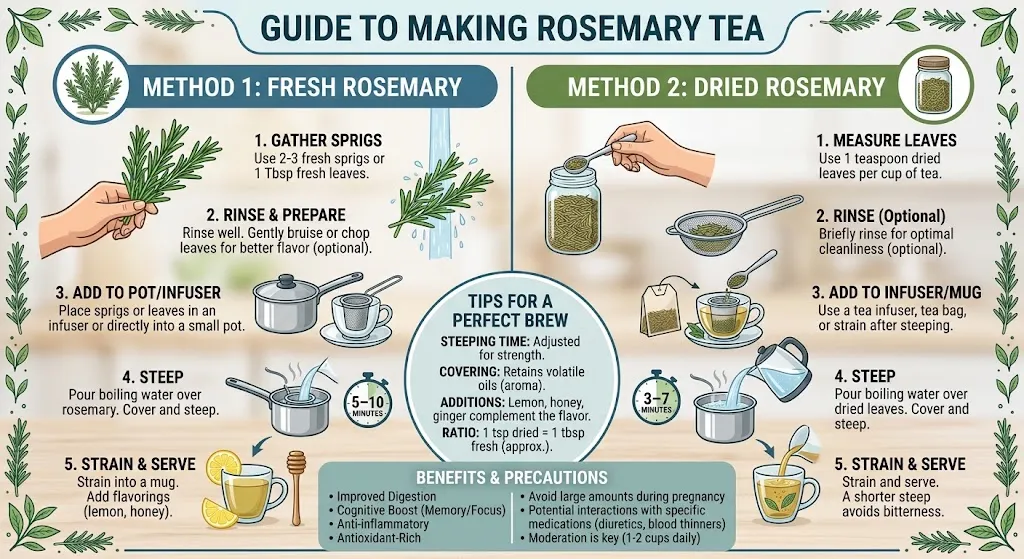
Make a fragrant, woodsy rosemary tea with fresh or dried rosemary in just a few minutes. Learn the right amount to use, the ideal steeping time, easy flavor variations, iced tea tips, storage guidance, and important safety notes.
To make rosemary tea, steep 1–2 small fresh rosemary sprigs or about 1 teaspoon dried rosemary in 2 cups of hot water for 3–5 minutes. Strain, then add lemon or honey if desired.
For the cleanest flavor, start with a shorter steep and taste before making the tea stronger. Rosemary can become noticeably more intense and bitter when over-steeped.
Rosemary Tea Recipe
A simple two-cup herbal infusion with fresh or dried culinary rosemary.
This basic rosemary tea recipe keeps the ingredient list simple and gives you control over the finished strength. The method is straightforward: heat the water, steep the rosemary off the heat, strain, and adjust the flavor at the end.
Ingredients
- 2 cups water
- 1–2 small fresh rosemary sprigs
- 1 teaspoon dried rosemary, if using dried instead
- 1–2 teaspoons fresh lemon juice, optional
- 1–2 teaspoons honey, optional
- Lemon slices or a small rosemary sprig, for serving
Equipment
- Kettle or small saucepan
- Heat-safe mugs
- Tea strainer or fine-mesh sieve
- Spoon for tasting
- Covered container for leftovers
Method
- Heat the water. Bring 2 cups of water to a boil.
- Remove from heat. Take the pot or kettle off the heat before adding the rosemary.
- Add rosemary. Add the fresh rosemary sprigs or dried rosemary.
- Steep. Cover and let the rosemary steep for 3–5 minutes.
- Taste. Taste a small spoonful at about 3 minutes. Continue briefly if you want a stronger flavor.
- Strain. Remove the rosemary and pour the tea into mugs.
- Adjust. Add lemon and honey if desired.
- Serve. Enjoy warm, or cool the tea for an iced version.
Rosemary Tea Recipe at a Glance
What Does Rosemary Tea Taste Like?
Rosemary tea has a bold herbal flavor with piney, woodsy, and slightly savory notes. It is more intense than many delicate floral or fruit infusions, so the first cup may taste surprisingly strong.
Fresh rosemary usually produces a greener, more aromatic character, while dried rosemary can taste deeper and more concentrated. Lemon adds brightness, while honey rounds off sharper herbal notes.
Flavor Pairings That Work Well
- Lemon: Adds acidity and brightness.
- Honey: Softens the herbal edge with gentle sweetness.
- Ginger: Adds warmth and a light spicy bite.
- Mint: Makes the cup fresher and cooler.
- Orange peel: Adds a softer citrus aroma.
- Cinnamon: Gives the tea a warmer character.
- Maple syrup: A vegan sweetener option.
- Apple slices: Add a mild fruity note to chilled tea.
Fresh Rosemary vs. Dried Rosemary
Both fresh and dried rosemary work for tea, but their flavor and convenience differ. Fresh rosemary tends to have a greener aroma, while dried rosemary is convenient and often more concentrated.
| Rosemary Type | Flavor | Convenience | Best Use |
|---|---|---|---|
| Fresh sprigs | Green, fragrant, piney | Requires fresh herbs | Bright, aromatic cup |
| Dried rosemary | Deeper and more concentrated | Easy to keep on hand | Quick pantry version |
| Fresh + lemon | Bright and herbal | Very simple | Everyday serving |
| Dried + ginger | Warm and robust | Pantry-friendly | Cooler weather |
How Much Rosemary Should You Use?
The right amount depends on how strong you want the tea and whether you’re using fresh or dried rosemary. Start conservatively, especially with dried rosemary.
| Amount of Tea | Fresh Rosemary | Dried Rosemary |
|---|---|---|
| 1 cup | 1 small sprig | About ½ teaspoon |
| 2 cups | 1–2 small sprigs | About 1 teaspoon |
| Stronger cup | Increase slightly | Increase slightly |
For a stronger cup, increase the rosemary slightly or steep for another minute or two and taste again. Don’t automatically solve weak tea by steeping for a very long time, because prolonged steeping can push the flavor toward bitterness.
How to Make Rosemary Tea Without Bitterness
The easiest way to avoid bitter rosemary tea is to control both the amount of herb and the steeping time. Rosemary is strongly flavored, so adding more isn’t always the best solution.
If Your Tea Tastes Too Bitter
- Use less rosemary next time.
- Shorten the steeping time to around 3 minutes.
- Remove the rosemary as soon as the flavor is strong enough.
- Try fresh rosemary for a greener, lighter aroma.
- Add a little lemon to brighten the flavor.
- Add honey or maple syrup if you want sweetness.
- Avoid combining several strong herbs in one cup.
Rosemary Tea With Lemon and Honey
Lemon and honey are simple additions for anyone new to rosemary tea. Lemon cuts through the savory herbal character, while honey provides sweetness and a smoother finish.
Prepare the basic tea first, then add the flavorings after straining. This keeps the citrus flavor fresh and lets you adjust sweetness to taste.
For Each Cup
- 1–2 teaspoons lemon juice, to taste
- 1 teaspoon honey, or more if preferred
For a vegan version, use maple syrup instead of honey.
Ginger Rosemary Tea
Fresh ginger adds warmth and gentle spice to rosemary’s woodsy flavor. It creates a more robust herbal drink without requiring many ingredients.
What You’ll Need
- 2 cups water
- 1–2 small rosemary sprigs
- 3–5 thin slices fresh ginger
- Lemon, optional
- Honey or maple syrup, optional
How to Make It
- Add ginger to the hot water first.
- Let it sit for a minute or two.
- Add the rosemary.
- Cover and steep for 3–5 minutes.
- Strain both ingredients.
- Add lemon or your preferred sweetener.
Rosemary Mint Tea
Mint makes rosemary tea taste fresher and lighter. Use rosemary as the primary flavor and mint as a supporting note.
Try This Combination
- 1 small rosemary sprig
- 4–6 fresh mint leaves
- 2 cups hot water
- Lemon, optional
- Honey or maple syrup, optional
Add both herbs to the hot water, cover, and steep for about 3–5 minutes. Strain before serving.
Citrus Rosemary Tea
Orange and rosemary create a softer, aromatic pairing than lemon and rosemary. Use a small strip of orange peel when you want fragrance without strong acidity.
Simple Citrus Version
- 2 cups water
- 1–2 small rosemary sprigs
- 1–2 thin strips orange peel
- Honey or maple syrup, optional
Steep the rosemary and orange peel together for 3–5 minutes, then strain.
Iced Rosemary Tea
Rosemary tea works well chilled when the original brew is light and clean. A very strong hot infusion can taste even more intense once chilled, so avoid overbrewing.
How to Make Iced Rosemary Tea
- Prepare the basic rosemary tea.
- Strain out the rosemary.
- Cool the tea promptly.
- Refrigerate it in a covered container.
- Serve over plenty of ice.
- Add lemon, orange, mint, or fresh fruit if desired.
Good Iced Tea Additions
- Lemon wheels
- Orange slices
- Fresh mint
- Peaches
- Strawberries
- Cucumber
- A small amount of maple syrup
- Sparkling water for a lighter spritzer-style drink
Common Rosemary Tea Mistakes
Most rosemary tea problems come from using too much herb or leaving it in the water too long.
- Using too much rosemary: Start with a small amount.
- Steeping indefinitely: Taste after about 3 minutes.
- Boiling the herb for a long time: Use a short covered infusion.
- Adding every flavor at once: Choose one or two supporting ingredients.
- Skipping straining: Remove loose dried leaves before serving.
- Using stale dried rosemary: Old herbs may taste flat or dusty.
- Overloading an iced version: Balance the original infusion before adding ice.
- Sweetening before tasting: Rosemary strength varies, so taste the plain infusion first.
Can You Make Rosemary Tea Ahead?
Yes, rosemary tea can be prepared ahead and refrigerated. Cool it promptly, transfer it to a clean covered container, and keep it refrigerated.
For best quality, make only as much as you expect to use within a day or two. If you keep it longer, follow general refrigerated-leftover safety practices and discard anything that develops an unusual smell, appearance, or flavor.
For the Best Make-Ahead Results
- Strain the rosemary before storing.
- Cool the tea promptly.
- Use a clean, covered container.
- Keep the refrigerator at 40°F or below.
- Add fresh lemon or garnishes just before serving.
- Don’t leave prepared tea sitting at room temperature for hours.
Is Rosemary Tea Caffeine-Free?
That changes if you combine rosemary with black tea, green tea, white tea, or another caffeinated tea.
If you want a caffeine-free cup, keep the blend to rosemary and other naturally caffeine-free herbs, fruits, or spices.
Rosemary Tea Safety and Precautions
Rosemary tea is a culinary herbal infusion, not a medical treatment. Avoid turning a normal food recipe into a highly concentrated herbal preparation without appropriate professional guidance.
- Wash fresh rosemary before brewing.
- Use rosemary from a reliable culinary food source.
- Don’t use herbs exposed to pesticides or chemicals unsuitable for food.
- Correctly identify rosemary if harvesting it yourself.
- People who are pregnant or breastfeeding, children, and anyone taking medications should ask a qualified healthcare professional before regularly consuming concentrated herbal preparations.
- Don’t use rosemary tea as a substitute for prescribed treatment.
- Never give honey to infants under 12 months.
The goal of this recipe is a normal culinary beverage rather than a concentrated herbal extract.
How to Choose the Best Rosemary for Tea
Fresh culinary rosemary is an easy choice when you want a bright, aromatic cup. Look for firm green needles and a clean herbal scent.
Fresh Rosemary
- Green rather than brown or gray
- Firm rather than limp
- Strongly aromatic
- Free from mold or slimy spots
- Suitable for culinary use
Dried Rosemary
Good dried rosemary should smell strongly herbal when you open the container. If the aroma is faint, dusty, or stale, the tea will usually be disappointing.
Store dried rosemary in a tightly closed container away from heat, light, and moisture.
Ways to Serve Rosemary Tea
A small garnish can make a simple herbal tea feel more intentional without changing the recipe.
- Serve warm in a small ceramic mug.
- Add a thin lemon wheel for brightness.
- Garnish with a small fresh rosemary sprig.
- Serve chilled with orange slices.
- Add fresh mint for a cooler finish.
- Pair it with a light breakfast.
- Serve alongside simple pastries or fruit.
- Use sparkling water for a lighter cold drink.
Rosemary Tea Recipe Variations at a Glance
| Variation | Main Addition | Flavor | Best For |
|---|---|---|---|
| Classic Rosemary Tea | None | Woodsy and herbal | First try |
| Lemon Rosemary Tea | Lemon | Bright and clean | Everyday drinking |
| Rosemary Honey Tea | Honey | Smooth and sweet | Softer flavor |
| Ginger Rosemary Tea | Fresh ginger | Warm and spicy | Cooler weather |
| Rosemary Mint Tea | Fresh mint | Fresh and green | Lighter flavor |
| Orange Rosemary Tea | Orange peel | Aromatic and citrusy | Seasonal serving |
| Iced Rosemary Tea | Lemon or fruit | Crisp and refreshing | Warm weather |
Frequently Asked Questions
Can I use fresh rosemary straight from my garden?
Yes, if it is correctly identified and grown for culinary use. Wash the sprigs before brewing and avoid herbs exposed to pesticides or chemicals that aren’t approved for food use.
Should I boil rosemary or steep it?
For a clean everyday cup, steeping is the better starting method. Bring the water to a boil, remove it from heat, add rosemary, cover, and taste after about 3 minutes.
Why is my rosemary tea bitter?
The most common problem is an overly strong infusion. Try using less rosemary or shortening the steeping time before adding more sweetener.
Can I use dried rosemary instead of fresh?
Yes. Dried rosemary is more concentrated by volume, so start with about 1 teaspoon for 2 cups of water rather than replacing fresh sprigs with an equal volume of dried leaves.
Can I drink rosemary tea cold?
Absolutely. Brew it normally, strain it, cool it promptly, refrigerate it in a covered container, and serve over ice with lemon, orange, mint, or fresh fruit.
Does rosemary tea contain caffeine?
Plain rosemary tea is naturally caffeine-free. Adding black tea, green tea, or another caffeinated tea changes that.
Can I add honey to rosemary tea?
Yes, honey pairs well with rosemary’s strong herbal flavor. However, never give honey to children younger than 12 months because of the risk of infant botulism.
Conclusion
This rosemary tea recipe is best when you keep the preparation simple and control the strength. Start with a small amount of fresh or dried rosemary, steep for a few minutes, strain it, and taste before making adjustments.
Once you have the basic cup right, try lemon and honey, ginger, mint, orange peel, or an iced version. Change one flavor at a time so you can easily find the combination you enjoy most.
Food-safety and honey-safety guidance should be checked against current USDA and CDC recommendations, respectively.
Read More :