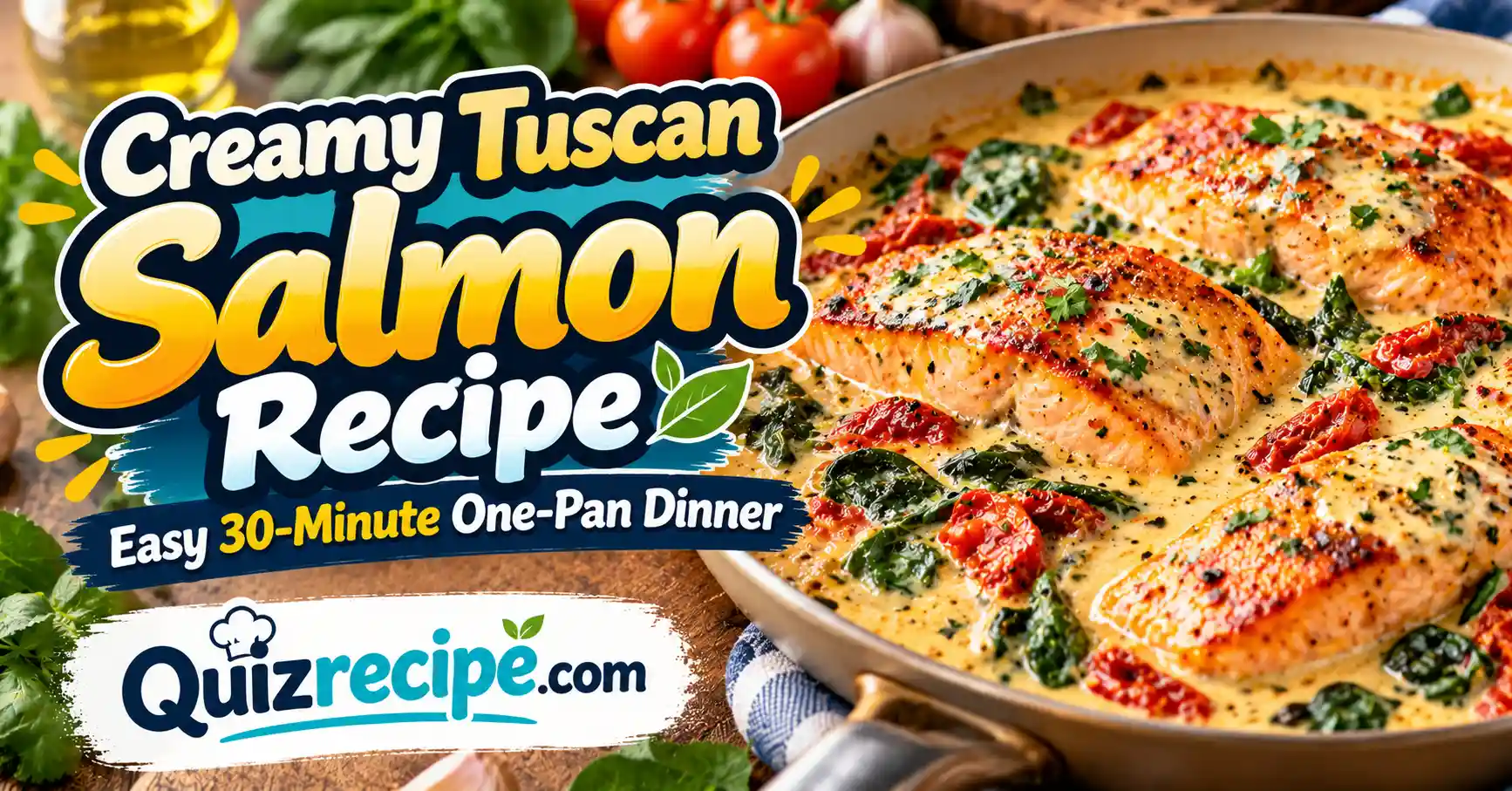
Golden-seared salmon in a luscious garlic-Parmesan cream sauce with spinach, sun-dried tomatoes, and Italian herbs.
If you’re looking for a seafood dinner that feels special without requiring complicated cooking techniques, this Creamy Tuscan Salmon Recipe is an excellent choice. Tender, golden-seared salmon fillets are nestled in a rich garlic-Parmesan cream sauce with fresh spinach, sun-dried tomatoes, and Italian herbs. The combination delivers savory, buttery, and slightly tangy flavors in every bite.
This one-pan Tuscan salmon takes approximately 30 minutes to prepare, making it practical for busy weeknights, family dinners, or a relaxed date night at home. You don’t need expensive equipment or hard-to-find ingredients. A large skillet, a few pantry staples, and fresh salmon are enough to create a satisfying meal.
The key is cooking the salmon gently and keeping the cream sauce at a low simmer. Below, you’ll find detailed instructions, ingredient substitutions, cooking tips, serving suggestions, and troubleshooting advice to help you prepare this dish confidently.
Quick Answer: What Is Creamy Tuscan Salmon?
Creamy Tuscan salmon is a skillet dish featuring pan-seared salmon in a garlic-Parmesan cream sauce with spinach, sun-dried tomatoes, and Italian seasoning. It takes approximately 30 minutes, uses one main cooking pan, and pairs well with pasta, rice, mashed potatoes, or roasted vegetables.
Creamy Tuscan Salmon at a Glance
Cooking method: One-pan stovetop.
Main ingredients: Salmon, garlic, cream, Parmesan, spinach, and sun-dried tomatoes.
Flavor: Rich, savory, garlicky, and slightly tangy.
Best sides: Linguine, orzo, lemon rice, or roasted asparagus.
Leftovers: Refrigerate for 3–4 days.
Why You’ll Love This Creamy Tuscan Salmon Recipe
The appeal of this dish comes from the contrast between the salmon and its sauce. A hot skillet gives the fish a lightly browned exterior, while the creamy garlic sauce keeps each serving rich and flavorful.
Sun-dried tomatoes add concentrated sweetness and acidity. Spinach provides color and a mild, earthy note. Parmesan adds a savory finish without needing a long list of seasonings.
One-Pan Cooking
The salmon and sauce are prepared in the same skillet, reducing cleanup.
Quick Preparation
Most ingredients require only simple chopping, measuring, and stirring.
Flexible Serving Options
Enjoy it with pasta, grains, potatoes, or roasted vegetables.
Customizable Sauce
Adjust the creaminess, garlic, herbs, and spice to your preference.
Beginner-Friendly
Straightforward steps make this recipe approachable when you control the heat.
Great for Entertaining
Individual salmon fillets are convenient to plate and serve.
A Note About Tuscan-Style Salmon
Although often described as Tuscan-style, this dish is best understood as an Italian-inspired creamy salmon recipe, rather than a traditional regional Italian preparation.
Creamy Tuscan Salmon Ingredients
The ingredients are simple, but their quality and preparation affect the finished dish. Choose evenly sized salmon fillets and finely grate the Parmesan so it melts smoothly.
Creamy Tuscan Salmon
One-pan salmon with garlic-Parmesan sauce, fresh spinach, and sun-dried tomatoes.
Times are planning estimates, not independently kitchen-tested results. Salmon thickness may change the cooking time.
Ingredients Checklist
Check off ingredients as you gather them.
0 of 15 ingredients gathered
Recipe Instructions
- Prepare the salmon. Pat each fillet dry with paper towels. Season with salt and black pepper.
- Sear the fillets. Heat olive oil over medium-high heat. Cook salmon approximately 3–4 minutes on the first side and 1–2 minutes on the second. Transfer to a clean plate.
- Sauté the aromatics. Reduce heat to medium-low. Add butter, garlic, and sun-dried tomatoes. Cook 30–60 seconds until fragrant.
- Prepare the sauce. Pour in broth, scraping up browned bits. Add cream and Italian seasoning. Simmer gently for approximately 2–3 minutes. Reduce heat and gradually stir in Parmesan.
- Wilt the spinach. Add baby spinach and stir for approximately 1–2 minutes until wilted.
- Finish the salmon. Return the salmon and collected juices to the skillet. Spoon sauce over the fillets and cook gently until the thickest part reaches 145°F (63°C).
- Garnish and serve. Adjust seasoning, add optional lemon juice, and finish with basil or parsley. Serve immediately.
Important Food Safety Note
Use an instant-read thermometer to confirm that salmon reaches 145°F (63°C) at its thickest point. Cooking times alone cannot establish doneness.
Choosing the Right Ingredients
Salmon
Atlantic salmon has a rich texture that works particularly well with creamy sauces. Coho and sockeye are also suitable, although leaner fillets may cook faster.
Heavy Cream
Heavy cream provides the smooth texture. Half-and-half can work, but the sauce will be thinner and more sensitive to high heat.
Sun-Dried Tomatoes
Oil-packed tomatoes are convenient because they’re already tender. Drain before chopping to prevent excess oil.
Parmesan
Freshly grated Parmesan generally incorporates more smoothly than pre-shredded varieties containing anti-caking ingredients.
Spinach
Fresh baby spinach wilts quickly. Frozen spinach also works when thawed and squeezed dry.
Garlic and Herbs
Fresh garlic builds aroma, Italian seasoning adds depth, and basil or parsley brightens the finished dish.
How to Make Creamy Tuscan Salmon Step by Step
The method has three main stages: searing the salmon, building the sauce, and finishing the fish gently.
Use a large 12-inch skillet when possible. A nonstick skillet is convenient for beginners, while stainless steel can produce more browned bits for the sauce.
Step 1: Prepare and Season the Salmon
Remove the salmon from its packaging and pat each fillet dry with paper towels.
Season with salt and black pepper. Keep the pieces similar in thickness so they cook at roughly the same rate.
Why this matters: Excess moisture creates steam, making browning more difficult.
Step 2: Sear the Salmon
Heat olive oil in the skillet over medium-high heat.
Place the salmon in the hot pan. For skin-on fillets, begin skin-side down if you want the skin to brown.
Cook for approximately 3–4 minutes on the first side, then turn carefully and cook another 1–2 minutes. These are starting estimates for moderately thick fillets.
Transfer the salmon to a clean plate. The fish will finish cooking later.
Step 3: Sauté Garlic and Sun-Dried Tomatoes
Reduce the heat to medium-low and add butter.
Stir in minced garlic and chopped sun-dried tomatoes. Cook for approximately 30–60 seconds, just until fragrant.
Avoid darkening the garlic too much. Burned garlic can make the sauce bitter.
Step 4: Build the Creamy Garlic Sauce
Pour in broth and scrape up the flavorful browned bits from the skillet.
Add heavy cream and Italian seasoning. Allow the mixture to reach a gentle simmer for about 2–3 minutes.
Reduce the heat before gradually stirring in freshly grated Parmesan.
The sauce should lightly coat a spoon. It will continue thickening as moisture evaporates.
Step 5: Add Fresh Spinach
Add baby spinach in handfuls, stirring gently.
The leaves should wilt within approximately 1–2 minutes. Avoid cooking them much longer because they can release extra moisture.
Step 6: Finish Cooking the Salmon
Return the salmon and any collected juices to the skillet.
Spoon sauce over each fillet and cook gently until the thickest portion reaches 145°F (63°C) on a food thermometer.
Cooking time depends on thickness and how much the salmon cooked during searing. Avoid a vigorous boil.
Step 7: Finish and Serve
Taste the sauce and adjust salt and pepper.
Add a small squeeze of lemon juice if the sauce tastes too rich. Garnish with fresh basil or parsley.
Serve immediately, spooning extra sauce over the salmon and your chosen side dish.
How to Choose the Best Salmon
Atlantic Salmon
Rich and relatively fatty, making it a good match for the creamy sauce.
Sockeye Salmon
Deep reddish color, stronger salmon flavor, and firmer texture. Watch cooking time closely.
Coho Salmon
Mild and moderately lean, suitable for cooks who prefer a less rich fish.
Fresh or Frozen Salmon
Both can produce excellent results when handled and cooked correctly.
Fresh vs. Frozen Salmon
Both fresh and properly frozen salmon can produce a satisfying result.
For frozen fillets, thaw in the refrigerator before cooking. Follow package instructions for vacuum-packed fish, including any directions to remove packaging before thawing.
Safe Thawing Reminder
Never thaw seafood at room temperature. Follow safe refrigerator-thawing practices and the instructions provided on vacuum-packed seafood.
Skin-On vs. Skinless Salmon
Skin-on salmon holds together well and can develop a crisp surface during searing. Simmering it in cream sauce, however, will soften that crispness.
Skinless salmon is convenient for serving directly in sauce. Handle it gently because the flesh can break during flipping.
Neither option is universally better. Choose based on your preferred texture and presentation.
How to Make the Best Tuscan Cream Sauce
A smooth sauce depends more on heat control than on adding extra ingredients.
Cream, broth, and Parmesan create a rich mixture, but excessive heat can make the sauce grainy or cause the fat to separate.
How to Keep the Sauce Smooth
- Add cream after lowering the skillet temperature.
- Use a gentle simmer rather than a rapid boil.
- Add Parmesan gradually while stirring.
- Use finely grated cheese.
- Avoid adding large amounts of lemon juice while the sauce is boiling.
- Adjust thickness with small amounts of broth.
Troubleshooting Common Sauce Problems
| Problem | Likely Cause | Practical Fix |
|---|---|---|
| Sauce too thin | Too much liquid or insufficient reduction | Simmer gently until slightly reduced. |
| Sauce too thick | Excessive reduction | Add warm broth one tablespoon at a time. |
| Grainy sauce | Cheese added at high heat | Remove from heat and stir gently. |
| Too salty | Salt from Parmesan, broth, or tomatoes | Add a little unsalted cream or broth. |
| Flat flavor | Insufficient seasoning or acidity | Add a little lemon juice and taste again. |
| Oily sauce | Excess tomato oil or separated fat | Reduce heat and stir gently. Full recovery isn’t guaranteed. |
Expert Sauce Tip
A small cornstarch slurry can thicken a sauce made with milk or half-and-half. Mix cornstarch with cold water before stirring it into the warm sauce.
For the heavy-cream version, gentle reduction is usually the simpler first option.
Creamy Tuscan Salmon Recipe Variations
Once you’re comfortable with the basic method, you can change the vegetables, sauce, or seasoning. These variations alter the original flavor, so treat them as adaptations rather than identical substitutes.
Creamy Tuscan Salmon With Mushrooms
Sauté sliced cremini mushrooms after removing the salmon. Cook until their moisture evaporates and they begin to brown. Then add garlic and continue with the sauce.
Mushrooms contribute an earthy flavor that complements the cream and Parmesan.
Spicy Tuscan Salmon
Add a pinch of crushed red pepper flakes while sautéing garlic. Start small and adjust after tasting.
This variation works particularly well with pasta.
Tuscan Salmon Without Heavy Cream
Replace heavy cream with half-and-half for a lighter-textured sauce. Keep the heat low and use a small cornstarch slurry if needed.
Whole milk produces a noticeably thinner sauce without a thickener.
Dairy-Free Tuscan Salmon
Use unsweetened plant-based cooking cream and a suitable dairy-free Parmesan alternative.
Cashew cream creates thickness, while coconut milk adds a recognizable coconut flavor. Check allergen labels.
Gluten-Free Tuscan Salmon
The basic recipe doesn’t require wheat flour. Check packaged broth, seasonings, and alternatives for gluten-containing ingredients or cross-contact warnings.
Serve with gluten-free pasta, rice, or vegetables.
Baked Creamy Tuscan Salmon
Preheat the oven to 400°F (204°C). Prepare the sauce on the stovetop, place raw seasoned salmon in a baking dish, and pour the sauce around it.
Begin checking smaller fillets around 10–12 minutes, allowing longer for thicker pieces. Cook until the fish reaches 145°F. Exact baking times need validation for your fillet size and dish.
What to Serve With Creamy Tuscan Salmon
The best side dishes either absorb the sauce or provide a fresh contrast. Because the sauce is rich, avoid pairing it with too many heavy, creamy dishes at once.
Linguine or Fettuccine
Ideal for a comforting pasta dinner. Reserve some pasta water to loosen the sauce.
Lemon Rice
Mild rice balances the garlic-Parmesan sauce, while lemon adds freshness.
Roasted Asparagus
A lighter side adding texture and color without competing with the salmon.
Garlic Mashed Potatoes
A comforting option that holds the extra sauce beautifully.
More Delicious Side Dish Ideas
- Orzo pasta
- Steamed broccoli
- Green beans
- Roasted zucchini
- Cauliflower rice
- Quinoa
- Simple garden salad
Serving Tip for Pasta Lovers
For four generous pasta servings, you may need more sauce. An extra half batch is a reasonable starting point, but adjust based on pasta shape and your desired consistency.
Common Mistakes to Avoid When Cooking Tuscan Salmon
Moving the Salmon Too Early
Salmon may stick before a browned surface develops. Allow it to sear undisturbed, then lift carefully with a thin spatula. Don’t force a fillet firmly attached to the skillet.
Overcooking the Salmon
Salmon can become dry and firm when left on heat too long. Use an instant-read thermometer and check the thickest portion. Remember that the fish continues cooking after returning to the warm sauce.
Burning the Garlic
Minced garlic cooks quickly, especially in a skillet just used for searing. Reduce heat before adding it. If garlic burns badly, clean the pan and restart the sauce rather than carrying a bitter flavor into the dish.
Boiling the Cream Sauce
A hard boil can cause excessive reduction and a greasy or grainy appearance. Maintain a gentle simmer and add cheese over lower heat.
Using Wet Spinach
Excess water can thin the sauce. Dry fresh spinach after washing, and thoroughly squeeze thawed frozen spinach before adding it.
Oversalting Before Tasting
Parmesan, broth, and sun-dried tomatoes contribute salt. Season the salmon lightly at first, then adjust the completed sauce.
Make-Ahead Tips, Storage, and Reheating
Creamy Tuscan salmon is best served immediately after cooking. However, some preparation can be completed ahead of time.
What Can You Prepare in Advance?
You can mince garlic, chop tomatoes, wash spinach, and measure broth and seasonings. Store prepared perishable ingredients in the refrigerator until needed.
For the best texture, cook the salmon shortly before serving rather than fully preparing the dish hours in advance.
How Long Does Creamy Tuscan Salmon Last?
Refrigeration Safety
Refrigerate leftovers within 2 hours of cooking, or within 1 hour when the surrounding temperature is above 90°F (32°C).
Store in shallow, airtight containers at 40°F (4°C) or below. Use refrigerated leftovers within 3–4 days.
Can You Freeze Tuscan Salmon?
Yes, but the sauce may separate or become grainy after thawing.
Freeze cooled portions promptly in suitable airtight containers. For best quality, aim to use them within 2–3 months.
Thaw in the refrigerator before reheating.
How to Reheat Creamy Tuscan Salmon
- Place salmon and sauce in a skillet over low heat.
- Add a splash of broth and warm gently.
- Stir the sauce without breaking the fish.
- Reheat leftovers to 165°F (74°C).
- Avoid repeatedly reheating the same portion.
Food Safety and Allergy Information
Essential Seafood Safety
Salmon is a perishable seafood product. Keep raw fish refrigerated until preparation and use separate utensils and cutting surfaces for raw salmon and ready-to-eat ingredients.
The FDA recommends cooking finfish to an internal temperature of 145°F (63°C).
Allergen Information
This recipe contains fish and dairy.
Dairy-free adaptations may introduce other allergens, such as cashews or soy, depending on the product used. Check all ingredient labels before cooking for anyone with food allergies.
For authoritative guidance, consult the FoodSafety.gov safe minimum internal temperature chart and cold food storage recommendations.
Creamy Tuscan Salmon FAQs
Can I use frozen salmon for creamy Tuscan salmon?
Yes. Frozen salmon works well when thawed safely in the refrigerator and dried before cooking. Follow package instructions for vacuum-packed seafood and avoid leaving fish on the counter to thaw.
Can I make Tuscan salmon without sun-dried tomatoes?
Yes. Halved cherry tomatoes are a convenient alternative. Cook them briefly to release moisture before adding cream. The sauce will taste fresher and less concentrated than the sun-dried tomato version.
What is the best cream for Tuscan salmon?
Heavy cream provides the richest and most stable sauce. Half-and-half produces a lighter consistency, while unsweetened plant-based cooking cream can be used for a dairy-free variation.
How do I know when salmon is fully cooked?
Use a food thermometer inserted into the thickest part of the fillet. The recommended safe internal temperature is 145°F (63°C). Visual appearance alone is less reliable than measuring temperature.
Can I use chicken instead of salmon?
Yes, you can use the Tuscan-style sauce with chicken, but the cooking method and timing must change. Chicken must reach 165°F (74°C). Do not substitute chicken into the salmon instructions without adjusting the cooking process.
Why is my Tuscan salmon sauce watery?
The sauce may contain too much broth, insufficiently drained spinach, or moisture from fresh tomatoes. Simmer gently to reduce excess liquid before adding the salmon back. Avoid boiling aggressively.
Can I make creamy Tuscan salmon ahead of time?
You can prepare vegetables and measure ingredients in advance. For the best flavor and texture, sear the salmon and prepare the sauce shortly before serving.
Is Tuscan salmon good with pasta?
Yes. Linguine, fettuccine, penne, and orzo all pair well with the creamy sauce. For larger pasta portions, prepare extra sauce and use reserved pasta water to adjust consistency.
Editorial note: This original cooking guide includes estimated ingredient ratios, cooking times, and yield that have not been independently kitchen-tested. Verify them through recipe trials before describing the recipe as tested.
Read More :
Best Starbucks Drinks in 2026: Popular Orders, Iced Coffee, Refreshers, and More
Protein Drinks: Best Options, Easy Recipes & Buying Guide