Best Fish Seasoning Recipe: Easy Homemade Blend for Any Seafood
Make a balanced pantry spice blend for baked, grilled, pan-seared, air-fried, and fried fish—with simple measurements, fish-by-fish pairing ideas, salt-free options, and storage tips.
Fish seasoning is one of the easiest ways to make seafood taste fresh, balanced, and full of flavor. A good blend can turn mild fish fillets into a quick weeknight dinner, help salmon taste bolder, and make shrimp, tacos, grilled fish, and baked fish more exciting.
The best part is that you do not need a long list of hard-to-find spices. Most homemade fish seasoning blends use pantry basics like paprika, garlic powder, dill, parsley, onion powder, celery seed, black pepper, and salt. You can keep the blend mild, make it smoky, add heat, or reduce the salt.
This guide shows you how to make the best fish seasoning at home, how much to use, which spices work with different fish, and how to store it so the flavor stays fresh.
Quick Answer
Fish seasoning is a dry spice blend used to flavor fish before baking, grilling, pan-searing, frying, or air frying. The best fish seasoning balances savory spices, herbs, gentle heat, and salt. A simple homemade blend usually includes paprika, garlic powder, dill, parsley, onion powder, celery seed, black pepper, and optional cayenne.
What Is Fish Seasoning?
Fish seasoning is a mix of dried herbs, spices, salt, and sometimes citrus-style flavors used to season fish and seafood. It can be sprinkled directly on fish, mixed with oil for a quick marinade, or added to flour or cornmeal for fried fish.
A good fish seasoning should enhance the fish, not hide it. Mild fish needs a lighter touch. Rich fish, such as salmon or tuna, can handle stronger spices.
What does fish seasoning usually contain?
Most homemade fish seasoning includes:
- Paprika for color and mild sweetness
- Garlic powder for savory depth
- Onion powder for roundness
- Dill or parsley for herbal freshness
- Black pepper for gentle heat
- Celery seed or celery salt for a classic seafood flavor
- Salt to bring the flavors together
- Cayenne, thyme, ginger, or lemon pepper for extra character
Is fish seasoning the same as seafood seasoning?
Fish seasoning and seafood seasoning are similar, but they are not always the same. Fish seasoning is usually balanced for fillets and whole fish. Seafood seasoning can be stronger and may be designed for shrimp, crab, lobster, scallops, seafood boils, or fried seafood.
In practice, you can often use fish seasoning on shrimp and scallops. Use less on delicate seafood, then add more after tasting.
Best Fish Seasoning Recipe
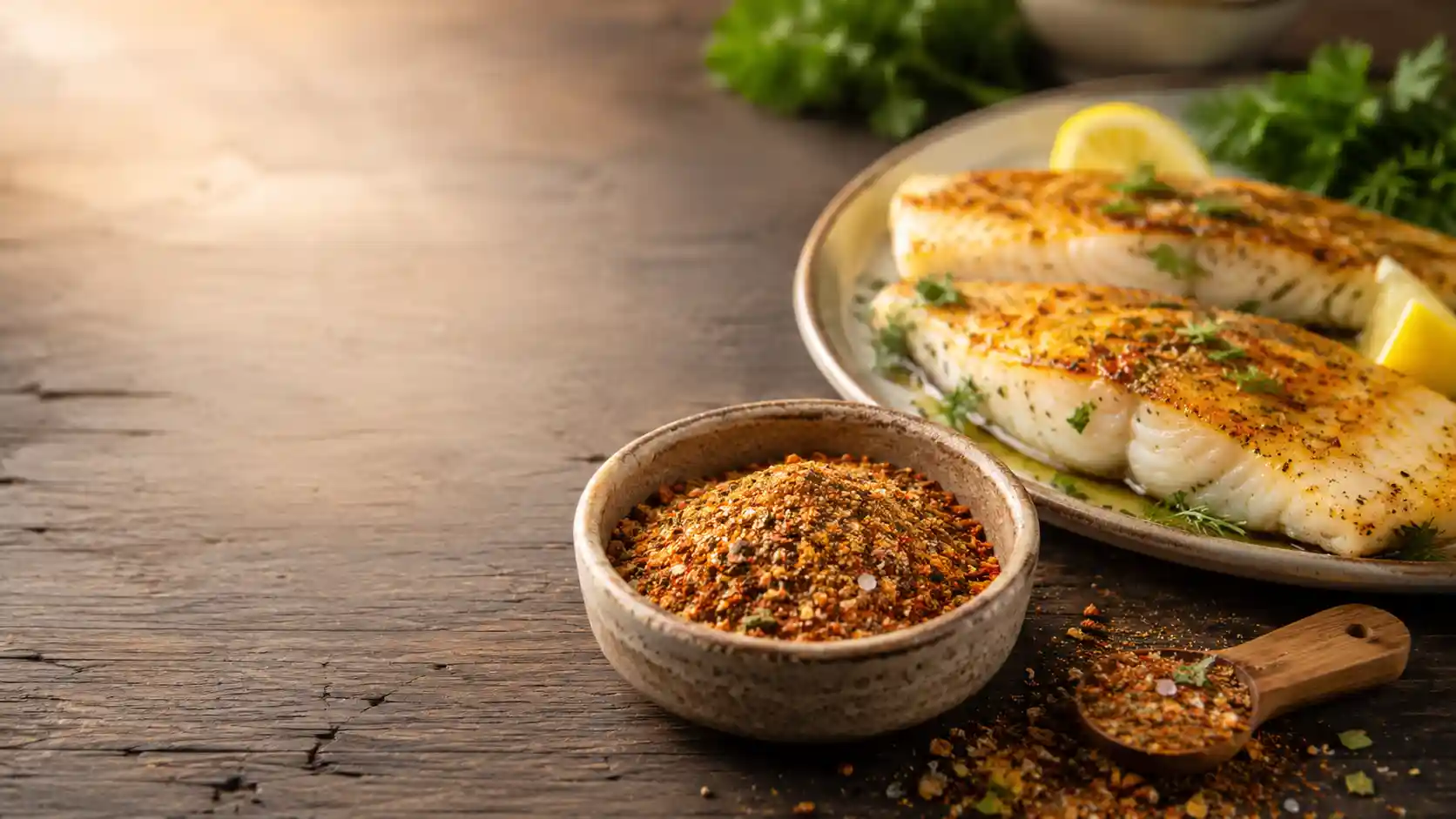
This homemade fish seasoning is balanced, simple, and flexible. It works well on cod, tilapia, salmon, trout, haddock, halibut, mahi mahi, shrimp, scallops, and fish tacos.
Ingredients
| Ingredient | Amount | Purpose |
|---|---|---|
| Smoked paprika or sweet paprika | 1 tablespoon | Adds color, warmth, and mild sweetness |
| Dried parsley | 1 tablespoon | Adds fresh, herbal flavor |
| Dried dill | 2 teaspoons | Pairs well with fish and lemon |
| Garlic powder | 2 teaspoons | Adds savory flavor |
| Onion powder | 1 teaspoon | Adds depth without sharpness |
| Celery seed, lightly crushed | 1 teaspoon | Adds classic seafood-style flavor |
| Kosher salt | 1 teaspoon | Balances the blend |
| Black pepper | 1/2 teaspoon | Adds mild bite |
| Dried thyme | 1/2 teaspoon | Adds earthy herb flavor |
| Ground ginger | 1/4 teaspoon | Adds gentle warmth |
| Cayenne pepper | 1/8 to 1/4 teaspoon, optional | Adds heat |
Yield: About 5 to 6 tablespoons
Prep time: 5 minutes
Best use: Baked, grilled, pan-seared, air-fried, or fried fish
How do you make homemade fish seasoning?
- Add all spices and herbs to a small bowl.
- Stir until the blend looks even in color and texture.
- Taste a tiny pinch and adjust salt, heat, or herbs if needed.
- For a finer blend, pulse it once or twice in a spice grinder.
- Transfer to a clean, dry spice jar.
- Label the jar with the name and date.
⚠️ Do not add fresh lemon zest, fresh garlic, or fresh herbs to the storage jar. Fresh ingredients add moisture and can shorten shelf life. Add fresh lemon juice or herbs right before serving instead.
Fish Seasoning Ingredients and Flavor Roles
A great seasoning blend works because each ingredient has a job. Knowing why each spice is included helps you adjust the recipe with confidence.
| Flavor Goal | Best Ingredients | Best For |
|---|---|---|
| Mild and fresh | Dill, parsley, lemon pepper | Cod, tilapia, haddock |
| Smoky | Smoked paprika, cumin, chili powder | Salmon, mahi mahi, grilled fish |
| Spicy | Cayenne, black pepper, chili flakes | Fish tacos, catfish, shrimp |
| Savory | Garlic powder, onion powder, celery seed | Most fish and seafood |
| Herby | Thyme, oregano, parsley, dill | Baked fish and roasted fish |
| Bright | Lemon juice, lemon pepper | White fish, salmon, shrimp |
Can you use celery salt instead of celery seed?
Yes. Celery salt gives fish seasoning a classic seafood flavor. If you use celery salt, reduce or remove the added kosher salt. This helps keep the blend from becoming too salty.
Can you make fish seasoning without salt?
Yes. For a salt-free fish seasoning, leave out the kosher salt and use celery seed instead of celery salt. You can salt the fish lightly right before cooking or skip salt completely if needed.
Salt-free version:
- 1 tablespoon paprika
- 1 tablespoon dried parsley
- 2 teaspoons dried dill
- 2 teaspoons garlic powder
- 1 teaspoon onion powder
- 1 teaspoon celery seed
- 1/2 teaspoon black pepper
- 1/2 teaspoon thyme
- 1/4 teaspoon ground ginger
- Optional cayenne to taste
How Much Fish Seasoning to Use
The right amount depends on the size of the fish, the salt level of your blend, and the cooking method.
| Fish or Seafood | Suggested Amount |
|---|---|
| Small fillet, 4 to 6 ounces | 1/2 to 3/4 teaspoon |
| 1 pound fish fillets | 1 1/2 to 2 teaspoons |
| Whole fish, about 1 1/2 pounds | About 1 tablespoon |
| Shrimp, 1 pound | 1 to 1 1/2 teaspoons |
| Fish tacos, 1 pound fish | 2 teaspoons |
| Fried fish coating | 1 to 2 tablespoons per cup of flour or cornmeal |
💡 Start with less if your fish is thin or your seasoning contains celery salt, lemon pepper, or a salty store-bought spice. You can always add a little more after cooking.
Best Fish Seasoning by Fish Type
Different fish have different textures and flavors. The best fish seasoning is the one that fits the fish you are cooking.
| Fish Type | Flavor Level | Best Seasoning Style |
|---|---|---|
| Cod | Mild | Dill, parsley, garlic, paprika, lemon |
| Tilapia | Very mild | Garlic, paprika, black pepper, lemon pepper |
| Haddock | Mild | Dill, parsley, celery seed, paprika |
| Halibut | Mild and firm | Garlic, thyme, paprika, black pepper |
| Salmon | Rich | Smoked paprika, garlic, dill, cayenne |
| Trout | Delicate | Dill, parsley, lemon, light garlic |
| Mahi mahi | Firm and slightly sweet | Paprika, garlic, onion, cayenne |
| Catfish | Earthy | Paprika, garlic, cayenne, black pepper |
| Tuna | Meaty | Black pepper, garlic, ginger, sesame-style flavors |
| Shrimp | Sweet and briny | Garlic, paprika, cayenne, lemon pepper |
Which seasoning works best for white fish?
White fish like cod, tilapia, haddock, and halibut taste best with a light blend. Use paprika, garlic powder, dill, parsley, black pepper, and a small amount of salt. Add lemon after cooking for a clean finish.
What seasoning works best for salmon?
Salmon can handle stronger flavor. Use smoked paprika, garlic powder, dill, black pepper, and a small pinch of cayenne. A little brown sugar can also work if you want a sweet-smoky grilled salmon flavor.
What seasoning works best for fish tacos?
For fish tacos, make the blend bolder. Add cumin, chili powder, extra paprika, and a pinch of cayenne. Finish with lime juice, cabbage slaw, and a creamy sauce.
How to Use Fish Seasoning for Different Cooking Methods
Fish seasoning works as a dry rub, a quick marinade, or a coating mix. The method depends on how you plan to cook the fish.
How do you use fish seasoning for baked fish?
Pat the fish dry first. Brush it with a little olive oil or melted butter. Sprinkle seasoning on both sides, then bake until the fish flakes easily.
A simple baked fish method:
- Heat oven to 400°F.
- Place fish on a lined baking sheet.
- Brush with oil or butter.
- Add fish seasoning.
- Bake until cooked through and flaky.
🌡️ For food safety, seafood should generally reach an internal temperature of 145°F, according to FoodSafety.gov and the FDA. Fish should also look opaque and separate easily with a fork.
How do you use fish seasoning for grilled fish?
Grilled fish needs seasoning that can stand up to heat. Brush the fish with oil, add seasoning, and let it sit for 10 to 15 minutes before grilling.
Use firm fish for grilling, such as salmon, mahi mahi, swordfish, halibut, or tuna. Delicate fish can fall apart unless cooked in foil or a grill basket.
How do you use fish seasoning for pan-seared fish?
Pat the fish very dry. Add seasoning right before cooking so the surface stays dry enough to brown. Heat oil in a skillet, then cook the fish until golden and flaky.
For thin fillets, avoid too much seasoning. A heavy coating can burn before the fish is fully cooked.
How do you use fish seasoning in an air fryer?
Brush the fish lightly with oil, season it, and place it in a single layer. Air fry until the fish is cooked through and flakes easily. For breaded fish, mix seasoning into breadcrumbs, flour, or cornmeal.
Dry Rub vs Marinade: Which Is Better?
Both methods work, but they create different results.
| Method | Best For | How to Use |
|---|---|---|
| Dry rub | Quick dinners, pan-searing, grilling | Sprinkle seasoning directly on fish |
| Oil paste | Baking, grilling, air frying | Mix seasoning with oil, then brush on fish |
| Wet marinade | Stronger flavor, thicker fish | Mix seasoning with oil and lemon juice |
| Coating mix | Fried fish | Add seasoning to flour, cornmeal, or breadcrumbs |
Should you marinate fish with lemon juice?
Use lemon juice carefully. Acid can firm up delicate fish if it sits too long. For most fillets, 10 to 20 minutes is enough. For very thin fish, add lemon after cooking instead.
Easy Fish Seasoning Variations
Once you have the base recipe, you can adjust it for different meals.
| Variation | Add This | Best Use |
|---|---|---|
| Lemon herb | Lemon pepper, extra dill, parsley | Cod, trout, tilapia |
| Cajun-style | Cayenne, oregano, thyme, smoked paprika | Catfish, salmon, shrimp |
| Taco-style | Cumin, chili powder, lime zest after cooking | Fish tacos |
| Mediterranean | Oregano, thyme, parsley, garlic | Baked fish, grilled fish |
| Caribbean-style | Allspice, thyme, ginger, cayenne | Snapper, mahi mahi, shrimp |
| Garlic butter | Extra garlic powder, parsley, butter after cooking | White fish, shrimp |
Best Side Dishes for Seasoned Fish
Seasoned fish pairs well with simple sides. Choose a side that balances the flavor of the seasoning.
Good vegetable sides:
- Roasted asparagus
- Steamed broccoli
- Grilled zucchini
- Green beans
- Cucumber tomato salad
- Roasted carrots
- Cabbage slaw
Good starch sides:
- Lemon rice
- Garlic mashed potatoes
- Roasted potatoes
- Pasta with olive oil and herbs
- Couscous
- Quinoa
- Cornbread for fried fish
Fresh finishing ideas:
- Lemon wedges
- Lime juice
- Fresh parsley
- Dill sauce
- Garlic yogurt sauce
- Tartar sauce
- Avocado crema for tacos
Common Fish Seasoning Mistakes
Even a good spice blend can taste wrong if you use it the wrong way. These mistakes are easy to avoid.
Using too much salt
Celery salt, lemon pepper, seasoning salt, and store-bought blends can contain a lot of sodium. If your blend already has salt, do not add more until you taste the cooked fish.
Seasoning wet fish
Moisture stops fish from browning. Pat fillets dry with paper towels before adding oil and seasoning.
Adding fresh ingredients to the spice jar
Fresh lemon zest, fresh garlic, and fresh herbs can add moisture. This may cause clumping and reduce shelf life. Add fresh ingredients during cooking or serving.
Using stale spices
Old spices lose aroma and taste flat. Rub a small pinch between your fingers. If it smells weak, replace it.
Overpowering delicate fish
Tilapia, sole, flounder, trout, and haddock need lighter seasoning. Save bold blends for salmon, tuna, catfish, mahi mahi, and grilled fish.
Burning the spices
Paprika, garlic powder, and dried herbs can burn over high heat. For pan-searing, use medium to medium-high heat and avoid overcrowding the pan.
Practical Tips for Best Results
- Pat fish dry before seasoning.
- Use oil or butter to help seasoning stick.
- Start with 1 1/2 teaspoons per pound, then adjust.
- Use less seasoning on thin fillets.
- Add lemon juice after cooking for brighter flavor.
- Let seasoned fish rest for 5 to 10 minutes before cooking when grilling.
- Use smoked paprika for deeper flavor.
- Use sweet paprika for a milder family-friendly blend.
- Make small batches so the spices stay fresh.
- Label the jar with the date.
Storage and Shelf Life
Store homemade fish seasoning in a clean, dry, airtight jar. Keep it in a cool, dark pantry away from heat, light, and moisture.
For best flavor, use the blend within 3 to 6 months. It may last longer if the spices were fresh when you made it, but the aroma will fade over time.
⚠️ Do not refrigerate the dry seasoning. Refrigerators can add moisture to the jar, which may cause clumping.
How do you know if fish seasoning is still good?
Check three things:
- Smell: It should smell fresh and aromatic.
- Texture: It should be dry, not damp or hard.
- Color: Paprika and herbs should still look bright, not dull or faded.
If the blend smells weak or dusty, make a fresh batch.
Quick Summary / Key Takeaways
- Fish seasoning is a dry spice blend used to flavor fish before cooking.
- The best fish seasoning balances herbs, paprika, garlic, pepper, celery seed, and salt.
- Use about 1 1/2 to 2 teaspoons per pound of fish.
- Use less seasoning on mild white fish and more on salmon or fish tacos.
- Store the blend in an airtight jar in a cool, dry pantry.
- Make a salt-free version by removing salt and using celery seed instead of celery salt.
- Add lemon juice after cooking for the freshest flavor.
FAQs
What is the best seasoning for fish?
The best fish seasoning usually includes paprika, garlic powder, onion powder, dill, parsley, celery seed, black pepper, and salt. This mix gives fish a balanced flavor without hiding its natural taste.
How much fish seasoning should I use per pound?
Use about 1 1/2 to 2 teaspoons of fish seasoning per pound of fish. Use less for thin or delicate fillets and more for thicker fish, fish tacos, or grilled seafood.
Can I use fish seasoning on shrimp?
Yes. Fish seasoning works well on shrimp. Use about 1 to 1 1/2 teaspoons per pound of shrimp, then cook until the shrimp turn firm, opaque, and pink.
Is fish seasoning good for salmon?
Yes. Salmon works well with a stronger fish seasoning that includes smoked paprika, garlic powder, dill, black pepper, and a small pinch of cayenne.
Can I make fish seasoning without paprika?
Yes. You can leave out paprika, but the blend will have less color and warmth. Replace it with dried parsley, dill, lemon pepper, or a small amount of chili powder if you want a different flavor.
Can I use this seasoning for fried fish?
Yes. Add 1 to 2 tablespoons of fish seasoning to each cup of flour, cornmeal, breadcrumbs, or fish fry coating. This gives fried fish more flavor in every bite.
How long does homemade fish seasoning last?
Homemade fish seasoning tastes best within 3 to 6 months when stored in an airtight jar in a cool, dry pantry. Replace it sooner if the aroma fades.
Should I season fish before or after cooking?
Season fish before cooking so the spices can flavor the surface. Add fresh lemon juice, herbs, butter, or sauce after cooking for a brighter finish.
Conclusion
Homemade fish seasoning is simple, budget-friendly, and much easier to customize than most store-bought blends. With a few pantry spices, you can build a balanced mix that works for baked fish, grilled fish, pan-seared fillets, air fryer seafood, shrimp, and fish tacos.
The key is balance. Use herbs for freshness, paprika for color, garlic and onion for savory flavor, celery seed for seafood-style depth, and black pepper or cayenne for gentle heat. Start with a small amount, taste as you go, and adjust the blend for the fish you are cooking.
Make one small jar, keep it in your pantry, and use it whenever you want fast, flavorful seafood without extra effort.