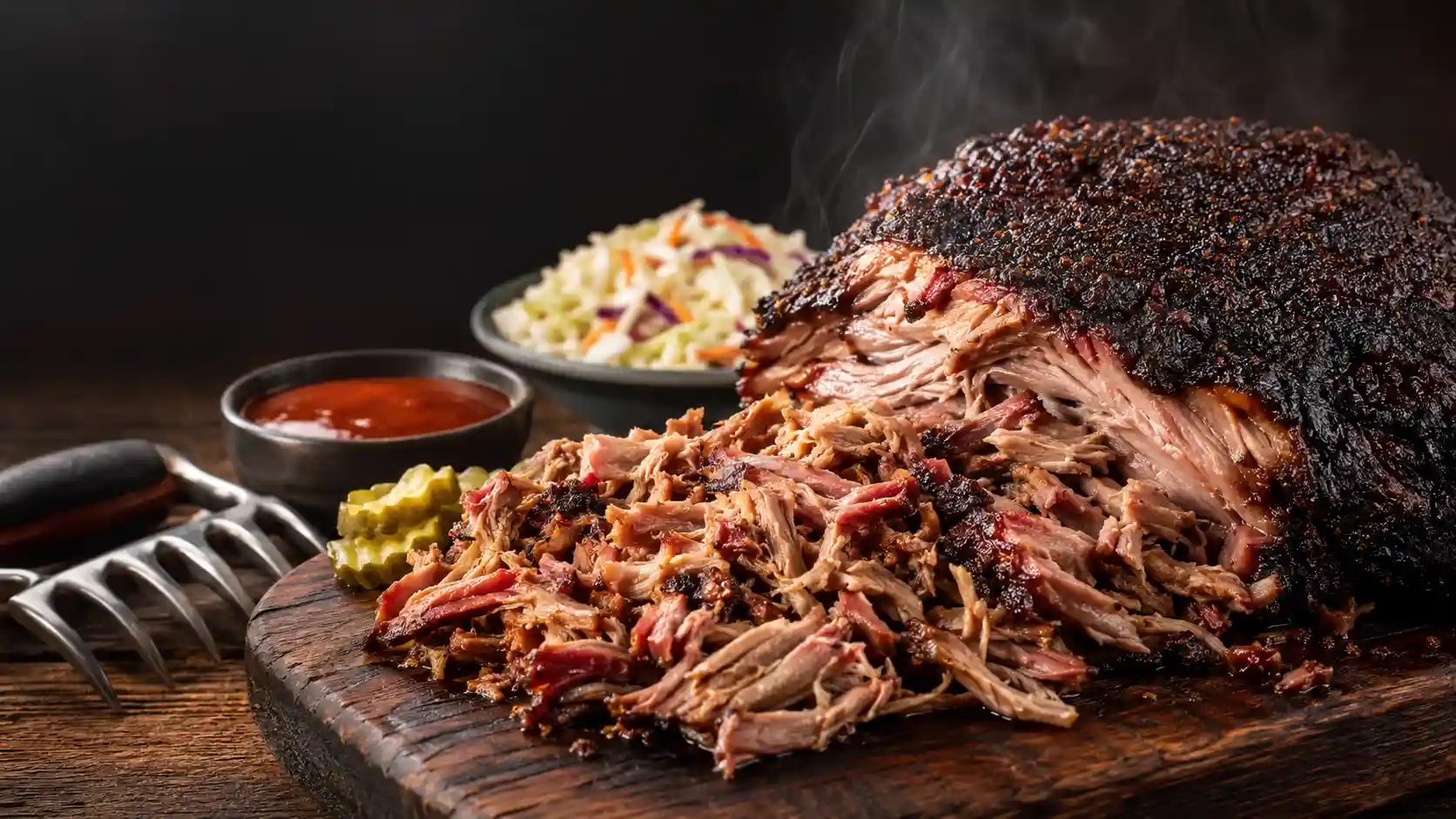
Best Smoked Pulled Pork: Tender, Juicy BBQ Pork Shoulder Guide
Learn how to choose the right pork cut, build flavorful bark, manage smoker temperature, wrap through the stall, rest properly, and shred juicy pulled pork for sandwiches, tacos, platters, and more.
Smoked pulled pork is a BBQ favorite because it turns an affordable pork shoulder into tender, juicy, smoky meat that can feed a crowd. The magic comes from low-and-slow cooking. Smoke adds flavor, time breaks down tough connective tissue, and the pork’s fat keeps the meat moist.
For many home cooks, pulled pork is also one of the most forgiving BBQ meats. It does not need the same precision as brisket, and it works well for sandwiches, sliders, tacos, nachos, rice bowls, and party platters.
The best smoked pulled pork starts with the right cut, a balanced rub, steady smoker heat, the right wood, and enough resting time before shredding. This guide explains why smoked pulled pork tastes so good, how to make it tender, and how to avoid the most common mistakes.
Last updated: July 2026
Quick Answer: Why Is Smoked Pulled Pork a BBQ Favorite?
Smoked pulled pork is a BBQ favorite because pork shoulder becomes tender, juicy, and flavorful when cooked low and slow. Smoke builds deep BBQ flavor, fat adds moisture, and connective tissue softens over time. Cook it until probe-tender, rest it well, then shred for sandwiches, tacos, platters, and leftovers.
Why Smoked Pulled Pork Tastes So Good
Smoked pulled pork works because it combines three things: fat, smoke, and time.
Pork shoulder is not naturally tender like pork tenderloin. It has more fat and connective tissue. That is exactly why it works so well for BBQ. When cooked slowly, the tough parts soften and the meat becomes easy to pull apart.
The smoke adds aroma and flavor to the outside of the pork. The rub forms a dark crust called bark. Inside, the meat stays juicy when cooked patiently.
What makes pulled pork tender?
Pulled pork becomes tender when the pork shoulder cooks long enough for connective tissue to soften. This is why pulled pork is usually cooked far above the basic safe temperature for pork.
🌡️ USDA lists 145°F with a 3-minute rest as the safe minimum for pork roasts, but pulled pork is cooked much higher for texture, not just safety. Most BBQ cooks pull pork shoulder when it is around 195°F to 205°F and feels tender when probed.
Why does smoke make pork taste better?
Smoke adds flavor compounds to the surface of the pork. It also helps build that classic BBQ aroma.
The first part of the cook is when smoke flavor matters most. As the surface dries and bark forms, the pork takes on smoke more slowly. That is why steady early smoke is more useful than heavy smoke late in the cook.
Why is bark important?
Bark is the dark, seasoned crust on smoked meat. It forms when the rub, smoke, heat, and meat surface work together.
Good bark should taste savory, smoky, slightly sweet, and peppery. It adds texture to soft shredded pork. When you mix the bark into the pulled meat, every bite tastes more complete.
Best Pork Cut for Smoked Pulled Pork
The best cut for smoked pulled pork is pork butt, also called Boston butt. It comes from the upper shoulder and has the right mix of fat, muscle, and connective tissue.
Pork shoulder can also work, especially if it includes the picnic portion. Pork loin is not ideal because it is too lean and can dry out.
| Pork Cut | Best For | Texture | Notes |
|---|---|---|---|
| Boston butt / pork butt | Best smoked pulled pork | Juicy, tender, easy to shred | Most reliable choice |
| Whole pork shoulder | Large BBQ gatherings | Rich and flavorful | May include butt and picnic |
| Picnic shoulder | Budget BBQ | Slightly firmer | Can need longer cooking |
| Pork loin | Slicing, not pulling | Lean and mild | Not best for pulled pork |
| Pork tenderloin | Quick meals | Very lean | Too lean for classic pulled pork |
Bone-in or boneless pork butt?
Both work, but bone-in pork butt is often preferred for smoking. It holds its shape well and gives you a built-in doneness clue. When the bone wiggles easily, the pork is usually close to tender.
Boneless pork butt cooks well too. Tie it with butcher’s twine if it opens unevenly, so it cooks more evenly.
How much pork should you buy?
A useful rule is to plan for shrinkage. Pork butt loses weight during smoking because fat renders and moisture evaporates.
For most meals:
- Plan 1/3 to 1/2 pound cooked pulled pork per adult.
- Buy more if serving big eaters or fewer side dishes.
- A 7- to 8-pound pork butt usually feeds a small gathering with sides.
Preparing Smoked Pulled Pork Like a Pro
Good prep makes the final pork taste better. You do not need complicated steps, but each step should have a reason.
Should you trim the fat cap?
Trim thick, hard fat, but do not remove all fat. Leave a thin layer if needed.
Too much surface fat can block rub and smoke. Too little fat can reduce moisture. For most readers, trimming the fat cap to about 1/4 inch or less is a practical target.
Should you use mustard as a binder?
Mustard is optional. It helps rub stick, but it does not make the pork taste strongly like mustard after smoking.
Good binder options include:
- Yellow mustard
- Hot sauce
- Olive oil
- Apple cider vinegar
- No binder at all
Use a thin layer. Too much binder can make the rub slide off.
Should you dry brine pork shoulder?
A dry brine means salting the meat ahead of time. This can help the pork taste seasoned beyond the surface.
A simple approach:
- Salt the pork lightly the night before.
- Refrigerate uncovered or loosely covered.
- Add the rest of the rub before smoking.
If your BBQ rub already contains plenty of salt, do not add a heavy dry brine. You can make the pork too salty.
Best Rub for Smoked Pulled Pork
A good smoked pulled pork rub should balance sweet, salty, smoky, spicy, and savory flavors.
A basic rub can include:
- Brown sugar
- Smoked paprika
- Kosher salt
- Black pepper
- Garlic powder
- Onion powder
- Chili powder
- Cayenne pepper, optional
- Mustard powder, optional
How much rub should you use?
Use enough rub to coat the pork evenly on all sides. The meat should look fully seasoned, but the rub should not be piled on like wet mud.
A simple guide:
| Pork Size | Rub Amount |
|---|---|
| 4-pound pork butt | 1/4 to 1/3 cup |
| 6-pound pork butt | 1/3 to 1/2 cup |
| 8-pound pork butt | 1/2 cup or slightly more |
| 10-pound pork butt | 1/2 to 3/4 cup |
Should pulled pork rub be sweet or savory?
It depends on your BBQ style.
Sweet rubs are popular for sandwiches and family BBQ. Pepper-heavy rubs taste more savory and work well with vinegar sauce. Spicy rubs are great for tacos, nachos, and bold BBQ platters.
A useful way to approach this is simple: sweet rub for classic BBQ sandwiches, peppery rub for savory pulled pork, spicy rub for tacos and nachos.
Best Wood for Smoked Pulled Pork
Wood choice changes the flavor. Some woods are bold. Others are mild and sweet.
| Wood Type | Flavor | Best Use |
|---|---|---|
| Hickory | Strong, classic BBQ smoke | Traditional pulled pork |
| Apple | Mild, sweet, fruity | Family-friendly BBQ |
| Cherry | Fruity, rich color | Great bark color |
| Pecan | Nutty, medium smoke | Balanced pulled pork |
| Oak | Clean, steady smoke | Larger pork shoulders |
| Maple | Mild and slightly sweet | Sweeter BBQ rubs |
What wood should beginners use?
For beginners, apple and hickory are a good mix. Apple keeps the smoke gentle, while hickory gives classic BBQ flavor.
If you want a stronger smoke flavor, use more hickory or oak. If you want a softer flavor, use apple, cherry, or pecan.
Can you oversmoke pulled pork?
Yes. Too much dirty smoke can make pork taste bitter.
⚠️ Clean smoke should look thin and light, not thick and gray. If your smoker is producing heavy smoke for hours, adjust airflow and fuel.
Smoking Temperature and Time
Most smoked pulled pork is cooked between 225°F and 275°F. Lower heat takes longer and can build strong smoke flavor. Higher heat finishes faster and still gives excellent results when managed well.
| Smoker Temp | Style | Approximate Result |
|---|---|---|
| 225°F | Traditional low-and-slow | Long cook, deep smoke |
| 250°F | Balanced method | Reliable for most home cooks |
| 275°F | Faster BBQ method | Shorter cook, still tender |
| 300°F | Hotter method | Faster, but needs attention |
Hey Grill Hey uses a 275°F method, wraps around the mid-cook stage, and finishes when the pork reaches at least 200°F and probes tender. AmazingRibs notes that at 225°F, pulled pork may take about 1 hour and 15 minutes per pound, though time varies by meat thickness and cooker.
How long does smoked pulled pork take?
A rough estimate is 1 to 2 hours per pound, depending on temperature, pork size, smoker type, weather, and wrapping.
Do not cook by time alone. Time helps you plan, but tenderness tells you when the pork is done.
What internal temperature is best?
Most pulled pork is ready around 195°F to 205°F. Some pork shoulders are tender at 198°F. Others need 203°F or 205°F.
The best test is the probe test. A thermometer probe should slide into the meat with little resistance, like soft butter.
The Stall and When to Wrap Pork
The stall is a period when the pork’s internal temperature seems to stop rising. It often happens around 150°F to 170°F.
This can feel frustrating, but it is normal. Moisture evaporates from the surface and cools the meat, slowing the temperature rise.
Should you wrap smoked pulled pork?
Wrapping is optional, but it helps speed up the cook and protect moisture.
Common wrap options:
| Wrap Method | Pros | Cons |
|---|---|---|
| Foil | Fastest, holds moisture well | Can soften bark |
| Butcher paper | Protects bark better | Does not hold as much moisture |
| No wrap | Best bark texture | Longest cook |
| Foil pan covered with foil | Saves juices | Softer bark but easy shredding |
If you want thick bark, wait to wrap until the bark looks dark and set. If you want faster cooking, wrap when the pork reaches the stall.
Resting and Shredding Smoked Pulled Pork
Resting is not optional if you want juicy pulled pork. It lets the meat relax and keeps more moisture in the final shred.
How long should smoked pulled pork rest?
Rest for at least 30 minutes. For a large pork butt, 1 to 2 hours in a warm cooler can work well.
Keep the pork wrapped during the rest. Place it in a pan or cooler with towels to hold warmth.
How do you shred pulled pork?
Use two forks, meat claws, or gloved hands. Remove large pieces of fat or gristle. Mix in some reserved juices for moisture.
Do not shred it too finely. Good pulled pork should have soft strands, bark pieces, and some texture.
Should you sauce pulled pork before serving?
For best texture, add sauce lightly after shredding or serve sauce on the side.
Too much sauce can hide the smoke and bark. A small amount of vinegar sauce, mustard sauce, or sweet BBQ sauce can brighten the pork.
Serving Ideas for Smoked Pulled Pork
Smoked pulled pork is popular because it works in many meals.
Classic serving ideas:
- Pulled pork sandwiches with coleslaw
- Pulled pork sliders for parties
- BBQ pork tacos with pickled onions
- Loaded baked potatoes
- BBQ nachos
- Pulled pork mac and cheese
- Rice bowls
- Breakfast hash
- Pulled pork pizza
- BBQ platters with beans and cornbread
What sides go best with smoked pulled pork?
The best sides balance the rich pork with crunch, acid, or sweetness.
Great choices include:
- Creamy coleslaw
- Vinegar slaw
- Baked beans
- Potato salad
- Mac and cheese
- Pickles
- Cornbread
- Grilled corn
- Collard greens
- Cucumber salad
Common Smoked Pulled Pork Mistakes
Even experienced cooks can run into problems. Most issues come from rushing, oversmoking, under-resting, or using the wrong cut.
Why is my smoked pulled pork tough?
It is usually undercooked. Pork shoulder can reach a safe temperature before it becomes tender enough to pull.
Keep cooking until the meat probes tender. Do not stop just because the thermometer says 180°F.
Why is my pulled pork dry?
Dry pork can come from a lean cut, cooking too hot without protection, shredding too early, or not mixing juices back in.
Use pork butt, rest it well, and save the drippings. Add warm broth, reserved juices, or a light sauce if needed.
Why is my bark too soft?
Soft bark often comes from wrapping too early or trapping too much steam.
To fix it next time, wait until the bark is dark and firm before wrapping. You can also unwrap near the end for a short bark-setting finish.
Why does my pork taste bitter?
Bitter pork often means dirty smoke, too much smoke, or burned sugar.
Use clean airflow, avoid thick white smoke, and keep sugar-heavy rubs away from direct high heat.
Why did my pork cook faster or slower than expected?
Every pork shoulder is different. Thickness, fat content, bone, smoker airflow, weather, and wrapping all affect timing.
Plan extra time. Finished pork can rest in a warm cooler, but undercooked pork cannot be rushed at the last minute.
Storage, Reheating, and Leftovers
Smoked pulled pork makes excellent leftovers, but it needs safe storage.
🧊 USDA food-safety guidance says cooked leftovers should generally be used within 3 to 4 days. USDA also advises refrigerating leftovers within 2 hours, and reheating foods to 165°F until hot and steaming.
How do you store smoked pulled pork?
Cool leftovers quickly and store them in shallow containers.
Storage guide:
| Storage Method | Best Use Time |
|---|---|
| Refrigerator | 3 to 4 days |
| Freezer | 2 to 3 months for best quality |
| Vacuum sealed and frozen | Longer quality retention |
How do you reheat pulled pork without drying it out?
Reheat gently with moisture.
Good options:
- Covered pan in a low oven
- Stovetop pan with broth or juices
- Vacuum-sealed bag in warm water
- Microwave with a cover and splash of liquid
Avoid high heat. It can dry out the shredded pork.
Practical Tips for the Best Smoked Pulled Pork
Use these tips to make your next cook easier.
- Start earlier than you think. Pulled pork can rest if it finishes early.
- Use a leave-in thermometer for easier tracking.
- Cook to tenderness, not only temperature.
- Keep smoker smoke clean and steady.
- Do not open the lid too often.
- Save pan juices and mix them back into shredded pork.
- Shred while warm, not cold.
- Serve sauce on the side for better texture.
💡 For most readers, the best beginner setup is simple: pork butt, dry rub, 250°F smoker, apple-hickory wood, wrap at the stall, cook until probe-tender, rest, shred, and serve.
Quick Summary: Key Takeaways
- Smoked pulled pork is loved because it is tender, smoky, juicy, and crowd-friendly.
- Pork butt or Boston butt is the best cut for classic pulled pork.
- Smoke between 225°F and 275°F depending on your preferred method.
- Cook until the pork reaches about 195°F to 205°F and probes tender.
- Wrap during the stall if you want a faster cook and softer texture.
- Rest the pork before shredding to keep it juicy.
- Add sauce lightly or serve it on the side.
- Store leftovers safely and use refrigerated pulled pork within 3 to 4 days.
FAQs About Smoked Pulled Pork
What is the best cut for smoked pulled pork?
The best cut is pork butt, also called Boston butt. It has enough fat and connective tissue to become tender during low-and-slow smoking. Pork shoulder also works well.
What temperature should smoked pulled pork reach?
Most smoked pulled pork becomes tender around 195°F to 205°F. The exact number can vary, so use the probe test. The meat should feel soft and easy to pull apart.
How long does it take to smoke pulled pork?
It usually takes 1 to 2 hours per pound, depending on smoker temperature, meat size, wrapping, and weather. Always plan extra time because large pork shoulders can stall.
Should I smoke pulled pork at 225°F or 250°F?
Both work. 225°F gives a longer traditional smoke. 250°F is a good balance for most home cooks because it cooks a little faster while still producing tender pork.
Is 275°F too hot for smoked pulled pork?
No. Many BBQ cooks use 275°F for a faster method. Keep the pork moist, watch the bark, and wrap if needed. It can still turn out juicy and tender.
Do you smoke pork fat side up or down?
Both methods can work. Fat side down can protect the meat from heat below. Fat side up may help baste the surface slightly. Choose based on where the main heat comes from in your smoker.
Should you wrap smoked pulled pork?
Wrapping is optional. Wrap in foil or butcher paper if you want to move through the stall faster and protect moisture. Leave it unwrapped if you want firmer bark and do not mind a longer cook.
How long should smoked pulled pork rest?
Rest smoked pulled pork for at least 30 minutes. A large pork butt can rest for 1 to 2 hours in a warm cooler while still staying juicy.
What wood is best for smoked pulled pork?
Hickory, apple, cherry, pecan, and oak all work well. Beginners can use a mix of apple and hickory for a balanced flavor.
Can you freeze smoked pulled pork?
Yes. Freeze pulled pork in airtight bags or containers with a little juice to protect moisture. For best quality, use it within 2 to 3 months.
Conclusion
Smoked pulled pork remains a BBQ favorite because it delivers big flavor without needing expensive meat or advanced cooking skills. With the right pork cut, steady heat, clean smoke, a balanced rub, and enough time, pork shoulder turns into tender shredded BBQ that works for almost any meal.
The most important lesson is to cook for tenderness. A thermometer helps, but the real test is how the pork feels. When the probe slides in easily and the meat pulls apart without force, it is ready.
Use this guide as your starting point. Try different woods, rubs, sauces, and sides until you find your favorite version. Whether you serve it on buns, tacos, nachos, or a BBQ platter, well-made smoked pulled pork is the kind of meal people remember.