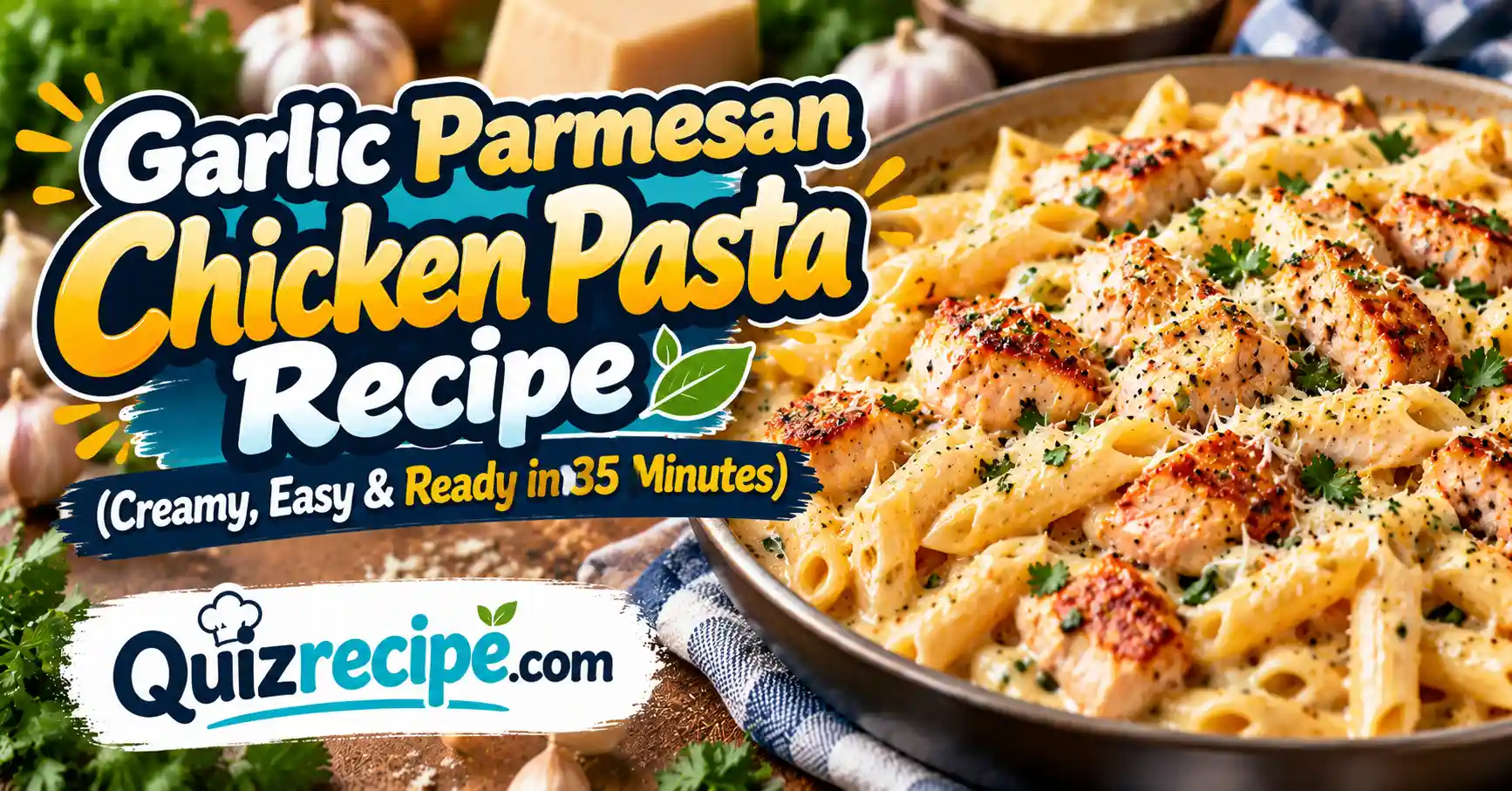
A comforting, restaurant-style chicken pasta with tender golden chicken, perfectly cooked noodles, and a rich garlic Parmesan cream sauce.
Garlic Parmesan Chicken Pasta Recipe is a comforting weeknight dinner made with tender, golden chicken, perfectly cooked pasta, and a rich garlic Parmesan cream sauce. It brings together simple pantry ingredients in a meal that feels restaurant-worthy without requiring complicated techniques.
Whether you’re cooking for your family, preparing a cozy dinner for two, or looking for a satisfying meal after work, this creamy chicken pasta is a dependable choice. The chicken is seasoned and browned in a skillet, while fresh garlic, butter, cream, and Parmesan create a silky sauce that clings to every piece of pasta.
The best part? You can make this garlic Parmesan chicken pasta in approximately 35 minutes, using one skillet and a separate pasta pot. You’ll also find helpful variations, ingredient substitutions, troubleshooting advice, and storage instructions.
Quick Answer: How Do You Make Garlic Parmesan Chicken Pasta?
Cook seasoned chicken until golden and safely cooked through. Prepare a creamy sauce using butter, fresh garlic, chicken broth, heavy cream, and Parmesan cheese. Toss with cooked pasta, adjust the sauce using reserved pasta water, and finish with fresh parsley.
Time: Approximately 35 minutes | Servings: 4 | Difficulty: Beginner-friendly.
Garlic Parmesan Chicken Pasta at a Glance
Main Ingredients
Chicken, pasta, garlic, Parmesan, butter, and cream.
Best Pasta
Penne, rigatoni, rotini, or fettuccine.
Cooking Method
Stovetop using a skillet and separate pasta pot.
Best Cheese
Freshly grated Parmesan for smoother melting.
Easy Variations
Broccoli, spinach, mushrooms, or chicken thighs.
Leftovers
Refrigerate promptly and use within 3–4 days.
Why You’ll Love This Garlic Parmesan Chicken Pasta
A good creamy chicken pasta should deliver three things: juicy chicken, tender noodles, and a sauce that coats the pasta without becoming heavy or clumpy.
This recipe uses a straightforward cooking method that gives you control over each component. The pasta cooks separately, so you can drain it when it’s just tender. Meanwhile, the chicken develops a golden exterior before the garlic Parmesan sauce comes together in the same skillet.
- Simple ingredients: Most items are available at ordinary grocery stores.
- Fast preparation: Approximately 35 minutes with ingredients prepared in advance.
- Family-friendly flavor: Garlic, butter, and Parmesan create a savory sauce without overwhelming heat.
- Flexible protein: Chicken breasts or thighs both work.
- Customizable vegetables: Add broccoli, spinach, mushrooms, or peas.
- Easy portions: Serves four and can be scaled.
- Minimal equipment: A pasta pot, skillet, and basic utensils.
- Useful leftovers: Extra portions make convenient lunches.
Why the Separate-Pot Method Works
Unlike one-pot pasta, cooking the noodles separately lets you control the pasta and sauce independently. That’s particularly helpful when learning to make creamy Parmesan sauces.
Garlic Parmesan Chicken Pasta Ingredients
The ingredients are familiar, but their quality and preparation affect the finished dish. Fresh garlic gives the sauce its aroma, while Parmesan provides the salty, nutty flavor.
Ingredients for 4 Servings
| Ingredient | Amount | Purpose |
|---|---|---|
| Boneless chicken breasts | 1 pound | Main protein |
| Dry penne pasta | 12 ounces | Pasta base |
| Olive oil | 1 tablespoon | Browning chicken |
| Unsalted butter | 2 tablespoons | Richness |
| Fresh garlic | 4 cloves, minced | Aromatic flavor |
| Heavy cream | 1 cup | Creamy sauce |
| Chicken broth | ½ cup | Savory depth |
| Parmesan | About 1 cup | Cheese flavor |
| Italian seasoning | ½ teaspoon | Herbal flavor |
| Paprika | ½ teaspoon | Color and warmth |
| Kosher salt | ½ teaspoon, plus more as needed | Seasoning |
| Black pepper | ¼ teaspoon | Gentle heat |
| Fresh parsley | 2 tablespoons | Garnish |
| Lemon juice | 1 teaspoon, optional | Balances richness |
Recipe testing note: These quantities form a practical home-cooking recipe, but they have not been independently kitchen-tested for this article. Cooking time and sauce consistency can vary.
Printable Garlic Parmesan Chicken Pasta Recipe Card
Creamy Garlic Parmesan Chicken Pasta
Golden chicken and tender pasta coated in a smooth garlic-Parmesan cream sauce.
Ingredients Checklist
Quick Cooking Instructions
- Cut chicken into evenly sized pieces and season with Italian seasoning, paprika, salt, and pepper.
- Cook penne until al dente. Reserve at least ½ cup pasta water and drain.
- Heat olive oil and 1 tablespoon butter. Brown chicken until it reaches 165°F.
- Remove chicken. Reduce heat and melt remaining butter with garlic for 30–60 seconds.
- Add broth and cream. Simmer gently for 2–3 minutes.
- Lower heat and stir in freshly grated Parmesan gradually.
- Add pasta and cooked chicken. Toss gently and loosen with reserved pasta water as needed.
- Garnish with parsley, optional lemon juice, and additional Parmesan. Serve warm.
Important Chicken Safety
Chicken must reach an internal temperature of 165°F (74°C). Use a food thermometer rather than relying on appearance alone.
Choosing the Best Chicken
Boneless, skinless chicken breasts cook quickly and have a mild flavor. Cut them into evenly sized pieces so they finish at roughly the same time.
Boneless chicken thighs are another excellent option. They contain more fat and tend to remain juicy during cooking. Their richer flavor pairs well with garlic and Parmesan.
For either cut, use an instant-read thermometer to verify 165°F (74°C) at the thickest point.
Why Fresh Parmesan Matters
Parmesan provides much of the sauce’s flavor. Its savory, slightly nutty taste balances the richness of butter and cream.
Freshly grated Parmesan is preferable to coarse pre-shredded cheese because packaged varieties may contain ingredients that affect melting.
Parmigiano Reggiano is a traditional Italian hard cheese that works beautifully here. Domestic Parmesan can also produce a flavorful sauce.
Parmesan Measurement Tip
For more consistent measurements, weigh the cheese when possible. One cup can vary considerably depending on how finely it’s grated.
Fresh Garlic vs. Garlic Powder
Fresh garlic is the first choice because it releases aromatic compounds when gently heated in butter.
Garlic powder can help when fresh garlic isn’t available, but the flavor differs. Start with approximately ½ teaspoon garlic powder in place of four fresh cloves, then adjust to taste.
Avoid browning minced garlic too deeply. Burned garlic can make the sauce bitter.
Best Pasta for Garlic Parmesan Chicken Pasta
Pasta shape determines how much sauce each bite carries. Short pasta with ridges, curves, or hollow centers works particularly well.
| Pasta Shape | Texture and Coverage | Best Use |
|---|---|---|
| Penne | Hollow tubes | Family dinners |
| Rigatoni | Large ridges | Hearty portions |
| Rotini | Spirals | Vegetable additions |
| Cavatappi | Curved, ridged | Thick creamy sauces |
| Fettuccine | Wide ribbons | Alfredo-style presentation |
| Linguine | Flat strands | Lighter sauce coating |
| Farfalle | Bow-tie shape | Family-style pasta |
| Fusilli | Tight spirals | Chicken and broccoli |
Essential Pasta Tip
Cook pasta until al dente. Before draining, reserve at least ½ cup pasta water. Its starch helps loosen and bind the sauce.
How to Make Garlic Parmesan Chicken Pasta Step by Step
This stovetop method keeps chicken, pasta, and sauce under separate control until the final step. Prepare ingredients before heating the skillet because the sauce comes together quickly.
Step 1: Prepare the Chicken
Pat chicken dry and cut into approximately 1-inch pieces.
Season with ½ teaspoon Italian seasoning, ½ teaspoon paprika, ½ teaspoon kosher salt, and ¼ teaspoon black pepper.
Toss until evenly coated. Drying the chicken helps encourage browning instead of steaming.
Step 2: Cook the Pasta
Bring a large pot of water to a boil and salt according to preference.
Add 12 ounces penne and cook until al dente according to package directions.
Reserve at least ½ cup pasta water before draining. Do not rinse the noodles because surface starch helps the sauce cling.
Step 3: Brown the Chicken
Heat a large skillet over medium-high heat. Add 1 tablespoon olive oil and 1 tablespoon butter.
Add chicken in a single layer and cook approximately 6–9 minutes, turning occasionally.
Cook until golden and the thickest pieces reach 165°F. Work in batches if necessary.
Transfer to a clean plate.
Step 4: Sauté the Garlic
Reduce heat to medium-low. Add the remaining tablespoon butter and minced garlic.
Cook approximately 30–60 seconds, stirring frequently until fragrant.
Let the skillet cool briefly if excessively hot. Garlic should soften without turning dark brown.
Step 5: Build the Creamy Sauce
Pour ½ cup low-sodium chicken broth into the skillet, scraping up browned bits.
Add 1 cup heavy cream and stir.
Allow a gentle simmer for approximately 2–3 minutes. Avoid a vigorous boil.
Step 6: Add the Parmesan
Remove the skillet from direct heat or keep over very low heat.
Add Parmesan in small handfuls, stirring between additions.
If too thick, add reserved pasta water one tablespoon at a time. The goal is a smooth sauce that lightly coats a spoon.
Step 7: Combine Pasta and Chicken
Add drained pasta and toss until coated.
Return cooked chicken and collected juices to the skillet.
Stir gently until evenly distributed and hot. Taste before adding extra salt.
Step 8: Garnish and Serve
Sprinkle with fresh parsley, additional Parmesan, and black pepper.
Add approximately 1 teaspoon lemon juice for brightness if desired.
Serve immediately while warm and creamy.
How to Make the Creamiest Garlic Parmesan Sauce
A creamy Parmesan sauce depends on three factors: gentle heat, finely grated cheese, and the right amount of liquid.
The most common mistake is adding cheese while the sauce is boiling. High heat can cause proteins in the cheese to tighten and form clumps.
Understanding Sauce Texture
A good garlic Parmesan sauce should flow slowly from a spoon and cling to pasta without pooling excessively.
Heavy cream provides fat and liquid, while Parmesan adds flavor and body. Pasta water helps adjust the sauce as noodles absorb moisture.
How to Prevent Grainy Parmesan Sauce
- Use finely grated Parmesan.
- Reduce heat before adding cheese.
- Add cheese gradually.
- Stir gently between additions.
- Avoid boiling after adding Parmesan.
- Add warm pasta water if the sauce thickens too quickly.
How to Fix Common Sauce Problems
| Problem | Possible Cause | Practical Fix |
|---|---|---|
| Too thick | Excess reduction | Add warm pasta water |
| Too thin | Excess liquid | Reduce gently before cheese |
| Cheese clumps | High heat | Lower heat and whisk gently |
| Bland flavor | Insufficient seasoning | Adjust salt, pepper, and cheese |
| Too salty | Cheese or broth | Add unsalted cream or pasta |
| Greasy sauce | Separated fat | Lower heat and add warm liquid |
| Bitter garlic | Burned garlic | Restart garlic base |
Important Sauce Warning
A severely separated sauce may not return to its original texture. Preventing overheating is more reliable than attempting to repair it afterward.
One-Pot Garlic Parmesan Chicken Pasta Variation
One-pot garlic Parmesan chicken pasta is useful when you want fewer dishes to wash.
Instead of boiling pasta separately, dry noodles cook directly in broth. Released starch helps create a creamy coating, but liquid management requires more attention.
How the One-Pot Method Works
- Brown seasoned chicken in a deep skillet or Dutch oven.
- Cook chicken to 165°F and transfer to a clean plate.
- Cook garlic briefly in butter.
- Add dry pasta and enough broth to support simmering.
- For 12 ounces short pasta, approximately 3 cups broth can be an initial amount.
- Stir frequently and add hot water as needed until tender.
- Reduce heat and incorporate cream and Parmesan.
- Return chicken and warm thoroughly.
Note: This is an adaptation, not an independently tested replacement for the main recipe. Pasta shape, pan size, and heat affect liquid requirements.
One-Pot vs. Separate-Pot Method
| Feature | Separate-Pot | One-Pot |
|---|---|---|
| Cleanup | Two cooking vessels | One vessel |
| Pasta texture | Easier control | Needs checking |
| Sauce thickness | Adjusted separately | Affected by starch |
| Liquid management | Predictable | Variable |
| Best for | Beginners | Experienced cooks |
Garlic Parmesan Chicken Pasta Without Heavy Cream
You can make this dish without heavy cream using butter, Parmesan, broth, and reserved pasta water.
This produces a glossy coating rather than a traditional rich cream sauce.
Butter and Pasta Water Method
- Cook pasta and reserve approximately 1 cup cooking water.
- Brown chicken separately until 165°F.
- Melt about 3 tablespoons butter with four minced garlic cloves.
- Add ½ cup warm broth and cooked pasta.
- Remove from direct heat.
- Add approximately 1 cup finely grated Parmesan gradually.
- Toss while adding warm pasta water a little at a time.
- Return chicken and serve immediately.
Can You Use Milk Instead?
Whole milk can replace heavy cream, but produces a thinner sauce.
A small amount of cornstarch may help. Mix it with cold milk, add to warm liquid, and simmer gently before lowering the heat and adding Parmesan.
The exact proportions need separate testing because milk-based sauces behave differently.
Easy Garlic Parmesan Chicken Pasta Variations
Chicken Pasta With Broccoli
Add approximately 2–3 cups broccoli florets. Steam or blanch until tender-crisp and fold into the finished pasta.
Chicken Pasta With Spinach
Add about 3 cups fresh baby spinach near the end and stir until wilted. Thaw and squeeze frozen spinach before using.
Chicken Pasta With Mushrooms
Sauté approximately 8 ounces sliced mushrooms until their moisture evaporates and edges brown. Add when combining pasta and chicken.
Chicken Pasta With Thighs
Replace chicken breast with an equal weight of boneless, skinless thighs. Cut evenly and cook to 165°F.
Spicy Garlic Parmesan Pasta
Add ¼ teaspoon crushed red pepper flakes with garlic, or use a little Cajun seasoning on the chicken.
Lemon Garlic Parmesan Pasta
Add fresh lemon zest and a small amount of lemon juice after removing sauce from heat.
Sun-Dried Tomato Version
Add a small handful of chopped, drained sun-dried tomatoes to the sauce before adding pasta.
Baked Garlic Parmesan Pasta
Combine cooked pasta, fully cooked chicken, and sauce in a greased baking dish. Top with mozzarella and Parmesan.
Bake at 375°F until bubbling and heated to 165°F throughout. Use a looser sauce to reduce dryness.
Gluten-Free and Dairy-Free Substitutions
Gluten-Free Garlic Parmesan Chicken Pasta
Replace regular penne with gluten-free pasta made from rice, corn, chickpeas, or lentils.
Follow package directions closely because some alternatives soften or break apart more easily.
For celiac disease or wheat allergies, verify pasta, broth, and seasonings, and use clean cookware to prevent cross-contact.
Dairy-Free Garlic Parmesan Chicken Pasta
- Replace butter with olive oil or dairy-free butter.
- Replace cream with unsweetened, unflavored plant-based cooking cream.
- Use a dairy-free cheese alternative suitable for sauces.
- Consider nutritional yeast for savory flavor, recognizing it doesn’t melt like Parmesan.
Allergen Reminder
Dairy-free alternatives may contain soy, nuts, or other allergens. Always check ingredient labels.
Higher-Protein Pasta Options
Chickpea or lentil pasta can contain more protein than some wheat pasta products, depending on the brand.
Use package nutrition labels for comparisons rather than assuming all alternative pastas have identical nutritional profiles.
Tips for Tender Chicken and Better Pasta
Cut Chicken Evenly
Similar-sized pieces cook more consistently.
Don’t Overcrowd
Cook in batches to encourage browning rather than steaming.
Use a Thermometer
Verify the thickest chicken pieces reach 165°F.
Keep Pasta Al Dente
Slightly firm noodles retain their shape when tossed with hot sauce.
Reserve Pasta Water
Keep extra water available and add gradually to adjust sauce.
Taste at the End
Broth and Parmesan contribute salt. Adjust seasoning after combining.
What to Serve With Garlic Parmesan Chicken Pasta
Because this pasta is rich and creamy, lighter side dishes provide a good contrast.
Fresh Green Salad
A simple salad with lemon vinaigrette adds freshness. Caesar salad is another familiar pairing.
Roasted Vegetables
Broccoli, asparagus, Brussels sprouts, and green beans complement the sauce.
Garlic Bread
Warm garlic bread offers crisp texture and is perfect for enjoying extra sauce.
Other Sides
Cucumber tomato salad, lemon arugula, roasted carrots, sautéed zucchini, and sourdough bread.
For a quick dinner, serve with a green salad. For guests, add roasted vegetables and warm bread.
How to Make Garlic Parmesan Chicken Pasta Ahead
Preparing ingredients ahead can shorten dinner preparation.
Cut and season chicken, grate Parmesan, mince garlic, and wash vegetables in advance.
Keep raw chicken refrigerated in a covered container, separate from ready-to-eat ingredients.
For the best texture, cook pasta close to serving time when possible.
If preparing full meals ahead, divide cooked pasta and chicken into shallow airtight containers. Cream sauce may thicken during refrigeration, so plan to add liquid when reheating.
Can You Double the Recipe?
Yes, but use a larger vessel and brown chicken in batches.
Doubling ingredients doesn’t necessarily double cooking time. A larger sauce quantity may take longer to warm, and pasta needs enough room to cook evenly.
For gatherings, two separate batches may give more consistent results.
How to Store, Freeze, and Reheat Leftovers
Safe Leftover Storage
Transfer leftovers to shallow airtight containers.
Refrigerate within 2 hours, or within 1 hour if the surrounding temperature exceeds 90°F (32°C).
Keep your refrigerator at 40°F (4°C) or below.
Use refrigerated chicken pasta within 3–4 days.
Freezing Garlic Parmesan Chicken Pasta
You can freeze cooked chicken pasta, although cream-based sauces may separate after thawing.
Use airtight freezer-safe containers and aim to consume within 2–3 months for best quality. Thaw in the refrigerator.
Reheating on the Stovetop
- Place pasta in a skillet over medium-low heat.
- Add a splash of broth, milk, or cream.
- Stir frequently until evenly heated.
- Verify leftovers reach 165°F.
Reheating in the Microwave
- Place a portion in a microwave-safe container.
- Add a little liquid and cover loosely.
- Heat in short intervals.
- Stir between intervals.
- Check the center temperature before eating.
Portioning leftovers helps avoid repeatedly reheating a large batch.
Common Mistakes to Avoid
| Mistake | Why It Happens | How to Avoid It |
|---|---|---|
| Burning garlic | Excessive heat | Reduce heat and stir |
| Overcooking chicken | Uneven pieces | Use a thermometer |
| Clumpy Parmesan | Boiling sauce | Add cheese over low heat |
| Thick sauce | Too little liquid | Use reserved pasta water |
| Soft noodles | Overcooking | Cook al dente |
| Too salty | Broth and cheese | Taste before seasoning |
| Dry finished pasta | Pasta absorbs sauce | Serve promptly |
Garlic Parmesan Chicken Pasta FAQs
What Is the Best Pasta for Garlic Parmesan Chicken?
Penne, rigatoni, rotini, and cavatappi work well because their shapes hold creamy sauce. Fettuccine is another option for long noodles. Penne is a dependable beginner-friendly choice.
Can I Use Rotisserie Chicken Instead of Raw Chicken?
Yes. Use approximately 2½ cups shredded cooked rotisserie chicken. Prepare the sauce, add chicken near the end, and heat thoroughly to 165°F.
Is Garlic Parmesan Chicken Pasta the Same as Chicken Alfredo?
They are similar because both can contain butter, cream, and Parmesan. Garlic Parmesan chicken pasta emphasizes garlic and may include broth, herbs, and additional seasonings.
Why Is My Garlic Parmesan Sauce Grainy?
Graininess often results from excessive heat or cheese that doesn’t melt evenly. Lower heat, use finely grated Parmesan, and add it gradually.
Can I Make Garlic Parmesan Chicken Pasta Without Cream?
Yes. Butter, Parmesan, and starchy pasta water can create a glossy sauce. Its texture differs from a cream-based sauce, and careful heat control is essential.
Can I Use Chicken Thighs Instead of Chicken Breasts?
Yes. Boneless, skinless thighs provide a richer flavor. Cut evenly and cook until they reach at least 165°F.
How Do I Keep Garlic Parmesan Chicken Pasta Creamy When Reheating?
Add a little broth, milk, or cream. Warm gently, stir frequently, and reheat to 165°F. The sauce may not return to its original texture.
What Vegetables Go Well With Garlic Parmesan Chicken Pasta?
Broccoli, spinach, mushrooms, asparagus, peas, and zucchini all work well. Cook firmer vegetables first and add tender greens near the end.
Final Thoughts
This Garlic Parmesan Chicken Pasta Recipe brings together tender chicken, comforting pasta, and a rich garlic Parmesan sauce using straightforward ingredients.
The separate-pot stovetop method gives you control over chicken, noodles, and sauce, making it a practical family dinner.
Start with penne, fresh garlic, and finely grated Parmesan for the classic version. Once you’re comfortable, try adding broccoli, spinach, mushrooms, or a touch of lemon.
The key to success: Cook chicken safely, keep pasta al dente, and melt Parmesan over gentle heat. These steps help produce a creamy, flavorful dinner worth making again.
Read More :
Best Starbucks Drinks in 2026: Popular Orders, Iced Coffee, Refreshers, and More
Protein Drinks: Best Options, Easy Recipes & Buying Guide