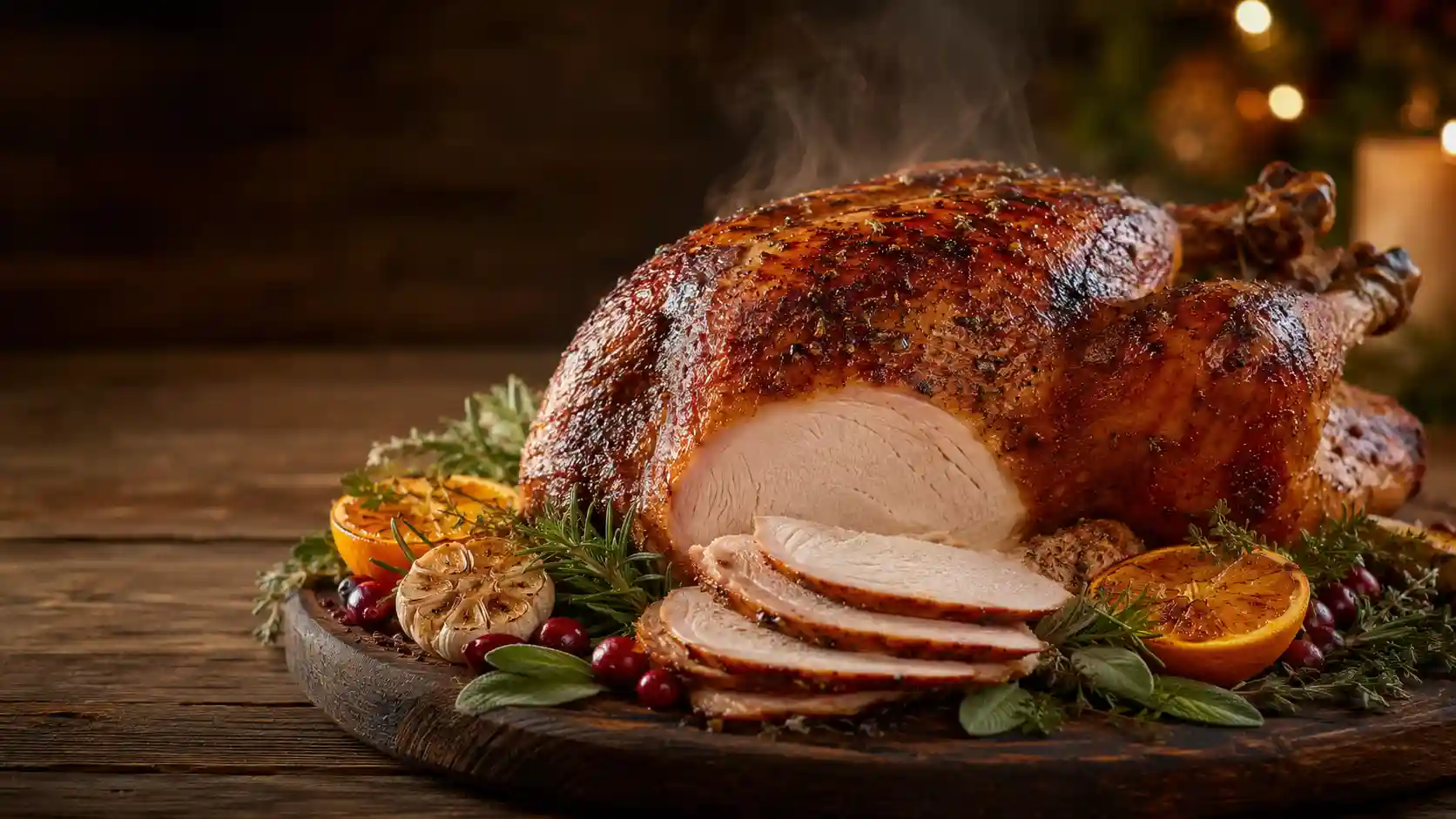
Smoked Turkey Recipe: Juicy, Tender & Easy Step-by-Step Guide
Learn how to smoke a whole turkey with juicy meat, deep smoke flavor, better skin, practical timing, wood choices, and clear food-safety guidance.
Easy Smoked Whole Turkey
A practical whole-turkey method built around steady heat, mild smoke, good seasoning, and thermometer-based doneness.
- Thaw completely and season with a wet brine, dry brine, or rub.
- Use apple, cherry, or pecan wood for balanced smoke.
- Smoke breast-side up until the breast and thigh reach 165°F.
- Rest 20–30 minutes before carving.
A good Smoked Turkey Recipe should give you three things: juicy meat, deep smoky flavor, and skin that is not rubbery. This guide shows you how to smoke a whole turkey with simple ingredients, safe temperatures, and beginner-friendly steps.
This recipe works for a pellet smoker, electric smoker, charcoal smoker, offset smoker, Traeger-style grill, or gas grill set up for indirect heat. You can use a wet brine for extra moisture or keep things simpler with a dry rub and butter. Both methods can work when the turkey is thawed properly, seasoned well, and cooked to the right internal temperature.
For best results, choose a 12–14 lb turkey. It cooks more evenly than a very large bird and is easier to manage on the smoker.
Smoked Turkey at a Glance
The best smoked turkey recipe uses a fully thawed 12–14 lb turkey, a flavorful brine or dry rub, mild fruit wood, steady smoker heat around 250°F–275°F, and a meat thermometer. Smoke until the thickest part of the breast and thigh reaches 165°F, then rest before carving.
Why This Smoked Turkey Recipe Works
This Smoked Turkey Recipe is built for home cooks who want reliable results without overcomplicating the holiday meal.
The method works because it focuses on four important things:
- Smaller turkey size for safer, more even cooking
- Steady smoker temperature for consistent heat
- Butter or oil on the skin to help browning
- Thermometer-based cooking instead of guessing by time
In practice, smoking turkey is not hard. The biggest mistake is waiting until the last minute. A turkey needs time to thaw, season, smoke, and rest. Once your timeline is clear, the recipe becomes much easier.
Ingredients for the Best Smoked Turkey Recipe
What size turkey is best for smoking?
For most readers, a 12–14 lb whole turkey is the easiest size to smoke. It fits most smokers, cooks more evenly, and gives enough meat for about 8–12 people.
Very large turkeys can take too long to move through safe cooking temperatures. If you are feeding a large crowd, smoke two smaller turkeys instead of one oversized bird.
Main ingredients
| Ingredient | Amount | Why It Matters |
|---|---|---|
| Whole turkey | 12–14 lb | Best size for even smoking |
| Butter or olive oil | 4–6 tbsp | Helps seasoning stick and improves browning |
| BBQ turkey rub | ½ cup | Builds flavor and color |
| Onion | 1, quartered | Adds aroma inside the cavity |
| Lemon or orange | 1, quartered | Adds brightness |
| Fresh herbs | 4–6 sprigs | Rosemary, thyme, sage, or parsley work well |
| Chicken broth | 2–3 cups | Adds moisture to the drip pan or basting pan |
| Wood pellets/chips | As needed | Apple, cherry, pecan, or hickory are good choices |
Simple smoked turkey rub
Use this easy rub if you do not have a store-bought blend:
- 2 tablespoons brown sugar
- 1 tablespoon smoked paprika
- 1 tablespoon kosher salt
- 2 teaspoons black pepper
- 2 teaspoons garlic powder
- 2 teaspoons onion powder
- 1 teaspoon dried thyme
- 1 teaspoon rubbed sage
- ½ teaspoon cayenne pepper, optional
Mix well and store in an airtight jar.
Wet Brine vs Dry Rub: Which Is Better?
Both methods work. The best choice depends on your time and taste.
| Method | Best For | Pros | Cons |
|---|---|---|---|
| Wet brine | Extra juicy meat | Adds moisture and seasoning | Needs fridge or cooler space |
| Dry brine | Crispy skin and easy prep | Less mess, better skin | Needs time to rest uncovered |
| Rub only | Fast prep | Simple and beginner-friendly | Less deep seasoning |
Should you wet brine smoked turkey?
A wet brine is helpful if you worry about dry breast meat. It seasons the turkey and helps it hold moisture during the smoke.
A simple brine can include water, kosher salt, brown sugar or maple syrup, peppercorns, bay leaves, citrus peel, and herbs. Brine the turkey for 12–24 hours, then pat it very dry before seasoning.
Should you dry brine smoked turkey?
A dry brine is a great option if you want better skin. Rub kosher salt under and over the skin, place the turkey uncovered in the refrigerator, and let it rest for 12–24 hours.
The uncovered rest helps the skin dry out, which supports better browning on the smoker.
Equipment You Need
You do not need fancy tools, but a few items make this recipe easier.
- Smoker or grill with indirect heat
- Instant-read thermometer
- Leave-in probe thermometer, if available
- Large rimmed pan or disposable roasting pan
- Food-safe brining bucket, if wet brining
- Butcher’s twine
- Basting brush
- Heavy-duty foil
- Cutting board and sharp carving knife
The most important tool is a meat thermometer. Time gives an estimate, but temperature tells you when the turkey is actually done.
Best Wood for Smoked Turkey
Turkey has a mild flavor, so strong smoke can overpower it.
| Wood Type | Flavor | Best Use |
|---|---|---|
| Apple | Mild, sweet | Best beginner choice |
| Cherry | Light, fruity, rich color | Great for holiday turkey |
| Pecan | Nutty and warm | Balanced flavor |
| Hickory | Stronger BBQ flavor | Use lightly |
| Mesquite | Very bold | Usually too strong for turkey |
For the best balance, use apple, cherry, or pecan. If you like stronger barbecue flavor, mix a small amount of hickory with fruit wood.
How to Prepare Turkey for Smoking
How do you thaw turkey safely?
Thaw the turkey in the refrigerator. Plan about 24 hours for every 4–5 pounds of turkey. A 12–14 lb turkey usually needs about 3 days in the fridge.
Keep the turkey in its original wrapper and place it on a tray so juices do not drip onto other foods.
Should you rinse the turkey?
Do not rinse raw turkey unless you are removing excess brine from the surface. Rinsing can spread raw poultry juices around the sink. Instead, pat the turkey dry with paper towels.
How do you season the turkey?
Remove the neck and giblets. Pat the turkey dry. Loosen the skin over the breast gently with your fingers. Rub some softened butter under the skin, then coat the outside with butter or oil.
Season the turkey generously with your smoked turkey rub. Add onion, citrus, and herbs to the cavity, but do not pack them tightly.
How to Smoke a Turkey Step by Step
Step 1: Preheat the smoker
Preheat your smoker to 250°F–275°F. This range gives good smoke flavor while helping the turkey cook at a safer, steadier pace.
Use indirect heat if cooking on a gas or charcoal grill.
Step 2: Place the turkey on the smoker
Place the turkey breast-side up on the smoker grates or in a roasting pan with a rack. Add chicken broth to the drip pan if you want drippings for gravy.
Tuck the wing tips behind the shoulders so they do not burn. Tie the legs loosely with butcher’s twine.
Step 3: Smoke until the turkey reaches safe temperature
Smoke the turkey until the thickest part of the breast and thigh reaches 165°F.
Do not rely only on the pop-up timer. Check several areas with an instant-read thermometer.
Step 4: Rest before carving
Move the turkey to a cutting board and tent loosely with foil. Rest for 20–30 minutes before carving.
Resting helps the juices settle back into the meat.
Smoked Turkey Time and Temperature Chart
Cooking time can vary by smoker, weather, turkey shape, and how often the lid opens. Use this chart as a planning guide only.
| Smoker Temp | Approx. Time Per Pound | Best For |
|---|---|---|
| 225°F | 30–40 minutes | More smoke flavor, longer cook |
| 250°F | 25–30 minutes | Balanced flavor and timing |
| 275°F | 20–25 minutes | Better skin and faster cook |
| 300°F | 15–20 minutes | Crispier skin, lighter smoke |
A 12–14 lb turkey often takes about 4–6 hours at 250°F–275°F. Start early and cook to temperature, not the clock.
How to Get Crispy Skin on Smoked Turkey
Rubbery skin is a common problem with smoked turkey. It usually happens when the smoker temperature is too low for too long or the skin is too wet.
For better skin:
- Pat the turkey very dry before seasoning
- Let it rest uncovered in the fridge overnight if possible
- Use butter or oil on the outside
- Smoke at 275°F instead of 225°F
- Raise the heat to 325°F near the end if the skin looks pale
- Avoid heavy basting late in the cook
If the turkey is done but the skin needs help, place it in a hot oven for a few minutes. Watch closely so the rub does not burn.
Whole Turkey vs Spatchcock Turkey
A whole smoked turkey looks traditional and beautiful on the table. A spatchcock turkey cooks faster because the backbone is removed and the bird lies flat.
| Style | Best For | Benefit |
|---|---|---|
| Whole turkey | Classic holiday presentation | Looks impressive |
| Spatchcock turkey | Faster, more even cooking | Better breast and thigh balance |
| Turkey breast | Small gatherings | Easier and quicker |
| Turkey legs | BBQ-style meals | Strong smoky flavor |
Should you spatchcock a turkey before smoking?
Spatchcocking is worth it if you want faster cooking and more even results. It also exposes more skin to heat, which can improve texture.
To spatchcock, cut along both sides of the backbone with poultry shears, remove the backbone, flip the turkey over, and press down firmly on the breastbone to flatten it.
Common Smoked Turkey Mistakes
Using a turkey that is too large
A huge turkey may look impressive, but it can cook unevenly. Choose 12–14 lb or smoke two smaller birds.
Cooking by time only
Time is only an estimate. Always check the breast and thigh with a thermometer.
Smoking at too low a temperature all day
A very low smoker temperature can lead to soft skin and a longer cook. For whole turkey, 250°F–275°F is a practical range.
Over-smoking the bird
Turkey does not need heavy smoke. Use mild wood and keep the smoke clean.
Stuffing the turkey cavity tightly
Do not pack stuffing inside the turkey. Dense stuffing slows cooking and creates safety issues. Cook dressing separately and use loose aromatics in the cavity.
Carving too soon
Cutting right away releases juices. Rest the turkey for 20–30 minutes first.
Practical Tips for a Juicy Smoked Turkey
- Choose a fresh or fully thawed turkey
- Use a dry brine or wet brine for better flavor
- Keep the smoker temperature steady
- Use apple, cherry, or pecan wood
- Place a drip pan under the turkey for gravy
- Check both breast and thigh temperatures
- Pull only when the turkey is safely cooked
- Rest before carving
- Slice breast meat across the grain
For most home cooks, the easiest winning method is a 12–14 lb turkey, dry brine overnight, smoke at 275°F, and finish when the thermometer reads 165°F.
What to Serve With Smoked Turkey
Smoked turkey works well with classic holiday sides and simple barbecue-style dishes.
Good side ideas include:
- Mashed potatoes
- Sweet potato casserole
- Green bean casserole
- Corn pudding
- Cranberry sauce
- Mac and cheese
- Roasted carrots
- Dinner rolls
- Gravy from smoked turkey drippings
- Apple or pecan pie
The smoky flavor also makes excellent leftovers for sandwiches, soups, tacos, salads, and turkey pot pie.
Food Safety Notes for Smoked Turkey
Turkey is poultry, so safe temperature matters. The USDA lists 165°F as the safe minimum internal temperature for poultry. Check the thickest part of the breast and thigh with a food thermometer.
Keep raw turkey cold before cooking. The USDA danger zone is 40°F–140°F, where bacteria can grow faster. Do not leave raw turkey sitting out for long periods.
Refrigerate leftovers within 2 hours. Store sliced turkey in shallow containers so it cools quickly.
Quick Summary: Key Takeaways
- The best size for smoked turkey is usually 12–14 lb.
- Use apple, cherry, pecan, or light hickory for balanced smoke.
- Smoke at 250°F–275°F for reliable results.
- Cook to 165°F internal temperature, not by time alone.
- Dry skin before smoking to avoid rubbery texture.
- Rest the turkey before carving.
- Cook stuffing separately for better safety and texture.
FAQs About Smoked Turkey Recipe
What is the best temperature to smoke turkey?
The best smoker temperature for turkey is usually 250°F–275°F. This range gives good smoke flavor while helping the skin brown better than very low heat.
How long does it take to smoke a turkey?
A smoked turkey often takes 20–30 minutes per pound, depending on smoker temperature. A 12–14 lb turkey usually takes about 4–6 hours, but always cook by internal temperature.
What internal temperature should smoked turkey reach?
Smoked turkey should reach 165°F in the thickest part of the breast and thigh. Use an instant-read thermometer for the most accurate result.
Should I wet brine or dry brine smoked turkey?
Use a wet brine if you want extra moisture. Use a dry brine if you want easier prep and better skin. Both methods can make a flavorful turkey.
How do I keep smoked turkey from drying out?
Choose a smaller turkey, brine it, use butter under the skin, avoid overcooking, and rest the turkey before carving. A thermometer is the best tool for juicy results.
What wood is best for smoked turkey?
Apple, cherry, and pecan are the best woods for smoked turkey. They add mild flavor without overpowering the meat.
Can I smoke a frozen turkey?
No. Thaw the turkey safely before smoking. A frozen or partly frozen turkey cooks unevenly and makes timing difficult.
Can I use smoked turkey drippings for gravy?
Yes. Place a drip pan under the turkey with broth or water. The drippings can be used for smoky, flavorful gravy.
Conclusion
This Smoked Turkey Recipe is a practical way to make a holiday bird that tastes special without taking over your oven. The key is simple: start with a manageable turkey, season it well, use mild wood, keep the smoker steady, and trust your thermometer.
For the juiciest result, brine the turkey ahead of time or dry brine it overnight for better skin. Smoke it at 250°F–275°F, check the breast and thigh carefully, and let it rest before carving. Once you try smoked turkey, it may become your favorite Thanksgiving, Christmas, or weekend gathering centerpiece.
Serve it with classic sides, save the drippings for gravy, and keep the leftovers for sandwiches and soups the next day.