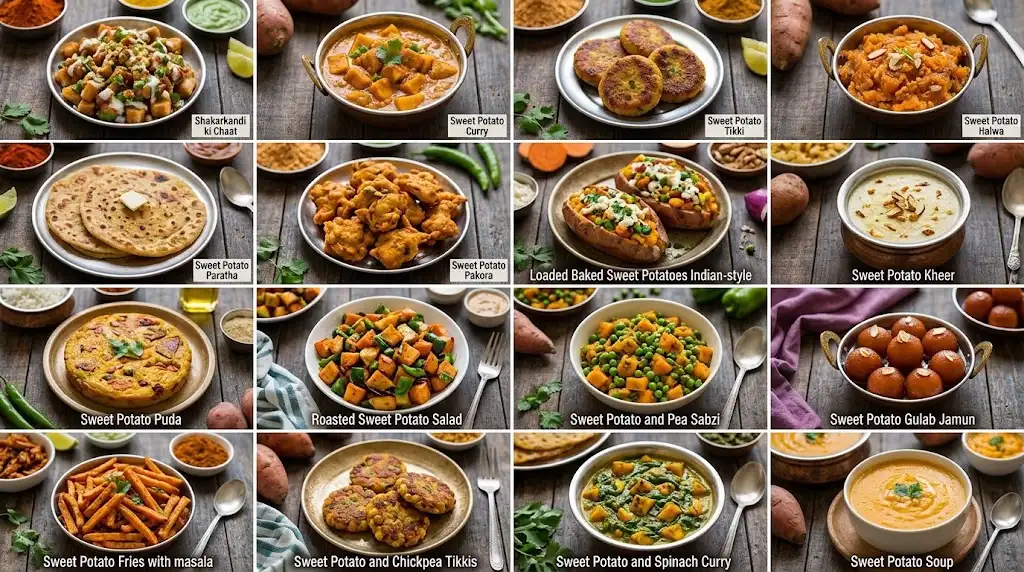
Explore delicious Indian sweet potato recipes featuring tangy shakarkandi chaat, crispy tikki, spiced sabzi, South Indian poriyal, creamy curry, roasted masala sweet potatoes, samosas, halwa, and easy weeknight ideas.
If you’re looking for Indian sweet potato recipes, you’re not limited to one type of dish. In India, shakarkandi can become tangy chaat, crisp tikki, spiced sabzi, coconut-rich poriyal, creamy curry, festive halwa, or a simple roasted snack.
This collection is designed for U.S. home cooks using sweet potatoes commonly found at American grocery stores. You’ll find complete recipes, practical cooking methods, spice pairings, substitutions, serving ideas, and storage guidance.
Quick Answer: What Are the Best Indian Sweet Potato Recipes?
The best-known Indian sweet potato recipe is shakarkandi chaat, made with cooked sweet potato, lemon, roasted cumin, chili, and tangy spices. Other popular preparations include sweet potato tikki, sabzi, poriyal, curry, roasted masala sweet potatoes, samosas, and halwa.
What Is Sweet Potato Called in Indian Cooking?
Sweet potato is commonly called shakarkandi or shakarkand in Hindi. The name appears frequently in Indian recipes, especially chaat and fasting preparations.
Indian cooking often balances sweet potato’s natural sweetness with cumin, chili, amchur, lemon, mustard seeds, curry leaves, ginger, coconut, and chaat masala.
Common Indian Terms
- Shakarkandi: Common Hindi name for sweet potato
- Shakarkand: Another Hindi form of the name
- Amchur: Dried green mango powder with fruity acidity
- Chaat masala: Tangy spice blend used in many Indian snacks
Cooking Terms
- Sendha namak: Rock salt commonly used in fasting foods
- Tadka: Hot oil or ghee tempered with spices and aromatics
- Poriyal: South Indian dry vegetable preparation
- Tikki: Seasoned patty or cutlet that is pan-fried or shallow-fried
How to Cook Sweet Potatoes for Indian Recipes
The cooking method matters because soft sweet potato can quickly become watery or mushy. Chaat needs pieces that hold their shape, while tikki needs a soft interior that mashes easily.
Choose the Best Method
- Boil: Best for chaat, halwa, and mashed preparations
- Steam: Keeps the flesh relatively dry and works well for chaat
- Roast: Best for concentrated flavor and browned edges
- Air fry: Excellent for crisp cubes and quick snacks
More Convenient Options
- Pressure cook: Useful when preparing several sweet potatoes
- Pan cook: Best when you want browned surfaces after boiling
- Microwave: Convenient for small batches
- Cool before cutting: Helps cooked sweet potatoes hold their shape
Shakarkandi Chaat
Shakarkandi chaat is one of the most recognizable Indian sweet potato preparations. It combines the vegetable’s natural sweetness with lemon, cumin, chili, amchur, and tangy seasoning.
Ingredients
- 2 medium sweet potatoes, about 1¼ pounds total
- 1 teaspoon roasted ground cumin
- ½ teaspoon amchur powder
- ¼ teaspoon red chili powder
- ½ teaspoon chaat masala
- ½ teaspoon black salt or regular salt, to taste
- 1 tablespoon fresh lemon juice
- 2 tablespoons chopped cilantro
- 1 green chili, finely chopped, optional
- 2 tablespoons roasted peanuts, optional
Method
- Scrub the sweet potatoes and cook them whole by boiling or steaming until just tender.
- Cool until comfortable to handle, then peel and cut into bite-size cubes.
- Place the cubes in a large bowl.
- Add cumin, amchur, chili powder, chaat masala, and salt.
- Add lemon juice and gently toss.
- Fold in cilantro and green chili.
- Top with roasted peanuts if using.
- Serve immediately while the sweet potato is still slightly warm.
Sweet Potato Tikki
Sweet potato tikki turns cooked sweet potato into crisp-edged patties with a soft, seasoned center. It’s excellent as a snack, appetizer, breakfast side, or chaat base.
Ingredients
- 2 medium sweet potatoes, about 1 pound
- ¼ cup finely chopped cilantro
- 1 green chili, finely chopped
- 1 teaspoon grated ginger
- ½ teaspoon roasted cumin powder
- ½ teaspoon chaat masala
- ½ teaspoon red chili powder
- ½ teaspoon salt
- 2 tablespoons rice flour or cornstarch
- 1 tablespoon lemon juice
- 2 tablespoons neutral cooking oil, for the pan
Method
- Cook the sweet potatoes until completely tender.
- Cool, peel, and mash thoroughly.
- Add cilantro, chili, ginger, cumin, chaat masala, chili powder, salt, rice flour, and lemon juice.
- Mix until the mixture holds together when pressed.
- Divide into six to eight portions.
- Shape each portion into a small, flat patty.
- Heat a thin layer of oil in a skillet over medium heat.
- Cook until browned on the first side.
- Carefully turn and brown the second side.
- Transfer to a plate and serve hot.
Indian Sweet Potato Sabzi
A dry sweet potato sabzi is one of the easiest ways to turn the vegetable into a side dish. The goal is browned or tender cubes coated with fragrant spices without making them overly sweet.
Ingredients
- 1½ pounds sweet potatoes, peeled and cubed
- 1½ tablespoons neutral oil
- 1 teaspoon cumin seeds
- ½ teaspoon turmeric
- 1 teaspoon ground coriander
- ½ teaspoon red chili powder
- ½ teaspoon salt, or to taste
- ½ teaspoon amchur powder
- 2 tablespoons chopped cilantro
- 1 tablespoon lemon juice
Method
- Heat oil in a wide skillet over medium heat.
- Add cumin seeds and let them sizzle briefly.
- Add sweet potato cubes.
- Sprinkle in turmeric, coriander, chili powder, and salt.
- Toss well so the spices coat the cubes.
- Cover and cook over medium-low heat until tender.
- Remove the lid and cook a few minutes longer to brown the edges.
- Turn off the heat.
- Add amchur, lemon juice, and cilantro.
- Toss gently and serve warm.
Make it more substantial: Add green peas, chickpeas, spinach, or cooked lentils in modest amounts so sweet potato remains the main ingredient.
South Indian Sweet Potato Poriyal
Sweet potato poriyal uses a South Indian-style tempering to create a savory contrast with the vegetable’s natural sweetness. Mustard seeds, curry leaves, green chili, and coconut work particularly well.
Ingredients
- 1½ pounds sweet potatoes, peeled and diced
- 1 tablespoon coconut or neutral oil
- 1 teaspoon mustard seeds
- 1 teaspoon urad dal, optional
- 8–10 curry leaves
- 1 green chili, sliced
- ¼ teaspoon turmeric
- ½ teaspoon salt
- ¼ cup unsweetened shredded coconut
- 1 tablespoon chopped cilantro
Method
- Heat oil in a skillet over medium heat.
- Add mustard seeds and let them begin to pop.
- Add urad dal if using and cook until lightly golden.
- Add curry leaves and green chili carefully.
- Add sweet potato, turmeric, and salt.
- Cover and cook until tender, stirring occasionally.
- Remove the lid and let excess moisture evaporate.
- Stir in coconut.
- Cook for another minute.
- Finish with cilantro and serve.
Indian Sweet Potato Curry
For a more substantial meal, turn sweet potato into a spiced tomato curry. Chickpeas add protein and contrasting texture, while coconut milk can make the sauce creamier.
Ingredients
- 1½ pounds sweet potatoes, peeled and cubed
- 1 tablespoon oil
- 1 small yellow onion, finely chopped
- 2 garlic cloves, minced
- 1 teaspoon grated ginger
- 1 teaspoon cumin seeds
- 1 teaspoon ground coriander
- ½ teaspoon turmeric
- ½ teaspoon chili powder
- 1 cup crushed tomatoes
- ¾ cup water or vegetable broth
- 1 cup cooked chickpeas
- ¾ teaspoon salt, or to taste
- 1 tablespoon lemon juice
- ¼ cup chopped cilantro
Method
- Heat oil in a deep skillet or saucepan.
- Add cumin seeds and cook until fragrant.
- Add onion and cook until softened.
- Stir in ginger and garlic.
- Add coriander, turmeric, and chili powder.
- Cook briefly so the spices become aromatic.
- Add crushed tomatoes and cook until slightly thickened.
- Add sweet potatoes and water.
- Cover and simmer until the sweet potatoes are tender.
- Stir in chickpeas.
- Simmer uncovered until the sauce reaches your preferred consistency.
- Season with salt and lemon juice.
- Finish with cilantro.
Roasted Masala Sweet Potatoes
Roasting gives sweet potatoes deep caramelized flavor. Coat them with cumin, coriander, turmeric, chili, and lemon for a low-effort Indian-inspired side dish.
Ingredients
- 2 pounds sweet potatoes, cut into 1-inch cubes
- 1½ tablespoons oil
- 1 teaspoon ground cumin
- 1 teaspoon ground coriander
- ½ teaspoon turmeric
- ½ teaspoon chili powder
- ¾ teaspoon salt
- ½ teaspoon amchur
- 1 tablespoon lemon juice
- 2 tablespoons chopped cilantro
Method
- Heat the oven to 425°F.
- Toss sweet potatoes with oil, cumin, coriander, turmeric, chili powder, and salt.
- Spread them in a single layer on a baking sheet.
- Roast until tender with browned edges, turning once during cooking.
- Remove from the oven.
- Sprinkle with amchur and cilantro.
- Finish with lemon juice just before serving.
Air Fryer Indian Sweet Potato Recipes
An air fryer is especially useful for crispy masala sweet potato cubes and quick snack portions. Exact cooking time varies by cube size and air-fryer model, so start checking early.
Air Fryer Masala Cubes
- 1 pound sweet potatoes, cut into even cubes
- 1 tablespoon oil
- Cumin, coriander, turmeric, chili powder, and salt
- Amchur, lemon, and cilantro for finishing
Method
- Toss sweet potato cubes with oil and spices.
- Preheat the air fryer if your model recommends it.
- Arrange cubes in a mostly single layer.
- Air fry at approximately 380°F until browned and tender.
- Shake or turn the cubes partway through cooking.
- Finish with amchur, lemon, and cilantro.
- Serve with green chutney or yogurt.
Sweet Potato and Pea Samosas
Sweet potato works beautifully in samosa filling because its sweetness balances peas, cumin, coriander, chili, and amchur.
Filling
- 1½ cups cooked mashed sweet potato
- ¾ cup cooked green peas
- 1 teaspoon cumin seeds
- 1 teaspoon ground coriander
- ½ teaspoon amchur
- ½ teaspoon chili powder
- ½ teaspoon garam masala
- ½ teaspoon salt
- 1 tablespoon chopped cilantro
- 1 teaspoon lemon juice
Method
- Heat a small amount of oil in a skillet.
- Add cumin seeds.
- Add peas and mashed sweet potato.
- Add spices and salt.
- Cook until the mixture becomes fairly dry.
- Stir in cilantro and lemon juice.
- Cool the filling completely.
- Fill and seal wrappers according to their instructions.
- Fry, bake, or air fry according to the pastry method.
- Serve with cilantro and tamarind-date chutneys.
Important Preparation Tip
Cool the filling completely before assembling. Warm, wet filling can soften the pastry and make sealing difficult.
Indian Sweet Potato Breakfast Ideas
Sweet potatoes can become a savory breakfast without much work, especially when they’re cooked ahead. Prepare them the night before and brown them quickly with spices in the morning.
- Sweet potato masala hash: Brown cubes with cumin, onion, chili, and cilantro.
- Sweet potato paratha filling: Mash cooked sweet potato with spices.
- Sweet potato tikki: Serve small tikkis with yogurt or chutney.
- Sweet potato poha-style bowl: Combine browned sweet potato with peanuts, curry leaves, and lemon.
- Spiced sweet potato eggs: Top masala cubes with fried or scrambled eggs.
- Sweet potato chaat bowl: Add yogurt, cilantro, cumin, and pomegranate.
- Coconut sweet potato bowl: Toss warm cubes with coconut and curry leaves.
- Sweet potato and chickpea hash: Combine roasted cubes with chickpeas.
Sweet Potato Recipes for Vrat and Fasting
Sweet potato is often used in vrat, or Hindu fasting, but fasting rules differ by tradition, region, festival, and household.
⚠️ Fasting Rules Vary
Don’t assume that every ingredient labeled “fasting-friendly” is acceptable for every observance. Check the rules followed by your family or religious tradition.
Simple Vrat-Style Sweet Potato Chaat
- Cook sweet potato until tender but not mushy.
- Cut into bite-size pieces.
- Season with sendha namak.
- Add roasted cumin powder.
- Add black pepper if permitted.
- Use amchur or lemon for acidity.
- Add fresh cilantro if permitted.
- Use green chili according to preference.
- Avoid standard chaat masala if its ingredients don’t fit your fasting rules.
- Serve immediately.
Common Ingredients to Check
- Sweet potatoes
- Sendha namak
- Cumin
- Black pepper
- Lemon
- Fresh herbs
- Peanuts
- Certain flours such as buckwheat or water chestnut flour
Fasting practices are not universal, so ingredient eligibility should always be verified for the specific observance.
Vegan, Vegetarian, Gluten-Free, and Dairy-Free Options
Sweet potato is naturally adaptable to many plant-based dishes. The main challenge is usually the sauce, topping, binder, or packaged seasoning, rather than the sweet potato itself.
- Vegan: Use oil instead of ghee and plant-based yogurt when desired.
- Vegetarian: Most dishes in this collection are naturally vegetarian.
- Gluten-free: Use rice flour or cornstarch where a binder is needed.
- Dairy-free: Skip yogurt or use an unsweetened dairy-free alternative.
- Nut-free: Omit peanuts and use toasted seeds where appropriate.
- Soy-free: Avoid soy-based sauces and check packaged substitutes.
- Lower-spice: Reduce chili and increase lemon, cilantro, or mild spices.
- No onion or garlic: Use cumin, ginger, curry leaves, or hing where appropriate and permitted.
Sweet Potato Halwa
Indian cuisine also uses sweet potatoes in halwa and other sweet preparations. Cardamom, saffron, nuts, and ghee add aroma and richness.
Ingredients
- 1½ pounds sweet potatoes
- 2 tablespoons ghee
- Sugar, according to taste
- ½ teaspoon ground cardamom
- Small pinch of saffron, optional
- Chopped pistachios or almonds for garnish
Method
- Cook sweet potatoes until very tender.
- Peel and mash until mostly smooth.
- Heat ghee in a heavy saucepan.
- Add mashed sweet potato.
- Cook over medium-low heat, stirring frequently.
- Add sugar gradually according to taste.
- Stir in cardamom and saffron if using.
- Cook until the mixture becomes thick and glossy.
- Garnish with chopped nuts.
- Serve warm.
What to Serve With Indian Sweet Potato Dishes
Sweet potatoes bring sweetness to the plate, so the best pairings usually add acidity, heat, freshness, creaminess, or savory depth.
| Sweet Potato Dish | Good Pairings |
|---|---|
| Shakarkandi chaat | Green chutney, tamarind chutney, yogurt, chai |
| Sweet potato tikki | Cilantro chutney, yogurt, salad |
| Dry sabzi | Dal, roti, rice, raita |
| Poriyal | Sambar, rasam, steamed rice |
| Sweet potato curry | Basmati rice, roti, naan |
| Roasted masala cubes | Dal, grilled vegetables, yogurt |
| Samosas | Tamarind chutney, green chutney |
| Halwa | Chai, festive meals, nuts |
South Indian-inspired plate: Sweet potato poriyal + rice + sambar + rasam.
Storage, Reheating, and Make-Ahead Tips
Cooked sweet potatoes and prepared dishes should be handled like other perishable cooked foods. Refrigerate leftovers promptly rather than leaving them at room temperature for extended periods.
For best quality, keep wet toppings such as yogurt, chutneys, herbs, and lemon juice separate until serving.
Storage
- Cooked plain sweet potato: Refrigerate in a covered container.
- Sweet potato curry: Refrigerate in an airtight container.
- Dry sabzi: Refrigerate after cooling promptly.
- Tikki mixture: Refrigerate before shaping and cooking.
- Cooked tikkis: Refrigerate and reheat in a skillet or air fryer.
- Chaat: Store sweet potato separately from wet toppings.
- Halwa: Refrigerate in a covered container.
Reheating & Freezing
- Leftovers: Use refrigerated cooked leftovers within 3–4 days.
- Reheating: Reheat leftovers to 165°F.
- Freezing: Freeze suitable cooked dishes in airtight portions.
- Expect some texture softening after thawing.
⚠️ Food Safety Reminder
Use a food thermometer when reheating leftovers rather than relying only on the appearance of steam. Refrigerate cooked leftovers promptly and discard food that has been stored improperly or shows signs of spoilage.
How to Choose the Best Indian Sweet Potato Recipe
The best recipe depends more on texture and occasion than on the sweet potato itself. If you want something bright and tangy, choose chaat. If you want a crisp snack, make tikki. For dinner, curry or sabzi makes more sense.
Choose This…
- A 15-minute-style snack: Chaat from already-cooked sweet potato
- A party appetizer: Tikki with two chutneys
- A weeknight side: Dry sweet potato sabzi
- A South Indian meal: Poriyal
For These Occasions…
- A complete dinner: Chickpea sweet potato curry
- Crispy edges: Roasted or air-fried cubes
- A make-ahead snack: Tikki mixture
- A festive dessert: Sweet potato halwa
Indian Sweet Potato Spice Pairing Guide
Sweet potato has a naturally sweet, earthy flavor. Indian spices work best when they provide heat, acidity, bitterness, warmth, or savory depth.
For Savory Dishes
- Cumin: Earthy and warm; excellent in chaat and sabzi
- Amchur: Sharp acidity that balances sweetness
- Chaat masala: Tangy and savory for snacks
- Red chili: Adds heat
- Coriander: Soft citrus-like spice for curries
- Mustard seeds: Excellent for South Indian tempering
For Aroma & Contrast
- Curry leaves: Fragrant and savory in poriyal
- Ginger: Adds warmth to curry and tikki
- Coconut: Rounds out South Indian preparations
- Cardamom: Best suited to sweet dishes
- Tamarind: Strong acidity for chaat and sauces
- Black pepper: Heat without red chili
A Simple Flavor Formula
Savory: Sweet potato + cumin + chili + acidity + fresh herbs
South Indian: Sweet potato + mustard seeds + curry leaves + coconut
Dessert: Sweet potato + cardamom + saffron + nuts
Common Mistakes When Cooking Indian Sweet Potatoes
Sweet potatoes are forgiving, but a few mistakes can change the final texture dramatically. The most common problem is too much moisture.
- Boiling until mushy: Cook only until tender.
- Crowding the roasting pan: Leave space around the cubes.
- Using too much water in curry: Add gradually.
- Making tikki mixture too wet: Let cooked sweet potato cool before shaping.
- Skipping acidity: Lemon, amchur, or tamarind balances sweetness.
- Adding delicate herbs too early: Finish with cilantro when possible.
- Overusing chaat masala: It can overpower the sweet potato.
- Adding wet chutneys too early: Keep them separate until serving.
- Ignoring fasting rules: Check packaged spice or condiment ingredients.
- Reheating without checking temperature: Bring leftovers to 165°F.
Frequently Asked Questions
What is the most popular Indian sweet potato recipe?
Shakarkandi chaat is one of the best-known Indian sweet potato preparations. It combines cooked sweet potato with tangy spices, lemon, cumin, and often chutneys or fresh herbs.
Is sweet potato used in Indian cuisine?
Yes. Sweet potato, or shakarkandi, is used in snacks, curries, dry vegetable dishes, fasting foods, and desserts. Its naturally sweet flavor works especially well with acidic and spicy seasonings.
Should I boil or roast sweet potatoes for chaat?
Both methods work. Boiling or steaming produces soft, clean pieces, while roasting creates deeper flavor and browned edges. Avoid cooking until mushy because the pieces need to survive tossing with spices and lemon.
How do I keep sweet potato tikki from falling apart?
Use cooked sweet potatoes that are not excessively wet, and allow them to cool before mixing. If the mixture is still loose, add a small amount of rice flour or cornstarch until it holds together.
Can I make Indian sweet potato recipes in an air fryer?
Yes. Air frying works particularly well for roasted masala cubes and chaat. Cut the sweet potatoes evenly, use a light coating of oil, avoid overcrowding, and check early because air fryers vary.
Are sweet potatoes suitable for Indian fasting recipes?
Sweet potatoes are commonly used in fasting preparations, but vrat rules vary. Check which salt, spices, grains, flours, dairy products, and packaged ingredients are permitted for the particular observance.
How long do cooked sweet potato leftovers last?
Most properly refrigerated cooked leftovers should be used within 3–4 days. Reheat leftovers to 165°F before eating, and discard food that has been stored improperly or shows signs of spoilage.
Final Thoughts on Indian Sweet Potato Recipes
The best Indian sweet potato recipes balance the vegetable’s natural sweetness with spice, acidity, herbs, and savory aromatics. Start with shakarkandi chaat for a quick snack, tikki for entertaining, sabzi or poriyal for a side dish, or sweet potato curry when you want a complete meal.
Once you understand how different cooking methods affect texture, the ingredient becomes remarkably versatile. Choose your dish by texture, season it with contrast, and finish with something fresh or acidic—then serve it with the Indian sides you already enjoy.
Read More :