Turn fresh geoduck into a tender, steak-style seafood dinner with the right cut, careful cleaning, even slicing, controlled heat, garlic butter, lemon, and parsley.
Quick Answer
The best starting point for a geoduck steak is the thicker body meat. Clean it carefully, slice it evenly, dry it thoroughly, and cook it quickly in a hot skillet. Finish with garlic butter, lemon, and parsley for a simple seafood dinner.
For a fully cooked home preparation, use a food thermometer. FDA guidance lists 145°F (63°C) for seafood; temperature is more reliable than judging doneness by color or texture alone.
What Is a Geoduck Steak?
A geoduck steak isn’t a separate cut like a beef steak. It is a steak-style preparation made from cleaned geoduck meat, usually cut into manageable pieces for pan-searing or grilling.
Geoduck has two main edible parts with noticeably different textures. The body meat is thicker and more tender, while the siphon is firmer and crunchier. That makes body meat a natural choice for this style of preparation.
Body Meat vs. Siphon
| Cut | Texture | Best Uses |
|---|---|---|
| Body meat | Softer and thicker | Steak-style cooking, grilling, breading |
| Thin siphon slices | Firm and crisp | Salad, sashimi-style preparations |
| Thick siphon slices | Firm and chewy | Stir-fry, chowder |
| Siphon batons | Firm and substantial | Stir-fry, chowder |
How to Choose Fresh Geoduck
Good cooking starts with good seafood. If you’re buying live geoduck, choose a reputable seafood market or supplier that can provide appropriate harvest and handling information.
- Look for a firm, plump siphon without obvious damage.
- Choose seafood with a clean ocean-like smell.
- Make sure the geoduck has been properly chilled.
- Ask the supplier where the geoduck came from when that information is available.
- Ask whether the fishmonger can clean it for you.
- Check that cleaned meat is packaged and kept cold.
If you’re new to geoduck, having the seafood counter clean it can save considerable preparation time.
How to Clean Geoduck for Steak
Cleaning geoduck can seem unusual the first time. Brief exposure to boiling or very hot water loosens the tough outer skin, making it easier to peel away.
- Keep the geoduck cold until you’re ready to clean it.
- Bring a pot of water to a boil and prepare a bowl of ice water.
- Briefly blanch the geoduck to loosen the outer skin.
- Transfer it immediately to the ice water.
- Peel away the loosened skin from the siphon and body.
- Separate the meat from the shell with a small, sharp knife.
- Remove the dark internal digestive material.
- Rinse the edible meat carefully to remove grit.
- Pat the meat completely dry.
- Separate the body meat from the siphon before slicing.
Garlic-Butter Geoduck Steak Recipe
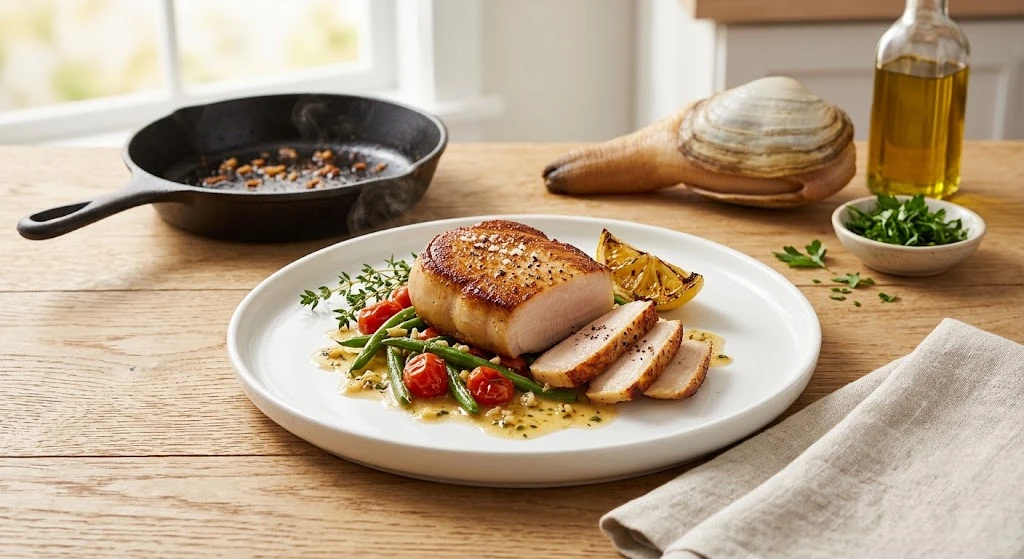
Tender-style pan-seared geoduck with lemon, garlic, butter, and parsley.
*Cooking time varies with the thickness and preparation of the meat. Use a thermometer to verify safe doneness.
Ingredients
- 8 ounces cleaned geoduck body meat
- 1 tablespoon neutral cooking oil
- 1 tablespoon unsalted butter
- 1 garlic clove, finely minced
- 1 tablespoon fresh lemon juice
- 1 tablespoon chopped fresh parsley
- ¼ teaspoon kosher salt, or to taste
- ⅛ teaspoon freshly ground black pepper
- Lemon wedges, for serving
Prepare the Geoduck
- Remove the outer skin and dark internal material if the meat hasn’t already been cleaned.
- Rinse the edible meat thoroughly.
- Pat it completely dry.
- Slice the body meat into even, manageable pieces.
- Keep pieces similar in thickness so they cook evenly.
Cook the Geoduck
- Heat a large skillet over medium-high heat.
- Add the oil and allow it to become hot without smoking.
- Place the geoduck pieces in a single layer.
- Avoid overcrowding the skillet.
- Turn the pieces after the first side develops light browning.
- Add the butter and garlic toward the end of cooking.
- Spoon the melted garlic butter over the geoduck.
- Add lemon juice and parsley.
- Continue cooking until the seafood reaches the appropriate safe internal temperature.
- Transfer immediately to a clean serving plate.
Why This Recipe Works
The most important technique isn’t the butter or garlic. It’s controlling heat and meat thickness.
Very thick pieces take longer to heat through, while thin pieces can become overcooked before thicker sections are ready. Consistent slicing gives you much more predictable cooking.
For Better Browning
Pat the geoduck dry, preheat the skillet, and avoid crowding the pan.
For Better Texture
Choose body meat, slice consistently, cook with controlled heat, and transfer the seafood from the hot pan promptly.
Food Safety First
For a fully cooked preparation, use a food thermometer rather than relying on color or texture. FDA guidance lists 145°F (63°C) for seafood.
Keep raw seafood refrigerated at 40°F or below, prevent cross-contamination, and refrigerate perishable seafood promptly after cooking.
How to Keep Geoduck Steak Tender
Geoduck can become tough when handled poorly. The goal is controlled cooking rather than simply cooking for the shortest possible time.
- Choose body meat for a softer steak-style texture.
- Slice the meat evenly.
- Pat the surface dry.
- Preheat the skillet before adding seafood.
- Don’t overcrowd the pan.
- Cook in batches when necessary.
- Add wet sauces near the end.
- Use a thermometer when appropriate.
- Move finished geoduck to a clean plate promptly.
- Don’t leave cooked seafood sitting in the hot skillet.
What Does Geoduck Taste Like?
Geoduck has a mild, naturally sweet and briny seafood flavor. Its texture is often more distinctive than its flavor.
Body meat is relatively tender when properly prepared, while the siphon has a firmer, crunchier bite. Garlic butter and lemon work well because they complement the seafood without completely covering its natural character.
Three Easy Geoduck Steak Variations
Lemon-Herb Geoduck
- Fresh lemon juice
- Lemon zest
- Chopped parsley
- Chives
- Black pepper
- A small spoonful of butter
A light option that pairs particularly well with roasted vegetables.
Ginger-Scallion Geoduck
- Neutral oil
- Fresh ginger
- Garlic
- Sliced scallions
- A small splash of soy sauce
- A few drops of toasted sesame oil
Serve with steamed rice and crisp vegetables.
Chili-Lime Geoduck
- Neutral oil
- Garlic
- Fresh lime juice
- Red chili or chili flakes
- Cilantro
- Thinly sliced scallions
Citrus and chili provide contrast without requiring a heavy sauce.
Can You Grill Geoduck Steak?
Yes. Grilled geoduck adds a lightly smoky flavor and browned edges. Body slices are particularly suited to this preparation.
- Use cleaned body meat.
- Slice it into even pieces.
- Pat the meat dry.
- Brush lightly with oil.
- Preheat the grill thoroughly.
- Use a clean, well-oiled cooking surface.
- Cook pieces in a single layer.
- Turn carefully.
- Monitor the internal temperature.
- Finish with lemon, herbs, or a light dipping sauce.
Can You Stir-Fry Geoduck?
Geoduck stir-fry is another practical option, especially for thicker siphon pieces. Ginger, scallions, garlic, and crisp vegetables pair naturally with the seafood.
- Cut cleaned geoduck into even pieces.
- Prepare all vegetables before heating the wok.
- Heat the wok thoroughly.
- Cook aromatics first.
- Add vegetables according to cooking time.
- Add geoduck toward the end.
- Toss rapidly.
- Add sauce sparingly.
- Continue cooking until the seafood reaches a safe temperature.
- Serve immediately over rice.
What to Serve With Geoduck Steak
Geoduck has enough character to work with simple sides. A balanced plate doesn’t need a complicated menu.
| Side | Why It Works |
|---|---|
| Steamed jasmine rice | Soaks up garlic butter and pan juices. |
| Roasted baby potatoes | Adds a hearty element. |
| Crisp cucumber salad | Provides refreshing contrast. |
| Steamed asparagus | Keeps the meal simple and vegetable-forward. |
| Roasted green beans | Adds lightly charred flavor. |
| Mixed greens | Works well with lemon vinaigrette. |
| Crusty bread | Ideal for buttery pan juices. |
| Steamed broccoli | Pairs with a light sesame dressing. |
For a dinner party, serve the geoduck with one starch, one green vegetable, and a bright acidic garnish.
Geoduck Buying and Preparation Tips
Buy Cleaned Meat
A fishmonger can often prepare the geoduck for you, allowing you to focus on slicing and cooking.
Start With Body Meat
The body is thicker and more tender, making it an easier starting point for steak-style cooking.
Dry the Meat Thoroughly
Surface moisture works against browning and can increase splattering in a hot skillet.
Prepare Everything First
Have garlic, butter, lemon, parsley, plates, and side dishes ready before the seafood enters the pan.
Common Geoduck Cooking Mistakes
1. Using the Wrong Cut
If you expect tender steak and use a thick, chewy piece of siphon, the texture may disappoint you. Body meat is the better starting point.
2. Leaving the Tough Skin Attached
Brief blanching helps loosen the outer skin so it can be removed.
3. Cutting Pieces Unevenly
Thick and thin pieces won’t finish at the same time. Keep portions as consistent as possible.
4. Overcrowding the Pan
Too much seafood can lower the pan temperature and encourage steaming.
5. Adding Sauce Too Early
Butter, garlic, soy sauce, and sugary glazes can burn. Add delicate finishing ingredients near the end.
6. Guessing Doneness From Appearance
Color alone isn’t a reliable safety test. Use a food thermometer.
7. Leaving Leftovers at Room Temperature
Perishable seafood should be refrigerated promptly.
Geoduck Food Safety
Geoduck is molluscan shellfish, so sourcing and handling are important. Some shellfish can accumulate naturally occurring marine toxins, and freshness alone doesn’t guarantee that seafood is free of those hazards.
- Buy geoduck from a reputable supplier.
- Keep raw seafood at 40°F or below.
- Wash hands before and after handling raw seafood.
- Use a separate cutting board when possible.
- Wash knives, boards, and counters after preparation.
- Keep raw seafood away from ready-to-eat food.
- Never reuse raw seafood marinade unless properly cooked.
- Use a food thermometer to verify cooking.
- Refrigerate leftovers promptly.
- Discard seafood with sour, rancid, or ammonia-like odors.
What About Raw Geoduck?
Geoduck is used raw in some culinary traditions, including sushi and sashimi-style preparations. Thin siphon slices are commonly associated with these preparations.
This recipe is specifically written for a fully cooked preparation.
How to Store Cooked Geoduck
- Transfer leftovers to a clean, shallow container.
- Refrigerate promptly.
- Keep the refrigerator at 40°F or below.
- Don’t leave cooked seafood at room temperature for more than 2 hours.
- Use a 1-hour limit when temperatures exceed 90°F.
- Reheat gently until thoroughly hot.
- Avoid repeatedly reheating the same portion.
Can You Substitute Another Seafood for Geoduck?
If geoduck isn’t available, razor clams can provide another firm-textured shellfish option. However, substitutions are not identical and cooking times should be adjusted for the particular seafood.
| Seafood | Texture | Good Uses |
|---|---|---|
| Geoduck body | Tender and substantial | Original recipe |
| Razor clam | Firm and tender when handled properly | Pan-frying, breading |
| Large sea scallop | Soft and meaty | Butter-based skillet dishes |
| Large clam meat | Firm and briny | Stir-fries and chowders |
Frequently Asked Questions
What part of geoduck is best for steak?
Cleaned body meat is the best starting point for a steak-style preparation because it is thicker and generally more tender than the firmer siphon.
How thick should geoduck be for pan-searing?
Aim for even slices or portions rather than one extremely thick piece. Consistent cuts heat more predictably and make it easier to manage the texture.
Why does my geoduck turn rubbery?
Overcooking is the main texture problem to avoid. Keep the pieces consistent, preheat the pan, avoid overcrowding, and monitor cooking rather than leaving the seafood in the skillet indefinitely.
Can you grill geoduck?
Yes. Body slices work well on the grill and can develop lightly smoky, browned edges. Keep the pieces consistent and monitor the cooking temperature.
Can you eat geoduck raw?
Geoduck is used raw in some dishes, especially thin siphon preparations. However, raw shellfish carries greater food-safety risks than fully cooked seafood, so this recipe recommends thorough cooking.
How long does cooked geoduck last in the refrigerator?
Refrigerate cooked geoduck promptly and keep it at 40°F or below. For best quality, use leftovers promptly rather than treating geoduck as a long-storage food.
Is geoduck safe during pregnancy?
Raw or undercooked geoduck should be avoided during pregnancy. FDA advises pregnant people to avoid raw or undercooked shellfish because of foodborne illness risks.
Read More :