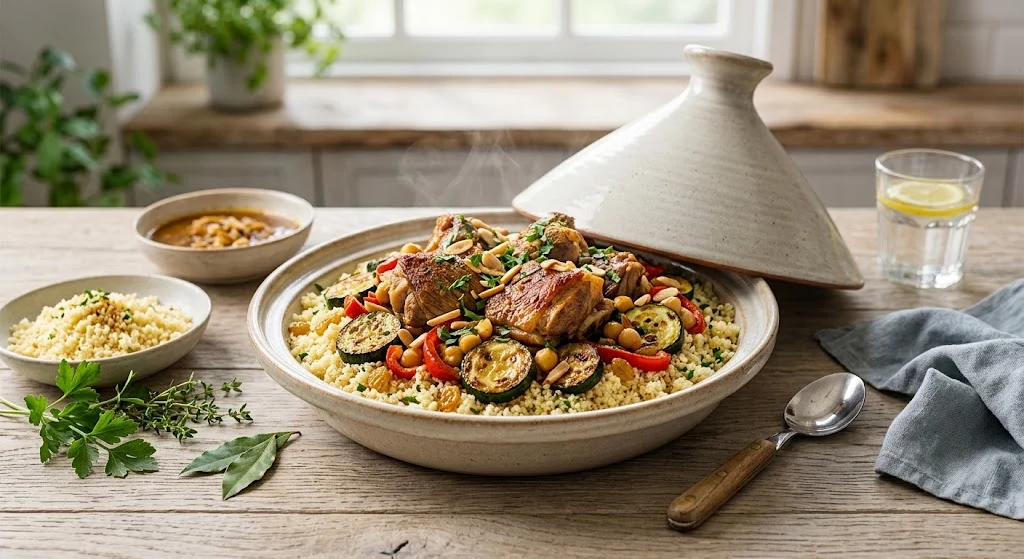
Tender lamb shoulder, fluffy couscous, zucchini, carrots, chickpeas, and warm spices come together in a rich, aromatic stew that’s approachable for an American home kitchen.
French couscous with zucchini and lamb is a hearty, aromatic dinner built around tender lamb, fluffy couscous, zucchini, carrots, chickpeas, and warm spices. This version uses a practical stovetop method, so you don’t need a traditional couscoussier.
Couscous has North African roots, while it has become deeply established in French food culture. Traditional lamb couscous often uses steamed couscous and a vegetable-rich lamb broth; this recipe keeps those flavors while using instant medium couscous for a much simpler home-cooking method.
Quick Answer
To make French-inspired couscous with zucchini and lamb, brown lamb shoulder, build a spiced tomato broth, and simmer the lamb until tender. Add carrots, chickpeas, and zucchini in stages, then serve the stew over separately prepared fluffy couscous.
The key: use lamb shoulder, keep the simmer gentle, and add zucchini near the end so it stays tender instead of collapsing.
French-Inspired Lamb Couscous Recipe
A practical stovetop version with tender lamb, vegetables, chickpeas, and fluffy couscous.
For the Lamb & Vegetable Stew
- 1½ pounds boneless lamb shoulder, cut into 1½-inch pieces
- 2 tablespoons olive oil
- 1 large yellow onion, diced
- 3 garlic cloves, finely chopped
- 2 tablespoons tomato paste
- 1 cup crushed tomatoes
- 3 cups low-sodium chicken or lamb broth
- 2 medium carrots, peeled and thickly sliced
- 2 medium zucchini, cut into thick half-moons
- 1 cup canned chickpeas, drained and rinsed
- 1 teaspoon ground cumin
- 1 teaspoon ground coriander
- ½ teaspoon ground turmeric
- ½ teaspoon sweet paprika
- ¼ teaspoon ground cinnamon
- 1 teaspoon kosher salt, plus more to taste
- ½ teaspoon black pepper
- 2 tablespoons chopped parsley or cilantro
- 1 lemon, cut into wedges
- Harissa, optional
For the Couscous
- 1½ cups medium instant couscous
- 1½ cups hot broth or water
- 1 tablespoon olive oil or butter
- ¼ teaspoon salt
What Makes This Couscous French-Inspired?
There isn’t one universally standardized dish called French couscous with zucchini and lamb. Couscous itself comes from North African culinary traditions, while France has developed a strong and longstanding relationship with couscous through its connections with North Africa.
This recipe is therefore best described as French-inspired lamb couscous rather than claiming that every French cook prepares it this exact way. Established recipes vary in lamb cuts, vegetables, spices, and whether the couscous is steamed or prepared separately.
- Lamb shoulder for a tender, rich stew
- Zucchini added late to preserve its shape
- Carrots and chickpeas for texture and sweetness
- Cumin, coriander, turmeric, and cinnamon for warm depth
- Medium instant couscous for a practical home method
- Harissa served separately for adjustable heat
- Lemon and fresh herbs to brighten the finished bowl
Why Lamb Shoulder Works Best
Lamb shoulder is an excellent choice for this stovetop version because its connective tissue and fat help it stay flavorful during a long, gentle simmer.
| Lamb Cut | Best Use | What to Expect |
|---|---|---|
| Shoulder | This recipe | Rich, tender, forgiving |
| Stew meat | Weeknight shortcut | Convenient; quality varies |
| Leg | Leaner variation | Less fatty; can dry out |
| Shank | Slow traditional-style stew | Very tender; longer cooking |
| Ground lamb | Fast variation | Different texture and flavor |
What Kind of Couscous Should You Use?
For this recipe, buy medium instant couscous, sometimes simply labeled “couscous” in US grocery stores.
Don’t confuse it with pearl couscous, also called Israeli couscous. Pearl couscous is larger and cooks more like small pasta, so it requires a different method.
| Couscous | Cooking Style | Best For |
|---|---|---|
| Instant medium couscous | Hydrate with hot liquid | Quick home cooking |
| Long-cooking couscous | Steam multiple times | Traditional preparation |
| Pearl couscous | Simmer like pasta | Modern variations |
How to Make French Couscous With Zucchini and Lamb
Prepare the stew and couscous separately. This gives you better control over the texture of both components: lamb needs time, while zucchini cooks quickly.
Brown the Lamb
Pat the lamb dry with paper towels and season with salt and black pepper. Heat olive oil in a large Dutch oven over medium-high heat. Brown the lamb in batches, leaving space between the pieces.
Cook until the exterior develops a deep brown crust, then transfer the lamb to a plate.
Build the Flavor Base
Lower the heat to medium. Add the onion and cook until softened, about 5 minutes. Add the garlic and tomato paste and cook for about 1 minute.
Add cumin, coriander, turmeric, paprika, and cinnamon. Stir for about 30 seconds, until fragrant but not scorched.
Start the Lamb Stew
Return the browned lamb and accumulated juices to the pot. Add crushed tomatoes and broth, stirring well and scraping the browned bits from the bottom.
Bring to a gentle simmer, partially cover, and cook for approximately 60 minutes. The liquid should bubble gently rather than boil aggressively.
Add the Carrots
Add the carrots after the lamb has begun tenderizing. Continue simmering for about 15–20 minutes. The lamb should be noticeably softer but may not yet be completely tender.
Add the Chickpeas and Zucchini
Stir in the chickpeas and zucchini. Continue cooking for approximately 10–15 minutes, until the zucchini is tender but still holds its shape.
Prepare the Couscous
Bring 1½ cups broth or water to a boil. Place the couscous in a heatproof bowl and add salt plus olive oil or butter.
Pour the hot liquid over the couscous, stir once, cover tightly, and let stand according to the package directions, usually around 5 minutes for instant couscous. Fluff gently with a fork.
Taste and Adjust
Taste the broth before serving. Adjust with salt and black pepper. If it tastes heavy, add a little lemon juice. Add harissa at the table if you want more heat.
Serve
Spoon couscous onto a large platter or individual bowls. Make a shallow well in the center and spoon the lamb, vegetables, chickpeas, and broth over the top.
Finish with fresh parsley or cilantro, lemon wedges, harissa, and an optional drizzle of extra-virgin olive oil.
How to Get Tender Lamb Without Drying It Out
The most important lamb technique is gentle, patient cooking. A hard boil can make meat tighten before connective tissue has enough time to soften.
Look for These Signs
- The lamb should be easy to pierce with a fork.
- The pieces should feel tender rather than rubbery.
- The broth should remain loose enough to spoon over couscous.
- Very lean lamb may finish sooner than shoulder.
- Larger pieces may require additional simmering.
How to Keep Zucchini From Turning Mushy
Zucchini contains a lot of water and cooks quickly. Cutting it into thick half-moons gives the pieces enough structure to survive the final simmer.
- Use medium-firm zucchini.
- Cut pieces at least ½-inch thick.
- Don’t add zucchini at the beginning.
- Add it during the final 10–15 minutes.
- Avoid vigorous boiling.
- Stop cooking when a fork meets slight resistance.
Instant Couscous vs. Traditional Steamed Couscous
Instant couscous is the practical choice for most weeknight cooks. Traditional steaming takes longer but produces a different texture and more closely follows classic couscous preparation.
| Choose Instant Couscous When… | Choose Steamed Couscous When… |
|---|---|
| You want dinner on the table faster. | You’re cooking for a special occasion. |
| You don’t own a couscoussier. | You enjoy traditional techniques. |
| You’re cooking for a busy family. | You have a suitable couscoussier or steamer. |
| You want a simple stew-plus-grain method. | You want to spend more time developing the dish. |
How to Build a Better Couscous Broth
The broth should be rich enough to flavor the couscous but loose enough to spoon over it. Browning the lamb creates the first layer of flavor; onion, tomato paste, spices, tomatoes, and broth build the second. Lemon and herbs provide the final lift.
How Spicy Should Lamb Couscous Be?
The base recipe is warmly spiced rather than hot. Serving harissa separately makes it easy to accommodate different preferences.
| Heat Level | How to Adjust |
|---|---|
| Mild | Follow the recipe and serve harissa separately. |
| Medium | Stir 1–2 teaspoons harissa into the finished broth. |
| Hot | Add additional harissa directly to individual bowls. |
Harissa also contributes acidity, garlic, and spice, so it changes the flavor beyond simple heat.
Traditional-Inspired Vegetable Variations
Zucchini is the defining vegetable here, but lamb couscous works well with many sturdy vegetables. Common variations can include carrots, turnips, potatoes, zucchini, chickpeas, peppers, winter squash, cabbage, or raisins.
- Turnips: peppery and earthy
- Bell peppers: sweet and colorful
- Butternut squash: soft and slightly sweet
- Potatoes: hearty and filling
- Cabbage: sturdy and substantial
- Raisins: sweet contrast
- Fresh mint: a cool herbal finish
Easy Substitutions
| Ingredient | Substitution | Important Note |
|---|---|---|
| Lamb shoulder | Lamb stew meat | Cooking time and tenderness can vary. |
| Zucchini | Yellow summer squash | Use an equal amount. |
| Chickpeas | White beans | Flavor and texture will change. |
| Chicken broth | Lamb broth | Lamb broth creates a stronger lamb flavor. |
| Individual spices | Ras el hanout | Start modestly because blends vary. |
| Medium instant couscous | Pearl couscous | Requires a separate cooking method. |
Make-Ahead Instructions
The lamb and vegetable stew can be made a day ahead. Reheating can make the flavors come together nicely. Prepare the couscous closer to serving for the best texture.
- Cook the lamb and vegetables completely.
- Cool the stew promptly.
- Refrigerate it in a shallow covered container.
- Prepare fresh couscous when you’re ready to eat.
- Reheat the stew gently on the stovetop.
- Add a little broth if the liquid has thickened too much.
- Finish with fresh herbs and lemon.
Storage and Food Safety
Cooked leftovers should be refrigerated within two hours and reheated to 165°F. Refrigerated leftovers are generally best used within three to four days.
| Storage Question | Recommendation |
|---|---|
| Refrigerator | Store lamb stew and couscous separately for 3–4 days. |
| Freezer | Freeze the stew in airtight portions. |
| Best texture | Prepare fresh couscous after thawing. |
| Reheating | Heat leftovers thoroughly to 165°F. |
| Thawing | Thaw frozen stew in the refrigerator rather than at room temperature. |
Can You Freeze Lamb Couscous?
Yes, but freeze the stew separately from the couscous whenever possible. The lamb and vegetable portion generally handles freezing and reheating better than prepared couscous.
Thaw the stew overnight in the refrigerator, reheat gently in a saucepan, and add a little broth if necessary. For the best texture, make a fresh batch of couscous.
How to Serve Lamb Couscous
For a family dinner, spoon couscous onto a wide serving platter and pile the lamb and vegetables in the center. Serve extra broth separately or spoon it generously over the couscous.
- Fresh parsley
- Fresh cilantro
- Mint
- Lemon wedges
- Harissa
- Plain yogurt, if dairy is suitable
- Toasted almonds, if there are no nut allergies
Common Mistakes and How to Fix Them
The lamb is still tough
Fix: Keep cooking it gently. Shoulder often needs additional time before its connective tissue softens.
The zucchini fell apart
Fix: It was probably added too early. Use thicker pieces and add them during the final 10–15 minutes.
The couscous is clumpy
Fix: Fluff gently with a fork after hydration. Avoid aggressively stirring or compressing the grains.
The couscous is dry
Fix: Add a small amount of hot broth, cover briefly, and fluff again.
The broth tastes flat
Fix: Check the salt first, then add a little lemon juice and fresh herbs.
The broth is too thick
Fix: Add hot broth a little at a time until it reaches a spoonable consistency.
The stew is too spicy
Fix: Add extra couscous and cooling yogurt if suitable, or dilute the heat with a little broth.
The lamb tastes greasy
Fix: Let the stew sit briefly and skim excess fat from the surface before serving.
Dietary and Allergy Notes
Traditional couscous is made from wheat, so this recipe is not naturally gluten-free. For a gluten-free meal, use a suitable gluten-free grain and follow that product’s cooking instructions.
| Concern | What to Know |
|---|---|
| Gluten | Traditional couscous contains wheat. |
| Dairy | Optional; use olive oil instead of butter for a dairy-free version. |
| Nuts | Not required. |
| Sesame | Check prepared harissa labels if allergies are a concern. |
| Broth | Check packaged broth for allergens. |
| Cross-contact | Use clean utensils and surfaces for serious allergy concerns. |
French Couscous vs. Moroccan-Style Lamb Couscous
These terms can overlap in everyday recipe writing, but they shouldn’t automatically be treated as identical.
Moroccan couscous refers to a broad culinary tradition with many regional preparations and vegetable combinations. French-inspired couscous describes how this North African staple can be adapted within French food culture and home cooking.
Frequently Asked Questions
Is French couscous the same as Moroccan couscous?
No. Couscous originated in North Africa, while France has developed its own strong relationship with couscous through its history and connections with North African communities. Recipes can overlap substantially, so the terms are sometimes used loosely.
Can I make this without a couscoussier?
Yes. This version uses instant couscous, which requires only a heatproof bowl and hot liquid. A traditional steaming method requires a couscoussier or suitable pot-and-steamer setup.
Can I use pearl couscous?
Yes, but not with the same hydration method. Pearl couscous is larger and should be cooked according to its package directions, usually by simmering it in liquid.
What is the best lamb cut for couscous?
Lamb shoulder is the best choice for this particular recipe because its connective tissue and moderate fat suit a long, gentle simmer.
Why do you add zucchini near the end?
Zucchini cooks much faster than lamb. Adding it during the final stage allows it to become tender while still holding its shape.
Can I make lamb couscous ahead?
Yes. Make the lamb and vegetable stew ahead, then prepare fresh couscous shortly before serving. Refrigerate cooked leftovers promptly and use them within three to four days.
Is lamb couscous spicy?
It doesn’t have to be. This recipe uses warm spices rather than a large amount of chile. Serve harissa separately so everyone can adjust the heat.
Final Thoughts
This French couscous recipe with zucchini and lamb combines tender lamb shoulder, fluffy couscous, zucchini, carrots, chickpeas, and warm spices into a substantial family dinner.
For the most reliable result, brown the lamb well, simmer it patiently, add zucchini late, and finish with lemon and fresh herbs. If you have more time, try traditionally steamed couscous; for an easier dinner, instant couscous keeps this recipe approachable for a regular home-cooked meal.
Read More :