From creamy chicken and broccoli to beef taco quinoa, tuna pasta, salmon, lentils, and breakfast egg bakes, these practical high-protein casseroles are designed for satisfying meals, easy meal prep, and reliable texture.
If you want high-protein casserole recipes that actually work as meals—not just a list of vague ideas—you need more than chicken and cheese. The best casseroles combine a dependable protein source with vegetables, grains or potatoes, a flavorful sauce, and enough moisture to stay tender after baking.
This collection focuses on complete, practical casserole recipes with estimated protein per serving, clear ingredient amounts, flexible substitutions, meal-prep advice, and food-safety guidance. The recipes use chicken, lean beef, turkey, eggs, cottage cheese, Greek yogurt, beans, tuna, salmon, and other protein-rich ingredients.
Quick Answer: What Are the Best High-Protein Casserole Recipes?
The easiest high-protein casseroles usually start with chicken, lean ground meat, eggs, cottage cheese, Greek yogurt, fish, beans, lentils, or a combination of these foods. For this collection, a practical benchmark is about 20 grams or more of protein per serving. That is an editorial benchmark, not an official definition of “high protein.”
For the most reliable texture, pair protein with a moisture source such as Greek yogurt, cottage cheese, tomato sauce, salsa, eggs, broth, or a measured amount of cheese.
What Counts as a High-Protein Casserole?
A casserole can contain protein without being particularly protein-dense. A dish made mostly from pasta, rice, potatoes, or cheese may taste satisfying but deliver less protein than expected.
For a useful recipe roundup, it helps to look at protein per serving, not simply whether an ingredient such as chicken or cheese appears somewhere in the ingredient list.
A Practical Protein Target
For these recipes, use 20+ grams of protein per serving as a simple benchmark. This makes it easier to compare casseroles without pretending there is one universally accepted definition.
| Casserole Style | Main Protein Sources | Practical Protein Target |
|---|---|---|
| Chicken casserole | Chicken, Greek yogurt, cottage cheese | 30–40g |
| Beef casserole | Lean beef, beans, cheese | 25–35g |
| Breakfast casserole | Eggs, turkey sausage, cottage cheese | 25–35g |
| Vegetarian casserole | Cottage cheese, eggs, beans, lentils | 20–30g |
| Seafood casserole | Tuna, salmon, shrimp, beans | 25–35g |
| Pasta bake | Chicken, tuna, turkey, cottage cheese | 25–40g |
The Easiest Way to Increase Protein
You usually do not need to double the cheese. Instead, add a substantial protein source such as:
- Cooked chicken breast
- Lean ground beef or turkey
- Eggs
- Cottage cheese
- Plain Greek yogurt
- Tuna or salmon
- Black beans, chickpeas, or lentils
- Tofu or edamame
- Quinoa alongside another protein
- Turkey or chicken sausage
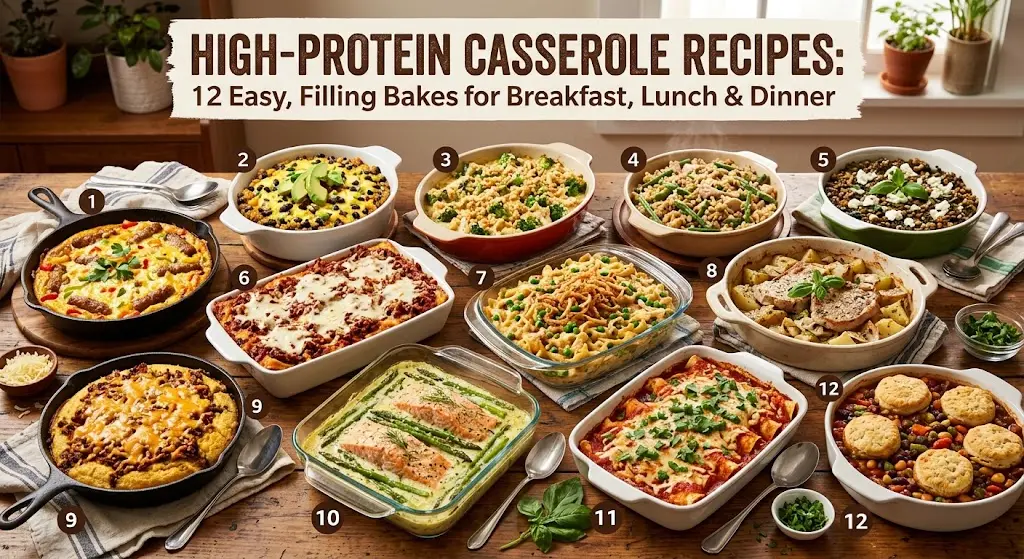
12 Best High-Protein Casserole Recipes
These recipes are designed for ordinary American home kitchens and use familiar ingredients rather than specialty products. The collection covers weeknight dinners, breakfast meal prep, vegetarian meals, seafood, freezer-friendly dishes, and creamy chicken casseroles.
1. Creamy Chicken, Broccoli & Cottage Cheese Casserole
This is the casserole to make when you want creamy comfort food with a serious protein boost. Cottage cheese and Greek yogurt create a creamy sauce while chicken provides most of the protein.
Ingredients
- 3 cups cooked chopped chicken breast
- 4 cups broccoli florets
- 1 cup cottage cheese
- ¾ cup plain Greek yogurt
- ½ cup shredded mozzarella
- ½ cup low-sodium chicken broth
- 1 teaspoon garlic powder
- ½ teaspoon onion powder
- ½ teaspoon paprika
- ½ teaspoon salt
- ¼ teaspoon black pepper
- 1 cup cooked brown rice
Method
- Heat the oven to 375°F and lightly grease a 9×13-inch baking dish.
- Steam or briefly microwave the broccoli until bright green but still slightly firm.
- Blend the cottage cheese, Greek yogurt, broth, garlic powder, onion powder, paprika, salt, and pepper until relatively smooth.
- Combine chicken, broccoli, rice, and sauce in the baking dish.
- Sprinkle mozzarella over the top.
- Bake uncovered for 30–35 minutes, until bubbling and hot throughout.
- Rest for 5–10 minutes before serving.
2. Chicken Enchilada & Black Bean Casserole
This version combines chicken, black beans, corn, tortillas, salsa, and cheese into a weeknight casserole with plenty of flavor.
Ingredients
- 3 cups cooked shredded chicken
- 1½ cups black beans, drained and rinsed
- 1 cup corn
- 2 cups red or green enchilada sauce
- 6 small corn tortillas, cut into strips
- 1 cup shredded Mexican-blend cheese
- ½ cup plain Greek yogurt
- 1 teaspoon chili powder
- ½ teaspoon cumin
- ½ teaspoon garlic powder
- ½ cup diced bell pepper
Method
- Heat the oven to 375°F.
- Stir chicken, black beans, corn, bell pepper, chili powder, cumin, and garlic powder together.
- Spread a thin layer of enchilada sauce in a greased 9×13-inch baking dish.
- Add half the tortilla strips, half the chicken mixture, and half the remaining sauce.
- Repeat the layers.
- Spread Greek yogurt over the top in small spoonfuls and finish with cheese.
- Bake for about 30 minutes, until hot and bubbling.
- Rest briefly before slicing.
3. Greek Yogurt Chicken & Rice Casserole
This is a lighter take on classic chicken-and-rice casserole. Greek yogurt replaces much of the heavy cream, while cooked chicken keeps the protein high.
Ingredients
- 3 cups cooked chicken breast, diced
- 3 cups cooked brown or white rice
- 1 cup plain Greek yogurt
- ½ cup chicken broth
- 1 cup frozen peas and carrots
- ½ cup shredded cheddar
- 1 teaspoon garlic powder
- 1 teaspoon dried parsley
- ½ teaspoon paprika
- ½ teaspoon black pepper
- Salt to taste
Method
- Heat the oven to 375°F.
- Mix Greek yogurt, broth, seasonings, and half the cheddar.
- Fold in chicken, rice, and vegetables.
- Transfer to a greased casserole dish.
- Top with the remaining cheese.
- Cover loosely with foil and bake for 20 minutes.
- Remove the foil and bake another 10 minutes.
4. High-Protein Beef Taco Quinoa Casserole
Lean ground beef, quinoa, black beans, tomatoes, and cheese turn taco-night ingredients into a filling casserole.
Ingredients
- 1 pound 93% lean ground beef
- 2 cups cooked quinoa
- 1 cup black beans
- 1 cup salsa
- 1 cup diced tomatoes
- 1 cup shredded Mexican cheese
- 1 small onion, diced
- 1 bell pepper, diced
- 1 tablespoon taco seasoning
- ½ teaspoon cumin
- ½ cup water or low-sodium broth
Method
- Heat the oven to 375°F.
- Brown the ground beef with onion and bell pepper in a skillet.
- Cook until the beef reaches 160°F internally.
- Stir in taco seasoning, cumin, salsa, tomatoes, beans, quinoa, and broth.
- Transfer to a greased baking dish.
- Sprinkle cheese over the top.
- Bake for 20–25 minutes.
- Serve with avocado, cilantro, tomato, or plain Greek yogurt.
5. Turkey, Sweet Potato & Spinach Breakfast Casserole
This make-ahead breakfast casserole combines eggs, lean turkey sausage, sweet potatoes, spinach, and cottage cheese.
Ingredients
- 8 large eggs
- 1 cup cottage cheese
- 8 ounces cooked turkey sausage
- 2 cups roasted diced sweet potato
- 2 cups fresh spinach
- ½ cup shredded cheddar
- ½ teaspoon garlic powder
- ½ teaspoon smoked paprika
- ¼ teaspoon black pepper
- Salt to taste
Method
- Heat the oven to 375°F.
- Whisk eggs, cottage cheese, garlic powder, paprika, pepper, and salt.
- Spread sweet potato, turkey sausage, and spinach in a greased 9×9-inch or similar baking dish.
- Pour the egg mixture over everything.
- Sprinkle with cheddar.
- Bake for 40–45 minutes, or until the center reaches 160°F.
- Rest for 10 minutes before cutting.
6. Cottage Cheese Vegetable Egg Bake
If you want a vegetarian high-protein casserole, this egg bake is one of the simplest options.
Ingredients
- 8 large eggs
- 1½ cups cottage cheese
- 1 cup chopped spinach
- 1 cup diced bell pepper
- 1 cup chopped mushrooms
- ½ cup shredded mozzarella
- ½ teaspoon garlic powder
- ½ teaspoon Italian seasoning
- Black pepper to taste
Method
- Heat the oven to 375°F.
- Whisk eggs and cottage cheese together.
- Fold in vegetables and seasonings.
- Pour into a greased baking dish.
- Top with mozzarella.
- Bake for 35–40 minutes, until the center is set and reaches 160°F.
- Cool for about 10 minutes before serving.
7. Tuna, White Bean & Pasta Casserole
Tuna and white beans provide two different protein sources, while whole-wheat pasta makes the casserole substantial enough for dinner.
Ingredients
- 12 ounces whole-wheat pasta
- 3 cans tuna, drained
- 1½ cups cannellini beans
- 1 cup frozen peas
- 1 cup plain Greek yogurt
- ½ cup milk
- ½ cup shredded mozzarella
- ½ cup grated Parmesan
- 1 teaspoon Dijon mustard
- 1 teaspoon garlic powder
- Black pepper
- ½ cup breadcrumbs
Method
- Heat the oven to 375°F.
- Cook pasta until just shy of al dente.
- Mix Greek yogurt, milk, Dijon, garlic powder, and pepper.
- Combine pasta, tuna, beans, peas, and sauce.
- Transfer to a greased baking dish.
- Top with mozzarella, Parmesan, and breadcrumbs.
- Bake for 20–25 minutes.
8. Salmon, Potato & Spinach Casserole
This casserole gives you a different flavor profile from the usual chicken-and-cheese combinations.
Ingredients
- 1½ pounds cooked salmon, flaked
- 2 pounds baby potatoes, thinly sliced
- 3 cups fresh spinach
- 1 cup plain Greek yogurt
- ½ cup milk
- ½ cup shredded Parmesan
- 1 tablespoon lemon juice
- 1 teaspoon dried dill
- 1 teaspoon garlic powder
- Black pepper
- ½ cup breadcrumbs
Method
- Heat the oven to 400°F.
- Par-cook the potato slices until almost tender.
- Whisk Greek yogurt, milk, lemon juice, dill, garlic, and pepper.
- Layer potatoes, spinach, and salmon in a casserole dish.
- Pour the yogurt sauce over the layers.
- Sprinkle Parmesan and breadcrumbs over the top.
- Bake for 30–35 minutes until hot and lightly browned.
9. Chicken Pesto Cottage Cheese Pasta Bake
This casserole is especially useful when you want high protein without sacrificing the comfort-food quality of a creamy pasta bake.
Ingredients
- 12 ounces high-protein or whole-wheat pasta
- 3 cups cooked chicken breast
- 1 cup cottage cheese
- ¾ cup plain Greek yogurt
- ½ cup pesto
- ½ cup shredded mozzarella
- 1 cup cherry tomatoes, halved
- ½ teaspoon garlic powder
- Black pepper
Method
- Heat the oven to 375°F.
- Cook pasta until slightly underdone.
- Blend cottage cheese and Greek yogurt until creamy.
- Stir in pesto and garlic powder.
- Combine pasta, chicken, tomatoes, and sauce.
- Transfer to a casserole dish.
- Top with mozzarella.
- Bake for 20–25 minutes.
10. Three-Bean Lentil Enchilada Casserole
You do not need meat to build a protein-rich casserole. Lentils, black beans, and pinto beans create a hearty vegetarian filling.
Ingredients
- 1½ cups cooked lentils
- 1 cup black beans
- 1 cup pinto beans
- 2 cups enchilada sauce
- 6 corn tortillas, cut into strips
- 1 cup shredded Mexican cheese
- 1 cup corn
- 1 bell pepper, diced
- 1 teaspoon cumin
- 1 teaspoon chili powder
Method
- Heat the oven to 375°F.
- Mix lentils, beans, corn, pepper, cumin, and chili powder.
- Layer sauce, tortillas, bean mixture, and cheese in a casserole dish.
- Repeat the layers.
- Finish with cheese.
- Bake for 25–30 minutes.
- Serve with Greek yogurt or avocado for extra creaminess.
11. Turkey & Spinach Cottage Cheese Pasta Bake
Lean ground turkey works particularly well in pasta casseroles because it absorbs tomato sauce and seasonings without making the dish excessively heavy.
Ingredients
- 1 pound lean ground turkey
- 12 ounces whole-wheat pasta
- 1½ cups marinara sauce
- 1 cup cottage cheese
- 1 cup chopped spinach
- 1 cup shredded mozzarella
- ½ onion, diced
- 2 cloves garlic, minced
- 1 teaspoon Italian seasoning
- ½ teaspoon red pepper flakes, optional
Method
- Heat the oven to 375°F.
- Cook the pasta until just underdone.
- Brown turkey with onion and garlic until the turkey reaches 165°F.
- Stir in marinara and Italian seasoning.
- Combine pasta, turkey sauce, spinach, and cottage cheese.
- Transfer to a baking dish.
- Top with mozzarella.
- Bake for 20–25 minutes.
12. Chicken, Chickpea & Feta Mediterranean Casserole
For something lighter and more vegetable-forward, combine chicken with chickpeas, tomatoes, spinach, herbs, and feta.
Ingredients
- 3 cups cooked chicken breast
- 1½ cups chickpeas
- 2 cups cherry tomatoes
- 2 cups fresh spinach
- ½ cup crumbled feta
- ½ cup chicken broth
- 1 tablespoon olive oil
- 1 teaspoon oregano
- 1 teaspoon garlic powder
- ½ teaspoon paprika
- 1 tablespoon lemon juice
- Black pepper
Method
- Heat the oven to 375°F.
- Add chicken, chickpeas, tomatoes, spinach, broth, olive oil, and seasonings to a casserole dish.
- Stir gently to combine.
- Bake covered for 20 minutes.
- Remove the cover and add feta.
- Bake for another 10 minutes.
- Finish with lemon juice before serving.
How to Build Your Own High-Protein Casserole
Once you understand the basic formula, you can create dozens of casseroles without following a recipe exactly.
The key is to balance protein, starch, vegetables, sauce, and a flavorful topping rather than simply adding more cheese.
The Five-Part Casserole Formula
| Component | Good Choices |
|---|---|
| Protein | Chicken, turkey, lean beef, eggs, tuna, salmon, beans, lentils, tofu |
| Starch | Rice, potatoes, pasta, quinoa, tortillas |
| Vegetables | Broccoli, spinach, peppers, mushrooms, zucchini, tomatoes |
| Moisture | Greek yogurt, cottage cheese, broth, salsa, marinara, enchilada sauce |
| Finishing layer | Cheese, breadcrumbs, Parmesan, herbs, seeds |
A Useful Starting Ratio
For a family-size casserole, start with approximately:
- 3 cups cooked protein
- 2–3 cups cooked starch
- 2–4 cups vegetables
- 1–2 cups sauce or creamy mixture
- ½–1 cup cheese or another topping
Adjust from there based on how wet or dry the ingredients are.
High-Protein Casserole Substitutions
Good substitutions should preserve protein, moisture, and structure. Replacing one ingredient without considering those three factors is a common reason casseroles fail.
Protein Substitutions
| Original | Possible Substitute |
|---|---|
| Chicken breast | Turkey breast or cooked turkey |
| Ground beef | Lean ground turkey |
| Tuna | Canned salmon |
| Chicken | Cooked beans plus extra Greek yogurt |
| Cottage cheese | Ricotta or thick Greek yogurt |
| Greek yogurt | Plain skyr or another thick unsweetened yogurt |
Dairy-Free Options
Use unsweetened dairy-free yogurt, nutritional yeast, dairy-free cheese, or blended silken tofu depending on the recipe.
Do not automatically replace Greek yogurt with a thin plant-based milk. The reduced thickness can turn a creamy casserole into a watery one.
Gluten-Free Options
- Gluten-free pasta
- Rice
- Quinoa
- Corn tortillas
- Certified gluten-free breadcrumbs
Always check packaged sauces, broths, seasoning mixes, and processed meats if strict gluten avoidance is necessary.
How to Keep High-Protein Casseroles From Becoming Dry or Watery
Protein-rich casseroles have a particular challenge: lean proteins can dry out while vegetables and dairy ingredients can release excess water.
Two short adjustments often make a bigger difference than adding more cheese.
If Your Casserole Is Dry
- Add ¼–½ cup broth.
- Use Greek yogurt or cottage cheese.
- Cover the casserole for part of the bake.
- Avoid overcooking lean chicken.
- Cook pasta only until slightly underdone.
- Let the casserole rest before serving.
If Your Casserole Is Watery
- Drain canned beans thoroughly.
- Thaw and squeeze frozen spinach.
- Cook watery vegetables briefly first.
- Avoid excessive sauce.
- Use thick Greek yogurt instead of thin yogurt.
- Rest the casserole 5–10 minutes before cutting.
High-Protein Breakfast Casseroles for Meal Prep
Breakfast casseroles are particularly convenient because eggs, cottage cheese, turkey sausage, vegetables, and lean meats all work naturally together.
The best combinations include eggs + cottage cheese + a lean protein + vegetables.
Easy Breakfast Combinations
- Eggs + cottage cheese + turkey sausage + spinach
- Eggs + chicken + peppers + cheddar
- Eggs + black beans + salsa + Greek yogurt
- Eggs + smoked salmon + spinach + feta
- Eggs + lean ham + mushrooms + cottage cheese
How to Make High-Protein Casseroles More Filling
Protein is only one part of a satisfying meal. A casserole can contain plenty of protein and still feel unbalanced if it has very little produce or lacks enough volume.
A more useful approach is to combine protein foods with vegetables, whole grains or potatoes, and a controlled amount of flavorful fat.
USDA MyPlate recommends varying protein sources and including foods such as seafood, beans, peas, lentils, soy, eggs, nuts, seeds, lean meats, and poultry.
Add Volume Without Making the Casserole Heavy
- Broccoli
- Spinach
- Mushrooms
- Zucchini
- Bell peppers
- Tomatoes
- Cauliflower
- Green beans
- Peas
- Lentils or beans
Meal Prep, Refrigerating & Freezing High-Protein Casseroles
Casseroles are naturally suited to meal prep because they can be portioned after cooling and reheated as needed.
Refrigerator Storage
- Let the casserole stop steaming.
- Divide large amounts into shallow containers when practical.
- Cover tightly.
- Refrigerate promptly.
- Eat within 3–4 days.
Freezer Storage
Most cooked casseroles can be frozen successfully, although texture varies.
- Cool the casserole before freezing.
- Freeze individual portions for convenience.
- Use airtight freezer-safe containers.
- Label with the date.
- Thaw in the refrigerator when possible.
- Add a little fresh sauce or cheese when reheating if the casserole has dried out.
USDA notes that frozen leftovers can remain safe for longer periods when continuously frozen, although quality declines over time; its guidance gives roughly 3–4 months for many leftovers for best quality.
Reheating
Reheat casserole portions until they reach 165°F internally. A food thermometer is more reliable than judging doneness from appearance alone.
Common High-Protein Casserole Mistakes
1. Adding Too Much Cheese
Cheese contributes protein, but using it as the primary protein strategy can make a casserole excessively rich.
Better: combine moderate cheese with chicken, eggs, cottage cheese, beans, fish, or lean meat.
2. Using Too Much Sauce
A casserole that looks dry before baking does not necessarily need another cup of liquid. Vegetables can release water as they cook.
3. Overcooking Lean Chicken
Chicken breast becomes dry quickly when repeatedly reheated. Use cooked chicken and bake only long enough to heat the casserole through.
4. Adding Raw Watery Vegetables
Zucchini, mushrooms, spinach, and frozen vegetables can release significant moisture. Sauté, drain, or squeeze them first when the recipe requires it.
5. Cutting Immediately
Freshly baked casseroles are often softer than they will be after resting. Give the dish 5–10 minutes before serving unless the recipe specifically requires another approach.
6. Guessing Protein Content
Calling something “high protein” without considering serving size can be misleading. A recipe that makes four servings may look protein-rich on paper but provide much less protein per person when divided into eight portions.
High-Protein Casserole Food-Safety Guide
Because casseroles frequently contain meat, poultry, eggs, dairy, cooked grains, and leftovers, temperature and storage matter.
For raw meat and poultry, use a food thermometer rather than relying only on color or appearance. USDA recommends 160°F for ground beef and other ground meats and 165°F for poultry.
Keep These Temperatures Handy
| Food | Minimum Internal Temperature |
|---|---|
| Poultry | 165°F |
| Ground beef, pork, lamb or veal | 160°F |
| Egg casseroles | 160°F |
| Reheated leftovers | 165°F |
| Casseroles containing poultry | 165°F |
USDA specifically recommends using a thermometer because appearance alone is not a reliable indicator of safe cooking.
Frequently Asked Questions
How many grams of protein should a casserole have to be considered high protein?
There is no single universal recipe standard that makes every casserole “high protein.” For this collection, 20 grams or more per serving is used as a practical benchmark. Individual nutritional needs vary, so the best target depends on the person’s overall diet.
What is the easiest way to add protein to a casserole?
The simplest options are cooked chicken, lean ground turkey or beef, eggs, cottage cheese, Greek yogurt, canned tuna, beans, and lentils. Choose the ingredient that fits the casserole’s existing flavor rather than simply adding more cheese.
Does cottage cheese make casseroles high in protein?
It can. Cottage cheese provides protein while also adding moisture and creaminess. Blending it can make the texture smoother, which is especially useful in pasta bakes, egg casseroles, and creamy chicken casseroles.
Can I use Greek yogurt instead of sour cream?
Usually, yes, especially in cooked casseroles. Plain, thick Greek yogurt works best. Add it to the sauce rather than exposing it to unnecessarily long, high-heat cooking.
Can I freeze a high-protein casserole?
Many cooked casseroles freeze well, particularly those containing chicken, beef, turkey, beans, rice, pasta, and tomato-based sauces. Creamy sauces and some vegetables may change texture after freezing, so freezing a small portion first can be useful.
How do I stop a casserole from becoming watery?
Drain canned ingredients, squeeze excess moisture from thawed spinach, pre-cook watery vegetables, avoid adding excessive sauce, and use thick dairy ingredients such as Greek yogurt or cottage cheese.
Can I make a casserole the night before?
Yes, many casseroles can be assembled ahead and refrigerated, but recipes containing raw egg mixtures require particular care. USDA advises that raw egg dishes such as strata should be refrigerated and cooked within the recommended safe window rather than being left at room temperature.
Conclusion
The best high-protein casserole recipes are not simply casseroles with extra cheese added at the end. They are built around a substantial protein source, balanced with vegetables, grains or potatoes, and enough moisture to produce a satisfying texture.
Start with chicken, lean ground meat, eggs, cottage cheese, Greek yogurt, seafood, beans, or lentils, then build the rest of the casserole around the flavor you want. If you’re meal prepping, prioritize recipes that reheat well, portion them after cooling, and follow safe storage and reheating temperatures.
For everyday cooking, the Chicken, Broccoli & Cottage Cheese Casserole, Chicken Enchilada & Black Bean Casserole, and Turkey, Sweet Potato & Spinach Breakfast Casserole are useful starting points because they combine substantial protein with familiar ingredients and straightforward preparation.
Read More :