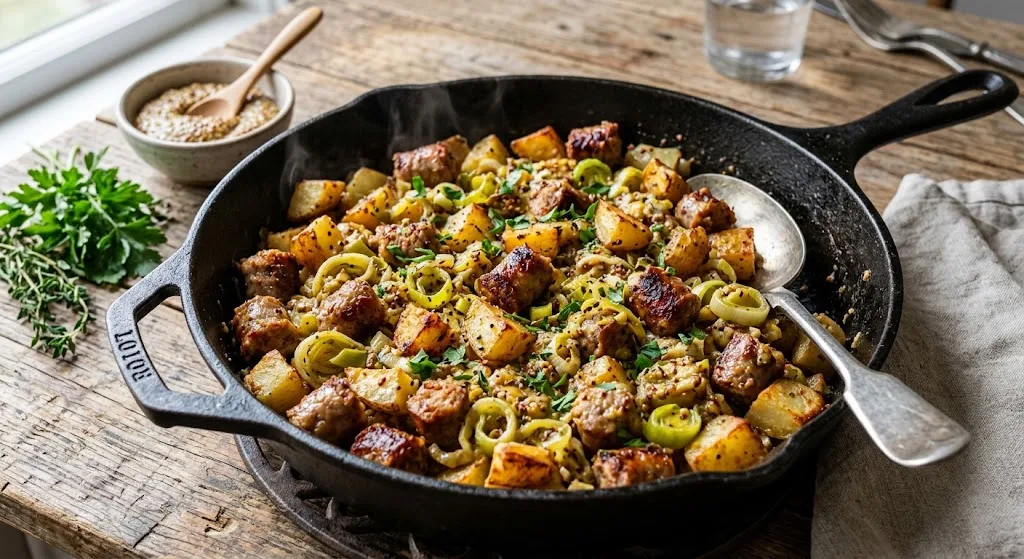
Crispy Yukon Gold potatoes, browned sausage, sweet-tender leeks and tangy Dijon mustard come together in one skillet for a hearty hash that works beautifully for breakfast, brunch, lunch or a quick weeknight dinner.
Quick Answer
The best sausage, leek, potato Dijon mustard hash starts with diced Yukon Gold potatoes, browned sausage, sliced leeks, garlic and Dijon mustard. Cook the potatoes until deeply golden, add the sausage and leeks, then finish with Dijon just before serving.
For the crispiest texture, use a 12-inch skillet, avoid overcrowding it, and let the potatoes sit undisturbed long enough to form their first golden crust.
Recipe at a Glance
| Detail | Recipe Information |
|---|---|
| Prep time | 15 minutes |
| Cook time | 25 minutes |
| Total time | About 40 minutes |
| Servings | 4 |
| Course | Breakfast, brunch, lunch or dinner |
| Method | One-skillet stovetop |
| Best potato | Yukon Gold |
| Best sausage | Fresh pork breakfast sausage |
| Main flavor | Savory, tangy and lightly sweet |
| Equipment | 12-inch skillet |
Sausage, Leek & Potato Dijon Hash
A crisp, savory one-skillet hash finished with bright Dijon mustard.
Ingredients
- 1½ lb Yukon Gold potatoes, ½-inch cubes
- 12 oz fresh pork breakfast sausage, casings removed
- 2 large leeks, white and light-green parts
- 2 tbsp olive oil
- 2 tbsp Dijon mustard
- 2 cloves garlic, finely minced
- 1 tsp fresh thyme leaves
- ½ tsp smoked paprika
- ½ tsp kosher salt, plus more if needed
- ½ tsp freshly ground black pepper
- 2 tbsp fresh parsley, chopped
Optional Additions
- 2 teaspoons apple cider vinegar
- ¼ teaspoon red pepper flakes
- 1 teaspoon whole-grain mustard
- Fried eggs
- Sliced green onions
- Shaved Parmesan
Instructions
Prepare the Potatoes and Leeks
Scrub the potatoes and cut them into ½-inch cubes. Yukon Gold potatoes can be left unpeeled. Trim the leeks, keeping the white and pale-green sections. Slice thinly and rinse thoroughly between the layers to remove hidden soil. Pat everything dry.
Brown the Sausage
Heat a 12-inch heavy skillet over medium-high heat. Add the sausage, break it into small pieces and cook until browned and cooked through. Transfer it to a plate.
Crisp the Potatoes
Add olive oil if needed and place the potatoes in the hot skillet. Spread them into a single layer. Cook for about 8–10 minutes, avoiding constant stirring. Turn when the bottoms are deeply golden, then continue cooking until browned outside and tender inside.
Add the Leeks
Add the sliced leeks and cook for 4–5 minutes, stirring occasionally, until softened and lightly golden. Add garlic, thyme, smoked paprika and black pepper. Cook for about 30 seconds.
Return the Sausage
Return the browned sausage to the skillet. Toss everything together and cook for another 2–3 minutes, allowing the flavors to combine.
Finish With Dijon
Reduce the heat to low. Add the Dijon mustard and gently toss until everything is lightly coated. For a looser finish, mix the Dijon with 1–2 tablespoons of water or unsalted stock first.
Garnish and Serve
Remove the skillet from the heat and scatter over fresh parsley. Serve immediately while the potato edges are crisp. Add a fried egg for breakfast or pair with a green salad for dinner.
Food-Safety Check
Fresh ground pork sausage should reach 160°F internally. Ground poultry sausage should reach 165°F. An instant-read thermometer is more reliable than judging doneness by color.
Keep raw sausage separate from ready-to-eat foods and wash your hands and utensils after handling it.
Why This Hash Works
The ingredients are added according to how they cook. Potatoes need direct heat and plenty of pan space. Sausage needs enough heat to brown without burning. Leeks contain more moisture, so adding them later helps preserve the potato crust.
Dijon goes in last because its main job is to brighten and bind the finished dish. The result is a satisfying contrast between crisp potatoes, juicy sausage, soft leeks and sharp mustard.
How to Get Crispy Potatoes Every Time
Crispy potatoes are mostly about controlling moisture, heat and pan space.
- Dry the potatoes thoroughly after cutting.
- Use a wide 12-inch skillet for four servings.
- Preheat the skillet before adding the potatoes.
- Keep pieces close to ½ inch for even cooking.
- Avoid piling potatoes several layers deep.
- Let the first side brown before turning.
- Don’t stir every few seconds.
- Add the leeks after the potatoes begin crisping.
- Keep Dijon and other wet ingredients until the end.
- For a double batch, use a second skillet or work in batches.
Do You Need to Parboil the Potatoes?
No. Parboiling isn’t required for this recipe because the potatoes are cut small enough to cook directly in the skillet.
| Method | Result | Best For |
|---|---|---|
| Raw skillet potatoes | Crisp outside, creamy center | Everyday cooking |
| Parboiled potatoes | Very tender center, crisp exterior | Large batches |
| Leftover boiled potatoes | Fast and nicely browned | Leftover meals |
| Air-fried potatoes | Extra crisp | Two-stage cooking |
For this recipe, raw diced Yukon Gold potatoes are the simplest choice.
Which Sausage Is Best?
The sausage changes the character of the entire hash. Mild pork breakfast sausage is a natural match for sweet leeks and Dijon, while Italian and smoked sausages create stronger flavor profiles.
| Sausage | Flavor Profile |
|---|---|
| Pork breakfast sausage | Rich, savory and classic for brunch |
| Mild Italian sausage | Herbal with fennel notes |
| Hot Italian sausage | Noticeable heat and herbs |
| Chicken sausage | Lighter-tasting alternative |
| Turkey sausage | Mild and useful with extra herbs |
| Smoked sausage | Robust smoky flavor |
| Plant-based sausage | Useful for a meat-free version |
| Pre-cooked sausage | Convenient and fast |
If using pre-cooked sausage, slice it into bite-size pieces and brown it until hot and lightly caramelized. Lean sausage may require a little additional olive oil.
How to Clean Leeks Properly
Leeks can hold soil between their layers even when the outside looks clean. Trim the root end and remove the tough dark-green leaves. Slice the white and light-green portions into thin half-moons.
- Place the sliced leeks in cold water.
- Separate the layers with your fingers.
- Swish gently to release dirt.
- Allow the soil to settle.
- Lift the leeks out rather than draining the dirty water over them.
- Dry thoroughly before cooking.
The Best Dijon Finish
Dijon provides the acidity this rich skillet needs. It should complement the sausage rather than overpower it, so add it after the vegetables and sausage are fully cooked.
| Variation | What It Adds |
|---|---|
| Smooth Dijon | Clean, sharp, classic finish |
| Whole-grain mustard | Texture and rustic appearance |
| Dijon + apple cider vinegar | Extra tang |
| Dijon + honey | Sweeter finish |
| Dijon + thyme | More herbal character |
| Dijon + lemon | Fresh, bright flavor |
| Dijon + red pepper flakes | Heat and sharpness |
| Dijon + unsalted stock | Looser skillet sauce |
Breakfast & Brunch Serving Ideas
The hash naturally fits breakfast because sausage, potatoes and eggs make a classic combination.
- Fried eggs with runny yolks
- Poached eggs
- Scrambled eggs
- Avocado slices
- Sourdough toast
- Fresh fruit
- Roasted tomatoes
- Fresh parsley
- Green onions
- Hot sauce
Turn It Into a Weeknight Dinner
Hash doesn’t have to be breakfast food. Use a more strongly seasoned sausage, increase the vegetables and serve it with a simple salad or roasted vegetable.
- Arugula salad with lemon dressing
- Roasted green beans
- Steamed broccoli
- Roasted Brussels sprouts
- Sautéed spinach
- Garlicky kale
- Roasted carrots
- Crusty bread
- Simple cabbage slaw
- Fried egg
Vegetable Variations
Add vegetables according to how quickly they cook. Hard vegetables should start early, while tender greens belong near the end.
| Add-In | How It Works |
|---|---|
| Mushrooms | Earthy flavor; brown before combining |
| Bell peppers | Sweetness and color |
| Spinach | Add during the final 1–2 minutes |
| Kale | Needs several minutes to soften |
| Brussels sprouts | Brown or roast before combining |
| Green beans | Fresh texture |
| Corn | Especially good in summer |
| Cabbage | Adds volume and pairs with sausage |
| Apples | Excellent with pork sausage |
| Sweet potatoes | Sweeter fall variation |
Keep it focused: two additional vegetables are usually enough.
Dietary Substitutions
The base recipe contains no required dairy, eggs or wheat. However, packaged sausage and mustard should always be checked when a strict dietary restriction applies.
| Need | Adaptation |
|---|---|
| Vegetarian | Use plant-based sausage or browned mushrooms. |
| Vegan | Use plant-based sausage and olive oil; check product labels. |
| Dairy-free | The main recipe is naturally dairy-free; skip Parmesan. |
| Gluten-free | Choose sausage and mustard suitable for your dietary needs. |
| Lower-meat | Use less sausage and increase mushrooms, cabbage, peppers or greens. |
Troubleshooting Common Problems
Make-Ahead, Storage & Reheating
This hash is best immediately after cooking, while the potato edges are crisp. For faster meals, cook the sausage, clean the leeks and cut the potatoes ahead of time, then finish the hash shortly before serving.
- Refrigerate cooked hash promptly.
- Use a shallow airtight container.
- Keep the refrigerator at 40°F or below.
- Use refrigerated leftovers within 3–4 days.
- Reheat in a skillet for better texture.
- Microwaving is convenient but won’t preserve crispness as well.
- Add fresh parsley after reheating.
- Add a little Dijon if the flavor has muted.
Fresh uncooked sausage has a shorter refrigerator storage window, so cook or freeze it promptly rather than treating it like cooked leftovers.
Can You Freeze Sausage Potato Leek Hash?
Yes, but expect softer potatoes after freezing and thawing. If freezing matters more than crisp texture, cool the cooked hash promptly and package it airtight.
Thaw frozen leftovers safely in the refrigerator, then reheat thoroughly. A hot skillet generally gives a better surface texture than a microwave.
Food Safety for Sausage Hash
Fresh sausage should be handled like other raw ground meat. Keep it refrigerated until cooking, wash your hands after handling it and prevent raw sausage from contacting ready-to-eat foods.
| Food | Minimum Internal Temperature |
|---|---|
| Ground pork sausage | 160°F |
| Ground beef sausage | 160°F |
| Ground chicken or turkey sausage | 165°F |
| Reheated leftovers | 165°F |
An instant-read thermometer is the reliable way to verify doneness. Cooked leftovers should not remain at room temperature for more than 2 hours, or more than 1 hour when temperatures exceed 90°F.
Frequently Asked Questions
Can I use russet potatoes instead of Yukon Gold?
Yes. Russets can become especially crisp, but they are more likely to break when stirred aggressively. Yukon Golds offer an easy combination of crisp edges and creamy centers.
Do I need to peel the potatoes?
No. Thin-skinned Yukon Gold and red potatoes work well with their skins intact. Scrub them thoroughly and remove damaged areas before cutting.
Can I use pre-cooked sausage?
Yes. Slice it into bite-size pieces and brown it until hot and lightly caramelized. You may need additional olive oil because pre-cooked sausage can release less fat.
Can I make this without Dijon mustard?
Yes. Whole-grain mustard is the closest substitute. For a mustard-free version, use a small splash of apple cider vinegar or lemon juice at the end for acidity.
Why are my potatoes not crispy?
Wet potatoes, insufficient pan space, low heat and excessive stirring are the most common causes. Dry the potatoes, use a wide skillet and allow them to sit undisturbed long enough to form a crust.
Can I double the recipe?
Yes, but don’t simply double everything in the same skillet. A crowded pan traps steam. Use two skillets or brown the potatoes in batches.
Can I make this hash ahead?
Yes. Prepare the sausage and vegetables ahead, refrigerate promptly and crisp and finish the hash shortly before serving. Cooked leftovers are best used within 3–4 days when properly refrigerated.
What should I serve with sausage potato leek hash?
For breakfast, try fried or poached eggs and toast. For dinner, serve it with a green salad, roasted vegetables or steamed greens.
Recipe Notes
Conclusion
This sausage, leek, and potato Dijon mustard hash keeps a simple skillet meal focused: crisp potatoes, savory sausage, tender leeks and sharp Dijon.
For the best result, use a wide skillet, give the potatoes room to brown, add the leeks later and finish with Dijon away from high heat. Serve it immediately with fried eggs for breakfast or a green salad for dinner.
The same cooking principle works for countless one-skillet meals: brown your main ingredients first, control moisture and add bright finishing flavors at the end.
Recipe Schema Note
Read More :