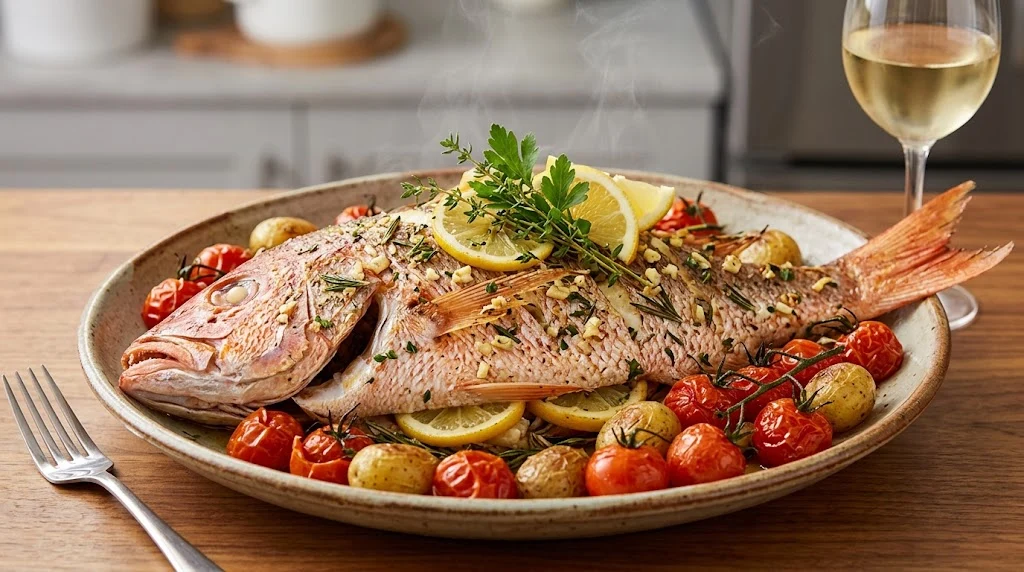
This easy oven-baked red snapper recipe delivers tender, flaky fish with lemon, garlic, olive oil, paprika, and fresh herbs. It works beautifully with skin-on or skinless fillets and is simple enough for a weeknight dinner.
Recipe at a Glance
Why This Oven-Baked Snapper Works
This recipe uses a moderate oven temperature so the fish cooks gently without requiring a complicated sauce. Lemon slices underneath the fillets add aroma and help create flavorful pan juices.
A small amount of olive oil helps the seasoning cling to the fish. Garlic, paprika, parsley, oregano, and black pepper add flavor while allowing snapper’s mild, firm flesh to remain the star.
Easy Lemon-Garlic Baked Red Snapper
Tender, flaky fillets with bright lemon, garlic, olive oil, and herbs.
Ingredients
- 4 red snapper fillets, about 5–6 ounces each
- 1½ tablespoons extra-virgin olive oil
- 3 garlic cloves, finely minced
- 1 teaspoon paprika
- ½ teaspoon kosher salt
- ¼ teaspoon black pepper
- 1 lemon, thinly sliced
- 1 tablespoon fresh lemon juice
- 2 tablespoons chopped fresh parsley
- ½ teaspoon dried oregano
- ¼ teaspoon red pepper flakes, optional
Instructions
- Preheat the oven. Heat the oven to 375°F. Lightly oil a baking dish large enough to hold the fillets in one layer.
- Prepare the fish. Pat the snapper dry with paper towels. Arrange the lemon slices across the bottom of the baking dish.
- Season the fillets. Mix olive oil, garlic, paprika, salt, pepper, and oregano. Brush the mixture evenly over the fish. Place skin-on fillets skin-side down.
- Bake. Bake uncovered for approximately 15–20 minutes, depending on thickness. Start checking thin fillets early.
- Check for doneness. Insert an instant-read thermometer horizontally into the thickest part. The fish is ready at 145°F.
- Finish and serve. Remove from the oven, drizzle with fresh lemon juice, and sprinkle with parsley. Serve promptly.
Why Each Ingredient Matters
| Ingredient | What It Does |
|---|---|
| Red snapper | Firm, mild flesh makes it excellent for oven roasting. |
| Olive oil | Adds richness and helps seasonings coat the fish. |
| Garlic | Adds savory depth without requiring a separate sauce. |
| Paprika | Provides gentle warmth and attractive color. |
| Lemon | Brightens the fish and balances its natural richness. |
| Parsley | Adds a fresh finish after baking. |
| Oregano | Gives the recipe a subtle Mediterranean character. |
| Red pepper flakes | Optional heat for anyone who likes a little spice. |
How Long Does Snapper Take in the Oven?
There is no single cooking time that works for every fillet. Thickness matters more than weight alone. At 375°F, ordinary snapper fillets often take roughly 15–20 minutes, but thinner pieces should be checked earlier.
| Fish Cut | Oven | Starting Point | Final Check |
|---|---|---|---|
| Thin fillet | 375°F | About 12–15 minutes | 145°F |
| ¾-inch fillet | 375°F | About 15–18 minutes | 145°F |
| 1-inch fillet | 375°F | About 18–22 minutes | 145°F |
| Thick fillet | 375°F | Check after 20 minutes | 145°F |
| Whole snapper | 400°F | Varies considerably | Check thickest flesh |
What Temperature Should You Bake Snapper At?
375°F is a practical starting temperature for everyday snapper fillets. It provides steady cooking without requiring the more aggressive heat used by some whole-fish preparations.
| Temperature | Best Use |
|---|---|
| 350°F | Gentler covered preparations |
| 375°F | Everyday baked snapper fillets |
| 400°F | Whole fish or faster roasting preparations |
| 145°F internal | Safe final temperature for finfish |
How to Tell When Red Snapper Is Done
An instant-read thermometer is the most reliable way to check. Insert it horizontally into the thickest portion of the fillet without touching the baking dish.
- Center is opaque rather than translucent.
- Flesh separates easily with a fork.
- Fish remains moist rather than dry and chalky.
- Thickest section reaches 145°F.
- Very thin sections may finish before thicker portions.
How to Keep Baked Snapper Moist
The biggest mistake is overcooking. Snapper is relatively lean, so a few extra minutes can noticeably change its texture.
- Pat the fish dry before seasoning.
- Use a light coating of olive oil.
- Place lemon slices underneath the fillets.
- Avoid unnecessarily long cooking times.
- Start checking thin fillets early.
- Use a thermometer instead of guessing.
- Add fresh lemon juice after baking.
- Serve soon after the fish reaches 145°F.
- Use a sauce after cooking if you want extra moisture.
- Avoid repeatedly reheating leftover fish.
Snapper Fillets vs. Whole Red Snapper
| Feature | Fillets | Whole Snapper |
|---|---|---|
| Preparation | Easier | More involved |
| Cooking speed | Faster | Slower |
| Portioning | Simple | Requires carving |
| Bones | Usually fewer | More bones |
| Presentation | Casual | Dramatic |
| Best use | Weeknight meals | Dinner parties |
| Beginner-friendly | Yes | Moderate |
Choose fillets when you want dinner on the table quickly. Choose whole snapper when presentation matters or you want to serve a larger seafood meal.
Easy Lemon-Garlic Snapper Variation
The main recipe already uses lemon and garlic, but you can intensify those flavors without making a separate sauce. Increase the garlic slightly and add fresh lemon zest before baking. Finish generously with parsley after the fish comes out.
Serve it with:
- Roasted baby potatoes
- Steamed green beans
- Cucumber salad
- Lemon rice
- Roasted asparagus
Mediterranean Baked Snapper
Turn the recipe into a Mediterranean-style dinner by adding vegetables directly around the fish. Keep the vegetables beside the fillets rather than piling them heavily on top so excess moisture does not cause the fish to steam.
Blackened-Style Oven Snapper
You can create the flavor of blackened snapper without pan-searing the fish. Combine paprika, garlic powder, onion powder, black pepper, oregano, and a small amount of cayenne.
Brush the fillets lightly with oil, coat them with the seasoning, and bake until the thickest portion reaches 145°F.
Good pairings: creamy slaw, corn, cilantro rice, roasted potatoes, avocado salad, and lemon wedges.
Snapper With Tomatoes and Olives
Arrange snapper fillets in a baking dish and surround them with cherry tomatoes, sliced red onion, Kalamata olives, and garlic. Drizzle with olive oil and season with oregano and black pepper.
Bake until the fish reaches 145°F, then finish with fresh parsley and lemon juice. Serve over rice or alongside toasted bread to soak up the light pan juices.
Sheet-Pan Snapper With Vegetables
A sheet-pan dinner works best when you account for the different cooking speeds of the ingredients.
| Stage | What to Do |
|---|---|
| 1. Dense vegetables | Start with small potatoes or carrots because they need more time. |
| 2. Medium-speed vegetables | Add bell peppers, red onion, or broccoli once the dense vegetables begin to soften. |
| 3. Add snapper last | Place the fillets on the pan when the vegetables are partly cooked. |
Try these combinations:
- Snapper + potatoes + green beans
- Snapper + zucchini + tomatoes
- Snapper + bell peppers + onions
- Snapper + asparagus + baby potatoes
- Snapper + broccoli + lemon
What to Serve With Oven-Baked Snapper
Think about contrast when choosing sides. Rich lemon-butter-style flavors benefit from something fresh and acidic, while spicy snapper pairs well with cooling vegetables or slaw.
| Category | Ideas |
|---|---|
| Light sides | Cucumber and tomato salad, green salad with lemon vinaigrette, steamed green beans, roasted asparagus |
| Hearty sides | Lemon rice, roasted baby potatoes, couscous, quinoa, crusty bread |
| Fresh toppings | Lemon wedges, parsley, dill, cilantro, chives, cucumber relish |
Best Substitutes for Red Snapper
If snapper is unavailable, choose another firm white fish and match the cooking method to the thickness of the replacement.
| Substitute | Texture & Flavor |
|---|---|
| Grouper | Mild and firm; a natural substitute for many baked recipes. |
| Mahi-mahi | Firmer with a slightly stronger flavor. |
| Sea bass | Richer and more delicate. |
| Cod | Mild and flaky, usually less firm than snapper. |
| Halibut | Thick and meaty; excellent with lemon and herbs. |
Dairy-Free and Gluten-Free Options
The basic recipe is naturally dairy-free and gluten-free when prepared with olive oil and suitable packaged ingredients.
- Use extra-virgin olive oil instead of butter.
- Finish with lemon juice.
- Add fresh herbs.
- Use a tomato or herb sauce.
- Check packaged seasoning blends.
- Avoid sauces thickened with wheat flour.
- Choose rice, potatoes, vegetables, or quinoa.
Common Mistakes When Baking Snapper
| Mistake | Better Approach |
|---|---|
| Cooking every fillet for the same amount of time | Start checking the thickest section early because fillet thickness varies. |
| Using too much liquid | Use a light coating of oil and modest amounts of vegetables or sauce. |
| Over-seasoning | Start with lemon, garlic, olive oil, salt, pepper, and one or two herbs. |
| Relying only on appearance | Use an instant-read thermometer and target 145°F. |
| Overcooking leftovers | Reheat gently and only warm the portion you plan to eat. |
How to Store and Reheat Baked Snapper
Refrigerate cooked snapper promptly. Perishable foods should not remain at room temperature for extended periods.
For Storage
- Cool leftovers promptly.
- Use a shallow airtight container.
- Keep refrigerated at 40°F or below.
- Eat refrigerated leftovers promptly.
- Discard seafood left at room temperature too long.
For Reheating
- Warm the fish gently in a covered baking dish or microwave-safe container.
- Add a small splash of water, lemon juice, or sauce to reduce drying.
- Heat only the portion you plan to eat.
- Avoid repeatedly heating and cooling the same portion.
Can You Bake Frozen Snapper?
For the most predictable texture, thaw snapper safely before using this standard fillet recipe. Follow package directions when available because frozen portions vary considerably in size and preparation.
How to Choose Fresh Red Snapper
Fresh fish should have a clean, mild smell rather than a strong sour or ammonia-like odor.
For whole fish, clear eyes and firm flesh can be useful freshness indicators. Smell and proper cold storage also matter. Keep seafood cold from the store to your refrigerator and prepare it promptly.
Frequently Asked Questions
How long should I bake red snapper at 375°F?
Many 5–6-ounce fillets take roughly 15–20 minutes at 375°F, but thickness is the better guide. Start checking thinner pieces early. The final test is 145°F in the thickest part.
Is 375°F or 400°F better for snapper?
Both temperatures can work. 375°F is a practical choice for everyday fillets, while 400°F is commonly used for whole-fish roasting and some faster preparations. The best choice depends on the recipe, fish thickness, and whether the fish is covered.
Should snapper be covered when baking?
It depends on the preparation. Covering or wrapping the fish traps moisture, while uncovered baking gives the surface more direct heat. For this recipe, bake the fillets uncovered.
How do I keep red snapper from drying out?
Avoid overcooking. Use moderate heat, start checking early, and remove the fish once the thickest section reaches 145°F. A light coating of olive oil and lemon slices can also help.
Can I use skin-on snapper fillets?
Yes. Place skin-on fillets skin-side down in the baking dish. The skin can help protect the flesh from direct heat and can usually be lifted away when the fish is served.
What fish is most similar to red snapper?
Grouper, mahi-mahi, sea bass, cod, and halibut can work in different baked preparations. Choose based on the desired texture and match the cooking method to the thickness of the replacement fish.
Can I prepare baked snapper ahead of time?
Prepare the seasoning, vegetables, sauce, and garnishes ahead, but bake the fish close to serving time for the best texture. Refrigerate cooked leftovers promptly.
Read More :