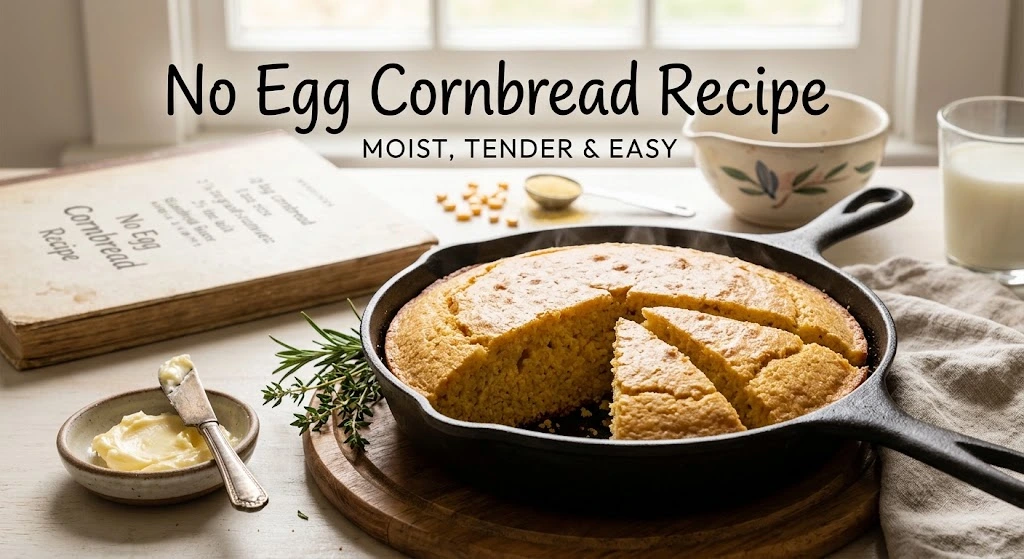
Make soft, golden no egg cornbread with plain yogurt, everyday pantry ingredients, and no boxed mix. It has a tender center, lightly crisp edges, and enough structure to slice cleanly.
No egg cornbread can be soft, golden, and sturdy enough to slice without falling apart. You don’t need a boxed mix or a complicated egg replacer.
This recipe uses plain yogurt to add moisture and help the crumb hold together. It gives you a tender center, lightly crisp edges, and a mild corn flavor that works with chili, soup, barbecue, beans, and holiday dinners.
Quick Answer
Yes, you can make excellent cornbread without eggs. The key is replacing the moisture and binding that eggs normally provide rather than simply leaving them out.
For this recipe, plain yogurt is the main binder. If you need a vegan version, a hydrated ground flaxseed mixture is a practical alternative.
Recipe at a Glance
| Detail | Recipe |
|---|---|
| Prep time | 10 minutes |
| Bake time | 25–30 minutes |
| Total time | About 40 minutes |
| Yield | 9 squares |
| Pan | 8-inch square baking pan |
| Oven | 400°F |
| Skill level | Beginner |
| Egg-free | Yes |
| Vegetarian | Yes |
| Vegan | With substitutions |
| Best texture | Tender center with lightly crisp edges |
The Best No Egg Cornbread Recipe
A tender, golden cornbread made without eggs or a boxed mix.
The goal is a cornbread that stays tender without becoming wet or fragile. Plain yogurt supplies moisture and body, while flour gives the crumb enough structure to hold together.
The recipe has a mild sweetness, so it works with both savory dinners and sweeter toppings. You can also reduce the sugar for a more savory Southern-style side.
Ingredients
- 1 cup yellow cornmeal — about 150–160 g, depending on grind
- 1 cup all-purpose flour — about 120 g
- 2 teaspoons baking powder
- ½ teaspoon baking soda
- ½ teaspoon fine salt
- 2 tablespoons granulated sugar
- ¾ cup plain yogurt — about 180 g
- ¾ cup milk — 180 ml
- ¼ cup unsalted butter, melted — 4 tablespoons
- 1 tablespoon honey, optional
Equipment
- 8-inch square baking pan
- Two mixing bowls
- Whisk
- Rubber spatula
- Measuring cups and spoons
- Cooling rack, optional
How to Make It
- Heat the oven. Heat the oven to 400°F. Grease an 8-inch square baking pan with butter or cooking spray.
- Mix the dry ingredients. Whisk together the cornmeal, flour, baking powder, baking soda, salt, and sugar.
- Mix the wet ingredients. Whisk the yogurt, milk, melted butter, and honey until mostly smooth.
- Combine the mixtures. Pour the wet ingredients into the dry ingredients.
- Stir gently. Mix only until the dry flour disappears. A few small lumps are fine.
- Check the batter. It should be thick but spreadable. Very thick yogurt may require another tablespoon or two of milk.
- Transfer to the pan. Spread the batter evenly into the prepared pan.
- Bake for 25–30 minutes. Start checking near the 25-minute mark.
- Check for doneness. The top should be golden, the center should look set, and a toothpick should come out with moist crumbs rather than wet batter.
- Cool before slicing. Let the cornbread rest for about 10 minutes before cutting.
What the Finished Cornbread Should Look Like
The top should have a light golden color with slightly darker edges. The center should feel springy when gently pressed.
The crumb should be moist but not gummy. It should hold together when lifted but still have the slightly crumbly character expected from cornbread.
Why Cornbread Works Without Eggs
Eggs can provide structure, moisture, emulsification, and binding in baked foods. Cornbread doesn’t necessarily need all those functions to come from one ingredient.
In this recipe, several ingredients divide the job:
That is why simply deleting eggs from a traditional recipe can produce a crumbly result. A successful eggless cornbread recipe needs its liquid, fat, flour, and leavening balanced together.
Ingredients and What Each One Does
Understanding the ingredients makes substitutions much easier. You can change the recipe without accidentally changing every part of its texture.
Cornmeal
Use yellow cornmeal for the classic golden appearance and familiar corn flavor.
Fine- or medium-ground cornmeal gives a more tender texture. Coarser stone-ground cornmeal creates a more rustic crumb and can make the bread feel drier if the liquid isn’t adjusted.
All-Purpose Flour
Flour helps the cornbread hold together.
A recipe made entirely from cornmeal can be more fragile, especially without eggs. The flour provides additional structure without overpowering the corn flavor.
Plain Yogurt
Plain yogurt is the main egg substitute here.
It adds moisture and body while keeping the flavor fairly neutral. Greek yogurt can also work, but its thickness varies considerably between brands.
Milk
Milk hydrates the cornmeal and flour while keeping the batter soft.
For a dairy-free version, use unsweetened oat, soy, or another neutral-tasting plant milk.
Butter
Butter adds richness and helps the edges brown.
For dairy-free cornbread, replace it with neutral vegetable oil, canola oil, or another mild cooking oil.
Baking Powder and Baking Soda
These provide lift because there are no eggs to help create structure during baking.
Don’t casually increase the leavening. Too much can leave an unpleasant aftertaste or cause the center to rise and then sink.
Which Egg Substitute Is Best for Cornbread?
The best substitute depends on what you want from the finished bread. There is no single replacement that behaves exactly like an egg in every cornbread recipe.
| Egg Substitute | Best For | Texture | Flavor Change | Vegan |
|---|---|---|---|---|
| Plain yogurt | Tender everyday cornbread | Soft and moist | Very mild | No |
| Greek yogurt | Richer crumb | Dense-tender | Mild tang | No |
| Ground flaxseed + water | Vegan baking | Slightly more substantial | Mild nutty note | Yes |
| Applesauce | Moist, slightly sweet bread | Soft | Adds sweetness | Yes |
| Commercial egg replacer | Neutral substitution | Brand-dependent | Usually mild | Usually |
| Silken tofu | Dense, moist versions | Sturdy | Mild | Usually |
| Mashed banana | Sweet breakfast cornbread | Soft | Noticeably fruity | Yes |
For an everyday batch, plain yogurt is the easiest starting point.
For vegan cornbread, flaxseed or a commercial egg replacer is usually more appropriate.
For sweet breakfast cornbread, applesauce can be useful. Banana works too, but it changes the flavor substantially.
How to Prevent Eggless Cornbread From Crumbling
Crumbly cornbread is one of the most common problems with egg-free recipes. Removing the eggs removes part of the structure, so the remaining ingredients need to be balanced carefully.
The good news is that most failures have a simple cause.
If Your Cornbread Falls Apart
Check these areas:
- Too much cornmeal: Cornmeal contributes texture but does not provide the same structure as wheat flour.
- Too little liquid: Dry batter usually produces dry, fragile cornbread.
- Too little binder: Egg-free recipes need another ingredient to help the crumb hold together.
- Overbaking: Even a well-balanced batter becomes dry when baked too long.
- Cutting too soon: Fresh cornbread is fragile while hot.
- Coarse cornmeal: A very coarse grind can create a more crumbly texture.
- Too much mixing: Excessive mixing can create a tougher flour-based crumb.
- Wrong pan size: A thinner layer bakes faster and can dry out before you expect it.
How to Make Cornbread Without Eggs or Buttermilk
You don’t need buttermilk for good eggless cornbread.
This recipe uses plain yogurt and regular milk, which gives you moisture and mild acidity without requiring a carton of buttermilk.
If you don’t have yogurt either, don’t automatically replace it with the same amount of water. That changes the recipe’s structure.
Instead, use a recipe specifically designed around your available ingredients.
If You Have No Eggs and No Dairy
Use a plant-based version:
Vegan No Egg Cornbread
Egg-free and dairy-free with a slightly more substantial crumb.
- 1 cup yellow cornmeal
- 1 cup all-purpose flour
- 2 teaspoons baking powder
- ½ teaspoon baking soda
- ½ teaspoon salt
- 2 tablespoons sugar
- ¾ cup unsweetened plant milk
- 1 tablespoon ground flaxseed
- 3 tablespoons water
- ¼ cup neutral oil
- Additional plant milk as needed
This creates a vegan, egg-free, dairy-free cornbread with a slightly more substantial crumb.
Vegan No Egg Cornbread
A vegan cornbread needs to replace both the egg and dairy ingredients.
A simple combination is plant milk, neutral oil, and a flax mixture. You can also use a commercial vegan egg replacer according to its package directions.
Recent vegan cornbread recipes continue to use combinations such as plant milk, flax, oil, and cornmeal, showing that the format works well without eggs or dairy.
For the Best Vegan Texture
- Use unsweetened plant milk.
- Choose a neutral oil.
- Hydrate ground flaxseed before adding it.
- Avoid strongly flavored plant milks.
- Don’t overmix the batter.
- Let the finished bread cool before slicing.
- Use a preheated skillet when crisp edges are your priority.
Dairy-Free Eggless Cornbread
For dairy-free cornbread, replace the yogurt, milk, and butter rather than trying to remove them without adjustment.
Use unsweetened plant milk and neutral oil. A dairy-free yogurt can also provide the moisture and body normally supplied by regular yogurt.
Good Dairy-Free Choices
| Ingredient | Why It Works |
|---|---|
| Soy milk | Mild flavor and useful body |
| Oat milk | Soft, slightly creamy texture |
| Almond milk | Mild but somewhat thinner |
| Dairy-free yogurt | Useful when extra moisture is needed |
| Canola oil | Neutral and reliable |
| Avocado oil | Mild and suitable for baking |
Gluten-Free Eggless Cornbread
Making cornbread gluten-free and egg-free at the same time requires more attention to structure.
Use a gluten-free all-purpose flour blend designed for baking rather than replacing wheat flour with a single starch.
Important Gluten-Free Tips
- Use certified gluten-free ingredients when medically necessary.
- Choose a flour blend that includes a suitable binder when required.
- Keep the yogurt or other moisture source in the formula.
- Don’t replace wheat flour with an equal amount of cornstarch.
- Let the finished bread cool completely before evaluating the crumb.
- Prevent cross-contact if serving someone with celiac disease.
Eggless Cornbread Muffins
Cornbread muffins are useful when you want individual portions rather than squares.
They’re especially convenient for potlucks, lunchboxes, soup dinners, and holiday tables.
How to Adapt the Batter
- Grease a standard muffin pan or use appropriate liners.
- Divide the batter evenly between the cups.
- Don’t fill the cups to the very top.
- Begin checking for doneness earlier than you would with a square pan.
- Look for a set center and lightly browned tops.
- Cool briefly before removing the muffins.
- Add jalapeño, cheddar, corn kernels, scallions, or herbs for savory muffins.
- For a sweeter breakfast version, use honey or maple syrup and serve them warm.
Skillet Cornbread Without Eggs
A cast-iron skillet changes the texture more than simply changing the shape.
The hot metal encourages stronger browning around the edges and underneath the bread. That’s useful when you like a crisp crust around a softer center.
Skillet Method
- Place a 9-inch cast-iron skillet in the oven while it preheats.
- Carefully remove the hot skillet.
- Grease it with butter or oil.
- Pour in the prepared batter.
- Bake until the center is set and the edges are browned.
- Rest the cornbread before slicing.
Sweet vs. Savory No Egg Cornbread
The base recipe sits comfortably between sweet and savory. You can shift it in either direction without rebuilding the entire recipe.
For Sweeter Cornbread
- Increase the sugar modestly.
- Add honey or maple syrup.
- Serve with butter and honey.
- Add cinnamon for breakfast.
- Fold in blueberries for a less traditional version.
For More Savory Cornbread
- Reduce or omit the sugar.
- Add chopped jalapeño.
- Fold in shredded cheddar.
- Add scallions or chives.
- Stir in roasted corn.
- Add cooked crumbled bacon if desired.
- Use fresh herbs.
How to Make Jiffy Cornbread Without Eggs
If you’re adapting a boxed corn-muffin mix, first check the exact package instructions.
Different mixes can have different formulations, so an egg substitute that works with one product isn’t automatically appropriate for another.
For a product such as JIFFY Corn Muffin Mix, use the manufacturer’s current package directions as your starting point rather than blindly applying a substitution from a different mix.
Common Substitution Options
- Plain yogurt
- Applesauce
- Commercial egg replacer
- Ground flaxseed mixture
What to Serve With No Egg Cornbread
The mild flavor makes eggless cornbread useful far beyond one particular dinner.
Savory Pairings
Toppings
- Salted butter
- Honey
- Maple butter
- Hot honey
- Jalapeño butter
- Berry preserves
- Dairy-free butter
For a savory dinner, keep the cornbread only lightly sweet. For breakfast, a sweeter version works especially well with butter and honey.
Holiday and Potluck Cornbread
Egg-free cornbread is particularly useful when you’re cooking for a mixed group with different dietary needs.
For a potluck, muffins are easier to portion, while a square pan creates a more traditional family-style presentation.
The FDA recommends reading food labels carefully because major allergens must generally be identified on packaged foods sold in the United States.
How to Store No Egg Cornbread
Let the cornbread cool before storing it. Once cooled, keep it tightly covered so the crumb doesn’t dry out.
Because this recipe contains yogurt and milk, treat leftovers as a perishable food rather than leaving them out indefinitely.
Refrigerator
- Cool the cornbread.
- Place it in an airtight container.
- Refrigerate promptly.
- Use refrigerated leftovers within 3–4 days for best safety and quality.
Freezer
- Cool completely.
- Cut into individual portions.
- Wrap each piece well.
- Place the wrapped pieces in a freezer-safe bag or container.
- Label with the date.
- Thaw before reheating.
How to Reheat Eggless Cornbread
The goal is to warm the bread without drying it out.
Oven
Wrap individual pieces loosely in foil and warm them in a moderate oven until heated through.
Microwave
Place one piece on a microwave-safe plate and heat it in short intervals.
Don’t overheat it. Cornbread can become dry and firm surprisingly quickly.
Skillet
A lightly greased skillet over low to medium-low heat can warm a slice while restoring some surface crispness.
No Egg Cornbread Troubleshooting
| Problem | Likely Cause | What to Do |
|---|---|---|
| Falling apart | Not enough moisture or binding; cutting too soon | Cool at least 10 minutes and check the moisture balance. |
| Gummy center | Too much liquid or insufficient baking | Check the center and continue baking if needed. |
| Dry cornbread | Overbaking, coarse cornmeal, insufficient liquid, or too much flour | Check baking time and batter consistency. |
| Dense texture | Old leavening, packed flour, or overmixing | Use fresh leaveners and mix gently. |
| Center sinks | Excess liquid, too much leavening, or underbaking | Keep the leavening balanced and bake until the center is set. |
| Pale top | Insufficient baking or pan-related browning | Allow additional baking time or use cast iron for stronger browning. |
Why Is My Eggless Cornbread Falling Apart?
The batter may need more moisture or binding, or the bread may have been cut while too hot.
Let it cool for at least 10 minutes before slicing. If the problem persists, check the cornmeal-to-flour balance and avoid overbaking.
Why Is the Center Gummy?
The batter may contain too much liquid, or the center may simply need more baking time.
Check the center rather than relying only on the color of the edges.
Why Is My Cornbread Dry?
Overbaking is one of the first things to check.
A very coarse cornmeal, insufficient liquid, or too much flour can also contribute to dryness.
Why Is My Cornbread Dense?
Check the freshness of your baking powder and baking soda.
Also make sure you aren’t heavily packing the flour into the measuring cup or stirring the batter for too long.
Why Did My Cornbread Sink?
A center that rises and then collapses can result from excessive liquid, too much leavening, or an underbaked center.
Avoid opening the oven repeatedly during baking.
Why Is the Top Pale?
Your oven may need more baking time, or the pan may be producing less browning than expected.
A cast-iron skillet generally gives stronger edge and bottom browning than a light-colored baking pan.
Frequently Asked Questions
Can you make cornbread without eggs?
Yes. Cornbread can be made without eggs when another ingredient supplies enough moisture and binding. Plain yogurt, flaxseed, applesauce, and commercial egg replacers can all be useful, but each produces a somewhat different texture.
What is the best egg substitute for cornbread?
For this recipe, plain yogurt is the best choice for a tender everyday crumb. If you need a vegan version, ground flaxseed mixed with water is a practical alternative. Applesauce works well when you don’t mind a slightly sweeter flavor.
Can I make cornbread without eggs or buttermilk?
Yes. You can use plain yogurt and regular milk instead of eggs and buttermilk. For a dairy-free version, use plant milk and a suitable vegan binder.
Can I use applesauce instead of eggs in cornbread?
Yes, applesauce can provide moisture and some binding. It also adds sweetness and can make the crumb softer. For a neutral savory cornbread, yogurt or a commercial egg replacer may be a better fit.
Can I use flaxseed instead of eggs?
Yes. Mix ground flaxseed with water and allow it to hydrate before adding it to the batter. Flax creates a slightly more substantial texture and is particularly useful for vegan cornbread.
Can I use mayonnaise as an egg substitute?
Some recipes use mayonnaise to add richness and moisture, but mayonnaise is not egg-free when it contains egg. That distinction matters if you’re avoiding eggs because of an allergy. Always check the ingredient label rather than assuming a substitute is allergen-free.
Can I freeze no egg cornbread?
Yes. Cool it completely, wrap individual portions well, and freeze them in an airtight package. For best quality, thaw individual pieces and reheat them gently rather than repeatedly heating and cooling the entire batch.
Conclusion
A good no egg cornbread recipe doesn’t have to be dry, dense, or difficult to slice. With the right balance of cornmeal, flour, moisture, fat, and leavening, you can make a tender homemade cornbread without eggs.
Start with the yogurt version if you want the simplest everyday recipe. Choose flaxseed for a vegan loaf, switch to plant milk and oil for dairy-free baking, or use a hot skillet when crisp edges matter most.
Read More :