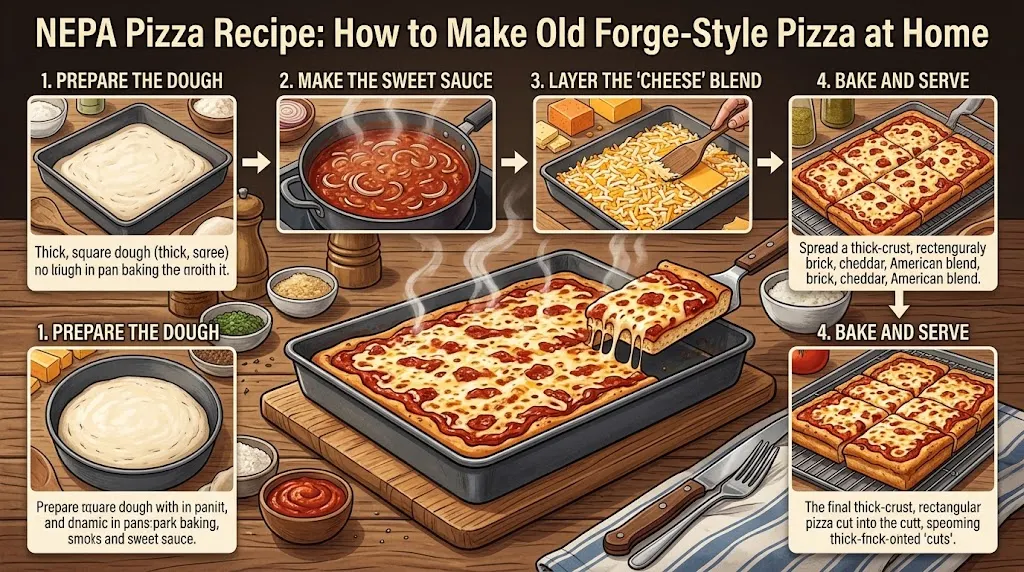
If you’re searching for a NEPA pizza recipe, you’re probably looking for the rectangular, pan-baked pizza associated with Northeastern Pennsylvania, especially Old Forge-style pizza. Unlike a thin round pie, this regional style is baked in a metal tray and served in square or rectangular “cuts.”
This home-oven version focuses on the details that make the style distinctive: a buttery medium-thick crust, lightly sweet tomato sauce, creamy cheese blend, and crisp bottom. You’ll also learn how to handle the dough, choose cheese, prevent a soggy center, and adapt the recipe for a regular U.S. kitchen.
Quick Answer: What Is NEPA Pizza?
NEPA means Northeastern Pennsylvania. The region has several pizza traditions, but Old Forge-style pizza is one of the best-known. It is typically rectangular, pan-baked, medium-thick, cheese-forward, and cut into individual “cuts” rather than triangular slices.
What Is NEPA Pizza?
NEPA pizza means pizza from Northeastern Pennsylvania. The region has several distinct styles, with Old Forge pizza among the most recognizable. Old Forge is in Lackawanna County, southwest of Scranton, and its pizza is traditionally baked in a rectangular metal pan.
The terminology is part of the experience. A whole rectangular pizza is commonly called a tray, while an individual serving is called a cut rather than a slice. Local versions vary from shop to shop, so there is no single universal Old Forge formula.
What Makes Old Forge Pizza Different?
Old Forge-Style NEPA Pizza Recipe
A practical home-oven adaptation for a crisp-bottomed, tender-centered rectangular pizza.
This recipe is designed as a home-oven adaptation, not a claim to reproduce one particular Old Forge shop exactly. It uses a 10×14-inch metal pan and conventional oven temperatures rather than a specialized pizza oven.
The goal is a crust that is crisp underneath, tender inside, and sturdy enough to support sauce and cheese.
Dough Ingredients
- 500 g bread flour
- 310 g water
- 6 g instant yeast
- 10 g fine salt
- 25 g unsalted butter, softened
- Butter or shortening, for the pan
Bread flour with roughly 11–13% protein is a practical choice. The target is a dough that is soft and slightly tacky rather than dry.
Sauce Ingredients
- 28 oz crushed tomatoes
- 60 g sweet onion, finely minced
- 2 garlic cloves, finely minced
- 1 tbsp olive oil
- 1 tbsp dried oregano
- 1 tsp dried basil
- 1–2 tsp sugar, optional
- ½ tsp black pepper
- ½ tsp salt, then adjust
- 2 tbsp Pecorino Romano, finely grated
Cheese Topping
- 2 cups shredded low-moisture mozzarella
- 1 cup shredded mild brick cheese
- 1 cup shredded white American cheese
- ¼ cup finely grated Pecorino Romano
If brick cheese is unavailable, use Muenster or mild white cheddar. The flavor will change, but both are practical home-kitchen substitutions.
Make the Dough
- Add the water and yeast to a large mixing bowl.
- Stir in the bread flour until no dry flour remains.
- Cover and rest for 10 minutes.
- Add the salt and mix thoroughly.
- Knead for about 5–7 minutes, until smoother.
- Work in the softened butter until fully incorporated.
- Cover and let the dough rise until noticeably puffy and roughly doubled.
- If the dough resists stretching, rest it another 10–15 minutes.
Prepare the Sauce
- Combine crushed tomatoes, onion, garlic, olive oil, oregano, basil, black pepper, and Pecorino.
- Add sugar only if the tomatoes taste sharply acidic.
- Blend briefly with an immersion blender if a smoother sauce is desired.
- Taste and adjust the salt.
- Refrigerate until ready to assemble.
Shape the Pizza
- Generously grease a 10×14-inch metal pan with butter or shortening.
- Place the risen dough into the pan.
- Gently press the dough outward with your fingertips.
- Stop if it repeatedly pulls away from the edges.
- Cover and rest for 10–15 minutes.
- Press again until the dough reaches the corners.
- Rest for another 20–30 minutes while the oven heats.
Parbake the Crust
Preheat the oven to 450°F.
Place the pan on the lower-middle rack and bake the plain dough for approximately 6–8 minutes. The goal is not to fully bake the crust. You want it firm enough to support the sauce and cheese.
Add Sauce and Cheese
- Spread approximately 1 to 1¼ cups of sauce over the parbaked crust.
- Leave a narrow border around the outside.
- Combine the mozzarella, brick cheese, and white American cheese.
- Scatter the cheese evenly over the sauce.
- Finish with Pecorino Romano.
Finish Baking
Return the pizza to the lower-middle rack and bake for approximately 10–15 minutes, rotating the pan if your oven browns unevenly.
If the cheese is finished but the bottom is still pale, move the pan lower for the final few minutes.
Let the finished tray rest on a rack for 5–10 minutes before cutting. This helps the cheese settle and allows excess steam to escape from the crust.
How to Get the Crisp Bottom
The bottom crust is where many home versions fall short. A thick pizza can look finished on top while remaining pale underneath. Simply baking it longer isn’t always the answer because excessive baking can dry the crust and overbrown the cheese.
5 Details That Make a Difference
A staged bake is also consistent with documented Old Forge-style techniques, although exact temperatures and timing vary between pizza ovens and home ovens.
Choosing the Right Cheese for NEPA Pizza
Cheese is one of the easiest ways to change the personality of the pizza. A supermarket mozzarella-only topping will work, but a broader blend creates a creamier, more distinctive result.
| Cheese | What It Contributes |
|---|---|
| Mozzarella | Familiar melt and mild stretch |
| White American | Creamy, smooth melt |
| Brick cheese | Mild, rich flavor |
| Muenster | Soft melt and practical substitution |
| Mild white cheddar | Slightly sharper flavor |
| Pecorino Romano | Salty, aged-cheese depth |
For a regional-style starting point, mozzarella, brick, white American, and Pecorino Romano make a useful combination.
Old Forge Pizza Sauce
The sauce should be thick enough to stay on the crust but loose enough to spread easily. The flavor should lean savory with gentle sweetness.
Finely minced onion is particularly useful because it gives the tomato base a rounded flavor without requiring a complicated ingredient list.
Pizza Sauce Tips
- Use good canned tomatoes rather than watery tomato sauce.
- Chop onion very finely so it blends into the sauce.
- Don’t oversalt because the cheese is already salty.
- Use sugar only when the tomatoes taste too acidic.
- Let the sauce cool before spreading it over the crust.
- Refrigerate unused sauce promptly.
- Make the sauce a day ahead when convenient.
Red vs. White Old Forge Pizza
Red pizza is the easiest version for a first attempt because the sauce, cheese, and crust provide a familiar starting point.
White pizza is more cheese-focused and is often associated with a double crust and rosemary. Local versions differ, so not every pizzeria follows the same formula.
| Feature | Red Pizza | White Pizza |
|---|---|---|
| Tomato sauce | Yes | Usually no |
| Cheese | Generous | Generous |
| Crust | Single | Often double |
| Herbs | Oregano common | Rosemary often used |
| Flavor | Tomato-forward | Rich and cheesy |
| Good starting point | Yes | After mastering the dough |
Old Forge Double-Crust White Pizza
Double-crust white pizza is one of the most distinctive variations associated with the region. Instead of placing cheese directly on a single crust, the filling is enclosed between two layers of dough.
Basic Method
- Grease the pan with butter or shortening.
- Press the first dough layer into the pan.
- Spread the cheese filling evenly.
- Add oregano, garlic, black pepper, or rosemary.
- Stretch a second dough layer over the filling.
- Seal the edges carefully.
- Make a small vent in the top.
- Brush the surface lightly with oil.
- Bake until deeply golden.
- Check through the vent that the filling is hot and melted.
- Rest before cutting.
Thinly sliced sweet onion works especially well. Broccoli, spinach, peppers, sausage, and pepperoni can also work when wetter ingredients are cooked or drained first.
Pagash Pizza: The Potato Version
Pagash is another important NEPA pizza tradition. It combines pizza dough with mashed potatoes and cheese, often with onions, creating something closer to a pierogi-inspired pizza than a standard tomato pie.
Simple Home Pagash
- Use prepared NEPA-style dough.
- Spread cooled mashed potatoes over the crust.
- Season with salt and black pepper.
- Add sautéed onions.
- Sprinkle with cheddar and mozzarella.
- Add small pieces of butter if desired.
- Bake until the crust is deeply browned.
- Serve warm.
Pagash is particularly useful when you have leftover mashed potatoes and want to turn them into a completely different meal.
NEPA Pizza vs. Pan-Fried Sicilian Pizza
NEPA has more than one regional pizza tradition. Old Forge pizza and pan-fried Sicilian pizza can both appear as rectangular tray pizzas, but their crusts are prepared differently.
| Feature | Old Forge-Style | NEPA Pan-Fried Sicilian |
|---|---|---|
| Shape | Rectangular | Rectangular |
| Pan cooking | Yes | Yes |
| Bottom texture | Crisp and baked | More distinctly fried |
| Oil | Generous greasing | Much heavier oil use |
| Cheese | Regional mixed cheese | Often mozzarella and cheddar |
| Sweet onion | Optional/common | Characteristic in many versions |
| Regional center | Old Forge / Lackawanna area | Luzerne County |
| Basic description | Pan-baked regional pizza | Oil-fried regional pizza |
These are related regional traditions, but they aren’t interchangeable recipes.
Best Toppings for NEPA Pizza
Classic regional pizza doesn’t need a mountain of toppings. Because the crust is thicker, too many wet ingredients can interfere with browning.
Good Topping Choices
- Pepperoni: crisp edges and salty flavor.
- Sweet onion: especially good with red sauce.
- Mushrooms: sauté first to remove moisture.
- Green peppers: slice thinly.
- Broccoli: blanch or sauté first.
More Options
- Spinach: cook and squeeze dry.
- Hot peppers: add sharper contrast.
- Cooked sausage: drain excess fat.
- Ham: use thin pieces.
- Rosemary: particularly good on white pizza.
How to Make NEPA Pizza Ahead
The dough, sauce, and cheese can be prepared separately, making this style convenient for a weekend dinner or party.
The Day Before
- Mix and knead the dough.
- Allow it to begin fermenting.
- Cover tightly and refrigerate.
- Prepare and refrigerate the sauce.
- Shred the cheese.
- Cook vegetables or meat toppings.
- Store each component separately.
On Pizza Day
- Take the dough from the refrigerator.
- Let it lose its refrigerator chill.
- Grease the pan.
- Shape the dough.
- Allow it to relax and rise.
- Assemble and bake.
How to Store and Reheat NEPA Pizza
Leftover pizza should be refrigerated promptly. For food safety, don’t leave perishable pizza at room temperature for more than 2 hours. Refrigerated leftovers are generally best used within 3–4 days.
| Method | Best For | Result |
|---|---|---|
| Skillet | One or two cuts | Crisp bottom with warmed cheese |
| Oven | Several cuts | Even reheating and crisp crust |
| Air fryer | Small portions | Very crisp bottom |
| Microwave | Fastest option | Softer crust |
If freezing, wrap individual cuts tightly and freeze them promptly. Reheat until the center is thoroughly hot.
Troubleshooting Your NEPA Pizza
The bottom is pale
Your pan may not be getting enough heat. Use a metal pan, move the pizza lower in the oven, and allow the oven to preheat fully.
The center is soggy
The most likely causes are too much sauce, wet toppings, or insufficient bottom heat. Use less sauce, drain vegetables, and parbake longer.
The dough keeps shrinking
Stop stretching. Cover the dough and let it rest for 10–15 minutes, then try again.
The crust is dense
The dough may not have fermented enough. Give it more time to become visibly puffy before shaping.
The cheese browns before the crust
Move the pizza lower in the oven. If necessary, cover the top loosely near the end while the bottom continues cooking.
The pizza sticks to the pan
Grease the pan more thoroughly next time. Butter or shortening also helps establish the browned pan crust.
The pizza tastes too salty
Reduce Pecorino and salty toppings. White American, brick, mozzarella, and other cheeses all contribute salt, so season gradually.
How to Serve NEPA Pizza
The traditional presentation is part of what makes this style fun. Serve the pizza warm but not immediately out of the oven. A short rest helps the cheese settle and makes cutting easier.
Cut the rectangular tray into manageable cuts rather than long triangular slices.
For a Family Dinner
- Simple green salad
- Roasted vegetables
- Garlic bread
- Antipasto
- Fresh fruit
- A second white tray
Ingredient Substitutions
| If You Don’t Have… | Use… | What to Expect |
|---|---|---|
| Brick cheese | Muenster or mild white cheddar | Similar melting function with a different flavor |
| White American cheese | Muenster | Softer, slightly different melt and flavor |
| Bread flour | Strong all-purpose flour | Somewhat different crust texture |
| Sweet onion | Another mild onion | Mince very finely |
| Pecorino Romano | Parmesan | Different flavor and texture |
| Metal pizza tray | Heavy rectangular metal baking pan | Use the heaviest suitable pan available |
Glass is less desirable for this particular style because the goal is strong direct heat on the bottom crust.
Food Safety & Allergy Notes
This recipe contains several common allergens and may include additional allergens depending on the toppings and processed cheese products used.
- Wheat: Bread flour contains wheat and gluten.
- Milk: Butter and the cheese blend contain dairy unless suitable alternatives are used.
- Soy: Some processed cheese products, including certain American cheese products, can contain soy-derived ingredients. Check the package if soy is an allergy concern.
- Meat toppings: Sausage and other raw meat toppings should be cooked safely before serving.
Keep raw meat separate from ready-to-eat ingredients and wash hands, boards, and utensils after handling it.
For leftover pizza, refrigerate promptly and reheat thoroughly before serving.
Frequently Asked Questions
What does NEPA mean in a pizza recipe?
NEPA means Northeastern Pennsylvania in this context. The term covers several regional pizza traditions, including Old Forge-style pizza and pan-fried Sicilian pizza.
What makes Old Forge pizza different from regular pizza?
Old Forge pizza is generally rectangular, pan-baked, medium-thick, and served in cuts. Red versions combine tomato sauce with a regional cheese blend, while white versions often emphasize cheese and may use two crust layers.
What cheese is used on Old Forge pizza?
There isn’t one universal cheese formula. A documented Old Forge-style recipe uses mozzarella, brick cheese, white American cheese, and Pecorino Romano. Muenster or white cheddar can replace brick cheese.
Can I make NEPA pizza in a regular oven?
Yes. A regular home oven works well when you use a metal pan and carefully control the crust. A home-oven version requires a different baking approach from recipes designed for specialized pizza ovens.
Why is Old Forge pizza called a tray?
The pizza is baked as a rectangular tray, and local terminology commonly calls an individual portion a cut rather than a slice.
Is Old Forge pizza the same as Sicilian pizza?
No. They can look similar because both may be rectangular and pan-baked, but Old Forge pizza has its own regional dough, cheese, sauce, and terminology. NEPA pan-fried Sicilian pizza also uses substantially more oil to create its characteristic crisp crust.
What is pagash pizza?
Pagash is a Northeastern Pennsylvania potato pizza commonly made with pizza dough, mashed potatoes, cheese, and often onions. It is closely associated with the region’s Eastern European-influenced food traditions.
Can I make the dough the night before?
Yes. Refrigerating the dough after its initial fermentation can make pizza day easier and give you more schedule flexibility. Let chilled dough warm enough to become workable before pressing it into the pan.
Conclusion
A great NEPA pizza recipe is less about piling on toppings and more about getting the fundamentals right: a well-fermented pan dough, flavorful tomato sauce, creamy cheese blend, and strong bottom heat.
Start with the red Old Forge-style version in a 10×14-inch metal pan. Once you can consistently produce a browned bottom and tender center, try white pizza, double-crust white pizza, or pagash.
The regional style has plenty of room for variation, but the pan, crust, cheese, and careful baking technique should remain the foundation.
Read More :