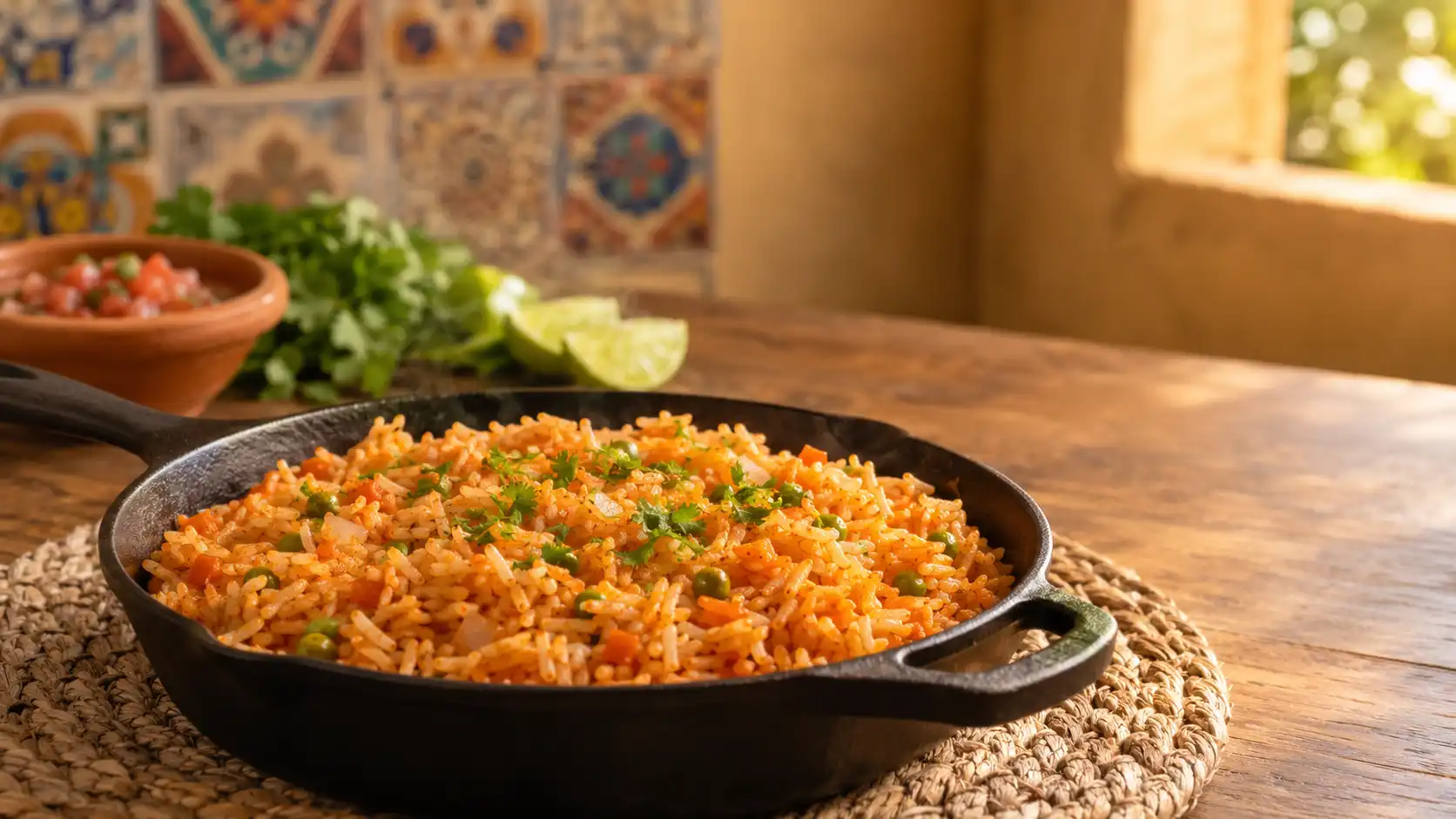
Learn how to make perfectly fluffy Mexican rice with long-grain rice, tomato sauce, broth, garlic, onion, and simple spices. This reliable stovetop method delivers savory, tomato-rich rice without the mushy texture.
Mexican Rice is a warm, tomato-flavored rice dish often served with tacos, enchiladas, beans, grilled meats, burrito bowls, and family-style Mexican dinners. It is also known as arroz rojo, which means red rice. The best version is simple, fluffy, savory, and not mushy.
This easy Mexican rice guide shows you how to make a reliable stovetop version with long-grain rice, tomato sauce, broth, garlic, onion, and everyday spices. You will also learn why rinsing and toasting the rice matter, how to adjust the flavor, what to serve with it, and how to fix common problems.
For most home cooks, the goal is clear: rice that tastes like a good Mexican restaurant side dish but uses pantry-friendly ingredients. This method gives you that balance. It is easy enough for Taco Tuesday and useful enough for meal prep, potlucks, and family dinners.
Mexican Rice is a fluffy tomato-style rice dish made by rinsing and toasting long-grain white rice, then simmering it with tomato sauce, broth, garlic, onion, and spices. For the best texture, use long-grain rice, avoid stirring while it cooks, let it rest, and fluff gently with a fork.
Easy Mexican Rice Recipe
Fluffy stovetop arroz rojo with tomato, broth, garlic, onion, and warm spices.
Ingredients
- 1½ cups long-grain white rice
- 2 tablespoons neutral oil
- ¼ cup finely diced onion
- 2 garlic cloves, minced
- ¼ cup tomato sauce
- 2¾ cups chicken broth or vegetable broth
- 1 teaspoon tomato bouillon, optional
- ½ teaspoon ground cumin
- ½ teaspoon chili powder, optional
- ½ teaspoon salt, plus more to taste
- 1 small jalapeño or serrano, whole or halved, optional
- 1 bay leaf, optional
- ¼ cup peas and carrots, optional
- Fresh cilantro and lime, for serving
Instructions
- Rinse the rice: Place rice in a fine-mesh strainer and rinse under cool water until the water runs mostly clear. Drain very well.
- Toast the rice: Heat oil in a heavy saucepan over medium heat. Add rice and cook for 5–7 minutes, stirring often, until the grains become lightly golden.
- Add aromatics: Stir in onion and cook for about 2 minutes. Add garlic and cook for 30 seconds, just until fragrant.
- Add tomato and seasoning: Stir in tomato sauce, broth, tomato bouillon, cumin, chili powder, and salt. Add the jalapeño and bay leaf if using.
- Simmer gently: Bring the mixture to a light boil. Reduce the heat to low, cover, and simmer for 18–20 minutes.
- Keep the lid closed: Avoid lifting the lid during cooking. The trapped steam helps finish the rice evenly.
- Rest: Turn off the heat and let the covered pot rest for 10 minutes.
- Fluff and serve: Remove the bay leaf and pepper. Gently fluff the rice with a fork and finish with cilantro and lime if desired.
What Is Mexican Rice?
Mexican Rice is a savory rice side dish cooked with tomato, broth, aromatics, and seasonings. In many Mexican and Mexican-American homes, it is called arroz rojo because of its red or orange color.
The color usually comes from tomato sauce, tomato paste, tomato bouillon, fresh tomato puree, or a combination of these ingredients. The flavor should be warm and savory rather than overwhelmingly spicy. Ideally, it tastes like rice cooked in flavorful broth with tomato, garlic, onion, and gentle seasoning.
Is Mexican rice the same as Spanish rice?
In the United States, the names Mexican rice and Spanish rice are often used interchangeably. However, they do not always describe the same dish. Mexican arroz rojo is commonly tomato-based, while some Spanish-style rice recipes use saffron and have a more yellow appearance.
For this article, the focus is easy Mexican Rice: a tomato-style arroz rojo side dish designed to pair with tacos, enchiladas, beans, grilled chicken, carne asada, and burrito bowls.
What should good Mexican rice taste like?
Fluffy
The grains should remain distinct instead of forming a sticky mass.
Tomato-Rich
Tomato should add color and depth without making the rice overly sour.
Savory
Broth or bouillon provides the deeper savory base.
Gently Seasoned
Garlic, onion, cumin, and optional chili provide balanced flavor.
Soft, Not Wet
The grains should be tender without excess liquid in the pot.
Easy to Pair
The flavor should complement beans, tacos, grilled meat, and saucy dishes.
Ingredients for Easy Mexican Rice
You do not need a long list of ingredients to make flavorful Mexican rice. The key is choosing the right rice, using an appropriate amount of liquid, and layering tomato flavor without making the rice heavy.
| Ingredient | Why It Matters | Easy Substitute |
|---|---|---|
| Long-grain white rice | Helps produce fluffy, separate grains. | Jasmine or basmati rice |
| Neutral oil | Helps toast the rice and adds flavor. | Canola, vegetable, avocado, or light olive oil |
| Onion | Adds sweet-savory depth. | Onion powder |
| Garlic | Adds aromatic depth. | Garlic powder |
| Tomato sauce | Provides tomato flavor and color. | Tomato paste mixed with water, passata, or fresh tomato puree |
| Chicken broth | Adds savory body to the rice. | Vegetable broth |
| Tomato bouillon | Boosts tomato flavor, color, salt, and savory depth. | Extra tomato paste plus seasoning |
| Cumin | Adds warm, earthy flavor. | A small pinch of chili powder |
| Salt | Balances and brings out the other flavors. | Use less when broth or bouillon is salty. |
| Cilantro | Adds fresh flavor at serving. | Green onion or parsley |
What rice works best for Mexican Rice?
Long-grain white rice is the easiest choice for classic Mexican Rice because its grains tend to remain separate when cooked. Short-grain rice contains more starch and is more likely to become sticky. Medium-grain rice can work, but it requires closer attention to texture.
Jasmine and basmati rice can also work. They are not the traditional choice for every Mexican rice recipe, but both can produce fluffy results when cooked carefully.
Should you rinse the rice first?
Yes. Rinsing helps remove surface starch that can contribute to gummy rice. Rinse the rice under cool water until the water looks mostly clear, then drain it thoroughly.
Drain rinsed rice well before adding it to hot oil. Excess water can cause hot oil to splatter. Keep the heat controlled while toasting.
What does tomato bouillon do?
Tomato bouillon, sometimes sold as caldo de tomate, can add tomato flavor, salt, color, and savory depth. It is commonly used in restaurant-style Mexican rice preparations.
If you do not have tomato bouillon, use broth and increase the tomato flavor with a small amount of tomato paste or additional tomato seasoning.
Can you make Mexican Rice without tomato bouillon?
Yes. Tomato bouillon is convenient but not essential. Tomato sauce, broth, garlic, onion, cumin, and salt are enough to create a balanced rice dish.
| If You Do Not Have | Try This Instead |
|---|---|
| Tomato bouillon | Tomato paste plus salt to taste |
| Chicken broth | Vegetable broth |
| Tomato sauce | Tomato paste mixed with water or passata |
| Fresh garlic | Garlic powder |
| Fresh onion | Onion powder |
| Cilantro | Green onion, parsley, or leave it out |
How to Make Mexican Rice on the Stovetop
This stovetop method is designed for beginners while still producing the fluffy texture and savory tomato flavor associated with restaurant-style Mexican rice.
Rinse the Rice
Rinse long-grain rice under cool water until the water is mostly clear. Drain thoroughly.
Toast the Rice
Heat oil over medium heat. Add rice and cook for 5–7 minutes until lightly golden, stirring frequently.
Add Aromatics
Add onion and cook for about 2 minutes. Add garlic and cook for approximately 30 seconds.
Add Tomato & Seasoning
Add tomato sauce, broth, bouillon, cumin, chili powder, salt, and optional pepper and bay leaf.
Simmer Gently
Bring to a light boil, reduce heat to low, cover, and simmer for 18–20 minutes.
Rest & Fluff
Turn off the heat and rest covered for 10 minutes. Remove aromatics and fluff gently with a fork.
Why should you toast rice before simmering?
Toasting rice in oil adds a light nutty flavor and helps create a better separation between the grains. This rice-pilaf-style technique is one of the most useful steps for achieving fluffy Mexican rice.
Should you stir rice while it cooks?
No. Stir once after adding the liquid, then leave the rice alone while it simmers. Repeated stirring can release starch and encourage a sticky texture. It can also break delicate grains.
Mexican Rice Ratios and Cooking Methods
The stovetop method is particularly useful because it allows you to toast the rice before cooking and control the heat throughout the process. Rice cookers and pressure cookers can also work, but their liquid requirements vary by appliance.
| Method | Starting Guidance | Cooking Note |
|---|---|---|
| Stovetop white rice | About 2 cups total liquid per 1 cup rice | Count tomato sauce as liquid; simmer covered and rest before fluffing. |
| Rice cooker | Use the machine’s white-rice guidance | Count tomato sauce as part of the liquid and adjust based on the appliance. |
| Instant Pot | Use less liquid than a stovetop version | Sauté first, scrape the bottom thoroughly, then pressure cook according to your model. |
| Brown rice | More liquid and significantly more cooking time | Expect a nuttier, chewier texture. |
| Basmati or jasmine | May need slightly less liquid | Check texture the first time because brands and cooking methods vary. |
Liquid ratios depend on the rice variety, pan, heat, and ingredients. Tomato sauce contributes liquid, so it should be considered when adjusting the overall amount. Avoid blindly adding extra broth if the rice already has enough cooking liquid.
Can you make Easy Mexican Rice in a rice cooker?
Yes. For deeper flavor, toast the rice in a skillet first. Transfer the toasted rice to the cooker and add tomato sauce, broth, and seasonings. Use the white-rice setting.
Because rice cookers vary, use your machine’s rice line as the primary guide and remember that tomato sauce counts toward the total liquid.
Can you make Mexican Rice in an Instant Pot?
Yes. Use the sauté function to toast the rice with oil, onion, and garlic. Add the tomato sauce, broth, and seasonings, then use an appropriate pressure-cooking method for your model and allow pressure to release safely.
Avoid overfilling the cooker. Scrape the bottom well after adding liquid so toasted rice does not remain stuck underneath.
Can you make Mexican Rice with brown rice?
Yes, but brown rice needs considerably more cooking time and usually more liquid. The finished rice will be nuttier and chewier. For a classic, beginner-friendly arroz rojo texture, long-grain white rice is simpler.
Mexican Rice Flavor Variations and Add-Ins
Once you know the basic method, Mexican rice is easy to customize for tacos, beans, grilled meats, vegetarian bowls, or spicier dinners.
How do you make restaurant-style Mexican Rice?
Toast the rice thoroughly, use broth instead of plain water, and consider tomato bouillon for additional tomato and savory depth. Keep the seasoning balanced rather than adding too many spices.
How do you make Mexican Rice spicier?
Add a whole serrano or jalapeño while the rice cooks. For more heat, slice the pepper or add a small amount of cayenne. For mild rice, keep the pepper whole and remove it before serving.
Can you add vegetables?
Yes. Peas, carrots, corn, bell pepper, and diced tomatoes can all work. Add vegetables that need cooking before or during the simmering stage. Fresh herbs are best added after cooking.
Avoid overloading the pot with vegetables because additional ingredients can alter the moisture balance and affect the finished texture.
How do you make vegetarian Mexican Rice?
Replace chicken broth with vegetable broth and skip chicken bouillon. Tomato bouillon, vegetable bouillon, tomato paste, garlic, onion, cumin, and salt can provide plenty of flavor.
Black Beans
A simple protein-rich pairing for a vegetarian meal.
Pinto Beans
Classic with rice and easy to serve family-style.
Roasted Vegetables
Add color and texture to a rice bowl.
Guacamole
Creamy avocado adds a fresh contrast.
Grilled Corn
Sweet corn complements savory tomato rice.
Eggs
Fried or scrambled eggs turn rice into a simple meal.
How do you make lower-sodium Mexican Rice?
Use low-sodium broth and reduce or skip bouillon. Build flavor with garlic, onion, cumin, tomato paste, lime, cilantro, and roasted peppers instead of relying on extra salt.
Taste the rice after it has rested. Adding a little salt at the end is easier than correcting a pot that became too salty during cooking.
What to Serve With Mexican Rice
Mexican Rice is an easy side dish to build a complete meal around. It works particularly well with saucy dishes, grilled proteins, beans, vegetables, and fresh toppings.
| Main Dish | Why It Works |
|---|---|
| Chicken tacos | The rice balances seasoned chicken and fresh toppings. |
| Carne asada | Tomato rice complements grilled beef. |
| Enchiladas | Rice provides a mild, filling side for saucy enchiladas. |
| Pollo asado | Citrusy grilled chicken pairs well with savory rice. |
| Chiles rellenos | Rice provides a simple contrast to stuffed peppers. |
| Refried beans | Rice and beans make a classic combination. |
| Fajitas | Rice makes the meal more filling. |
| Burrito bowls | Rice works as a flavorful base for multiple toppings. |
| Pozole | Rice can be served as a filling side. |
| Mexican street corn | Sweet corn balances the savory tomato flavor. |
Can Mexican Rice be used in burritos?
Yes. Allow the rice to cool slightly before adding it to a burrito. It pairs well with beans, shredded chicken, beef, cheese, salsa, and sour cream.
Can you use Mexican Rice for meal prep?
Yes. Mexican Rice can be portioned with beans, grilled chicken, vegetables, or other meal-prep ingredients. Add fresh ingredients such as avocado shortly before serving for better texture.
Why Does Mexican Rice Turn Mushy or Crunchy?
Most Mexican rice problems come down to liquid, heat, rice variety, stirring, or cooking time.
| Problem | Likely Cause | What to Do Next Time |
|---|---|---|
| Mushy rice | Too much liquid or too much stirring | Measure liquid carefully, rinse rice, and avoid stirring during simmering. |
| Crunchy rice | Too little liquid, insufficient cooking, or heat too low | Add a small amount of hot broth, cover, and continue cooking gently. |
| Burnt bottom | Heat too high or thin cookware | Use low heat and a heavy-bottomed saucepan. |
| Bland rice | Plain water or insufficient seasoning | Use broth and balance garlic, onion, tomato, salt, and spices. |
| Sticky rice | Excess starch, short-grain rice, or too much stirring | Rinse long-grain rice and leave it undisturbed while cooking. |
| Wet rice | Too much liquid or insufficient resting | Let the rice rest covered before fluffing. |
| Broken grains | Excessive stirring | Fluff gently with a fork only after cooking. |
Why is my Mexican Rice mushy?
Mushy rice can result from too much liquid, repeated stirring, short-grain rice, or skipping the resting period. Measure the liquid carefully and avoid disturbing the rice once it begins simmering.
Why is my rice still hard?
Rice may remain hard if the heat was too low, the lid did not seal properly, or the liquid evaporated before the grains finished cooking. Add a small amount of hot broth, cover the pot, and continue cooking gently.
Why did my rice burn?
The heat was likely too high, particularly after the liquid was added. Once the mixture reaches a boil, reduce it to a gentle simmer. A heavy-bottomed saucepan can also help distribute heat more evenly.
Practical Tips for the Best Mexican Rice
01. Choose Long-Grain Rice
It generally produces the separate, fluffy grains associated with this dish.
02. Rinse Well
Remove excess surface starch before cooking.
03. Drain Thoroughly
Excess water can interfere with toasting and cause oil splatter.
04. Toast Until Golden
Lightly golden grains provide a deeper base flavor.
05. Use Broth
Broth adds more flavor than plain water.
06. Keep the Lid Closed
Steam is essential for finishing the rice properly.
07. Rest Before Fluffing
A 10-minute covered rest helps the grains firm up.
08. Fluff With a Fork
Gentle fluffing helps protect the grains.
09. Finish Fresh
Add cilantro and lime after cooking for brighter flavor.
Storage, Freezing, and Reheating
Mexican Rice can be convenient for leftovers and meal prep, but cooked rice should be cooled and refrigerated promptly. Proper storage helps reduce the risk associated with leaving cooked rice at room temperature for extended periods.
How do you store leftover Mexican Rice?
Transfer cooked rice to a shallow airtight container and refrigerate it promptly. For food-safety purposes, do not leave cooked rice sitting at room temperature for an extended period.
Can you freeze Mexican Rice?
Yes. Cool the rice, portion it into freezer-safe bags or containers, and label the date. Flattening freezer bags can help the rice freeze and reheat more evenly.
How do you reheat Mexican Rice?
Add a spoonful of water or broth before reheating. Microwave the rice covered and fluff partway through, or warm it gently in a skillet over low heat. Reheat only the amount you plan to eat.
Refrigerate cooked rice promptly rather than leaving it at room temperature for a prolonged period. Store leftovers in a refrigerator and use them within a few days, or freeze them for longer storage.
Quick Summary: Key Takeaways
- Mexican Rice is a tomato-style rice dish also known as arroz rojo.
- Long-grain white rice is a practical choice for fluffy results.
- Rinsing helps remove excess surface starch.
- Toasting rice in oil adds flavor and helps keep the grains separate.
- Broth and tomato bouillon can provide deeper savory flavor.
- Avoid stirring the rice while it simmers.
- Rest the rice for 10 minutes before fluffing.
- Store cooked leftovers promptly and refrigerate for a few days or freeze for longer storage.
FAQs About Mexican Rice
What is the best rice for Mexican Rice?
Long-grain white rice is a practical choice because it tends to cook fluffy and separate. Jasmine and basmati can also work, while short-grain rice is more likely to become sticky.
Is Mexican Rice spicy?
Mexican Rice is generally savory rather than intensely spicy. Skip the jalapeño for a mild version or add serrano, cayenne, or another chili for more heat.
Can I use tomato paste instead of tomato sauce?
Yes. For this recipe, about 2 tablespoons tomato paste mixed with ¼ cup water can replace ¼ cup tomato sauce. Because tomato paste is concentrated, avoid adding too much.
Why do you fry rice before adding liquid?
Toasting the rice in oil adds flavor and helps the grains remain separate. It also creates a lightly golden foundation before the tomato and broth are added.
Can I make Mexican Rice without chicken broth?
Yes. Use vegetable broth for a vegetarian version. Water can also work, although the finished rice may have a lighter flavor.
How much Mexican Rice should I make per person?
A useful side-dish starting point is about ¼ cup uncooked rice per person. One cup of uncooked rice generally produces around 3 cups of cooked rice, depending on the rice and cooking method.
Can I add beans to Mexican Rice?
Yes. Stir cooked black beans or pinto beans into the rice after it has finished cooking. Adding them after cooking avoids changing the liquid balance of the basic rice recipe.
Can I double this recipe?
Yes. Use a wide, heavy pot and keep the heat controlled. Larger batches can require slightly different cooking and resting times, so check the texture rather than relying only on the clock.
Conclusion
Mexican Rice is one of the most useful side dishes to learn at home. It is simple, affordable, flexible, and easy to pair with tacos, enchiladas, beans, grilled chicken, carne asada, burrito bowls, and weeknight dinners.
The method is straightforward: use long-grain rice, rinse it well, toast it in oil, cook it with tomato and broth, keep the lid closed, and let it rest before fluffing. These small steps make it easier to avoid mushy rice and achieve a fluffy texture.
Once you master the basic method, you can make it mild, spicy, vegetarian, lower-sodium, or meal-prep friendly. Finish with fresh cilantro and lime, serve it alongside your favorite dishes, and keep this dependable recipe ready for busy nights and family meals.
Read More :