If you’ve ever wondered how to make seitan at home, you’re in the right place. This easy seitan recipe is perfect for beginners who want a high-protein vegan meat substitute without complicated steps. Made from vital wheat gluten, seitan has a satisfying meaty texture that works beautifully in stir-fries, sandwiches, wraps, curries, and meal-prep recipes.
The best part is that you can control the flavor, texture, and seasoning. Whether you prefer soft and tender seitan or a firmer, chewier bite, the techniques below will help you make flavorful homemade seitan with confidence.
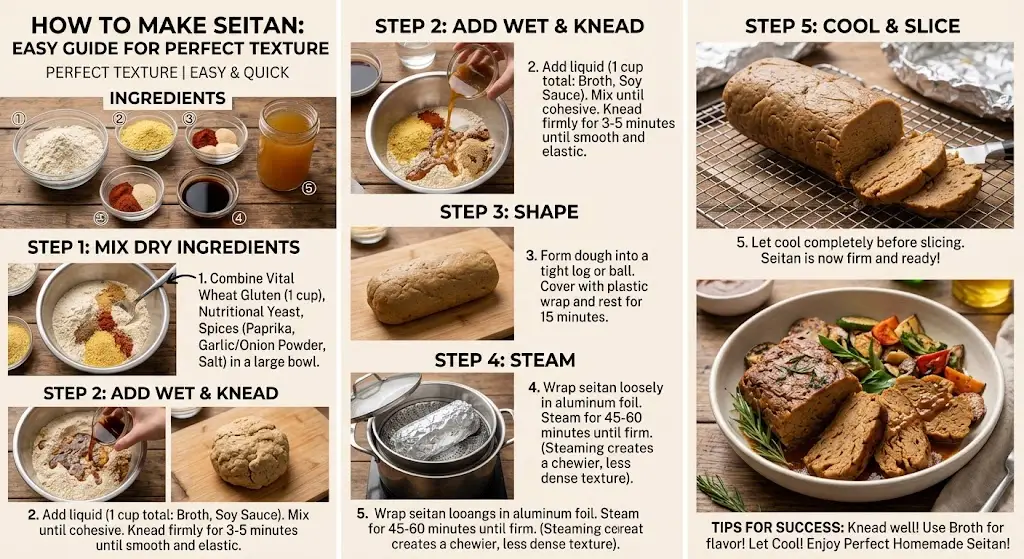
Seitan is made by mixing vital wheat gluten with water or broth and seasonings, kneading the dough to develop its texture, shaping it, and then cooking it by steaming, simmering, or baking until firm and chewy.
For beginners, the vital wheat gluten method is the simplest approach because it is quick, consistent, and easy to customize.
What Is Seitan?
Seitan is a popular plant-based protein made primarily from vital wheat gluten, the protein component of wheat. When hydrated and cooked, gluten develops a firm, chewy structure that makes seitan a popular “wheat meat” substitute.
On its own, seitan has a relatively mild flavor, which makes it excellent at absorbing sauces, broths, marinades, and seasonings. You can create chicken-style, beef-style, smoky, spicy, or BBQ-inspired seitan depending on how you season it.
Two Ways to Make Seitan
Vital Wheat Gluten Method
Mix vital wheat gluten with liquid and seasonings, knead the dough, shape it, and cook it.
- Fast and beginner-friendly
- Consistent results
- Easy to customize
- Excellent for everyday cooking
Washed Flour Method
This traditional approach starts with regular flour dough. The dough is repeatedly washed to remove starch, leaving behind the gluten-rich portion.
- More traditional
- Can produce unique textures
- Does not require packaged vital wheat gluten
- More time-consuming
| Method | Best For | Difficulty | Main Advantage |
|---|---|---|---|
| Vital wheat gluten | Beginners and quick meals | Easy | Fast, consistent results |
| Washed flour | Traditional seitan makers | Advanced | Unique, handmade texture |
Ingredients Breakdown: What Each Ingredient Does
Vital Wheat Gluten
The main structural ingredient. It provides the protein-rich gluten network responsible for seitan’s characteristic chewy texture.
Liquid
Water hydrates the gluten, while vegetable broth adds more flavor. A seasoned liquid can make the finished seitan much more flavorful.
Seasonings
Soy sauce or tamari, garlic powder, onion powder, nutritional yeast, mushrooms, herbs, and spices can build the savory flavor profile.
Substitution Limits
There is no direct gluten-free replacement that turns into traditional seitan. The main alternative technique is the washed flour method.
Easy Seitan Recipe: Step-by-Step Beginner Method
Easy Homemade Seitan
A flexible base for stir-fries, sandwiches, wraps, curries, and meal prep.
*Cooking time varies with the size and shape of the seitan pieces.
Core Ingredients
- Vital wheat gluten
- Vegetable broth or water
- Soy sauce or tamari
- Garlic powder
- Onion powder
- Nutritional yeast, optional
- Additional herbs and spices according to your desired flavor
Mix the Dough
Combine the vital wheat gluten, liquid, and seasonings in a bowl. Mix until a dough forms. Aim for dough that is firm but slightly elastic rather than extremely wet.
Knead for About 2–5 Minutes
Knead the dough for approximately 2–5 minutes. Kneading develops the gluten network and influences the final texture.
Less kneading generally produces softer seitan, while more kneading produces a chewier structure.
Shape the Seitan
Choose a shape based on how you plan to serve it:
- Small chunks: stir-fries and curries
- Logs or cutlets: sandwiches and plated meals
- Thin strips: chicken-style dishes
- Large pieces: roasts and meal prep
Cook Until Firm and Set
For the most forgiving beginner method, steam the shaped seitan until it is firm and cooked through. Cooking time depends on the size of the pieces.
Once cooked, allow it to cool slightly before slicing, shredding, marinating, or pan-frying.
Advanced Techniques for Better Seitan
Stretching & Layering
Stretch the dough and fold it over itself before cooking to encourage a layered, meat-like texture.
Shredded Chicken-Style Texture
Pull cooked or partially cooked seitan into strands for tacos, wraps, sandwiches, and pulled chicken-style recipes.
Control Density
Adjust hydration, kneading, shaping, and cooking technique to move between soft, tender, firm, and chewy textures.
Cooking Methods Compared: Steam vs. Boil vs. Bake vs. Fry
| Method | Texture | Pros | Potential Issue | Best Use |
|---|---|---|---|---|
| Steaming | Firm, chewy, balanced | Holds shape well; less likely to become waterlogged | Takes longer than some methods | General-purpose seitan |
| Gentle simmering | Soft to tender | Simple and useful for soups and saucy dishes | Aggressive boiling can make seitan spongy | Soups and curries |
| Baking | Dense and firm | Strong structure and easy slicing | Can dry out if overcooked | Roasts and cutlets |
| Frying | Crispy outside, chewy inside | Adds browning, flavor, and texture | Usually works best as a finishing step | Sandwiches, wraps, chicken-style pieces |
Seitan Texture Control Guide
Tender Seitan
Use gentler kneading and avoid excessive cooking. A slightly higher hydration can also produce a softer result.
Chewy Seitan
Moderate kneading and controlled cooking can produce a firm but pleasantly chewy bite.
Dense Seitan
Less hydration and a firmer cooking approach can create a denser texture, but overcooking may make it tough.
| Problem | Likely Cause | Adjustment |
|---|---|---|
| Rubbery | Too much kneading or overcooking | Knead less and avoid prolonged cooking |
| Spongy | Aggressive boiling or excess hydration | Steam or simmer gently and adjust hydration |
| Too dense | Insufficient hydration or excessive cooking | Increase hydration slightly and monitor cooking |
| Dry | Overcooking or insufficient moisture | Cook carefully and finish with broth or marinade |
How to Make Seitan Taste More Like Meat
Seitan has a relatively neutral base flavor, so the seasoning and cooking liquid make a major difference. Building flavor at multiple stages gives the finished vegan meat substitute much more depth.
1. Use Umami-Rich Ingredients
- Soy sauce or tamari
- Nutritional yeast
- Garlic and onion powder
- Mushroom powder
- Smoked paprika for deeper flavor
2. Cook in Seasoned Broth
A well-seasoned vegetable broth can add flavor throughout the seitan rather than leaving all the seasoning on the exterior.
3. Marinate After Cooking
Try BBQ, teriyaki, spicy, garlic-soy, or herb-based marinades. Allow the cooked seitan to absorb the marinade for 30–60 minutes when practical.
Common Seitan Mistakes and How to Fix Them
Rubbery Seitan → Over-Kneading
If your seitan is unusually tough and rubbery, excessive kneading or cooking may be responsible. Try keeping the kneading period around 2–5 minutes and reduce it further for a softer result.
Bland Seitan → Weak Seasoning
Because seitan itself is mild, under-seasoning can produce a bland result. Build flavor into both the dough and the cooking liquid.
Spongy Seitan → Aggressive Boiling
Rapid boiling can encourage an undesirable airy or spongy texture. A gentler steaming or simmering approach can provide better control.
Dry Seitan → Overcooking
Prolonged cooking can make seitan dry or tough. Monitor cooking carefully and use broth or marinade to add moisture after cooking when needed.
Flavor Variations to Try
Chicken-Style
Use garlic, onion, lighter seasonings, and a shredded shape for chicken-style seitan.
Beef-Style
Combine soy sauce, smoked paprika, black pepper, and other savory seasonings for a deeper beef-style profile.
BBQ or Spicy
Finish cooked seitan with BBQ sauce or a chili-based marinade, then pan-fry for caramelized edges.
Quick Marinade Ideas
- Teriyaki: sweet-savory and glossy
- Garlic soy: salty, savory, and aromatic
- Lemon herb: bright and fresh
- BBQ: smoky and sweet
- Spicy chili: bold and hot
Seitan Nutrition and Health Considerations
Seitan is popular among people looking for a protein-rich plant-based food. Its exact nutritional profile varies significantly by recipe, brand, and serving size, so nutrition information should be checked for the specific preparation you use.
Potential Advantages
- Protein-rich
- Typically low in fat
- Versatile meat substitute
- Can be affordable when made at home
Important Limitations
- Contains wheat gluten
- Not appropriate for gluten-free diets
- Protein quality differs from animal proteins
- Works best as part of a varied diet
Seitan is not suitable for people who need to avoid gluten or wheat. If you have celiac disease or another diagnosed condition requiring gluten avoidance, choose a different plant-based protein such as tofu, tempeh, beans, or another suitable gluten-free option.
Seitan for Different Diet Goals
High-Protein Meals
Seitan can be incorporated into meals where you want a convenient, protein-rich plant food.
Vegan Meal Prep
Make a batch, portion it, and combine it with grains, vegetables, sauces, or legumes throughout the week.
Lower-Fat Cooking
Homemade seitan can be prepared with relatively little added fat, depending on the recipe and cooking method.
How to Store, Freeze, and Meal Prep Seitan
| Storage Method | How to Store | Quality Guidance |
|---|---|---|
| Refrigerator | Place cooked seitan in an airtight container, ideally with some broth or sauce. | Use within about 4–5 days for best quality. |
| Freezer | Cool completely, portion, and pack in freezer-safe containers or bags. | Best quality within about 2–3 months. |
Refrigerate cooked seitan promptly rather than leaving it at room temperature for extended periods. When reheating leftovers, heat them thoroughly and handle them as you would other cooked foods.
How to Use Homemade Seitan
Stir-Fries
Slice seitan into strips or chunks and cook with vegetables, noodles, rice, and a flavorful sauce.
Sandwiches & Wraps
Use sliced or shredded chicken-style seitan with vegetables, sauces, greens, and bread or tortillas.
Curries & Saucy Dishes
Add seitan to curries, gravies, and richly seasoned sauces where its absorbent texture can take on surrounding flavors.
Weekly Meal Prep
Cook a batch, portion it, and use it throughout the week in bowls, salads, sandwiches, wraps, and quick dinners.
FAQs About How to Make Seitan
Why is my seitan rubbery?
The most common reasons are excessive kneading or overcooking. Try kneading for less time and using a gentler cooking method.
How can I make seitan soft?
Use gentler kneading, appropriate hydration, and avoid prolonged cooking. Steaming can also give you better texture control than aggressive boiling.
Can you make seitan without gluten?
Traditional seitan depends on wheat gluten, so it cannot be made into traditional seitan without gluten. For a gluten-free alternative, consider foods such as tofu, tempeh, beans, or other suitable plant proteins.
What is the best way to cook seitan?
Steaming is a useful all-purpose method for achieving a balanced, firm texture. You can then fry or bake the cooked seitan for additional browning.
Is seitan healthy?
Seitan can be a useful protein-rich plant food, but whether it fits your diet depends on your individual nutritional needs. It is made from wheat gluten, so it is not appropriate for people who need to avoid gluten or wheat.
Can I freeze homemade seitan?
Yes. Cool the cooked seitan, portion it into freezer-safe packaging, and freeze it with a little broth or sauce if desired to help maintain moisture.
Final Thoughts
Learning how to make seitan at home gives you an affordable, customizable way to add a versatile plant-based protein to your meals. The key variables are hydration, kneading, shaping, cooking method, and seasoning.
Start with the beginner-friendly vital wheat gluten method, use flavorful broth, and experiment with steaming, frying, marinades, and different shapes until you find the texture you enjoy most.
Whether you’re preparing seitan chicken, beef-style seitan, sandwiches, stir-fries, curries, or meal-prep bowls, homemade seitan gives you plenty of room to customize both flavor and texture.
Read More :