If you’ve ever started a recipe and realized you’re out of rice flour, don’t worry—you have plenty of easy alternatives. Whether you’re baking, frying, or thickening a sauce, choosing the right rice flour substitute can save your recipe without sacrificing the texture you need.
The trick is knowing what to use instead of rice flour for your specific recipe. Cornstarch and potato starch are excellent for crispy coatings, while all-purpose flour and almond flour are better suited to many baking applications.
Quick Answer: What Is the Best Rice Flour Substitute?
The most useful rice flour substitutes include cornstarch, potato starch, tapioca flour, all-purpose flour, and almond flour. A 1:1 volume substitution can work in some recipes, but the result depends heavily on what rice flour is doing in the original recipe.
For a crispy coating, choose cornstarch or potato starch. For many baking recipes, all-purpose flour or a suitable gluten-free flour may work better. For sauces, cornstarch or arrowroot is usually more appropriate than a baking flour.
Choose Your Substitute in Seconds
What Is Rice Flour and Why Is It Used in Cooking?
Rice flour is made by finely grinding rice into a smooth powder. It is common in traditional Asian cooking and modern gluten-free recipes because it has a mild flavor and can provide a light texture.
White Rice Flour vs. Brown Rice Flour
| Type | Characteristics | Common Uses |
|---|---|---|
| White rice flour | Mild flavor and smooth texture | Baking, batters, coatings and traditional recipes |
| Brown rice flour | More pronounced, slightly nutty flavor | Gluten-free baking and whole-grain-style recipes |
Why Rice Flour Is Popular
- Naturally gluten-free when uncontaminated and appropriately processed.
- Has a relatively light, fine texture.
- Can help produce crispy fried coatings.
- Works across baking, frying and other cooking applications.
What Makes Rice Flour Unique?
No Gluten Structure
Rice flour contains no gluten, so it does not form the elastic gluten network created by wheat flour. This is important when choosing a substitute because wheat-based alternatives can change the structure of the finished food.
Fine Grain Texture
The fine texture of rice flour makes it useful for smooth batters and delicate coatings. A substitute with a noticeably different particle size can change the mouthfeel.
Crispiness in Frying
Rice flour is popular for creating light, crisp coatings. This is why cornstarch and potato starch are particularly useful when the primary goal is crispiness.
Binding and Structure
Rice flour contributes structure differently from wheat flour and starches. As a result, the best rice flour substitute depends on whether you need crispness, thickening, softness, elasticity or structure.
Best Rice Flour Substitutes: Quick List
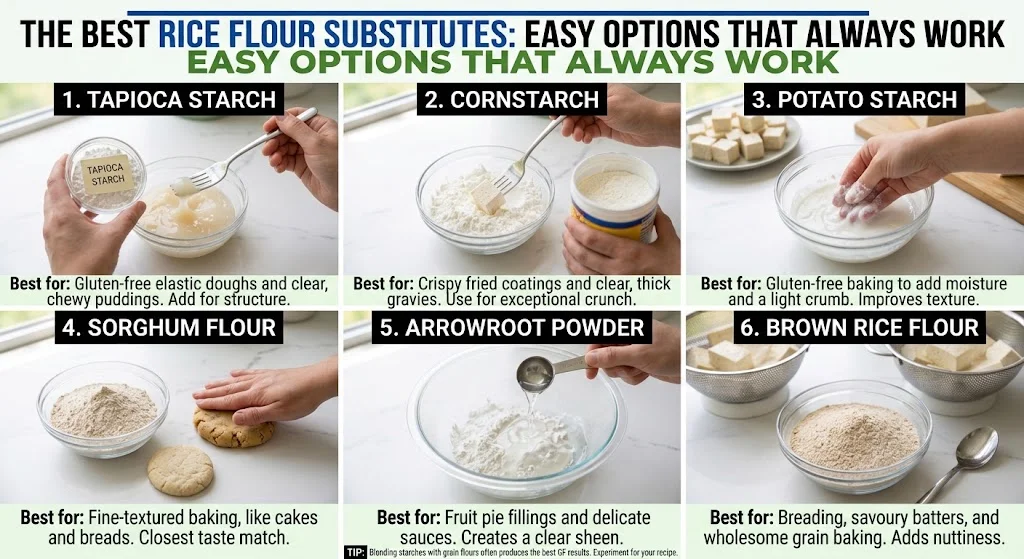
1. Cornstarch
An excellent choice for crispy frying, light coatings and thickening sauces.
2. Potato Starch
A strong option when you want an especially light and crisp coating.
3. Tapioca Flour
Useful for chewy and elastic textures, especially in gluten-free baking.
4. All-Purpose Flour
An accessible choice for many baking applications, but it contains gluten.
5. Almond Flour
A gluten-free option for some baking recipes that contributes moisture and a nutty flavor.
Rice Flour Substitute Comparison Table
Use this table to quickly match a rice flour alternative to the texture and recipe you’re working with.
| Substitute | Best Use | Starting Ratio | Texture | Gluten-Free* |
|---|---|---|---|---|
| Cornstarch | Frying, thickening | 1:1 in suitable applications | Light, crisp | Yes |
| Potato starch | Crispy frying | 1:1 in suitable applications | Very crisp, light | Yes |
| Tapioca flour | Baking, sauces | 1:1 starting point | Chewy, slightly elastic | Yes |
| All-purpose flour | Baking, general cooking | 1:1 starting point | Soft, more structured | No |
| Almond flour | Gluten-free baking | Recipe-dependent | Moist, soft, nutty | Yes |
*Always check packaging if gluten avoidance is medically necessary because cross-contact and processing practices vary by product.
Best Rice Flour Substitute by Use-Case
For Baking
Baking requires more than simply replacing one powder with another. The substitute must provide the right combination of structure, moisture and texture.
- Almond flour: useful for cakes and cookies where a soft, moist crumb is desirable.
- Oat flour: mild flavor and useful in muffins and pancakes.
- All-purpose flour: convenient for many conventional baked goods when gluten is acceptable.
For Frying
If your priority is a light, crispy coating, starches are generally more useful than heavier baking flours.
- Cornstarch: excellent for crisp coatings.
- Potato starch: useful when you want pronounced crunch.
- Tapioca flour: can provide crispness with some chew.
For Thickening Sauces
When rice flour is being used primarily as a thickener, dedicated starches are often easier to control.
- Cornstarch: powerful and quick thickening.
- Arrowroot powder: useful for a smooth, glossy finish.
For Gluten-Free Cooking
Choose alternatives that are naturally gluten-free and appropriate for the particular recipe rather than assuming every gluten-free flour behaves like rice flour.
- Almond flour: useful for many gluten-free baked goods.
- Tapioca flour: contributes elasticity.
- Potato starch: useful for texture and crispness.
Rice Flour Substitute Ratio Guide
A 1:1 substitution can be a useful starting point for some applications, but it should not be treated as a universal rule. Starches, nut flours and wheat flour behave differently.
| Rice Flour Amount | Substitute | Starting Point | Important Note |
|---|---|---|---|
| 1 cup | Cornstarch | 1 cup | Best suited to appropriate frying or thickening applications. |
| 1 cup | Potato starch | 1 cup | Useful for crisp coatings; results vary by recipe. |
| 1 cup | Tapioca flour | 1 cup | May create more chew or elasticity. |
| 1 cup | All-purpose flour | 1 cup | Contains gluten and can change structure. |
| 1 cup | Almond flour | Recipe-dependent | It is not an equivalent structural replacement in every baked recipe. |
Treat 1:1 as a starting point rather than a guarantee. If the recipe depends heavily on rice flour for structure, changing the flour can require adjustments to liquid, eggs or other binders.
Rice Flour vs. Other Flours
| Comparison | Rice Flour | Alternative | Best Choice When… |
|---|---|---|---|
| Rice Flour vs Cornstarch | Light and useful for crisp coatings | Cornstarch creates a very crisp, delicate coating | You prioritize crunch or thickening |
| Rice Flour vs All-Purpose Flour | Gluten-free and lighter | Wheat-based flour provides gluten structure | You need conventional baking structure and gluten is acceptable |
| Rice Flour vs Tapioca Flour | Light, dry and fine | Tapioca is more stretchy and chewy | You need elasticity in gluten-free cooking |
When NOT to Substitute Rice Flour
Not every recipe can tolerate a direct substitution. Some dishes depend on the distinctive properties of a particular type of rice flour.
Mochi relies on glutinous rice flour for its characteristic sticky and chewy texture. Regular rice flour, cornstarch or all-purpose flour are not interchangeable with glutinous rice flour in a traditional mochi recipe.
Dumplings & Traditional Asian Recipes
Some dumplings and traditional preparations depend on rice flour for a specific soft, firm or delicate bite. A substitution may significantly change the result. Tapioca flour can sometimes help, but it is not guaranteed to reproduce the original texture.
Texture-Sensitive Recipes
Be especially cautious when the recipe depends on precise crispness, lightness or elasticity. Thin coatings, delicate batters and specialty gluten-free baked goods may require a more carefully selected flour blend.
If you need to avoid gluten for medical reasons, choose products labeled appropriately for your needs and consider the possibility of cross-contact during processing.
How to Choose the Right Rice Flour Substitute
For Baking
Consider almond flour, oat flour or all-purpose flour, depending on whether you need gluten-free ingredients and what texture the recipe requires.
For Frying
Choose cornstarch or potato starch when crispiness is the priority.
For Thickening
Use cornstarch or arrowroot powder rather than a baking flour when the main purpose is thickening.
For Gluten-Free Recipes
Consider almond flour, tapioca flour or potato starch, while remembering that each creates a different texture.
Match the substitute to the job rice flour performs: crisping, thickening, binding, creating structure or adding softness.
Health & Nutrition: Rice Flour vs. Substitutes
Nutritional values vary substantially by brand and serving size, so the table below is best used as a general comparison rather than a precise nutrition calculation.
| Ingredient | General Nutrition Profile | Gluten-Free* | Common Use |
|---|---|---|---|
| Rice flour | Primarily carbohydrate-based | Yes | General gluten-free cooking and baking |
| Cornstarch | Primarily starch/carbohydrate | Yes | Thickening and frying |
| Potato starch | Primarily starch/carbohydrate | Yes | Crispy coatings and texture |
| Tapioca flour | Primarily carbohydrate | Yes | Elasticity and gluten-free baking |
| All-purpose flour | Carbohydrates with some protein | No | Conventional baking |
| Almond flour | Higher in fat and protein than many grain flours | Yes | Gluten-free baking |
*Verify product labeling when gluten avoidance is medically necessary.
Almond flour can be useful when you want a nut-based, lower-carbohydrate baking option, but it is substantially different from rice flour in both composition and baking behavior.
Common Mistakes When Using Rice Flour Substitutes
Using the Wrong Ratio
A 1:1 substitution does not guarantee the same result. Different ingredients absorb liquid and contribute structure differently.
Ignoring Texture
All-purpose flour, almond flour and starches behave very differently. Choose based on whether you need crisp, soft, chewy or structured results.
Over-Thickening Sauces
Cornstarch and arrowroot can thicken strongly. Start with a modest amount and adjust gradually rather than adding too much at once.
Using Almond Flour for Frying
Almond flour is primarily a baking alternative. It does not reproduce the same light, crisp coating that starches can provide.
Pro Tips for the Best Results
Mix Flours for Better Texture
In some gluten-free baked goods, combining flours can provide a more balanced result than relying on a single substitute. For example, tapioca flour + almond flour can combine elasticity with moisture and richness.
Adjust Liquid Gradually
Different substitutes absorb liquids differently. Rather than changing the recipe dramatically at once, make small adjustments until the batter or dough reaches the intended consistency.
Match the Ingredient to the Recipe
| Recipe Goal | Good Starting Options | What to Watch For |
|---|---|---|
| Baking | Almond flour, oat flour, all-purpose flour | Structure, moisture and gluten requirements |
| Frying | Cornstarch, potato starch | Crispness and coating thickness |
| Thickening | Cornstarch, arrowroot | Over-thickening or gumminess |
| Gluten-free baking | Almond flour, tapioca flour, gluten-free flour blends | Binding and overall structure |
FAQs About Rice Flour Substitutes
Can I Use All-Purpose Flour Instead of Rice Flour?
Yes, all-purpose flour can replace rice flour in some baking recipes, but it contains gluten and may produce a different, more structured texture. It is not a good choice when the recipe must remain gluten-free.
Can Cornstarch Replace Rice Flour?
Yes. Cornstarch is one of the most useful rice flour substitutes for frying and thickening. It can create a very light, crisp coating, although it does not behave exactly like rice flour in every recipe.
What Is the Closest Substitute for Rice Flour?
For crispy frying, cornstarch and potato starch are particularly useful alternatives. For baking, the closest option depends on the role rice flour plays in the recipe.
Is Rice Flour Gluten-Free?
Yes, rice itself is naturally gluten-free. However, packaged rice flour can be subject to cross-contact during processing, so people who must strictly avoid gluten should check product labeling.
Can Almond Flour Replace Rice Flour?
Yes, almond flour can replace rice flour in some baking recipes, but it behaves very differently. It adds fat, moisture and a nutty flavor, so it is not a universal 1:1 structural replacement.
What Is the Best Rice Flour Substitute for Frying?
Cornstarch and potato starch are strong choices when the main goal is a crisp coating. Potato starch can provide particularly pronounced crunch, while cornstarch is highly versatile.
What Can I Use Instead of Rice Flour to Thicken a Sauce?
Cornstarch or arrowroot powder are convenient options. Add them gradually so you can control the final thickness and avoid making the sauce overly thick.
Conclusion: Choosing the Best Rice Flour Substitute
Finding the right rice flour substitute becomes much easier once you identify what the original flour is supposed to do. For frying, cornstarch or potato starch can provide the crispness you want. For baking, all-purpose flour may work when gluten is acceptable, while almond flour can be useful in certain gluten-free recipes. For sauces, cornstarch or arrowroot is usually the more practical choice.
The most important rule is to match the substitute to the texture and function of the rice flour in your recipe. A 1:1 ratio can be a useful starting point, but different ingredients can require adjustments. When texture is especially important, choosing the right starch or flour—or using a blend—will give you a much better result than simply replacing rice flour blindly.
Crispy frying → cornstarch or potato starch.
Baking → almond, oat or all-purpose flour depending on the recipe.
Sauces → cornstarch or arrowroot.
Gluten-free cooking → choose a certified/appropriately labeled gluten-free alternative when required.
Read More :